
Loading, please wait...
LOT 1126
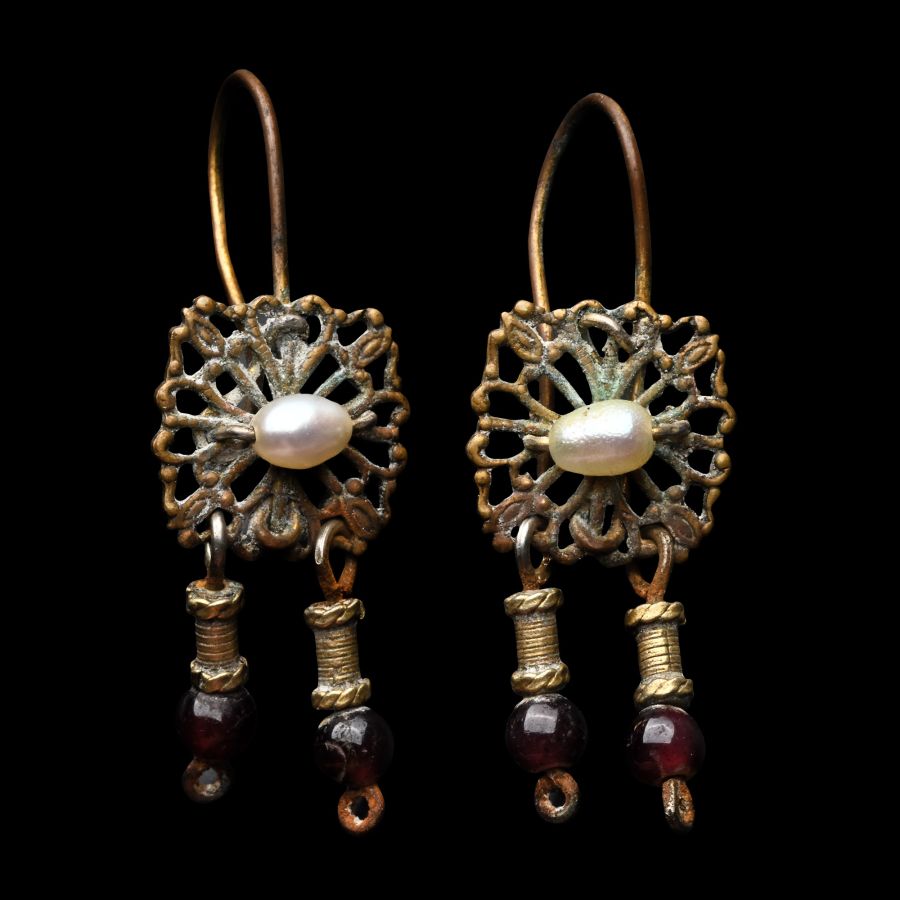
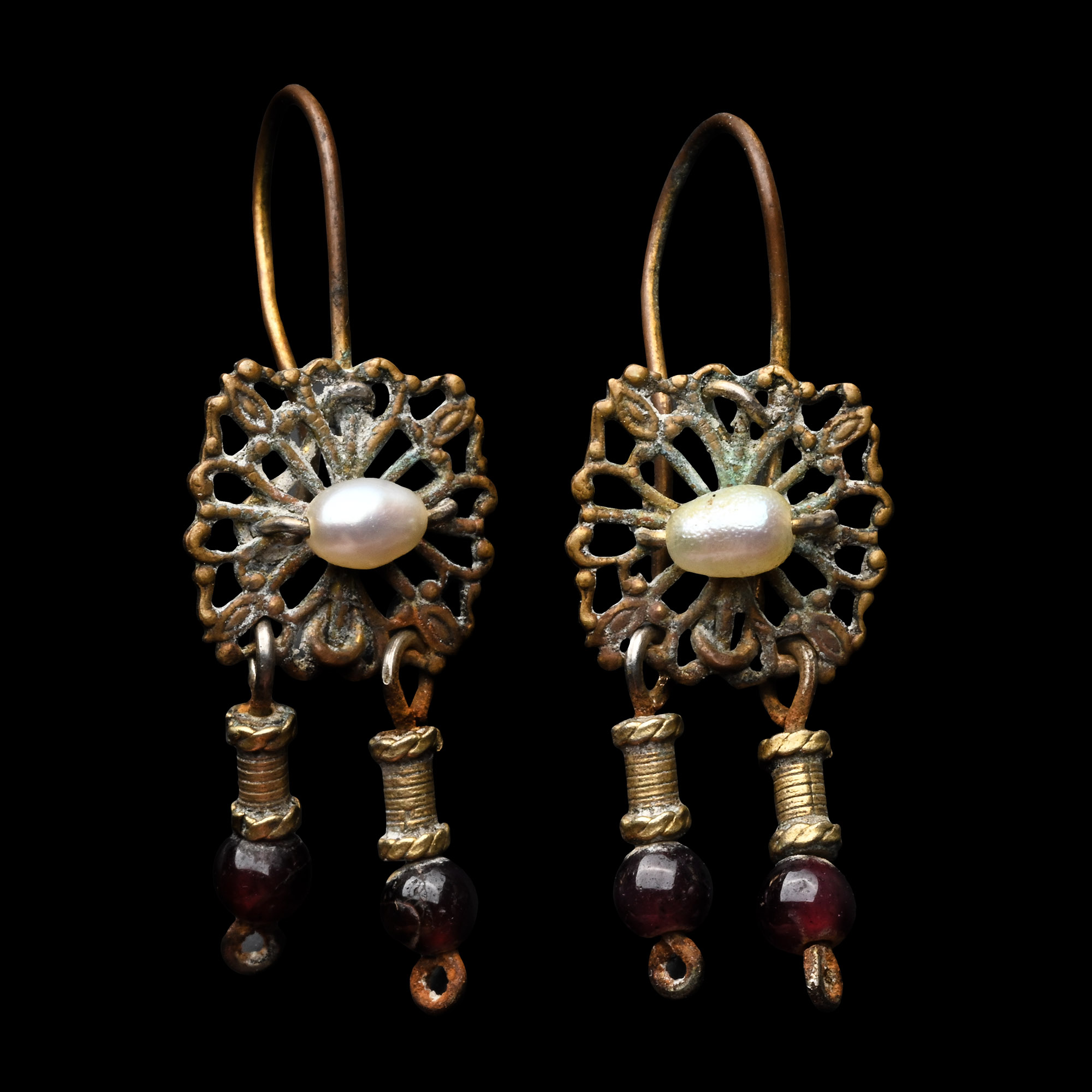
Byzantine Gold Floral Earring Pair
7TH-8TH CENTURY A.D.
1 3/8 - 1 1/2 in. (3.17 grams total, 36-38 mm).
Matched pair, each an openwork floral plaque with a hook to the reverse, attached pearl bead and two dangles with garnet beads. [2]
ProvenanceLondon collection, before 1995.
TimeLine Auctions, 25th-27th February 2016, no.512.
Private collection, Suffolk.
TimeLine Auctions follows a vetting process to ensure the authenticity and legality of all items, reinforcing our commitment to integrity and responsible trading. Each antiquity, antique, and coin lot undergoes thorough examination by a vetting committee of at least ten external specialists, professional trade association members, scientists, and archaeologists: Our Vetting Process
AUCTIONS:
TimeLine is a leading auction house specialising in antiquities, ancient art, collectables, natural history, coins, medals, and books. Our auctions offer museums, collectors, historians, and enthusiasts the opportunity to acquire unique and historically significant pieces.
-
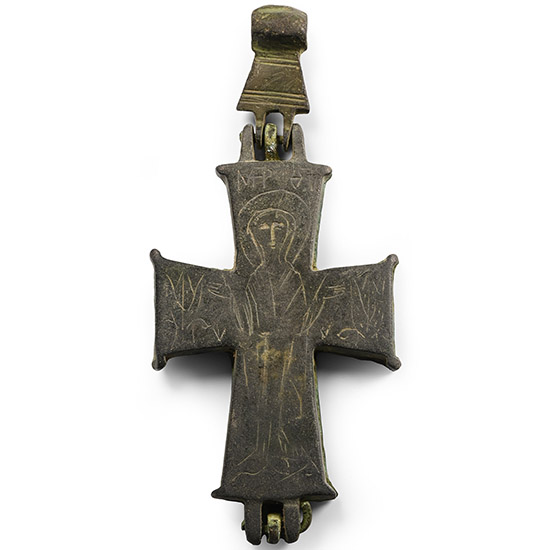
Byzantine Bronze Reliquary Cross Pendant
Circa 10th-12th century A.D.Sold for (Inc. bp): £234
Formed from two hinged plates with a recess to the inner face of each, cast suspension loop to the upper hinge; obverse with four incised equal-arm crosses and 'MIXAHΛ' (Michael) legend; reverse with low-relief image of nimbate Mary in orans pose. 56.8 grams, 10.1 cm
Ex German art market, 2000s. Acquired from an EU collector living in London. From the collection of Surrey, UK, gentleman. -
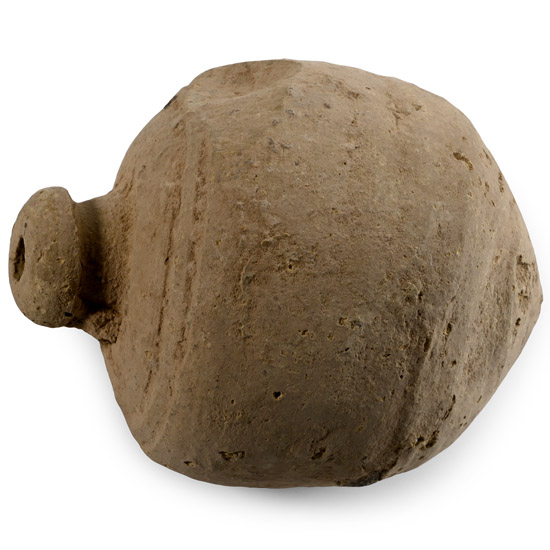
Byzantine 'Greek Fire' Ceramic Fire Bomb or Hand Grenade
9th-11th century A.D.Sold for (Inc. bp): £91
Bulbous body with pointed base and domed mouth, two circumferential bands on the shoulder; intended to be filled with explosive liquid and a wick, and used as a hand grenade. 378 grams, 10.3 cm
From an important specialist collection, London, UK, 1990s. Accompanied by an academic paper by military specialist Dr Raffaele D'Amato, dated 15 July 2019 and titled 'Eastern Roman Empire - Greek Fire Bomb or Hand Grenade (μεσαίον kακάβιον) 9th-11th century AD'.
Apart from the use of siphons or manual flame-throwers called cheirosiphona, special corps of Roman soldiers employed terracotta grenades, in the form of small jars, abundantly evidenced in archaeological excavations. They were called μεσαία kακαβιά or κυτροκακάβια, where the former had a bulbous shape and the latter a more cylindrical form. -
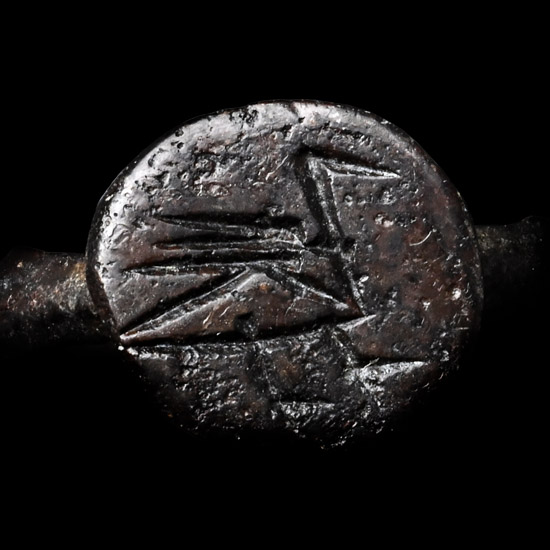
Large Byzantine Bronze Ring with Bird
6th-8th century A.D.Sold for (Inc. bp): £46
Comprising a slender large hoop and a discoid bezel with a stylised standing bird. 2.34 grams, 23.12 mm overall, 18.28 x 20.50 mm internal diameter (approximate size British Q, USA 8, Europe 17.49, Japan 16)
From a UK collection formed in the 1980s. Property of an Essex, UK, gentleman.
