
Loading, please wait...

LOT 0201
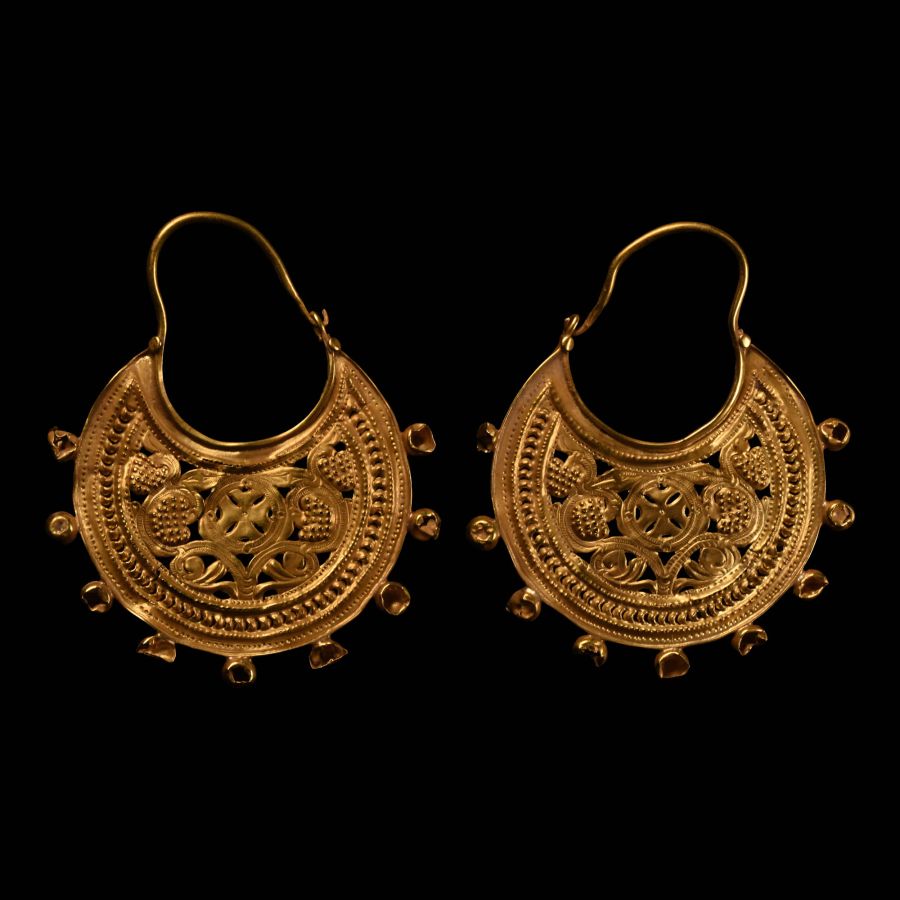
Byzantine Gold Earrings with Crosses
CIRCA 6TH-8TH CENTURY A.D.
2 1/4 in. (10.80 grams total, 59-60 mm).
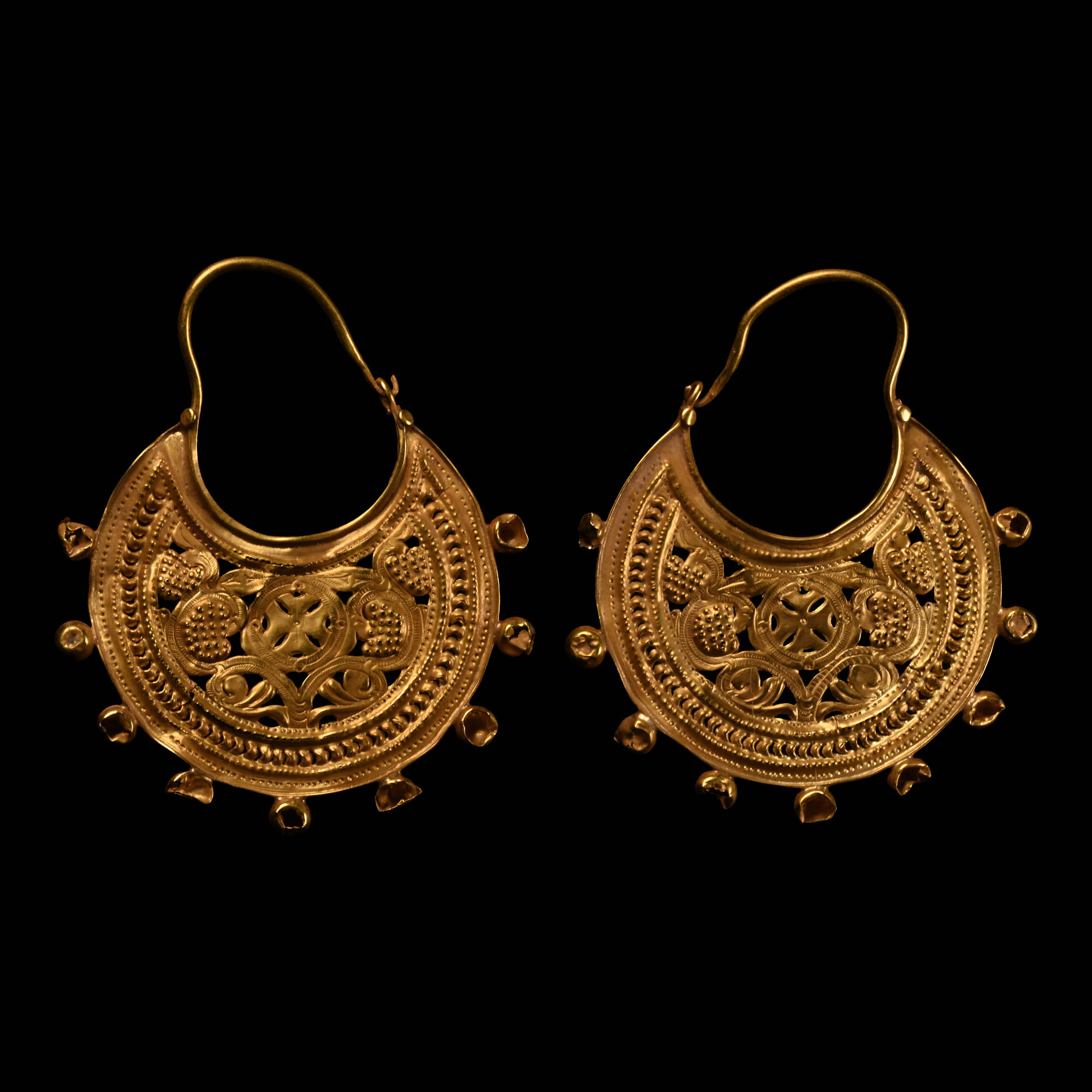
Each a crescent plaque with integral wire loop and fastener, applied radiating granules to the rim, the field an openwork panel of tendrils and grapes surrounding an equal-arm cross. [2]
ProvenanceFormerly in North American collection, 1990s.
From the collection of a London, UK, gentleman.
TimeLine Auctions follows a vetting process to ensure the authenticity and legality of all items, reinforcing our commitment to integrity and responsible trading. Each antiquity, antique, and coin lot undergoes thorough examination by a vetting committee of at least ten external specialists, professional trade association members, scientists, and archaeologists: Our Vetting Process
AUCTIONS:
TimeLine is a leading auction house specialising in antiquities, ancient art, collectables, natural history, coins, medals, and books. Our auctions offer museums, collectors, historians, and enthusiasts the opportunity to acquire unique and historically significant pieces.
-
Byzantine Gold Earrings with Crosses
Circa 6th-8th century A.D.Sold for (Inc. bp): £1,170
Each a crescent plaque with integral wire loop and fastener, applied radiating granules to the rim, the field an openwork panel of tendrils and grapes surrounding an equal-arm cross. 10.80 grams total, 59-60 mm
Formerly in North American collection, 1990s. From the collection of a London, UK, gentleman. -
Byzantine Silver-Gilt Temple Ring Pair
9th-12th century A.D.Sold for (Inc. bp): £195
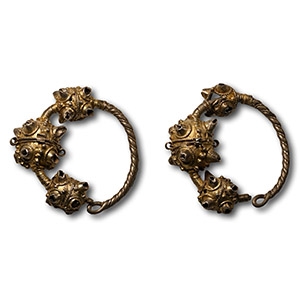
Hollow-formed with applied filigree collars to shank and base of horns, bulbs with horns and granule clusters; one bulb detached. 19.5 grams total, 48-49 mm
Acquired in the 1980s. From the collection of a London antiquarian. -

Byzantine 'Greek Fire' Ceramic Fire Bomb or Hand Grenade
9th-11th century A.D.Sold for (Inc. bp): £195
Piriform body with vertical ribs to the body, interstitial panels of impressed foliage ornament, domed filler-hole, intended to be filled with explosive liquid and wick, used as a hand grenade. 573 grams, 14 cm
From a specialist collection of militaria, London, UK, collected 1990s onwards. Accompanied by an academic paper by military specialist Dr Raffaele D'Amato, dated 15 July 2019 and titled 'Eastern Roman Empire - Greek Fire Bomb or Hand Grenade (μεσαίον kακάβιον) 9th-11th century AD'.
This piece was a sort of a ceramic fire grenade, similar to the ones used by the Eastern Romans but of Turco-Mongol type. Apart from the use of manual flame-throwers, special corps of soldiers employed terracotta grenades, in the form of small jars, abundantly evidenced in archaeological excavations, even in Burma.
