
Loading, please wait...
LOT 0738
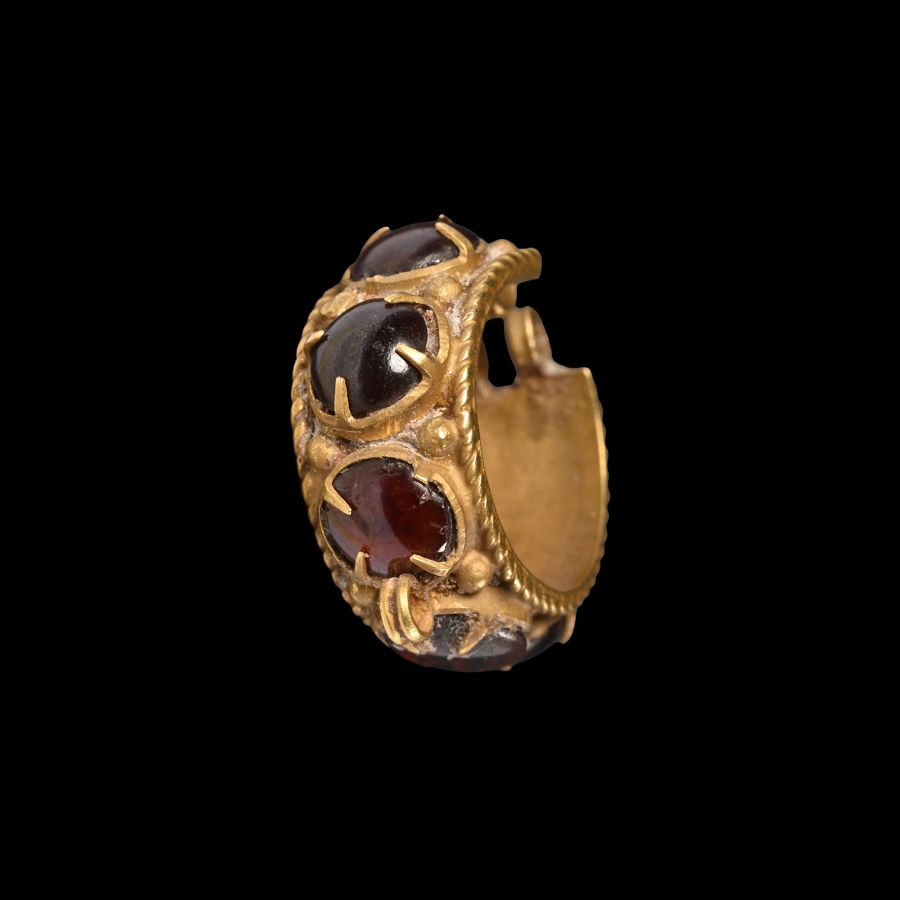
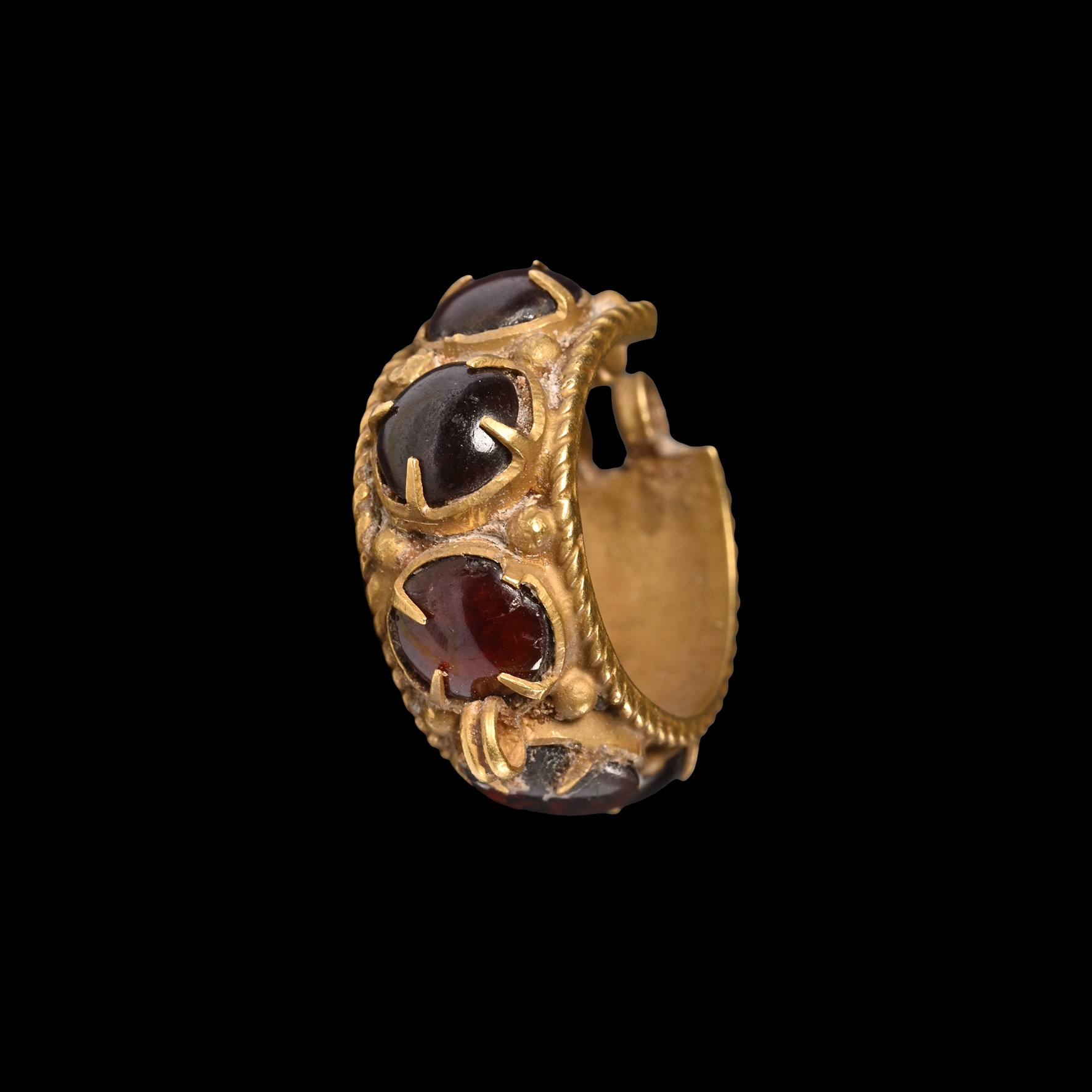
Byzantine Gold Earring
CIRCA 8TH-12TH CENTURY A.D.
5/8 in. (2.71 grams, 17 mm).
Substantial D-section hoop with applied ropework borders, loops for fastening clasp, six radiating garnet cabochons in claw settings with interstitial granules, ribbed loop to the apex.
ProvenanceEx European collection formed in the 1990s.
Acquired from a North London gallery.
Property of an Essex gentleman.
See Entwistle, C. & Adams, N., Intelligible Beauty, Recent Research into Byzantine Jewellery, London, 2010, for discussion.
CONDITIONTimeLine Auctions follows a vetting process to ensure the authenticity and legality of all items, reinforcing our commitment to integrity and responsible trading. Each antiquity, antique, and coin lot undergoes thorough examination by a vetting committee of at least ten external specialists, professional trade association members, scientists, and archaeologists: Our Vetting Process
AUCTIONS:
TimeLine is a leading auction house specialising in antiquities, ancient art, collectables, natural history, coins, medals, and books. Our auctions offer museums, collectors, historians, and enthusiasts the opportunity to acquire unique and historically significant pieces.
-
Byzantine Bronze and Silver Earring Pairs
Circa 10th-15th century A.D.Sold for (Inc. bp): £104
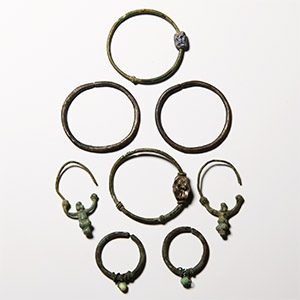
Comprising: a penannular bronze earring pair with integral granulated pendant drops; a bronze penannular pair with thick hoop, a white stone bead attached with coiled wire to the hoop; a pair of silver earrings with round-section hoops; a pair of annular bronze hoops with collars, one with a blue glass bead and the other with a collared silver bead. 35.2 grams total, 31-44 mm
Acquired in the 1980s-1990s. Property of a Nottinghamshire gentleman. -
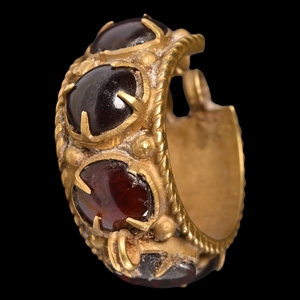
Byzantine Gold Earring
Circa 8th-12th century A.D.Sold for (Inc. bp): £403
Substantial D-section hoop with applied ropework borders, loops for fastening clasp, six radiating garnet cabochons in claw settings with interstitial granules, ribbed loop to the apex. 2.71 grams, 17 mm
Ex European collection formed in the 1990s. Acquired from a North London gallery. Property of an Essex gentleman. -
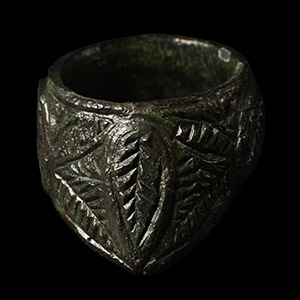
Byzantine Bronze Archer's Ring
Circa 12th-14th century A.D.Sold for (Inc. bp): £247
With a substantial keeled hoop with four panels of zig-zag motifs; triangular plaque with foliage motifs, raised central panel with frond motif. 22.81 grams, 34.44 mm overall, 21.06 mm internal diameter (approximate size British W 1/2, USA 11 1/4, Europe 25.66, Japan 24)
Acquired on the German art market before 2000. Property of a Surrey, UK, collector.
