
Loading, please wait...
LOT 0773
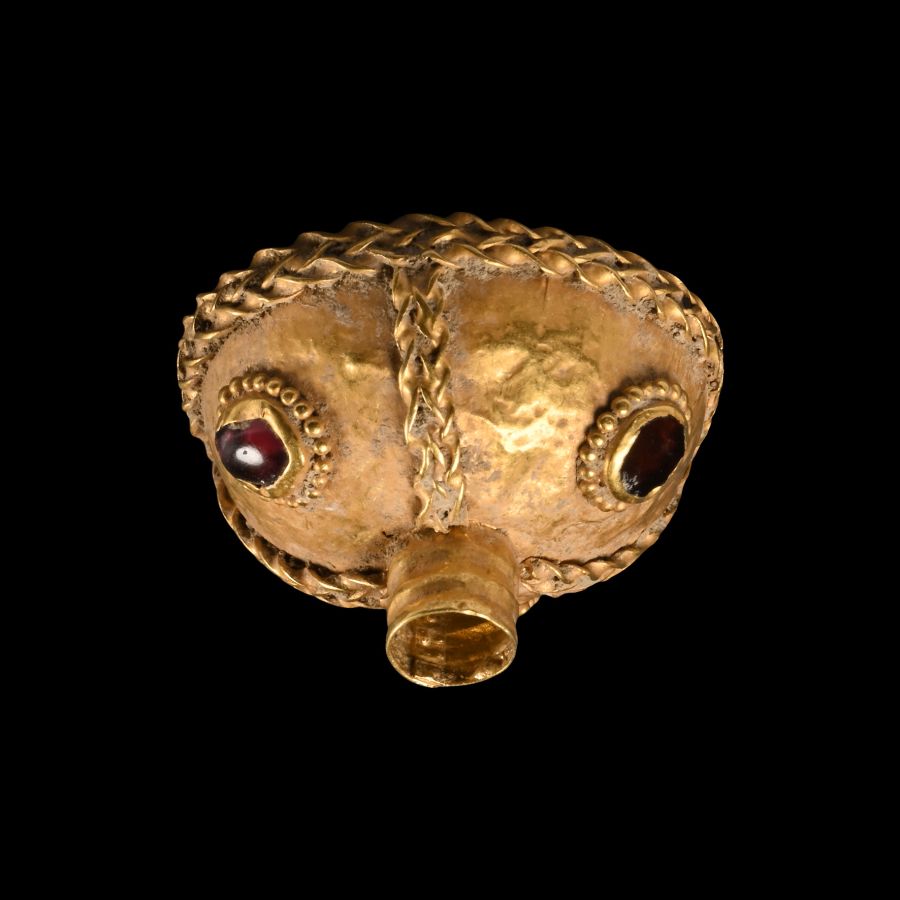
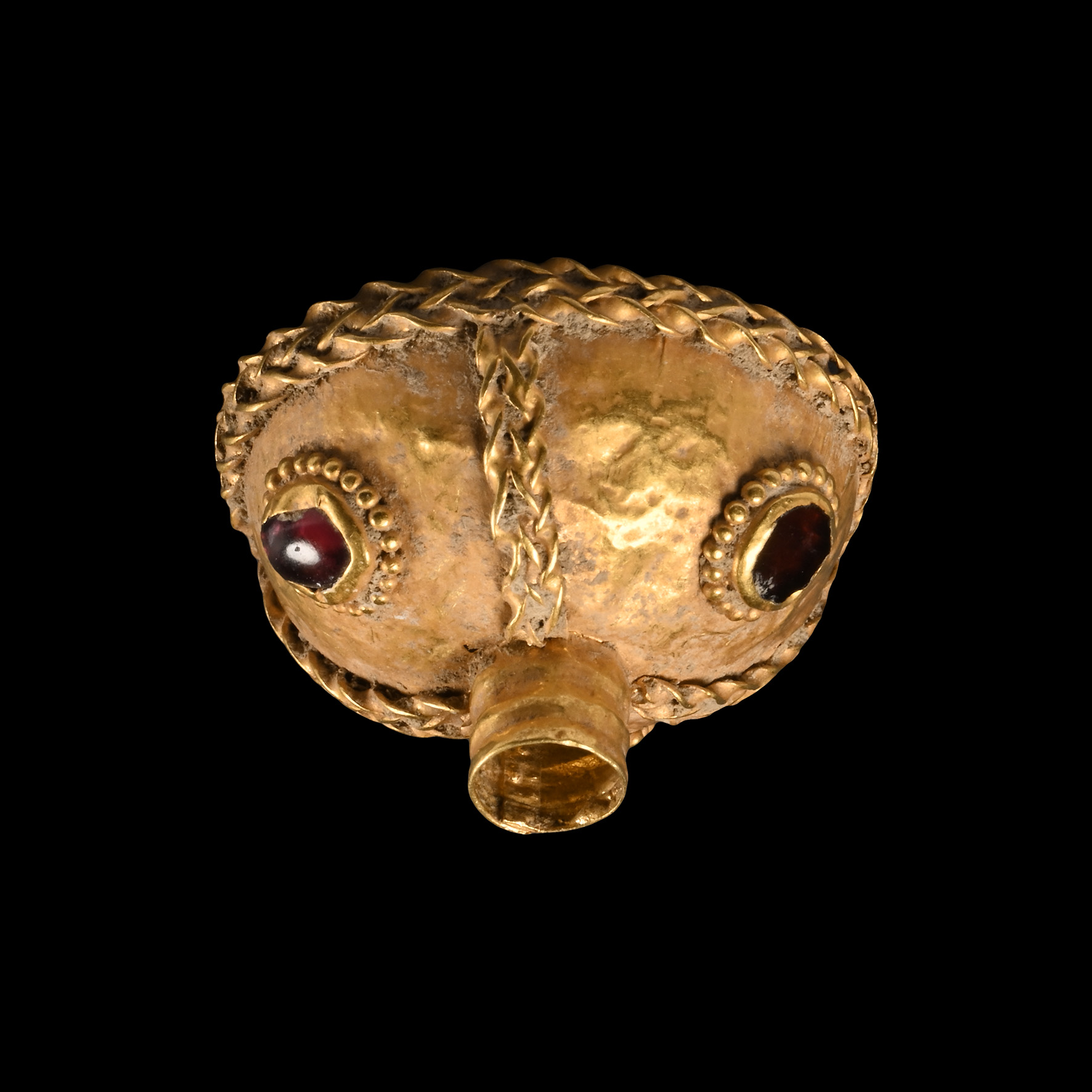
Byzantine Gold Dagger Pommel Cap with Garnets
CIRCA 8TH CENTURY A.D.
7/8 in. (2.13 grams, 22 mm).
Sheet gold dome with braided filigree band to the rim, three vertical bands and three cells each set with a garnet cabochon, collar to the apex. [No Reserve]
ProvenanceFrom a continental collection prior to 2000.
Acquired on the UK art market in 2010.
Property of a UK gentleman.
TimeLine Auctions follows a vetting process to ensure the authenticity and legality of all items, reinforcing our commitment to integrity and responsible trading. Each antiquity, antique, and coin lot undergoes thorough examination by a vetting committee of at least ten external specialists, professional trade association members, scientists, and archaeologists: Our Vetting Process
AUCTIONS:
TimeLine is a leading auction house specialising in antiquities, ancient art, collectables, natural history, coins, medals, and books. Our auctions offer museums, collectors, historians, and enthusiasts the opportunity to acquire unique and historically significant pieces.
-
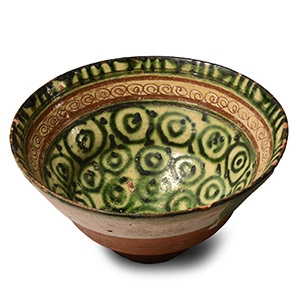
Byzantine Green Glazed Terracotta Bowl
Circa 14th-15th century A.D.Sold for (Inc. bp): £702
Bell-shaped with part-glazed surface, basal ring; geometric panels to the rim, concentric rings to the body, reserved band of spirals. 487 grams, 19 cm wide
Ex old English collection. London art market, pre 2000. Property of a Lonodon, UK, gentleman. -
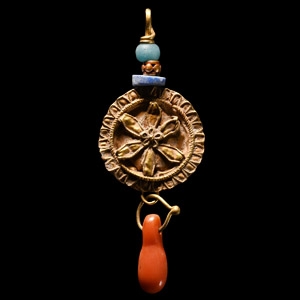
Byzantine Gold Floral Pendant with Bead Drop
6th-10th century A.D.Sold for (Inc. bp): £364
Comprising a discoid plaque with filigree rosette to the rim, applied foil leaves and central filigree rosette; wire loop below with carnelian dangle; suspension loop with lapis lazuli, glass and gold-granule collars. 3.1 grams, 53 mm
UK private collection formed before 2000. Ex North London, UK, gallery. -
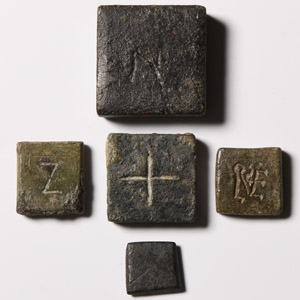
Byzantine Bronze Trade Weight Collection
Circa 8th-12th century A.D.Sold for (Inc. bp): £78
Group of tabular weights with markings including incised cross, monogram 'Z', 'N', NE monogram and others. 43.9 grams total, 10-20 mm
Ex Simmons Gallery, London E11, UK, in the 1990s. From a North London collection.
