
Loading, please wait...
LOT 0202
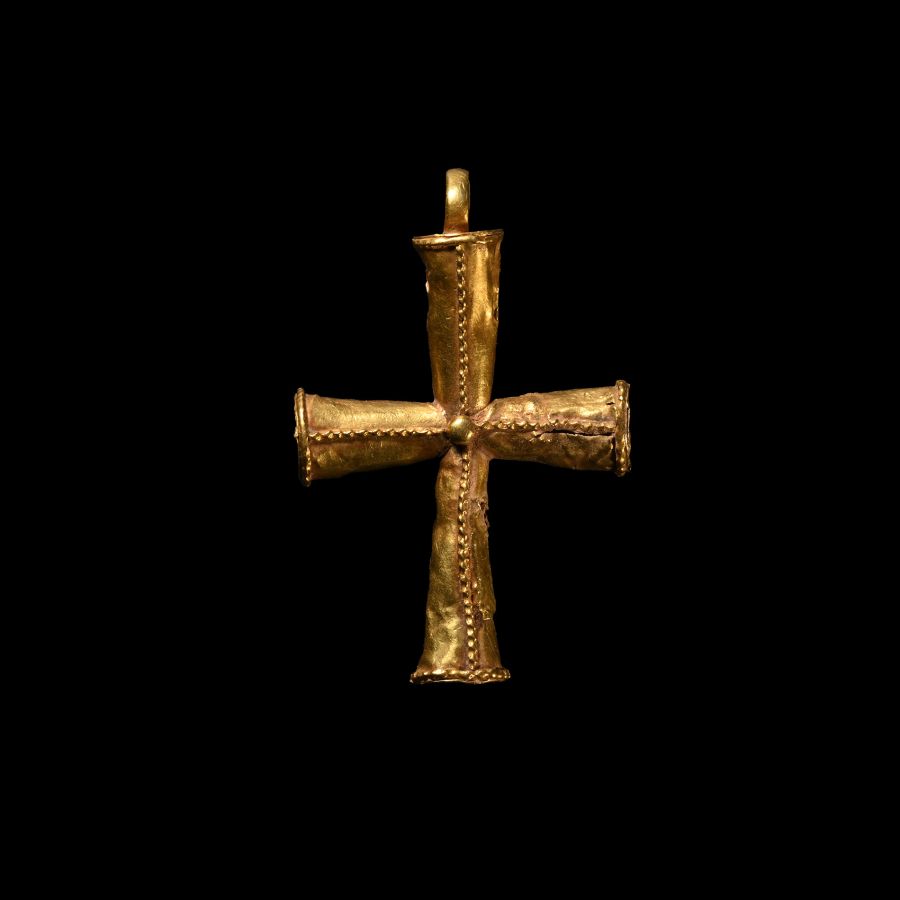
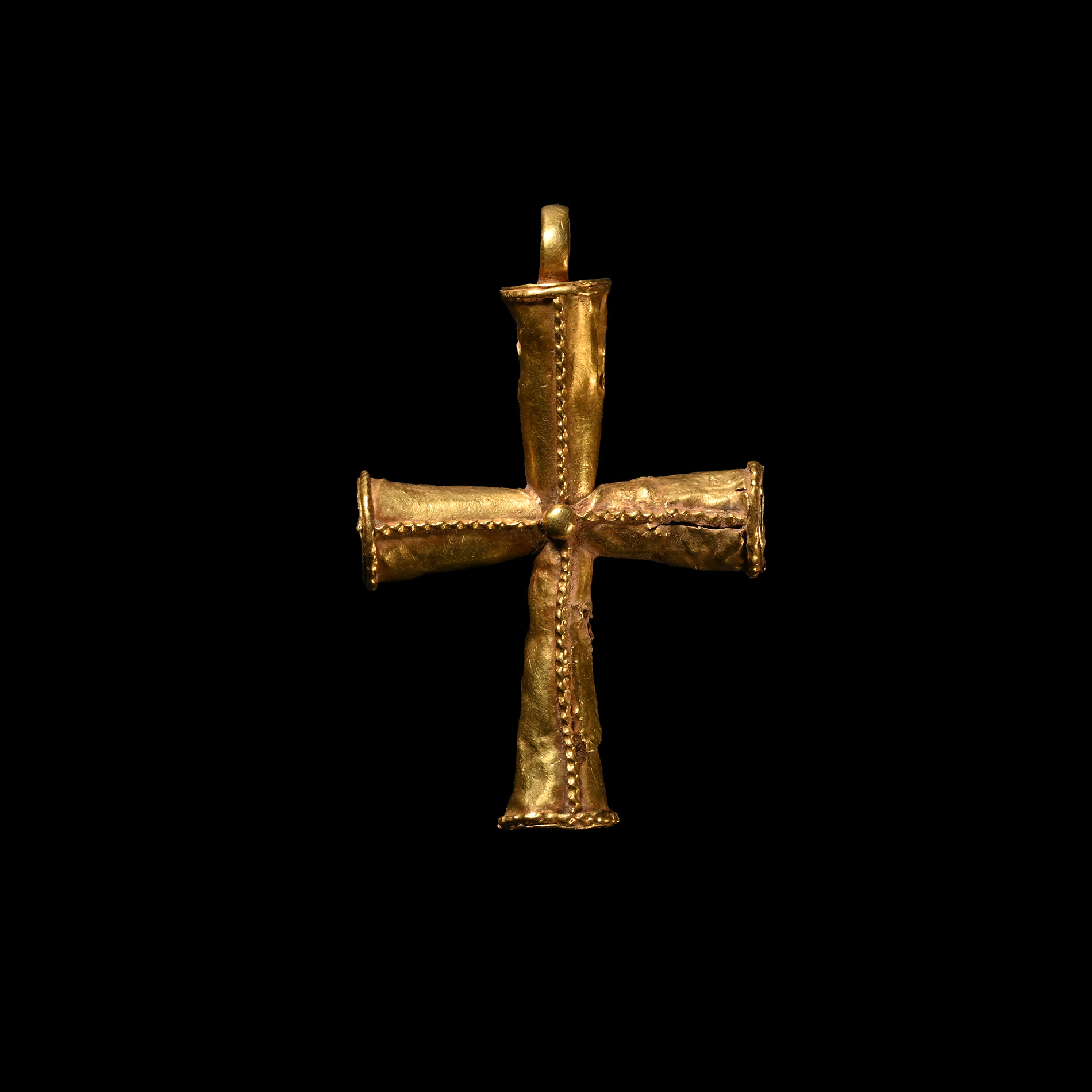
Byzantine Gold Cross Pendant
5TH-6TH CENTURY A.D.
1 5/8 in. (3.67 grams, 40 mm).
Hollow-formed sheet gold cruciform pendant with filigree ropework to the end of each expanding tubular arm, band of beading to the upper face of each arm and central pellet; bale to the upper end.
ProvenanceAcquired in the mid 1980s-1990s.
From the family collection of Mr S.A., Switzerland, thence by descent.
Private collection since the late 1990s.
This lot has been checked against the Interpol Database of stolen works of art and is accompanied by a search certificate number no.12114-218167.
Cf. Wamser, L., Die Welt von Byzanz - Europas Östliches Erbe, München, 2004, item 519, for type.
CONDITIONTimeLine Auctions follows a vetting process to ensure the authenticity and legality of all items, reinforcing our commitment to integrity and responsible trading. Each antiquity, antique, and coin lot undergoes thorough examination by a vetting committee of at least ten external specialists, professional trade association members, scientists, and archaeologists: Our Vetting Process
AUCTIONS:
TimeLine is a leading auction house specialising in antiquities, ancient art, collectables, natural history, coins, medals, and books. Our auctions offer museums, collectors, historians, and enthusiasts the opportunity to acquire unique and historically significant pieces.
-
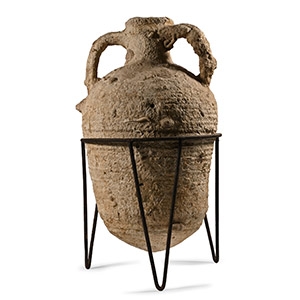
Byzantine Shipwreck Terracotta Wine Amphora
5th-7th century A.D.Sold for (Inc. bp): £468
With tapering ribbed sidewall and conical foot, domed shoulder, carinated mouth with two lateral strap handles; marine encrustation; with tripod display stand. 8.15 kg total, 56 cm high including stand
From a family collection mostly formed in the 1940s-1950s, thence by descent. -
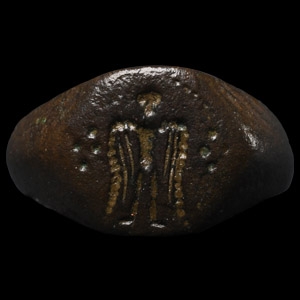
Byzantine Bronze Ring with Eagle
6th-8th century A.D.Sold for (Inc. bp): £169
With a D-section hoop expanding at the shoulders, hexagonal bezel with intaglio image of an eagle with wings spread, pellets to the field. 6.79 grams, 23.08 mm overall, 19.62 mm internal diameter (approximate size British S 1/2, USA 9 1/4, Europe 20.63, Japan 19)
Ex German art market, 2000s. Acquired from an EU collector living in London. From the collection of Surrey, UK, gentleman. -
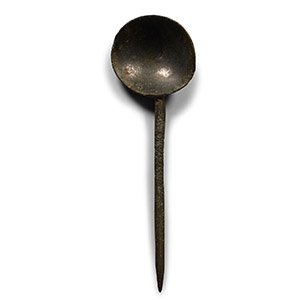
Byzantine Tinned Bronze Apothecary Spoon
6th-10th century A.D.Sold for (Inc. bp): £65
With broad bowl and spike handle. 6.65 grams total, 76 mm
Acquired on the European art market since the early 2000s. From the private Northern Ireland collection of R.M.
