
Loading, please wait...
LOT 0171
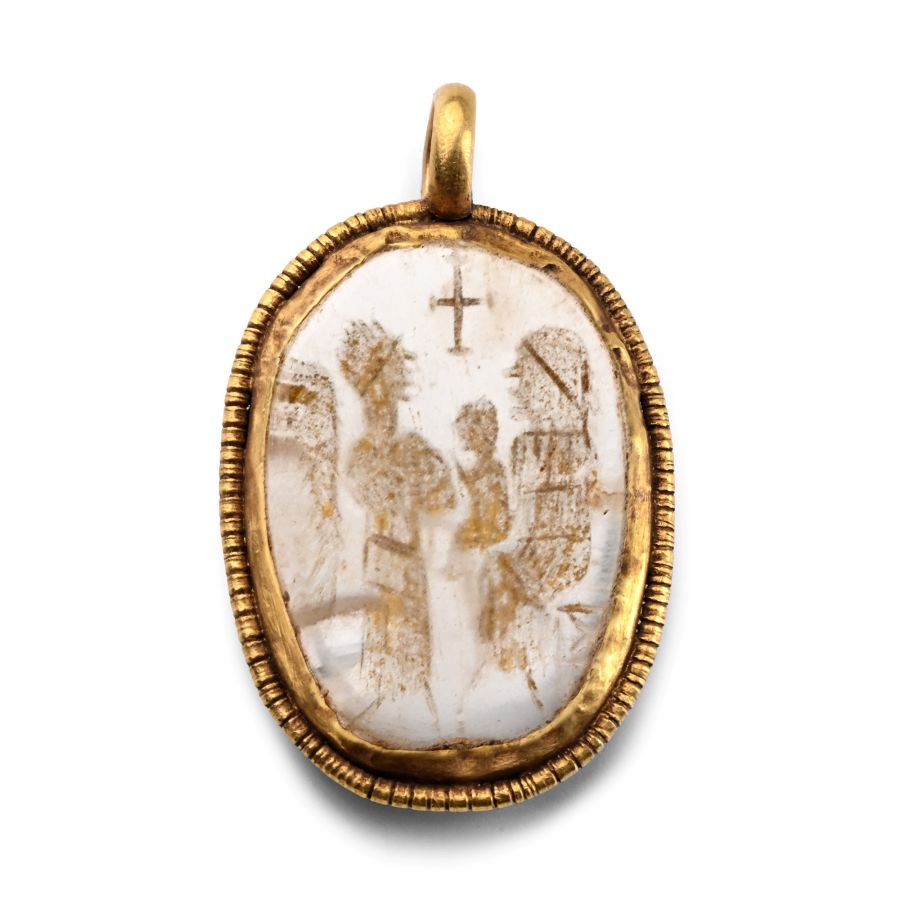
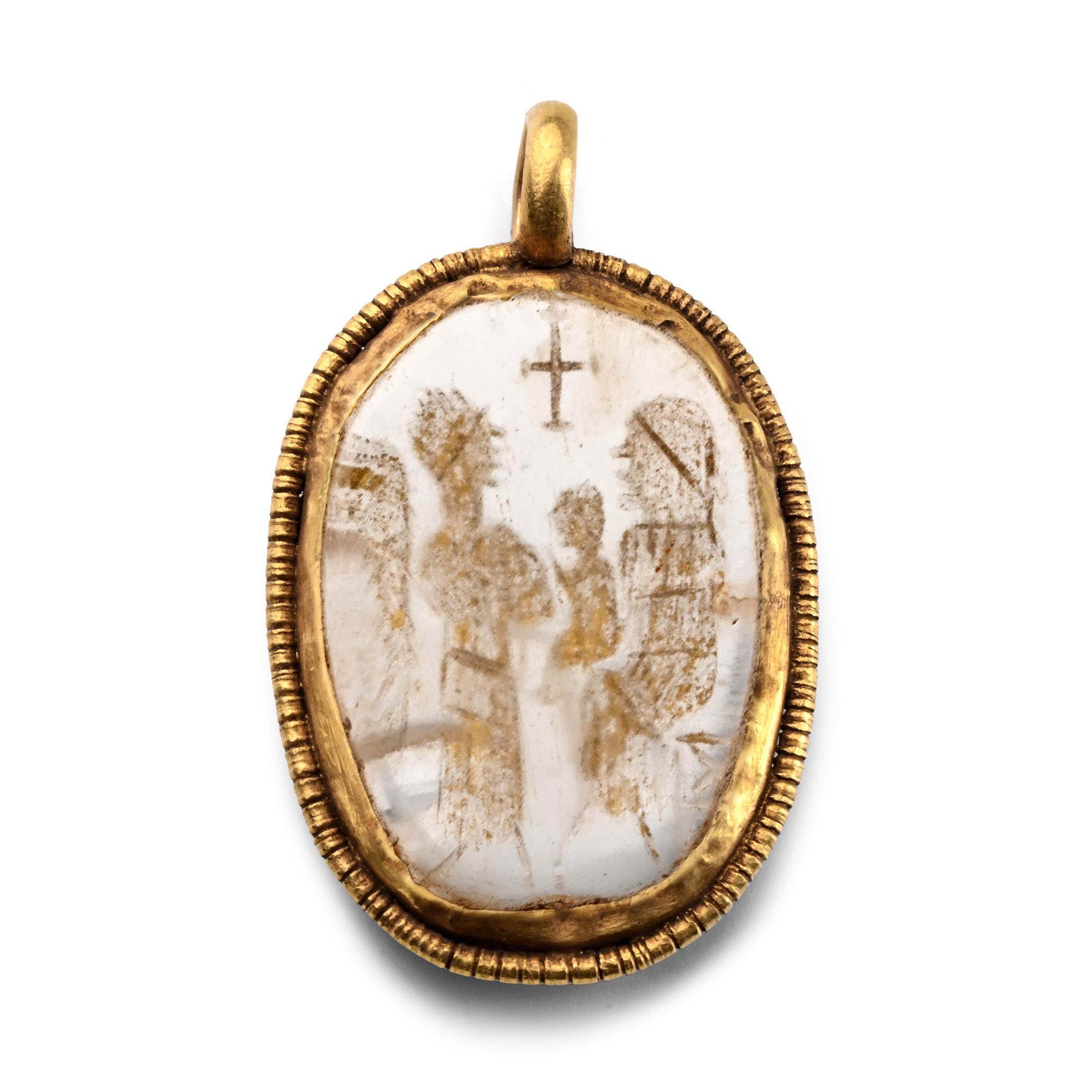
Byzantine Gold and Rock Crystal Pendant with Adoration Scene
LATE 6TH CENTURY A.D.
1 3/8 in. (9.35 grams, 36 mm).
Ellipsoid intaglio with adoration scene comprising of seated Virgin holding an infant Christ on her lap, opposite a standing crowned figure holding a shield(?), cross to the upper centre of the scene; set in a golden frame with ribbed border and suspension loop to the top.
ProvenanceEx an important collection of Christian artefacts, from a Surrey, UK, gentleman, 1980-1990s.
This lot has been checked against the Interpol Database of stolen works of art and is accompanied by a search certificate number no.12871-240788.
This lot has been cleared against the Art Loss Register database, and is accompanied by an illustrated lot declaration signed by the Head of the Antiquities Department, Dr Raffaele D'Amato.
Cf. Ross, M.C., Catalogue of the Byzantine and Early Mediaeval Antiquities in the Dumbarton Oaks Collection, Volume 2: Jewelry, Enamels and Art of the Migration Period, Washington, 2005, No. 179 M, pl. XCVIII.
CONDITIONTimeLine Auctions follows a vetting process to ensure the authenticity and legality of all items, reinforcing our commitment to integrity and responsible trading. Each antiquity, antique, and coin lot undergoes thorough examination by a vetting committee of at least ten external specialists, professional trade association members, scientists, and archaeologists: Our Vetting Process
AUCTIONS:
TimeLine is a leading auction house specialising in antiquities, ancient art, collectables, natural history, coins, medals, and books. Our auctions offer museums, collectors, historians, and enthusiasts the opportunity to acquire unique and historically significant pieces.
LOT 0171
Byzantine Gold and Rock Crystal Pendant with Adoration Scene
Sold for (Inc. bp): £4,680
-
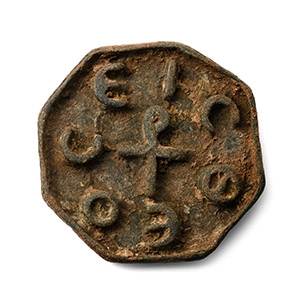
Byzantine Bronze Seal with Cross
6th century A.D.Sold for (Inc. bp): £1,235
Octagonal in plan with raise rim and loop handle to reverse (detached); reserved Christogram to centre surrounded by legend 'ЄIC ΘЄΟC' ([there is] one god). 114 grams total, 35-66 mm
Ex private European collection, 1980s. Private collection, Switzerland, acquired in 2000. This lot is accompanied by an illustrated lot declaration signed by the Head of the Antiquities Department, Dr Raffaele D'Amato. -
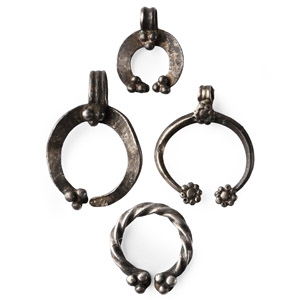
Byzantine Silver Pendant Collection
7th-11th century A.D.Sold for (Inc. bp): £247
Comprising of four penannular pendants with applied pelletted decoration; three with attachment loops. 8.6 grams total, 18-30 mm
UK private collection before 2000. Acquired on the UK art market. Private collection, London, UK. This lot is accompanied by an illustrated lot declaration signed by the Head of the Antiquities Department, Dr Raffaele D'Amato. -
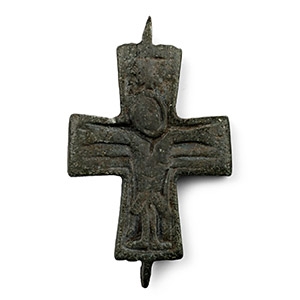
Byzantine Bronze Reliquary Cross Pendant Plate
10th-14th century A.D.Sold for (Inc. bp): £85
Low-relief Corpus Christi on the obverse, hinge loops above and below. 7.36 grams, 42 mm
Ex German art market, 2000s. Acquired from an EU collector living in London. From the collection of a Surrey, UK, gentleman. This lot is accompanied by an illustrated lot declaration signed by the Head of the Antiquities Department, Dr Raffaele D'Amato.
