
Loading, please wait...
LOT 0191
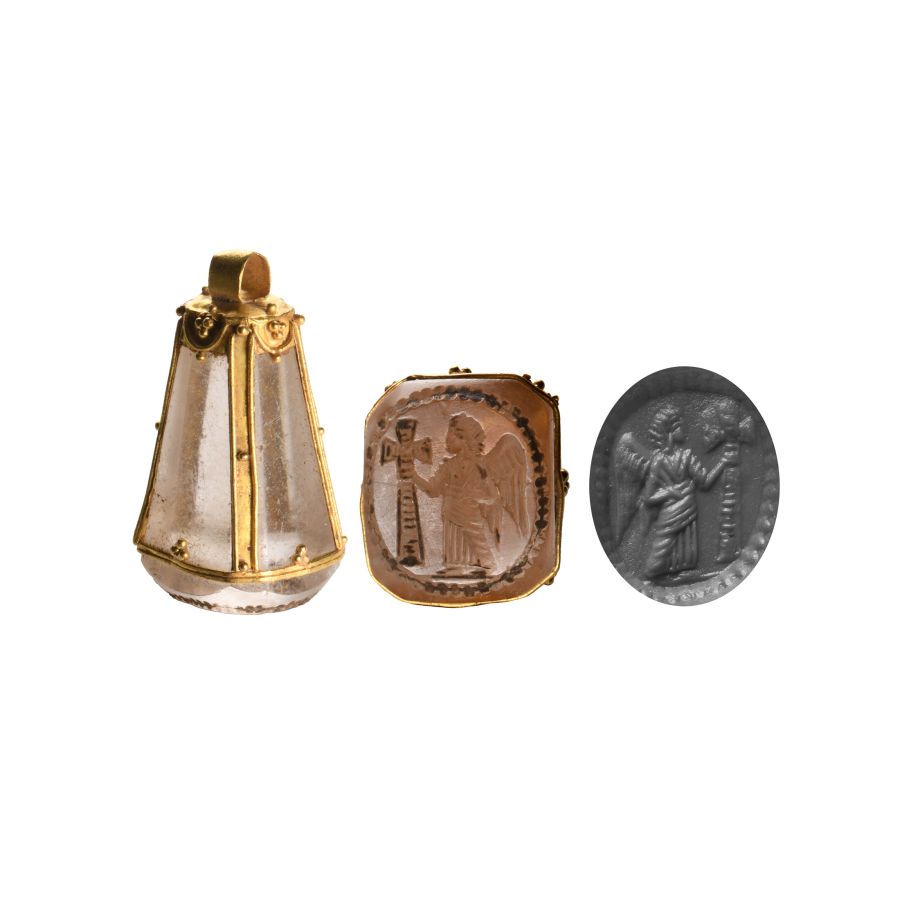
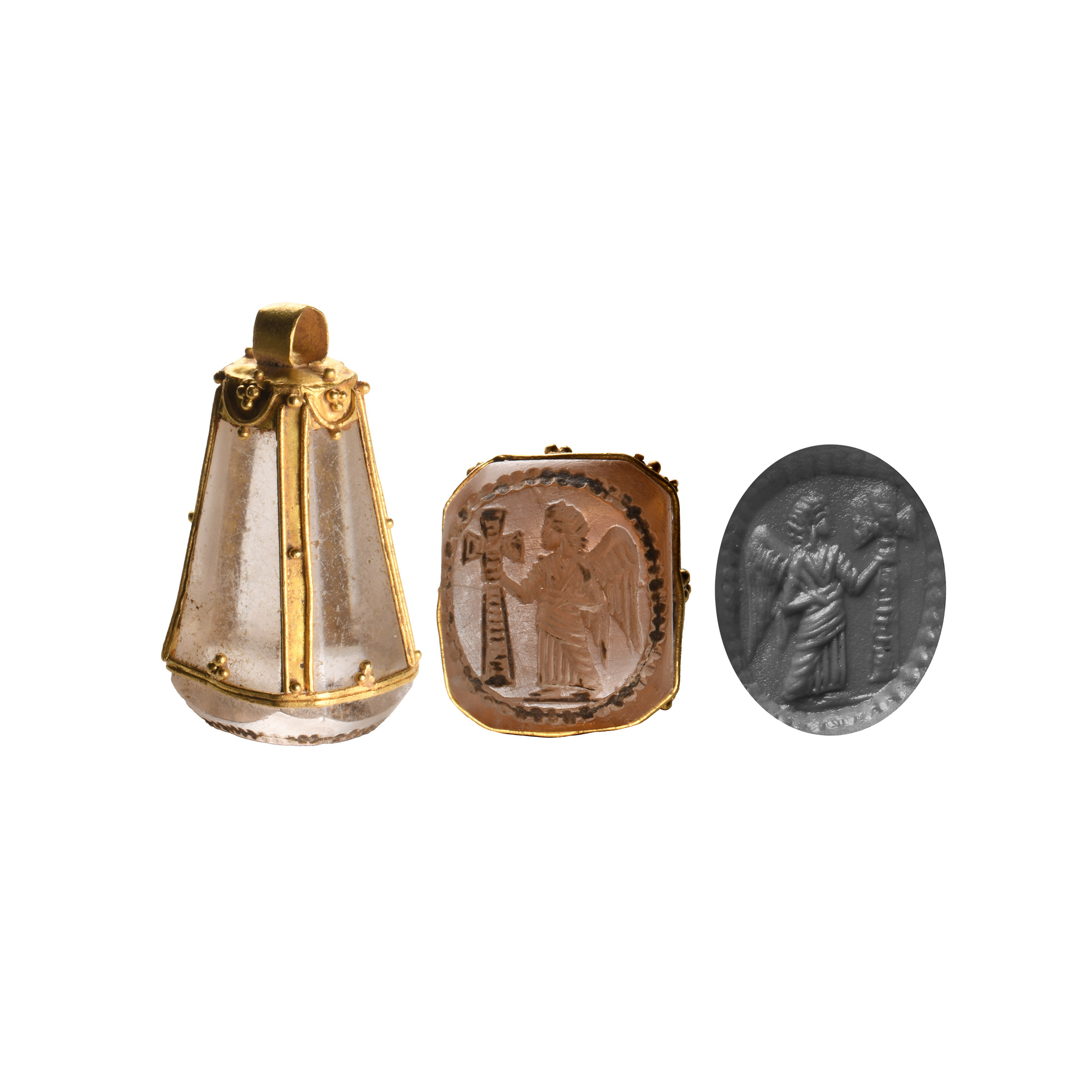
Byzantine Gold and Crystal Seal Pendant
6TH-7TH CENTURY A.D. OR LATER
1 1/8 in. (9.27 grams, 29 mm).
Composed of a tapering octagonal body, intaglio image of a robed and winged figure of Archangel Michael standing left, holding a Christian cross to base, granulated gold frame with suspension loop.
ProvenanceFrom the collection of a North American gentleman, formed in the 1990s.
This lot has been checked against the Interpol Database of stolen works of art and is accompanied by search certificate number no.11864-200658.
Cf. Ross, M.C., Catalogue of the Byzantine and Early Mediaeval Antiquities in the Dumbarton Oaks Collection, Volume 2: Jewelry, Enamels and Art of the Migration Period, Washington, 2005, pl.XCVIII, items 62,179, for similar engravings of an angel on a ring and a pendant; the same image appears on the coins of Anastasios I (491-518), see Wamser, L., Die Welt von Byzanz - Europas Östliches Erbe, München, 2004, item 44, 639 (ring).
FootnotesThe Roman motif of winged Victory bearing a laurel wreath was slowly replaced with the image of Archangel Michael carrying the victory cross when the Roman Empire converted to Christianity.
CONDITIONTimeLine Auctions follows a vetting process to ensure the authenticity and legality of all items, reinforcing our commitment to integrity and responsible trading. Each antiquity, antique, and coin lot undergoes thorough examination by a vetting committee of at least ten external specialists, professional trade association members, scientists, and archaeologists: Our Vetting Process
AUCTIONS:
TimeLine is a leading auction house specialising in antiquities, ancient art, collectables, natural history, coins, medals, and books. Our auctions offer museums, collectors, historians, and enthusiasts the opportunity to acquire unique and historically significant pieces.
-
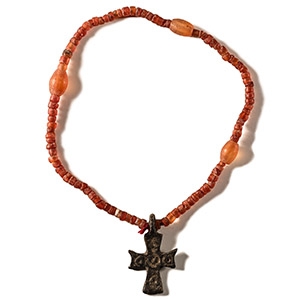
Byzantine Bead Bracelet with Cross
15th century A.D. or earlierSold for (Inc. bp): £169
Restrung; composed of annular and biconvex carnelian beads, together with a bronze Christian cross with the Five Wounds of Christ represented as ring-and-dot ornament. 4.28 grams, 18 cm long
Acquired 1980-2015. Ex Abelita family collection. -
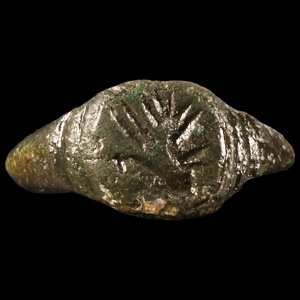
Byzantine Bronze Ring with Dove
Circa 5th-7th century A.D.Sold for (Inc. bp): £85
Composed of a slender hoop and sub-circular bezel engraved with a highly stylised figure of a dove. 2.02 grams, 18.51 mm overall, 14.84 mm internal diameter (approximate size British H, USA 3 3/4, Europe 6.18, Japan 6)
Private collection formed since the 1940s. UK art market. Property of an Essex gentleman. -
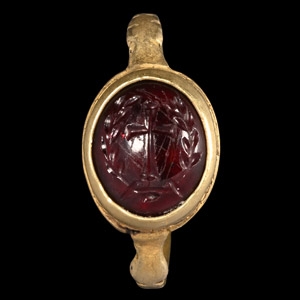
Byzantine Gold Ring with Engraved Cross Gemstone
6th-8th century A.D.Estimate: £2,000 - 3,000 (+bp*)
Opening Bid: £1,111
With baluster detailing to the shoulders, ellipsoid bezel with decorative band to the cell wall, inset garnet cabochon with intaglio design of a cross beneath a wreath and dish below. 3.35 grams, 21.60 mm overall, 19.51 mm internal diameter (approximate size British M, USA 6, Europe 12.46, Japan 12)
From a late Japanese specialist collector, 1970-2000s. This lot has been checked against the Interpol Database of stolen works of art and is accompanied by search certificate number no.11865-206975.
