
Loading, please wait...
LOT 0213
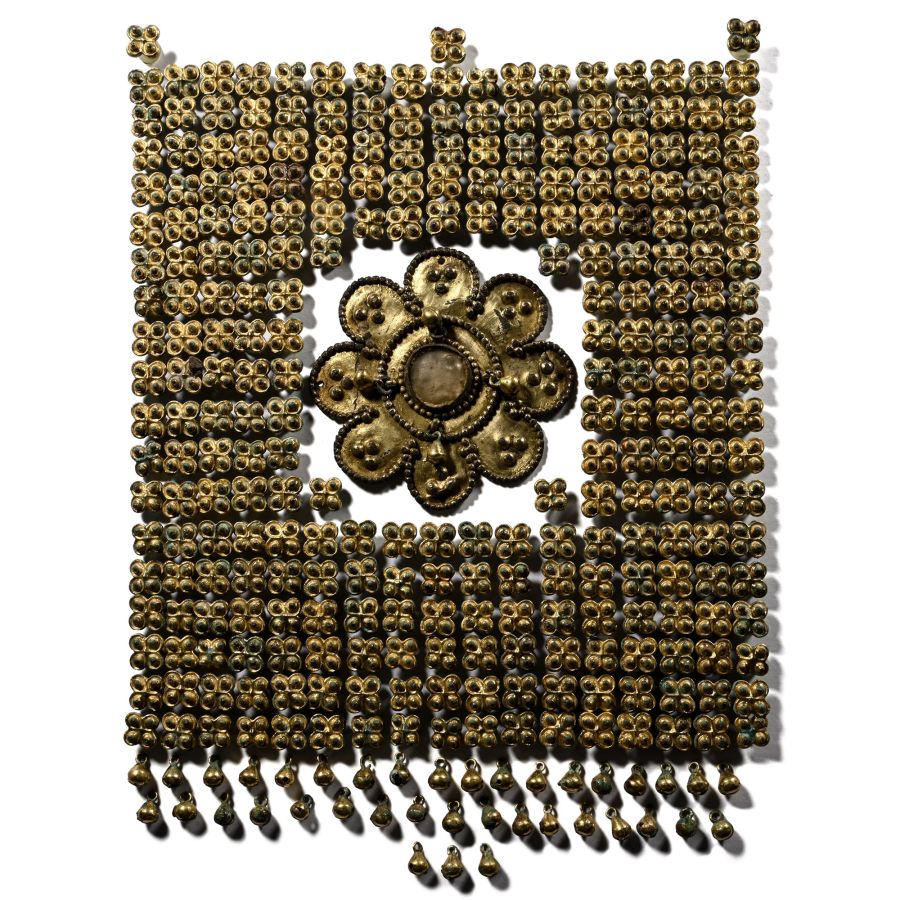
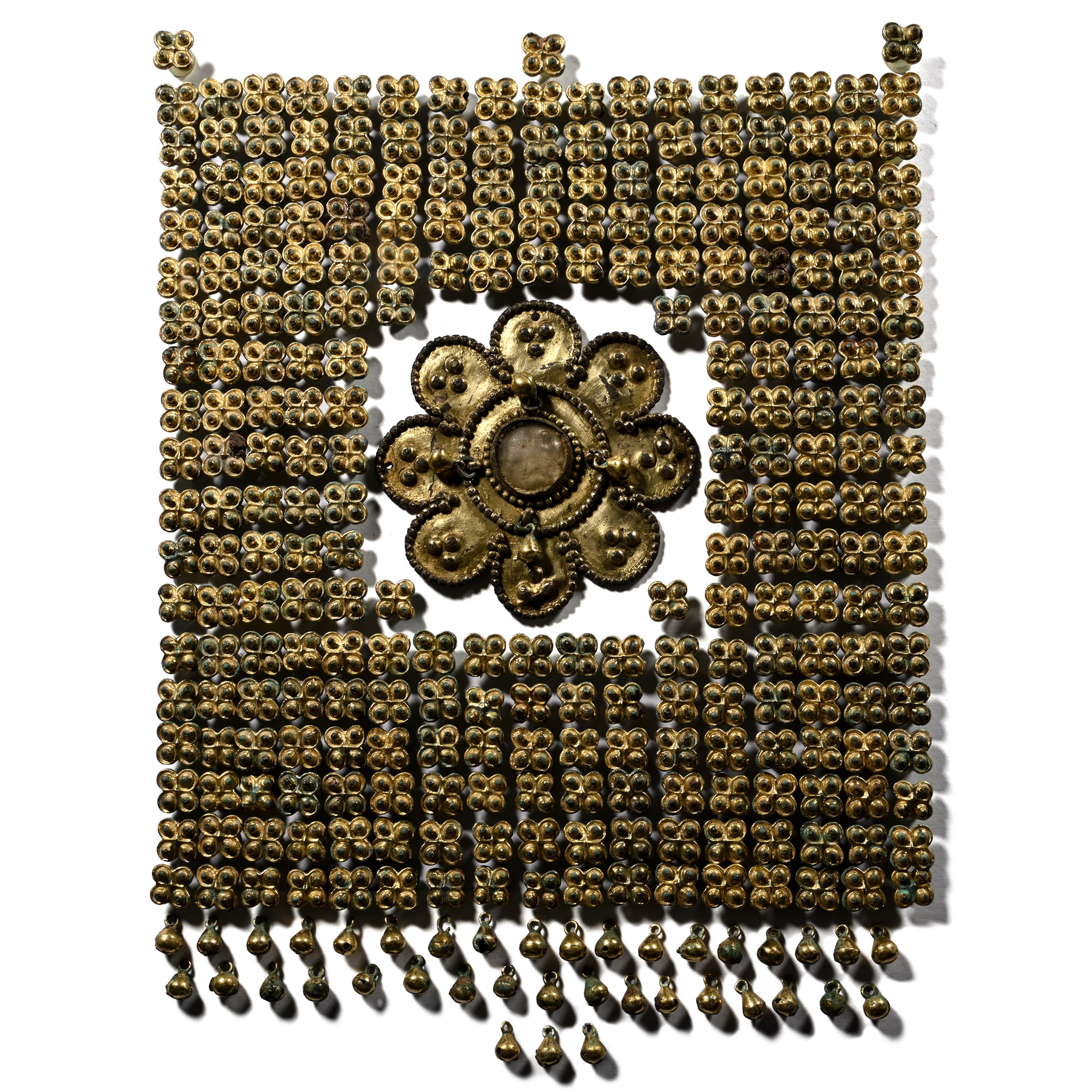
Byzantine Gilt Bronze Horse Harness Decoration Set
8TH-10TH CENTURY A.D.
3/8 - 3 5/8 in. (556 grams total, 11-92 mm).
Comprising: a large octofoil harness frontal plate with beaded rim and granulation; studs with quatrefoil plates; bell-shaped dangles.
ProvenanceFrom the private collection of a London gentleman, from his grandfather's collection formed before the early 1970s.
This lot has been checked against the Interpol Database of stolen works of art and is accompanied by a search certificate number no.12687-234699.
TimeLine Auctions follows a vetting process to ensure the authenticity and legality of all items, reinforcing our commitment to integrity and responsible trading. Each antiquity, antique, and coin lot undergoes thorough examination by a vetting committee of at least ten external specialists, professional trade association members, scientists, and archaeologists: Our Vetting Process
AUCTIONS:
TimeLine is a leading auction house specialising in antiquities, ancient art, collectables, natural history, coins, medals, and books. Our auctions offer museums, collectors, historians, and enthusiasts the opportunity to acquire unique and historically significant pieces.
-
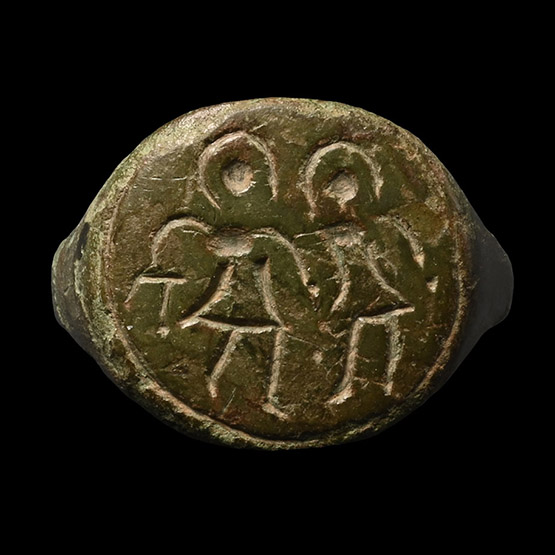
Byzantine Bronze Ring with Saints
11th century A.D.Sold for (Inc. bp): £442
Comprising a D-section hoop and a large discoid bezel with two stylised nimbate figures dressed in short tunics. 6.46 grams, 22.33 mm overall, 19.15 mm internal diameter (approximate size British R 1/2, USA 8 3/4, Europe 19.38, Japan 18)
Acquired on the UK and EU art market before 2000. From the private collection of a Surrey, UK, gentleman.
The oval hoop, in this category of rings, gradually widens into a full shoulder and massive flattened head. The bezel is ellipsoidal, decorated with stylised images, most probably of military saints, invoking protection and blessing. -
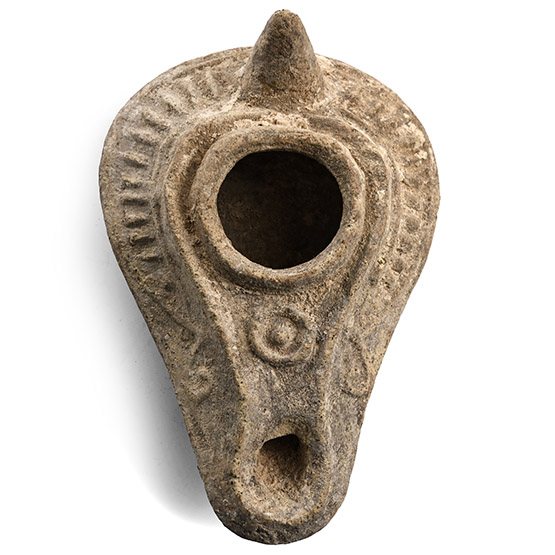
Byzantine Terracotta Oil Lamp
5th-7th century A.D.Sold for (Inc. bp): £98
Slipper-shaped in plan with spike handle, raised rim to the filler hole, broad shoulder with raised radiating bars, stub nozzle with ring-and-dot above, low basal ring. 72 grams, 97 mm
From the Lloyd and Jeanne Raport collection, Washington, D.C. and Florida, USA, formed between 1972-2000. Acquired through Bonhams, London, UK. -
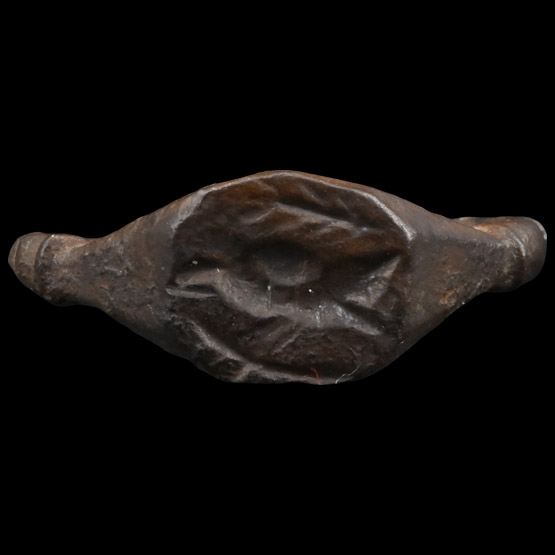
Byzantine Bronze Ring with Dove
12th-15th century A.D.Sold for (Inc. bp): £26
With slender hoop and baluster to each shoulder, ellipsoid bezel with incuse perching bird motif. 5.12 grams, 25.42 mm overall, 21.22 mm internal diameter (approximate size British U, USA 10, Europe 22.52, Japan 21)
Ex German art market, 2000s. Acquired from an EU collector living in London. From the collection of a Surrey, UK, gentleman.
