
Loading, please wait...
LOT 0183
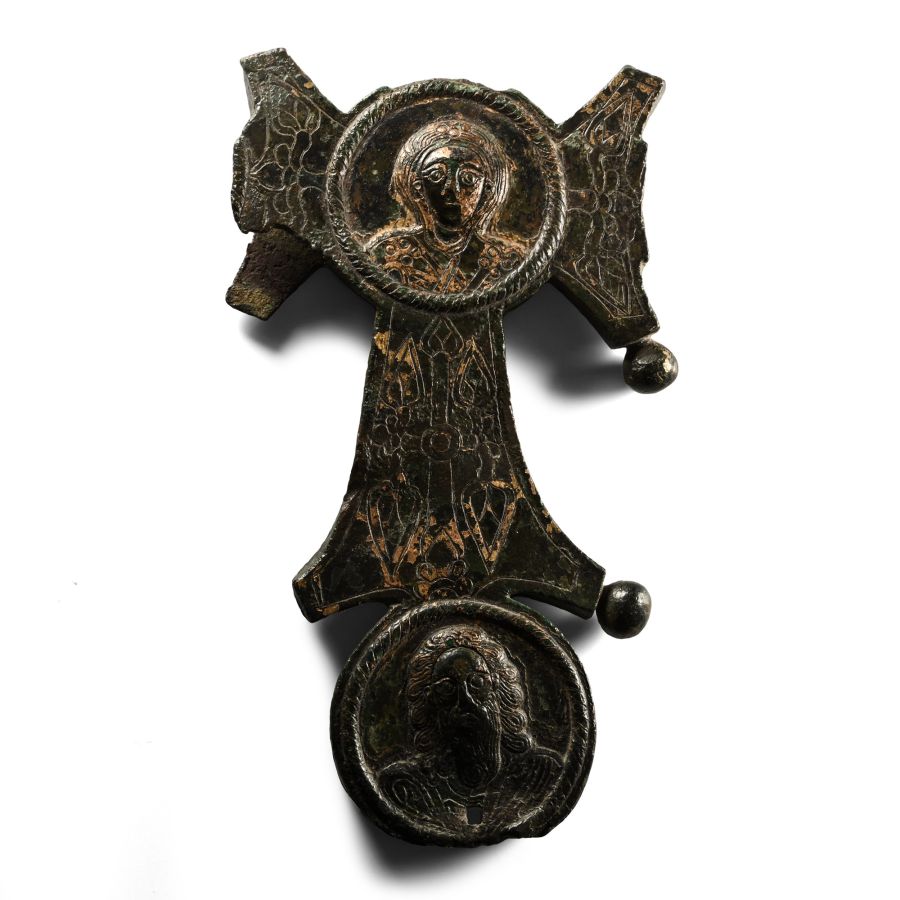
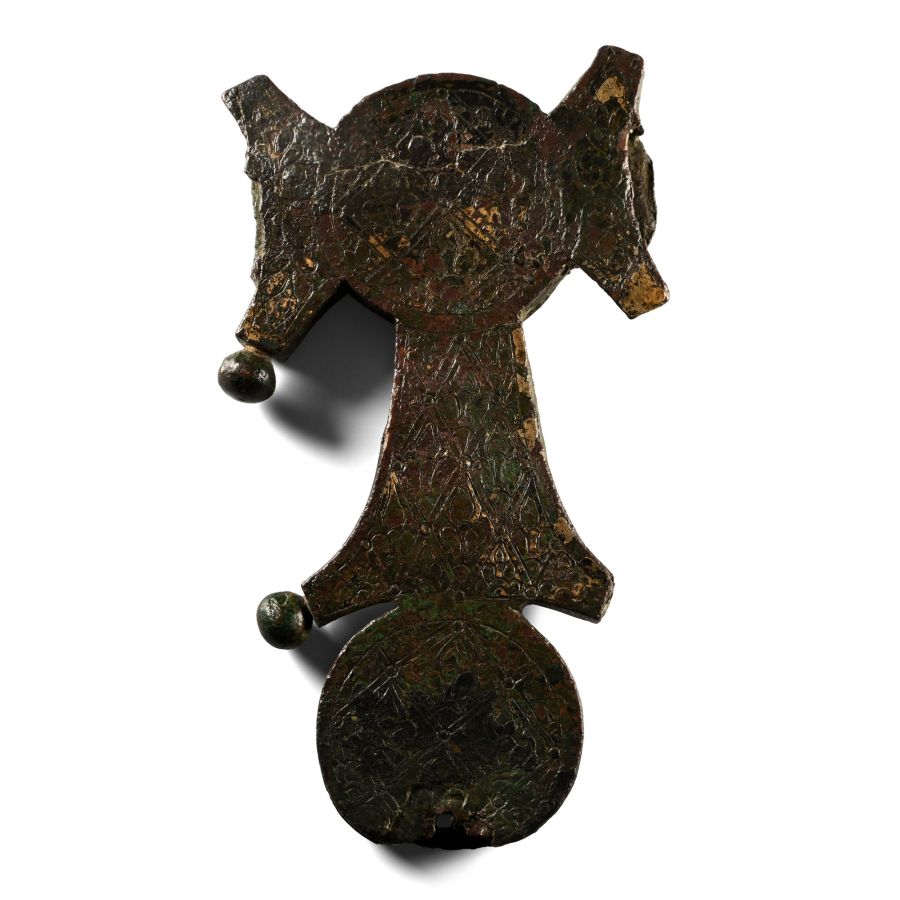
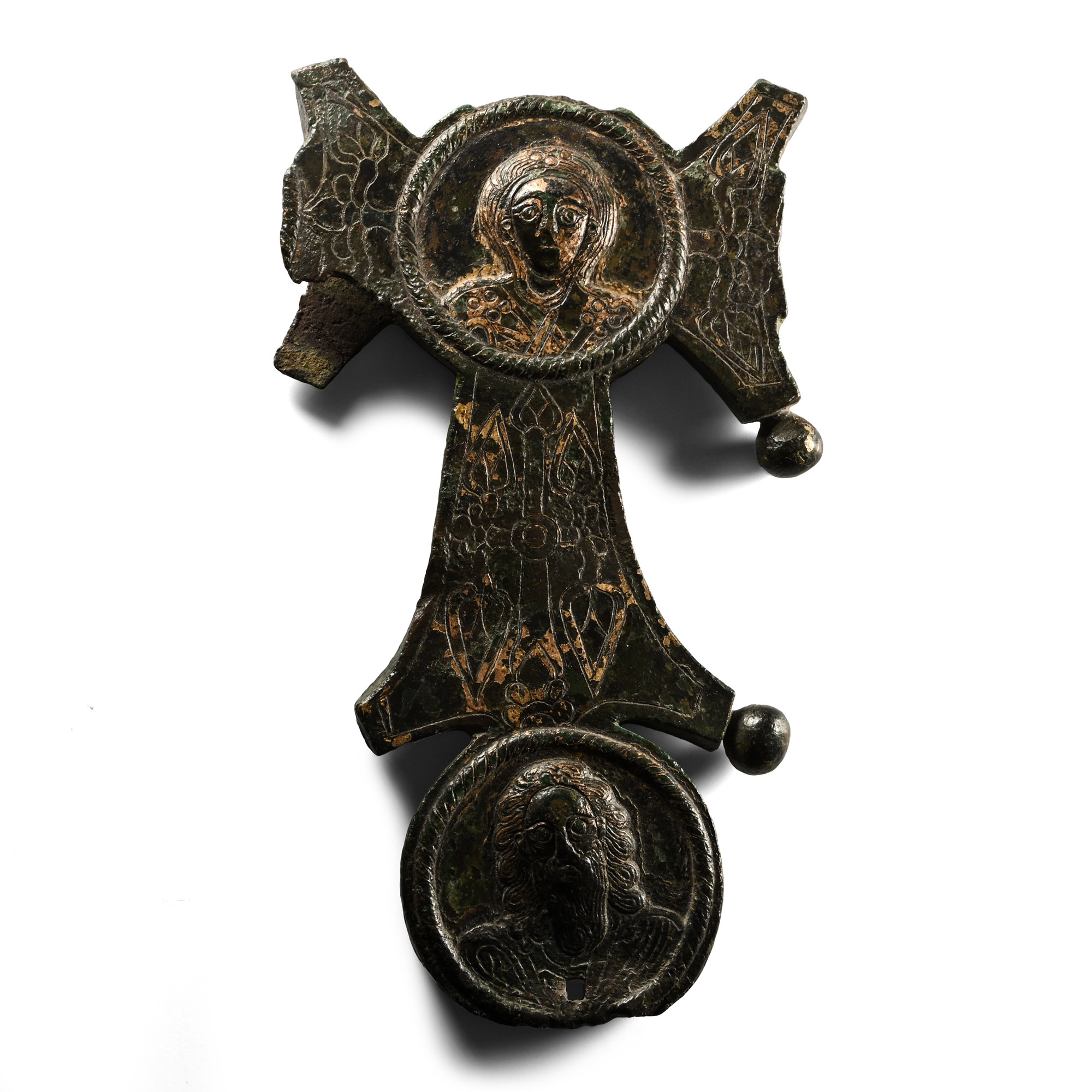
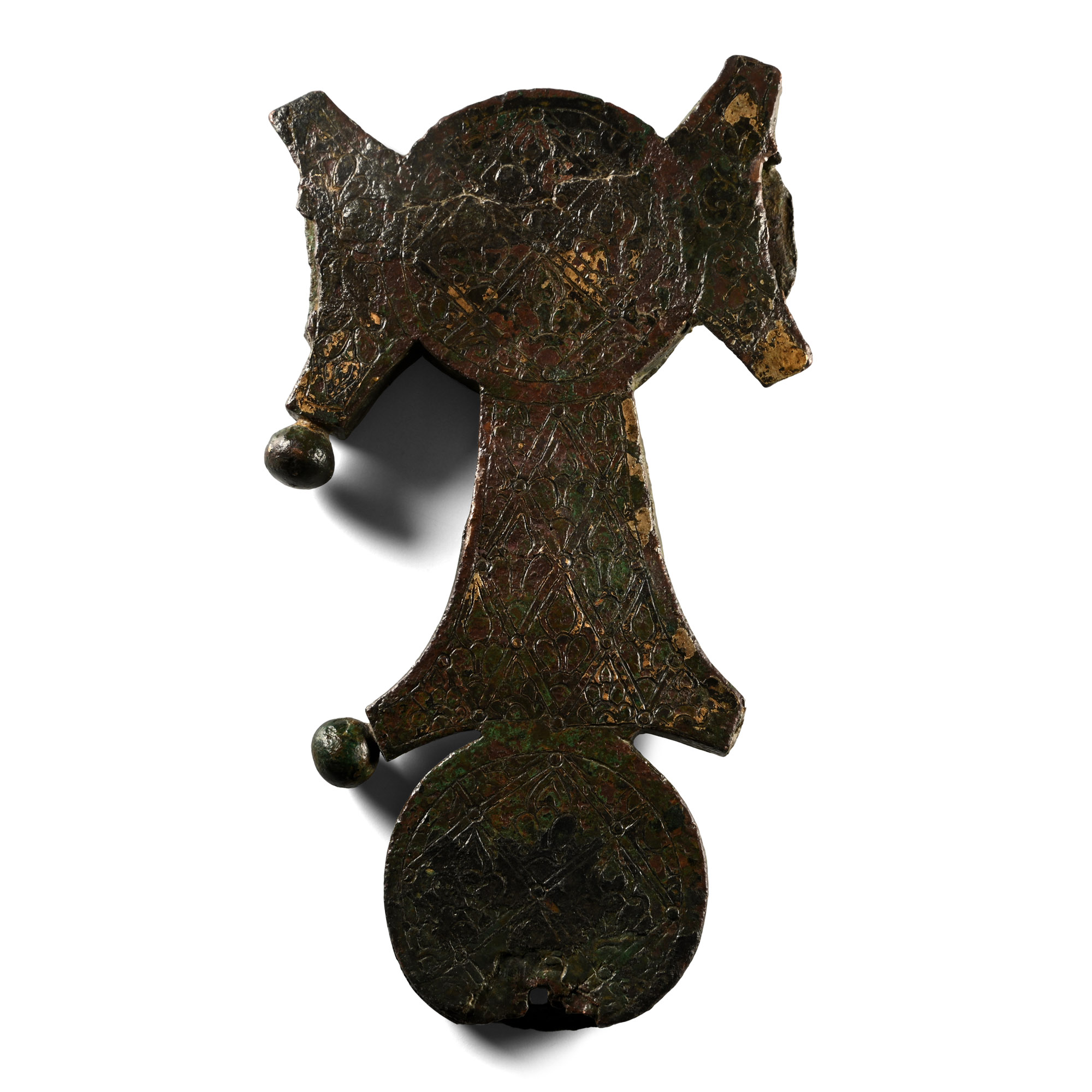
Byzantine Gilt Bronze Altar Cross with Two Medallions
11TH CENTURY A.D.
5 3/8 in. (153 grams, 13.8 cm).
Hollow-formed cross fragment with low-relief ornament; obverse with facing veiled female bust within a ropework tondo, cruciform design to the lower arm and second tondo with facing bearded bust, foliage to the lateral arms; reverse with geometric saltire bands; knop finials to the arms (two present) and slots for attachment of additional features. [No Reserve]
Provenancewith Rupert Wace Ltd.
This lot is accompanied by an illustrated lot declaration signed by the Head of the Antiquities Department, Dr Raffaele D’Amato.
TimeLine Auctions follows a vetting process to ensure the authenticity and legality of all items, reinforcing our commitment to integrity and responsible trading. Each antiquity, antique, and coin lot undergoes thorough examination by a vetting committee of at least ten external specialists, professional trade association members, scientists, and archaeologists: Our Vetting Process
AUCTIONS:
TimeLine is a leading auction house specialising in antiquities, ancient art, collectables, natural history, coins, medals, and books. Our auctions offer museums, collectors, historians, and enthusiasts the opportunity to acquire unique and historically significant pieces.
-
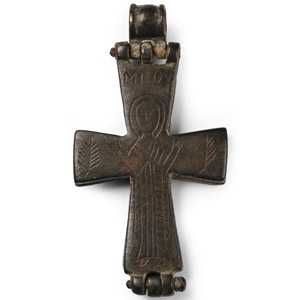
Byzantine Bronze Reliquary Cross Pendant
10th-12th century A.D.Sold for (Inc. bp): £416
Enkolpion with ribbed loop and hinges, engraved orans image to each face: obverse with Jesus and 'ICXC' legend, reverse with Mary and 'MP-ΘC' legend. 34.2 grams, 66 mm
Ex German art market, 2000s. Acquired from an EU collector living in London. From the collection of Surrey, UK, gentleman. This lot is accompanied by an illustrated lot declaration signed by the Head of the Antiquities Department, Dr Raffaele D’Amato. -
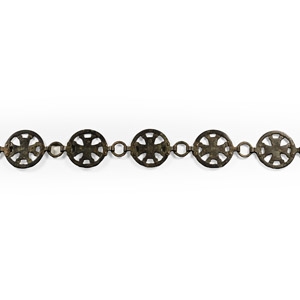
Byzantine Bronze Belt with Openwork Crosses
6th-7th century A.D.Sold for (Inc. bp): £195
Formed from nine openwork bronze discs, each with a central cross botonny and incised ring-and-dot motifs, with connecting rings and separate loops; tongue-shaped strap end with riveted rear plate; round-section buckle loop with tongue curved over the forward edge. 216 grams, 69.3 cm
Acquired on the London art market before 1995. From a Russian art collector, London, UK. Property of a Californian, USA, collector. This lot is accompanied by an illustrated lot declaration signed by the Head of the Antiquities Department, Dr Raffaele D’Amato. -
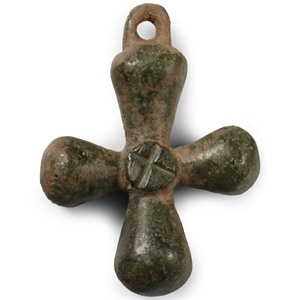
Byzantine Bronze Cross Pendant
10th-12th century A.D.Sold for (Inc. bp): £117
Equal-arm type with saltire on a central disc panel and four radiating bulbous arms. 38.39 grams, 45 mm
Ex German art market, 2000s. Acquired from an EU collector living in London. From the collection of Surrey, UK, gentleman. This lot is accompanied by an illustrated lot declaration signed by the Head of the Antiquities Department, Dr Raffaele D’Amato.
