
Loading, please wait...
LOT 0223
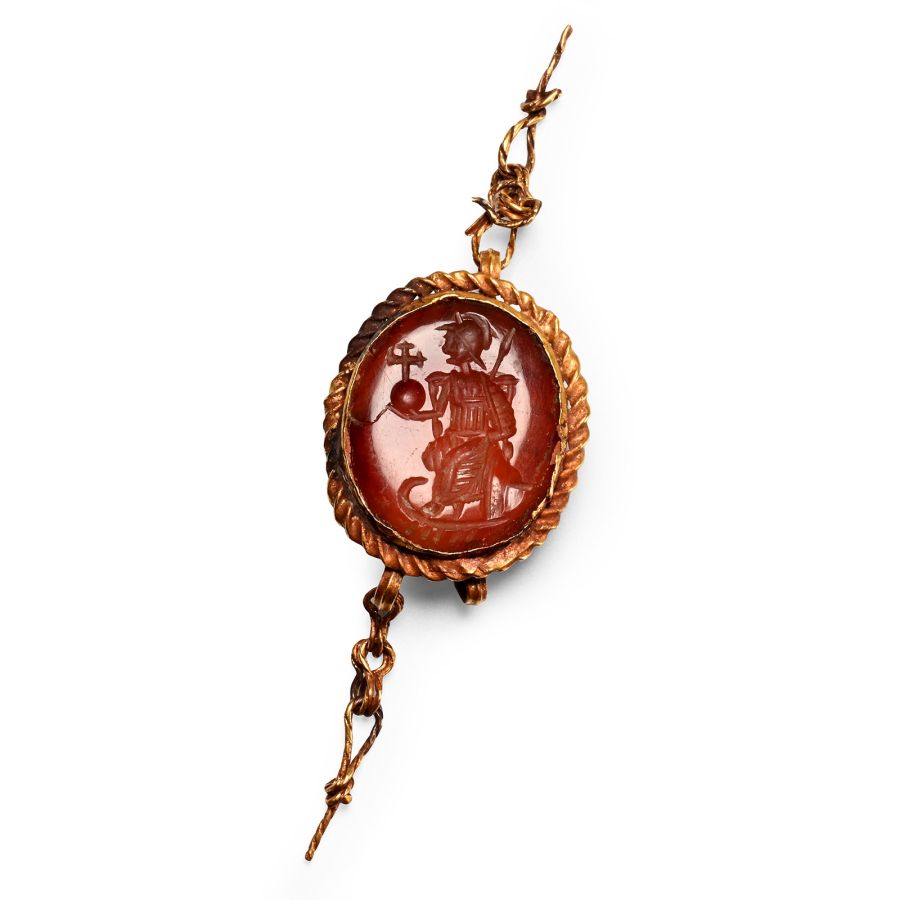
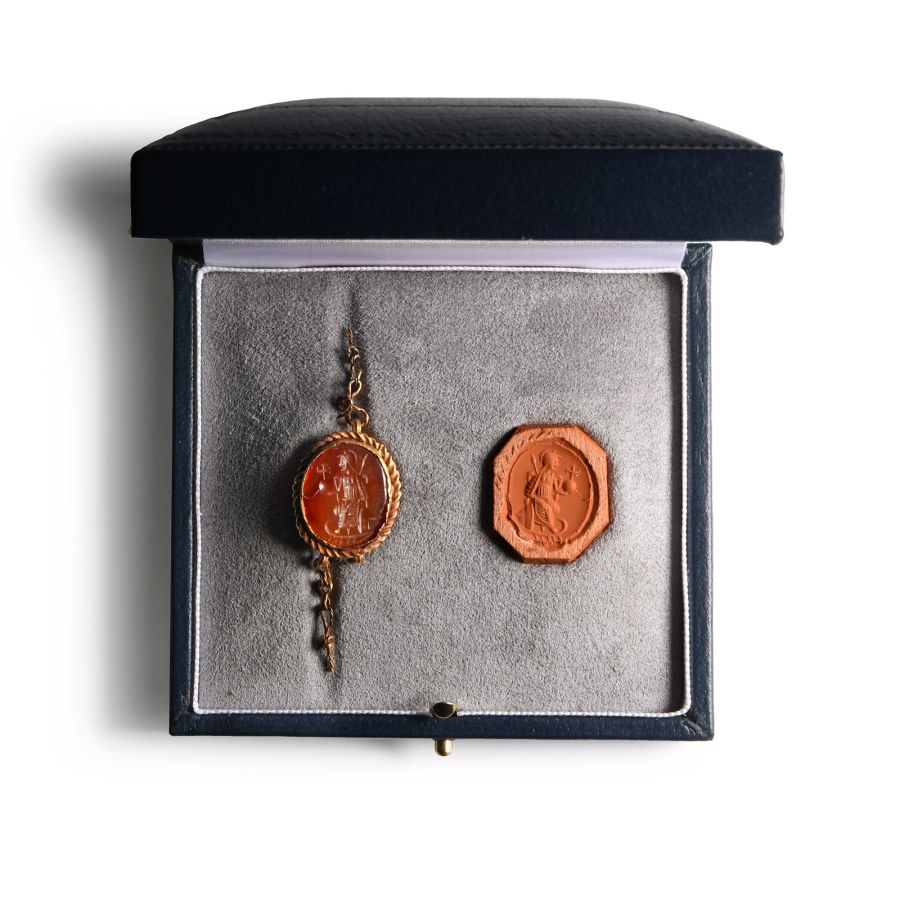
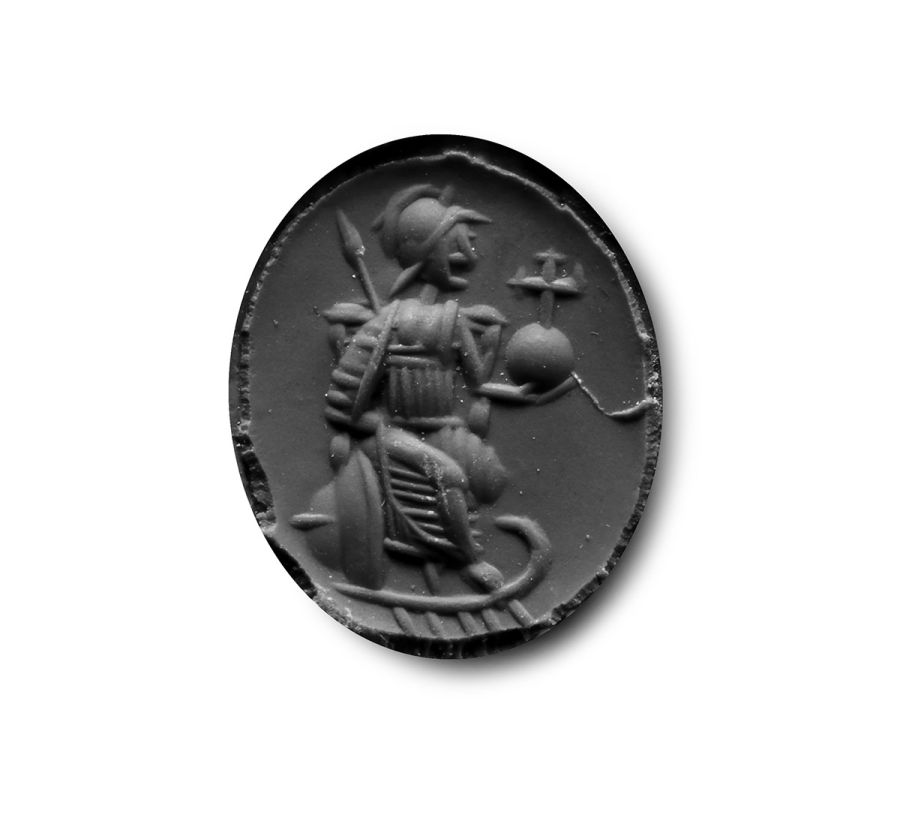
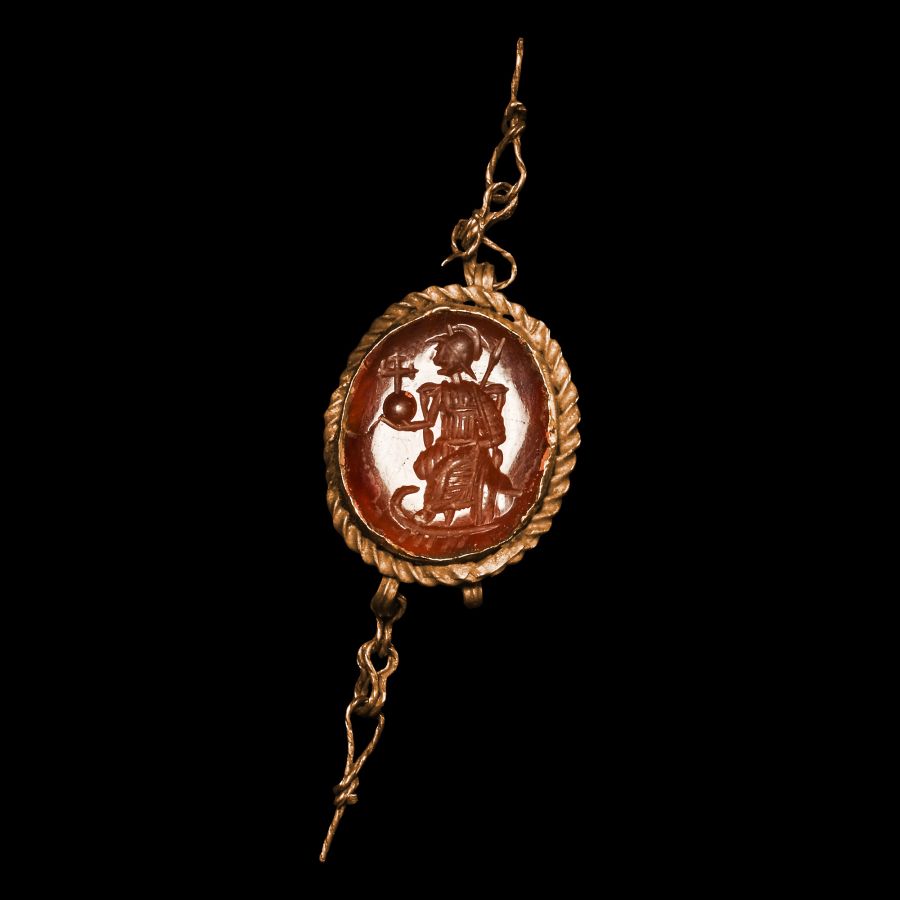
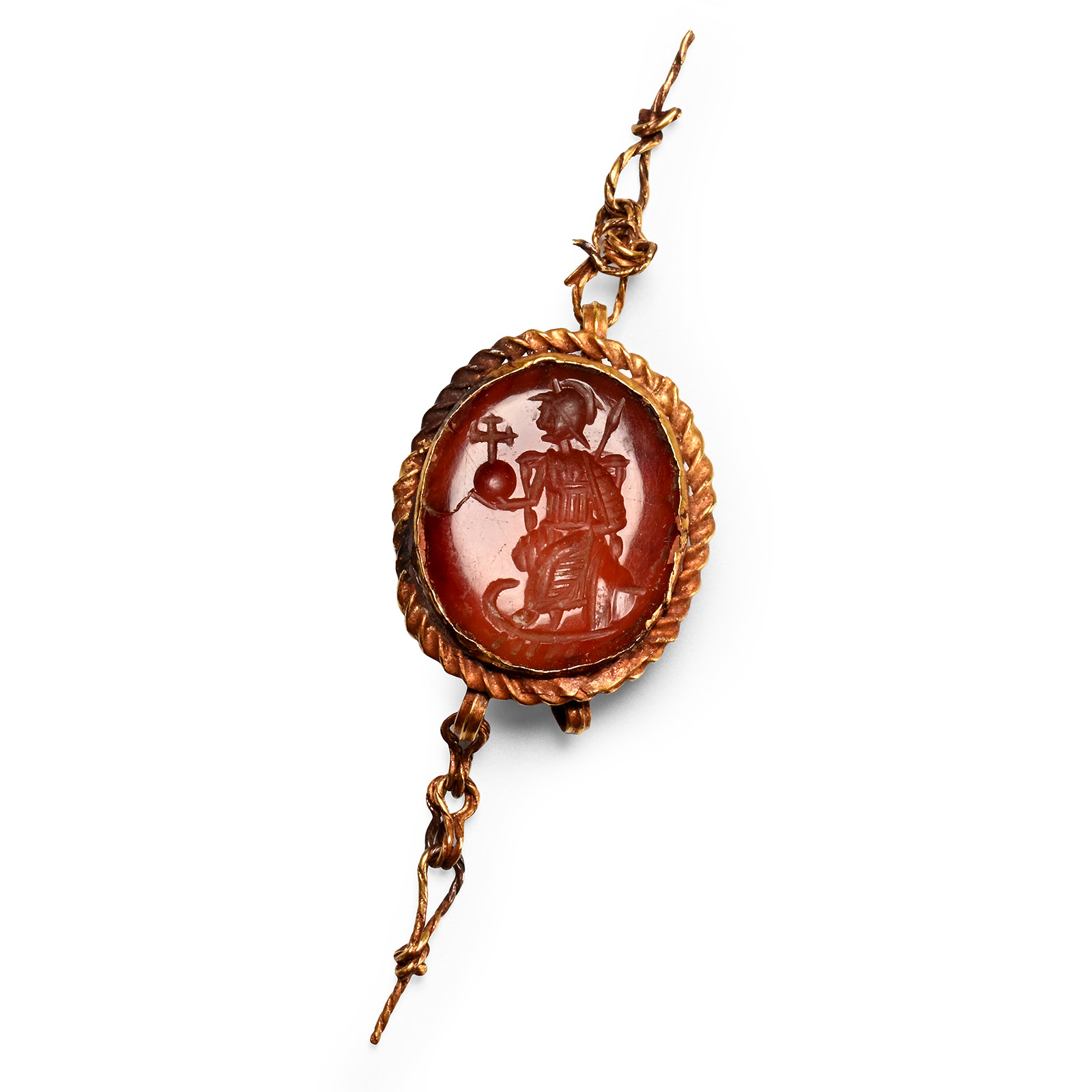
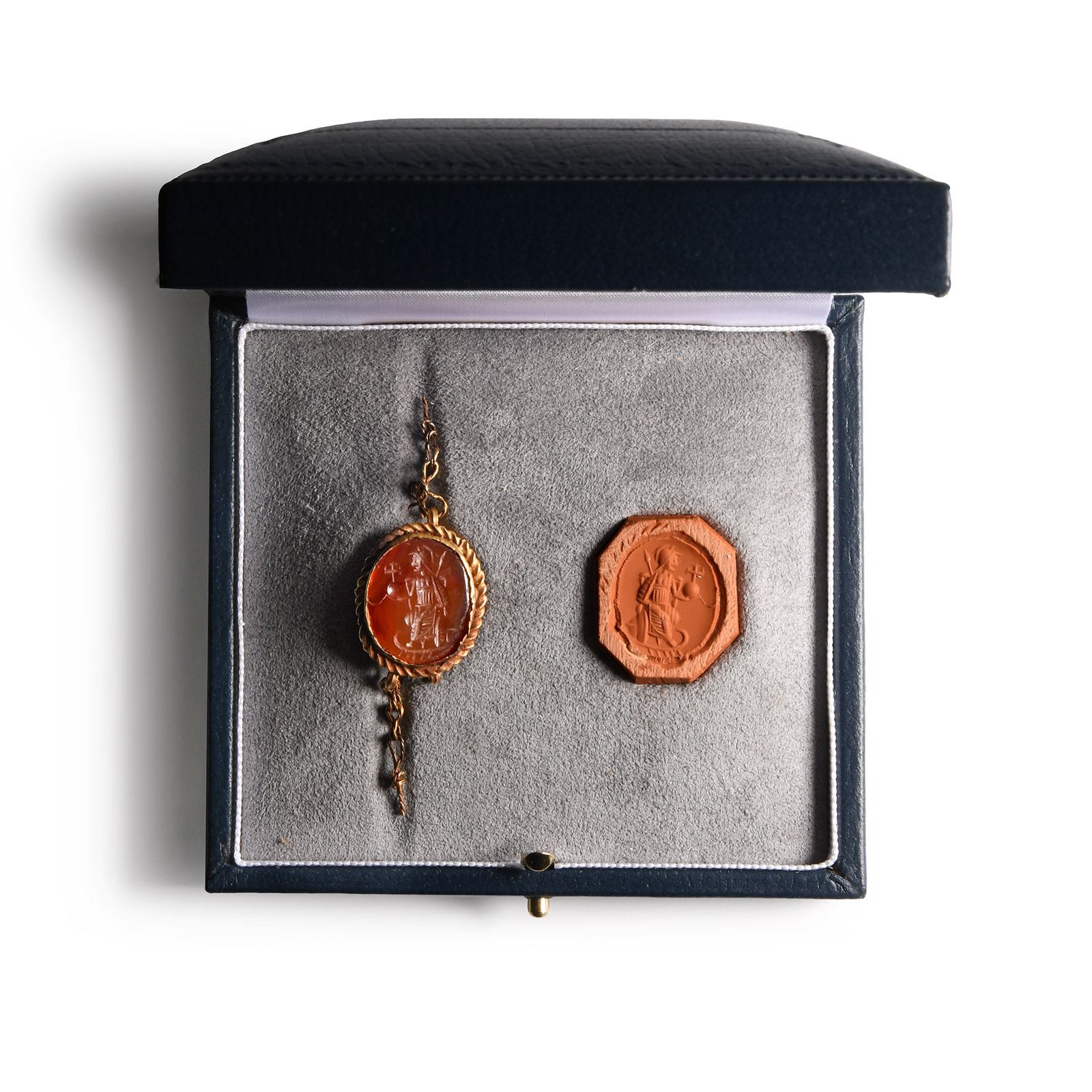
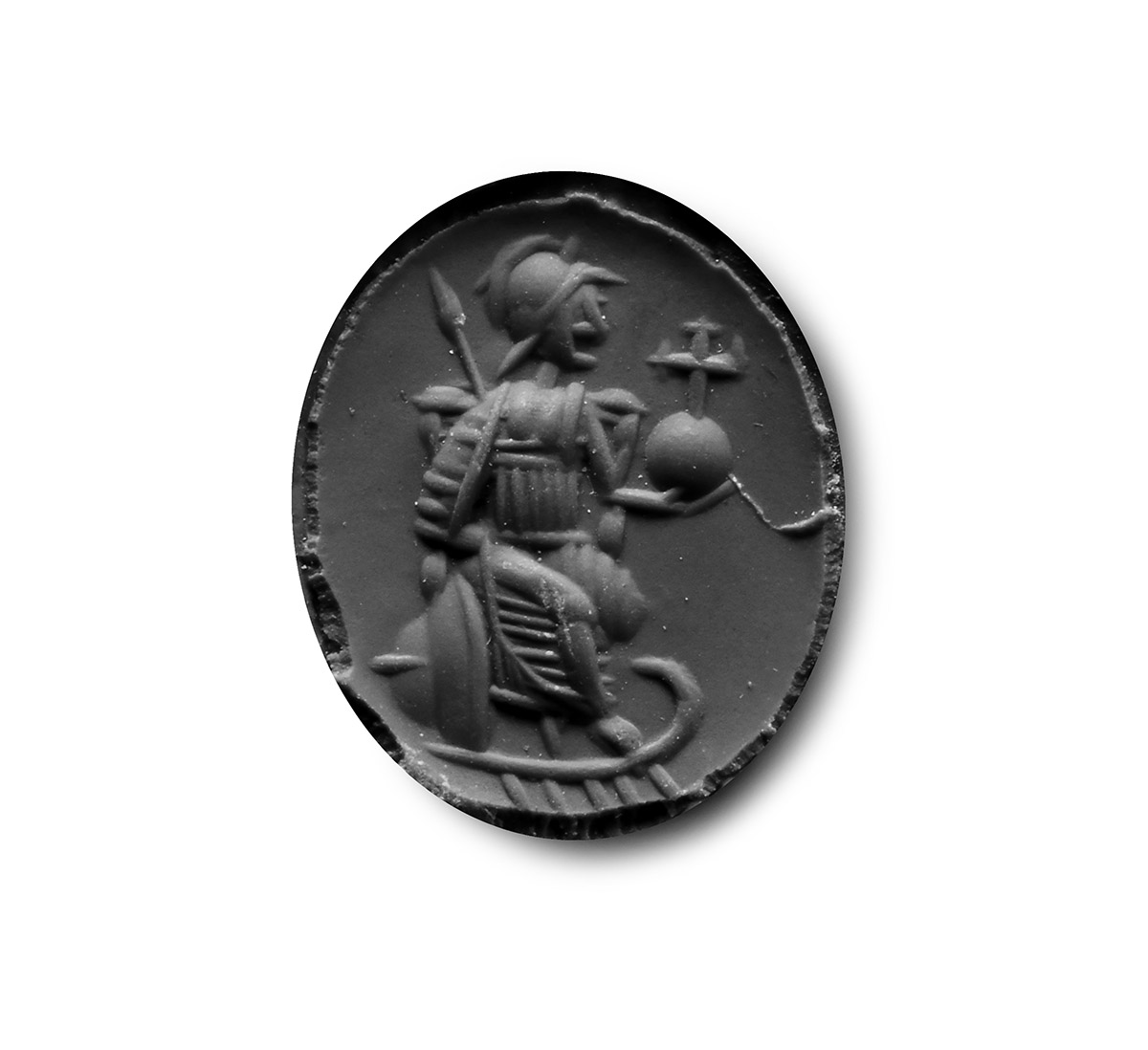
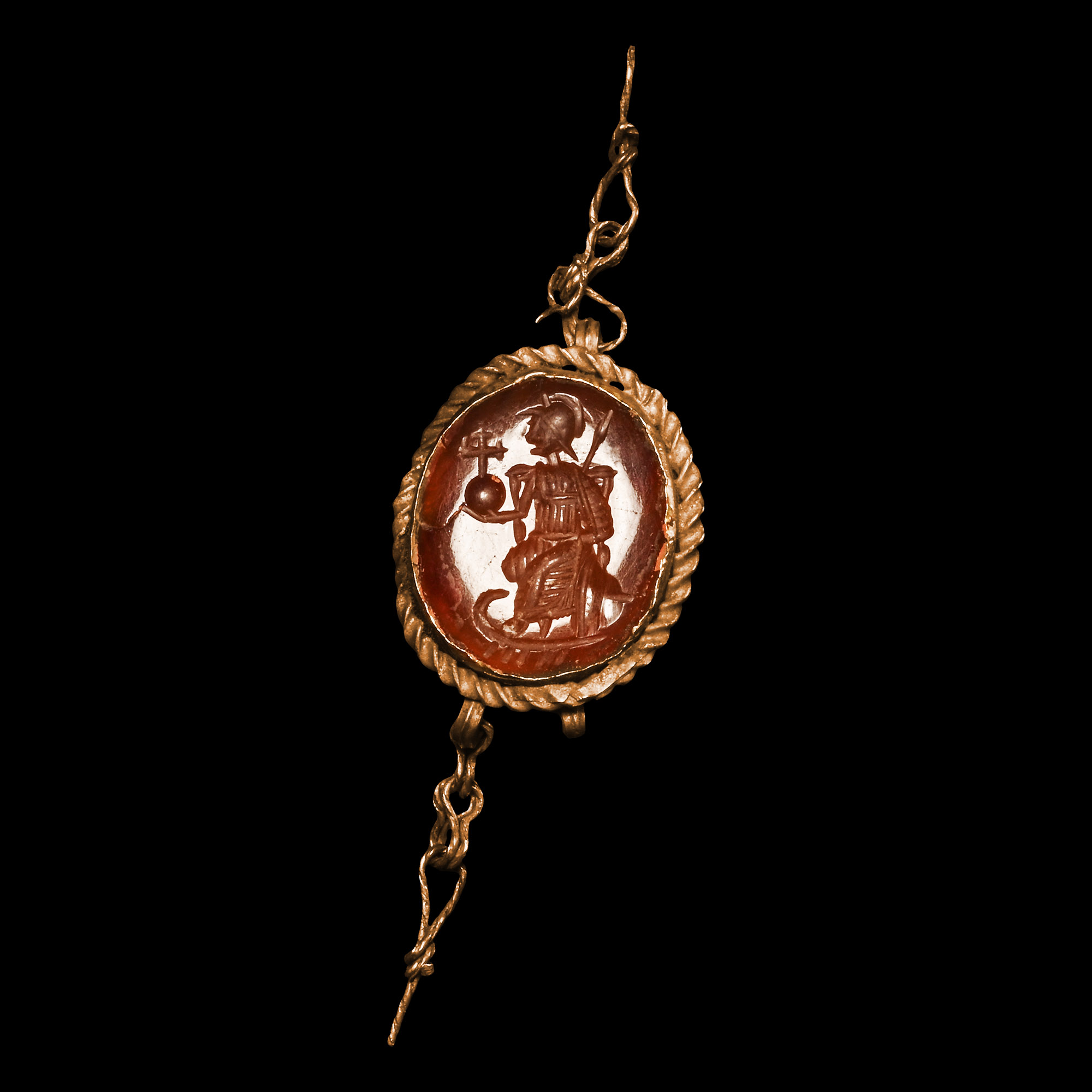
Byzantine Gemstone with the Personification of Constantinople
5TH CENTURY A.D.
2 3/8 in. (2.86 grams, 59 mm).
Carnelian cabochon in gold cell with ropework border, ribbed loop and chain sections; intaglio figure of Constantinople standing wearing full panoply of armour with crested helmet, holding an oval shield, a spear and supporting a globus cruciger; supplied with an impression of the seal and housed in a custom-made display case.
ProvenanceAcquired in the late 1980s-early 1990s.
Important North West London collection.
Accompanied by an academic report by Dr Raffaele D'Amato.
This lot has been checked against the Interpol Database of stolen works of art and is accompanied by a search certificate number no.11933-210475.
Cf. similar specimens in Spier, J.B., Late Antique and Early Christian Gems, Wiesbaden, 2007, pl.69, nos.561-562; for similar iconography see Zalesskaya, V.N., Early Byzantine Glyptic Art in the Hermitage Collection, Saint Petersburg, 2001, pp.175-176, fig.13; Demandt, A., Engemann, J., Imperator Caesar Flavius Constantinus - Konstantin der Grosse, Mainz, 2007, p.172, on various iconographies of personification of Constantinople.
FootnotesThe oval gem shows the personification of the new capital of the Roman Empire: Νέα Ρώμη, Constantinople, founded by Constantine the Great on the shores of the Bosphorus, on the site of the ancient Greek Megarese colony of Byzantium, on 11 May 330 A.D. The city was the new centre of the Roman Empire for the next 1123 years.
CONDITIONTimeLine Auctions follows a vetting process to ensure the authenticity and legality of all items, reinforcing our commitment to integrity and responsible trading. Each antiquity, antique, and coin lot undergoes thorough examination by a vetting committee of at least ten external specialists, professional trade association members, scientists, and archaeologists: Our Vetting Process
AUCTIONS:
TimeLine is a leading auction house specialising in antiquities, ancient art, collectables, natural history, coins, medals, and books. Our auctions offer museums, collectors, historians, and enthusiasts the opportunity to acquire unique and historically significant pieces.
LOT 0223
Byzantine Gemstone with the Personification of Constantinople
Estimate £10,000 - 14,000€11,600 - 16,240 (for guidance only)$13,500 - 18,900 (for guidance only)
-
.jpg)
Byzantine Bronze Trade Weight Collection
Circa 8th-12th century A.D.Sold for (Inc. bp): £33
Mixed group of barrel-shaped and biconvex weights with punched pellet markings. 122 grams total, 15-20 mm
Ex Simmons Gallery, London E11, UK, in the 1990s. From a North London collection. -
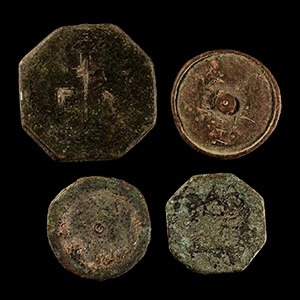
Byzantine Bronze Trade Weight Group
6th-12th century A.D.Sold for (Inc. bp): £33
Comprising four weights: one octagonal with remains of an inlaid cross and lettering to one side; a smaller octagonal weight; a round weight with recessed faces, an annulet to one side and a possible letter to the other; a circular weight with one recessed side, boss to the centre and incised symbols on the field. 128 grams total, 25-33 mm
From a 1990s English collection. Property of an Essex gentleman. -
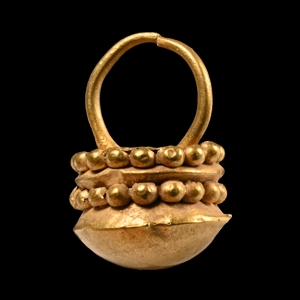
Byzantine Gold Earring
Circa 8th-12th century A.D.Estimate: £250 - 350 (+bp*)
Opening Bid: £125
Hollow-formed drum with domed lower face, applied collar and two rows of granules, split loop above. 3.11 grams, 23 mm
Ex European collection formed in the 1990s. Acquired from a North London gallery. Property of an Essex gentleman.
