
Loading, please wait...


LOT 0190
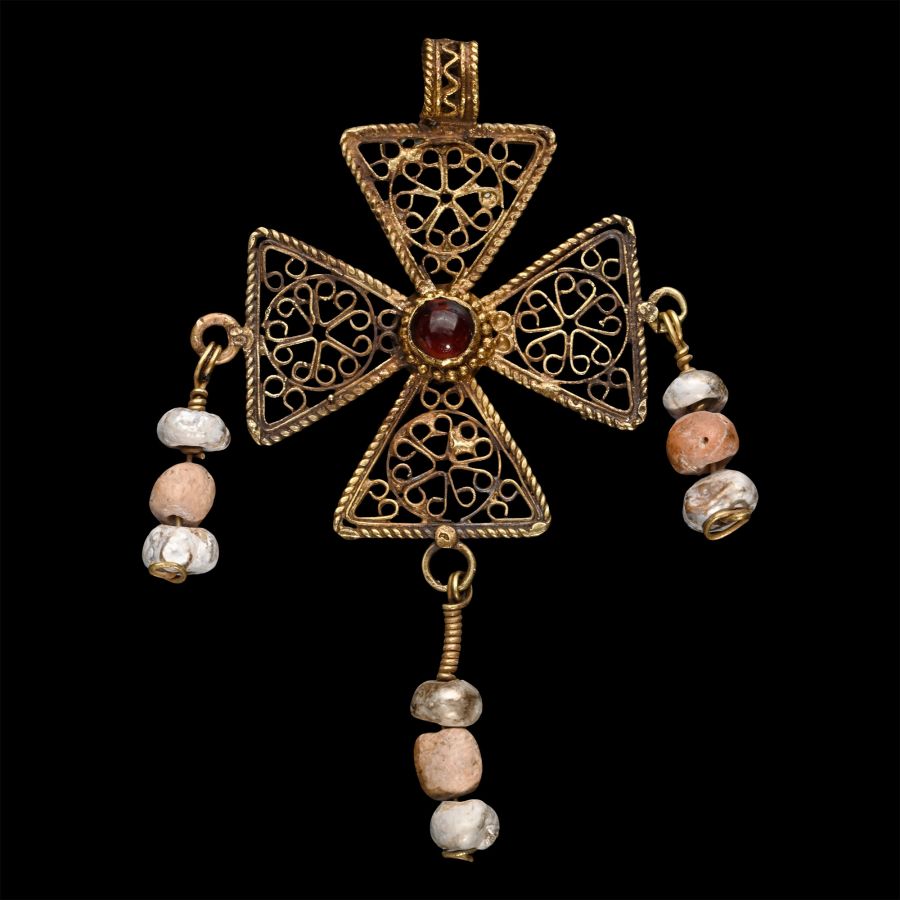
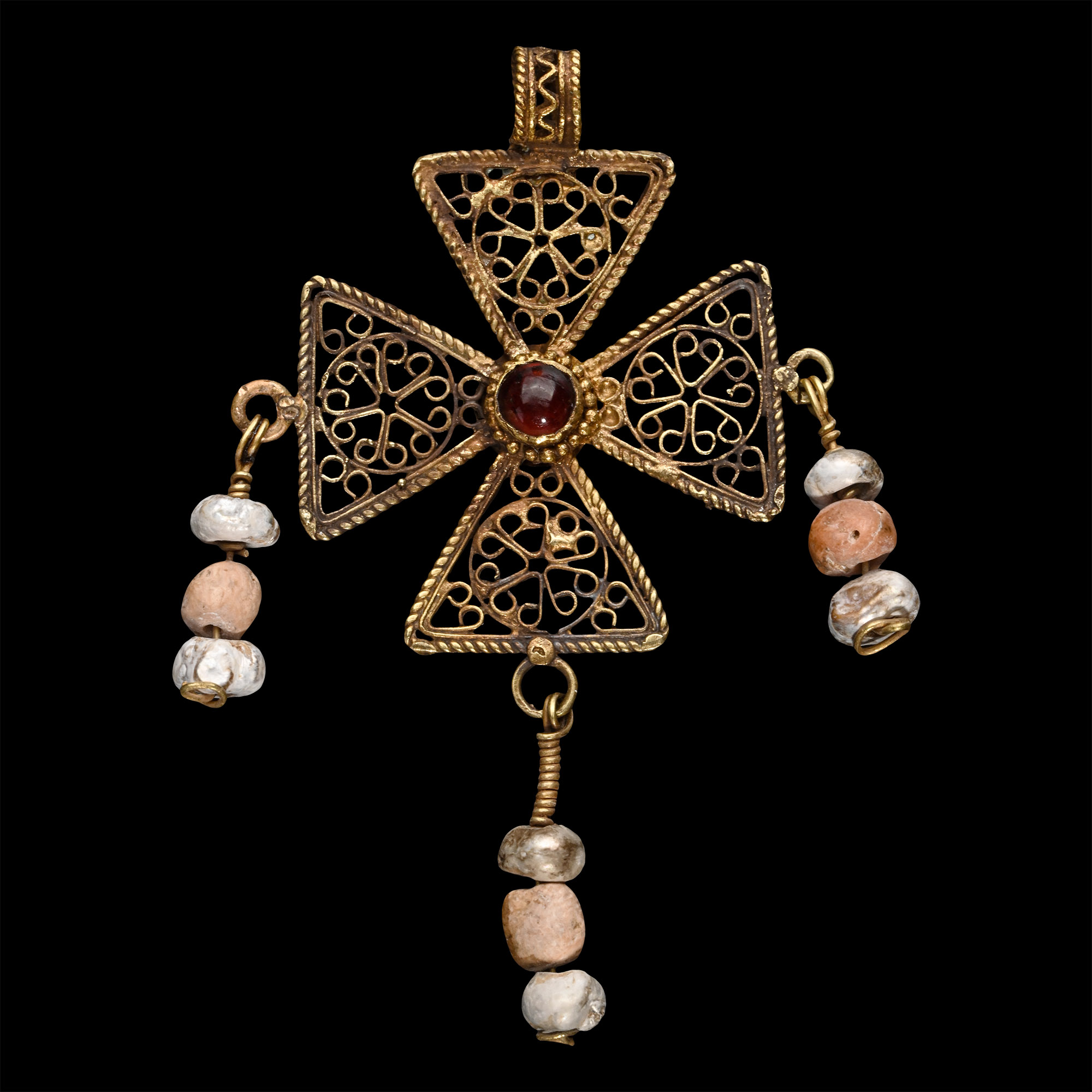
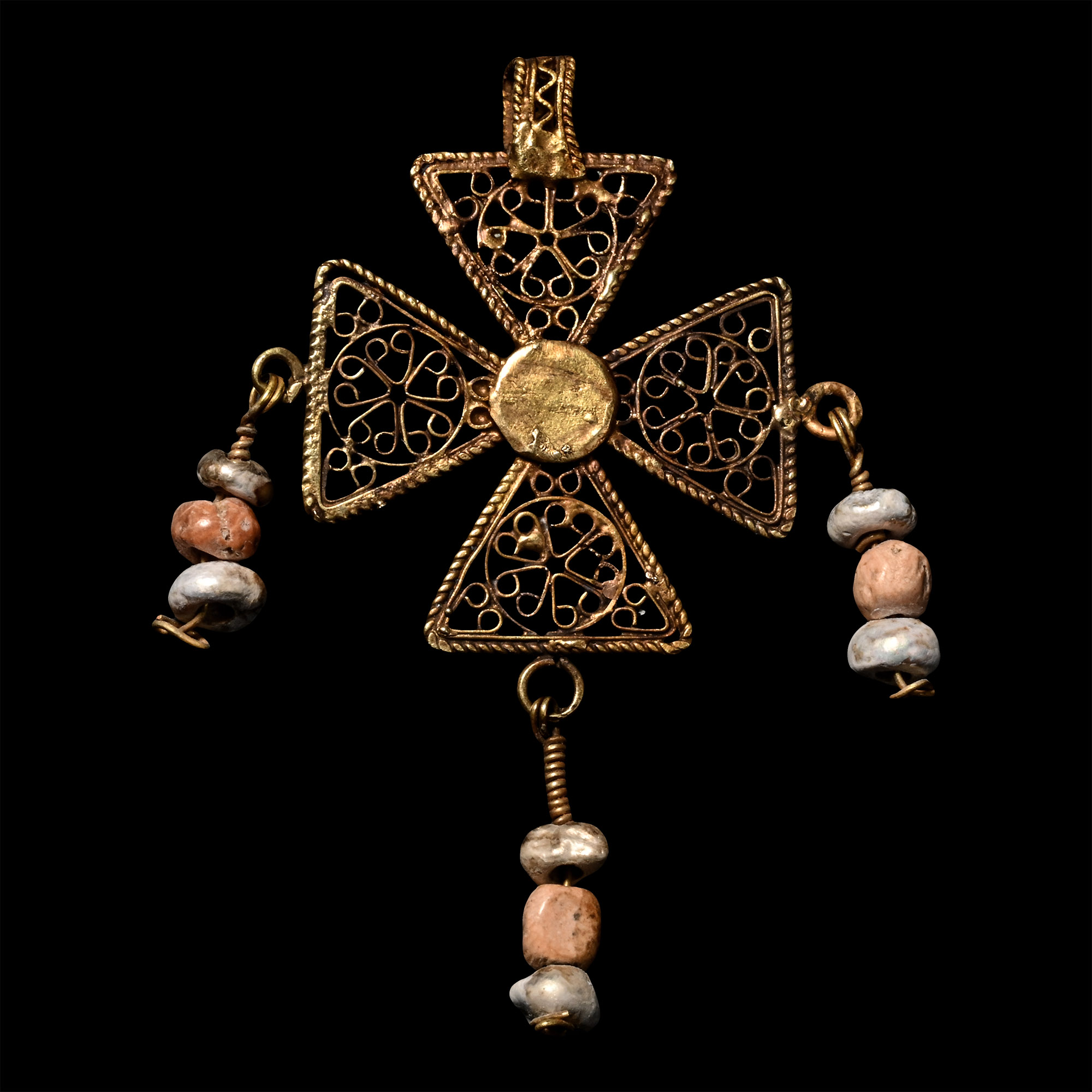
Byzantine Filigree Gold Cross Pendant with Bead Drops
CIRCA 6TH-8TH CENTURY A.D.
2 in. (3.68 grams, 50 mm).
Formed as a Maltese cross, each arm with twisted filigree frame and filigree coils, dangle to the outer end with pearl and other beads (pearls ancient but possibly not original), central stepped cell with beaded collar and inset garnet cabochon, loop with filigree detailing.
ProvenanceFrom a North American gentleman's collection, 1990s.
CONDITIONTimeLine Auctions follows a vetting process to ensure the authenticity and legality of all items, reinforcing our commitment to integrity and responsible trading. Each antiquity, antique, and coin lot undergoes thorough examination by a vetting committee of at least ten external specialists, professional trade association members, scientists, and archaeologists: Our Vetting Process
AUCTIONS:
TimeLine is a leading auction house specialising in antiquities, ancient art, collectables, natural history, coins, medals, and books. Our auctions offer museums, collectors, historians, and enthusiasts the opportunity to acquire unique and historically significant pieces.
LOT 0190
Byzantine Filigree Gold Cross Pendant with Bead Drops
Sold for (Inc. bp): £1,560
-
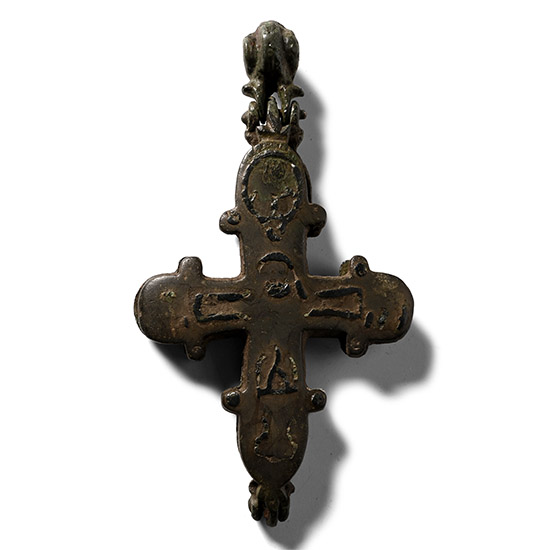
Large Byzantine Bronze Cross Pendant
Circa 10th-12th century A.D.Sold for (Inc. bp): £98
Enkolpion cross pommée hinged at the base and closure with facetted suspension loop above; obverse with silver-inlaid cross and (abraded) monogram to each roundel; reverse with abraded Corpus Christi. 38.3 grams, 82 mm
From the private coin collection of a West London, UK, gentleman, formed since the mid 1980s. -
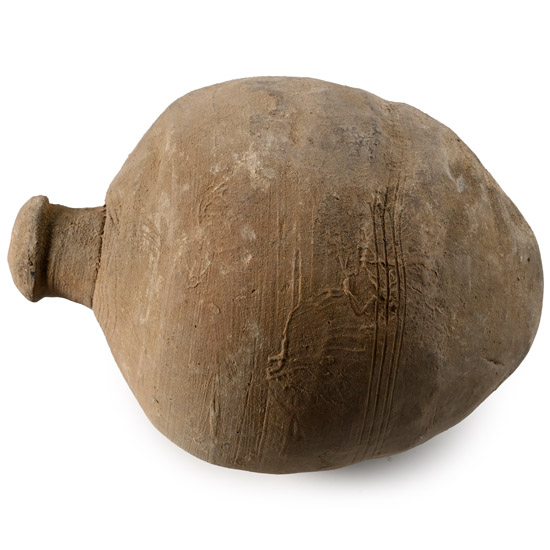
Byzantine 'Greek Fire' Ceramic Fire Bomb or Hand Grenade
9th-11th century A.D.Sold for (Inc. bp): £59
Piriform body with a rounded base and domed mouth, circumferential bands on the body; intended to be filled with explosive liquid and a wick, and used as a hand grenade. 747 grams, 14 cm
From an important specialist collection, London, UK, 1990s. Accompanied by an academic paper by military specialist Dr Raffaele D'Amato, dated 15 July 2019 and titled 'Eastern Roman Empire - Greek Fire Bomb or Hand Grenade (μεσαίον kακάβιον) 9th-11th century AD'.
Apart from the use of siphons or manual flame-throwers called cheirosiphona, special corps of Roman soldiers employed terracotta grenades, in the form of small jars, abundantly evidenced in archaeological excavations. They were called μεσαία kακαβιά or κυτροκακάβια, where the former had a bulbous shape and the latter a more cylindrical form. -
.jpg)
Byzantine Gold Marriage Ring
Circa 6th-7th century A.D.Sold for (Inc. bp): £9,100
D-section hoop with expanding shoulders, trumpet-shaped bezel with two facing busts and a cross between and a nimbate bearded bust above, legend 'OMONOIA' (harmony) below. 9.62 grams, 23.93 mm overall, 18.92 mm internal diameter (approximate size British R 1/2, USA 8 3/4, Europe 19.38, Japan 18)
From an important Byzantine collection, formed in the 1970s, Surrey, UK. This lot has been checked against the Interpol Database of stolen works of art and is accompanied by search certificate number no.13347-258734.
The marriage ring is one of the typologies in which figural decorations are frequently found. Generally speaking, marriage rings are engraved with a representation of a husband and wife, sometimes accompanied by Christ, and usually engraved with wishes for 'harmony, health and the grace of God'. Rings of this type had been used since the late 4th century A.D. and remained extremely popular in Byzantium in the 6th and 7th centuries.
