
Loading, please wait...
LOT 1095
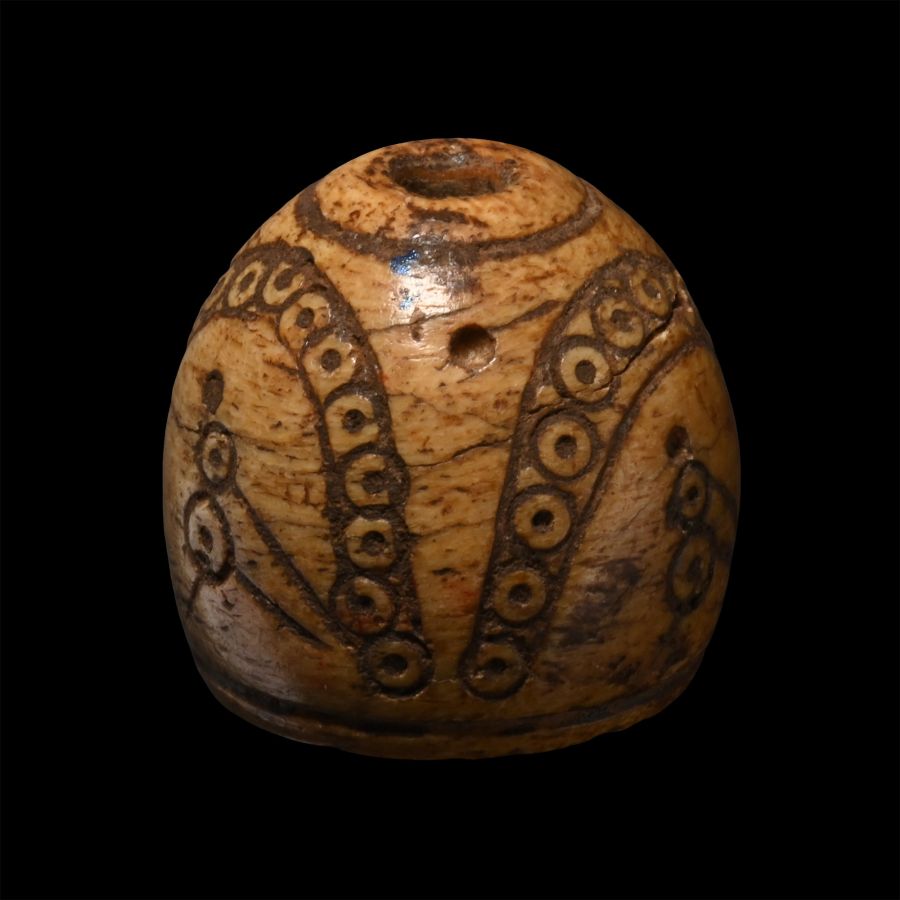
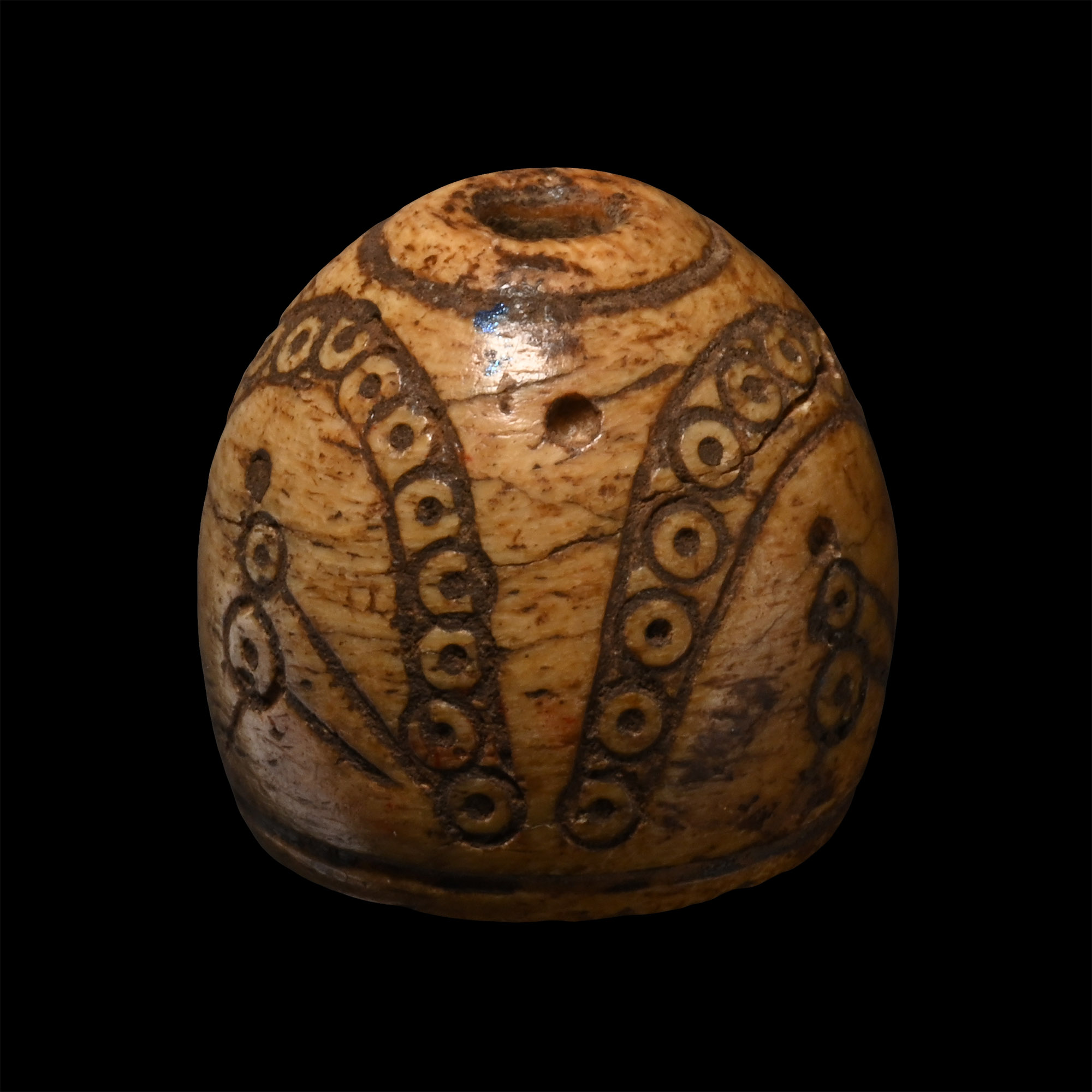
Byzantine Engraved Bone Spindle Whorl with Birds Below Canopy
CIRCA 8TH-12TH CENTURY A.D.
5/8 in. (7.78 grams, 17.78 mm).
Barrel-shaped with incised ring-and-dot ornament forming an arcade.
ProvenanceEx Abelita family collection, 1980s-2000s.
CONDITIONTimeLine Auctions follows a vetting process to ensure the authenticity and legality of all items, reinforcing our commitment to integrity and responsible trading. Each antiquity, antique, and coin lot undergoes thorough examination by a vetting committee of at least ten external specialists, professional trade association members, scientists, and archaeologists: Our Vetting Process
AUCTIONS:
TimeLine is a leading auction house specialising in antiquities, ancient art, collectables, natural history, coins, medals, and books. Our auctions offer museums, collectors, historians, and enthusiasts the opportunity to acquire unique and historically significant pieces.
LOT 1095
Byzantine Engraved Bone Spindle Whorl with Birds Below Canopy
Estimate £80 - 100€93 - 116 (for guidance only)$108 - 135 (for guidance only)
-
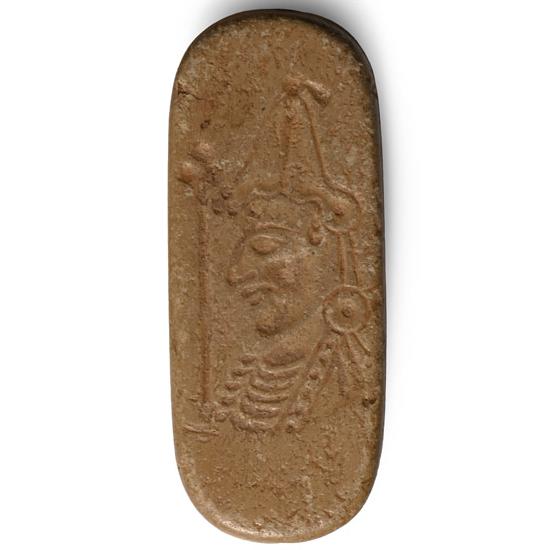
Byzantine Inscribed Bone Plaque
Circa 6th-10th century AD.Sold for (Inc. bp): £117
Obverse with low-relief bust wearing conical headgear, with trefoil sceptre and hatched robe; reverse with legend 'ΚΕΒΟΗΙΤΟ' ('T' inverted). 3.12 grams, 38 mm
Ex Essex gentleman's collection, 2000s. -
.jpg)
Byzantine Bronze Ring with Monogram
13th-14th century A.D.Sold for (Inc. bp): £78
An expanding hoop with decorated shoulders, an octagonal bezel with a monogram, composed of the Greek letters 'Χ [ΑΙΡΕ] ΔΥωΝ[Υ]C (?)' = Be glad Dyoniys. 5.76 grams, 24.25 mm overall, 20.14 mm internal diameter (approximate size British S, USA 9, Europe 20, Japan 19)
Acquired on the UK and EU art market before 2000. From the private collection of a Surrey, UK, gentleman.
The plate and hoop of these rings were soldered together. This system probably originated only in the late period of the Eastern Roman Empire, as evidenced by the faceting of the sides and the irregularity in the letters forming the name. -
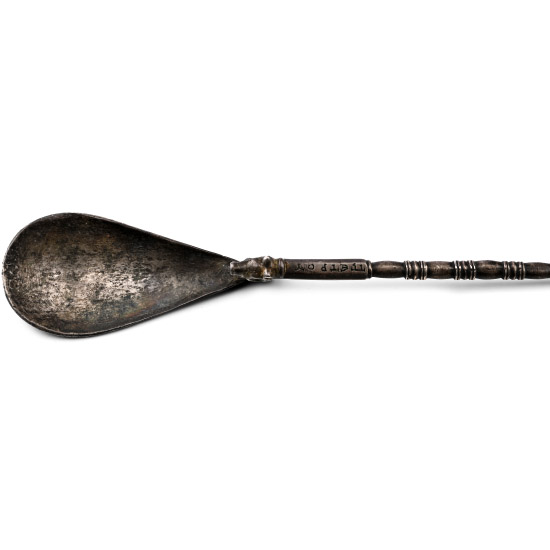
Late Byzantine Silver Spoon with 'St Peter' Inscription on the Handle
Late 6th-8th century A.D.Sold for (Inc. bp): £910
Featuring a large, shallow piriform bowl, stepped junction with a boar's head above, a hexagonal-section stem extending from behind the boar's neck bearing a Greek inscription 'TTETPOY' (of Peter); a balustered handle with a cuboid, striated finial. 60.77 grams, 21.5 cm
Acquired on the UK art market. Private collection, Surrey, UK.
The inscription suggests that the spoon may have had a liturgical purpose, associated with the Holy Communion. Still today in the Orthodox Church, the Body and Blood of Christ are dispensed with similar liturgical objects. The name Peter can be associated with the church, or simply with the owner of the liturgical artefact.
