
Loading, please wait...
LOT 1468
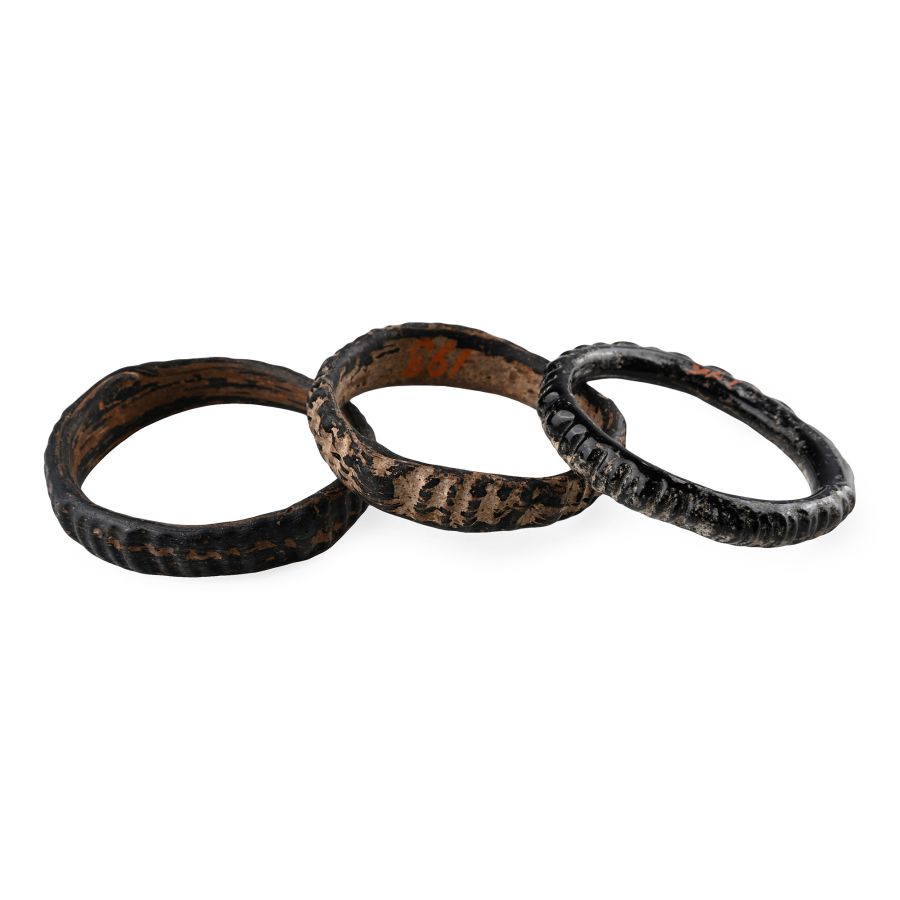
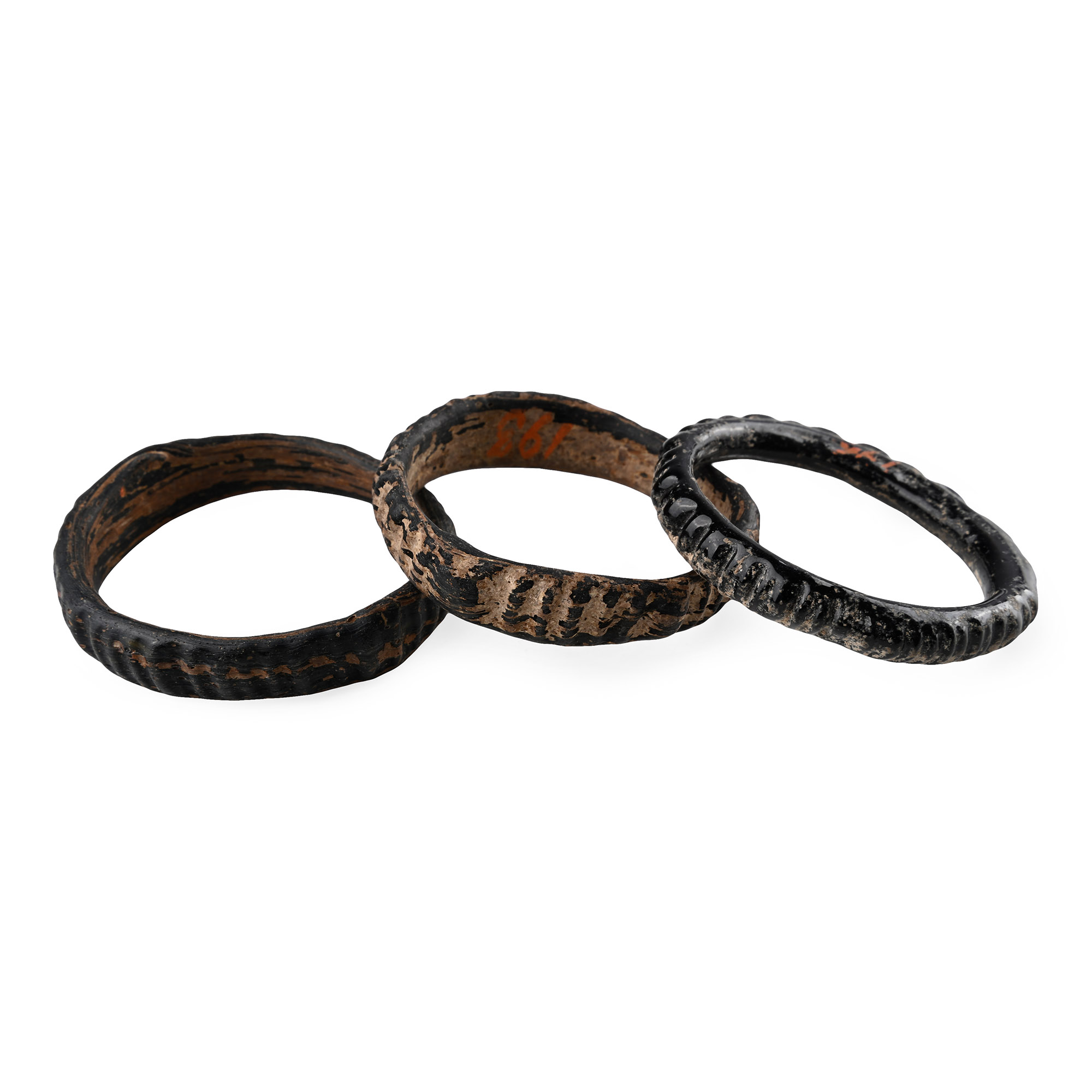
Byzantine Decorated Glass Bracelet Group
CIRCA 6TH-10TH CENTURY A.D.
2 2 1/4 in. (41 grams total, 52 - 56 mm).
D-shaped in section with corrugations to the outer face. [3, No Reserve]
ProvenanceAcquired on the UK art market since the 1990s.
From the property of a late Lincolnshire, UK, gentleman; thence by descent.
TimeLine Auctions follows a vetting process to ensure the authenticity and legality of all items, reinforcing our commitment to integrity and responsible trading. Each antiquity, antique, and coin lot undergoes thorough examination by a vetting committee of at least ten external specialists, professional trade association members, scientists, and archaeologists: Our Vetting Process
AUCTIONS:
TimeLine is a leading auction house specialising in antiquities, ancient art, collectables, natural history, coins, medals, and books. Our auctions offer museums, collectors, historians, and enthusiasts the opportunity to acquire unique and historically significant pieces.
LOT 1468
Byzantine Decorated Glass Bracelet Group
Estimate £60 - 80€70 - 93 (for guidance only)$81 - 108 (for guidance only)
Opening Bid
£5 (EUR 6; USD 7) +BP*
-
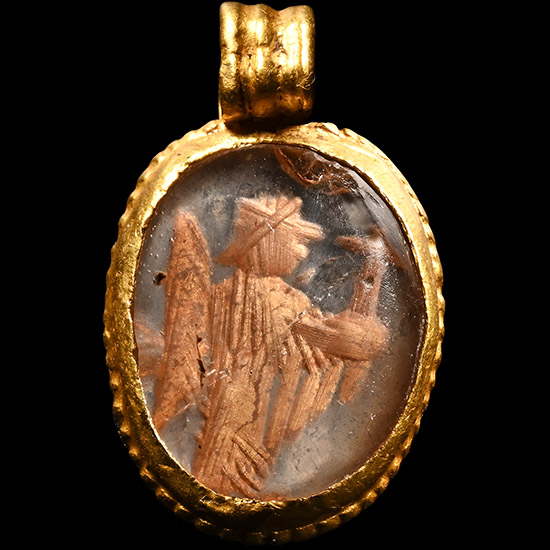
Byzantine Gold Pendant with Gold Figure of Archangel Gabriel in Rock Crystal
Circa 9th-11th century A.D.Estimate: £2,000 - 3,000 (‡+bp*)
Opening Bid: £1,000
Biconvex in section with gold frame and beaded edge, ribbed loop above; reserved winged figure with processional cross. 4.66 grams, 25 mm
Private collection of Kal Noselson, New York, acquired between 1976 and the late 1990s; thence by descent. This lot has been checked against the Interpol Database of stolen works of art and is accompanied by search certificate no.13425-259853.
The angel was probably taken from an original seal showing the Archangel Gabriel visiting Mary and then transformed into a pendant. The motifs on the stamp seals are predominantly religious in nature and include images of Christ and the saints, which could suggest that they were used for clerical purposes—perhaps in monasteries. -
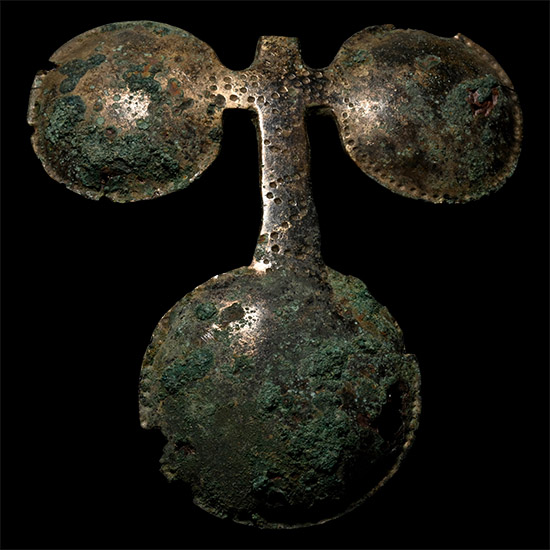
Byzantine Lobed Mount with Pointillé Inscription
Circa 6th-8th century A.D.Estimate: £30 - 40 (+bp*)
Opening Bid: £5
Comprising a flat-section shank with two lateral domed discs, each with pointillé detailing to the outer edge; similar larger finial; the shank with pointillé design, possibly an inscription 'ΩΜΝ[...]'. 20.9 grams, 77 mm
From a UK collection formed in the 1980s. Property of an Essex, UK, gentleman. -
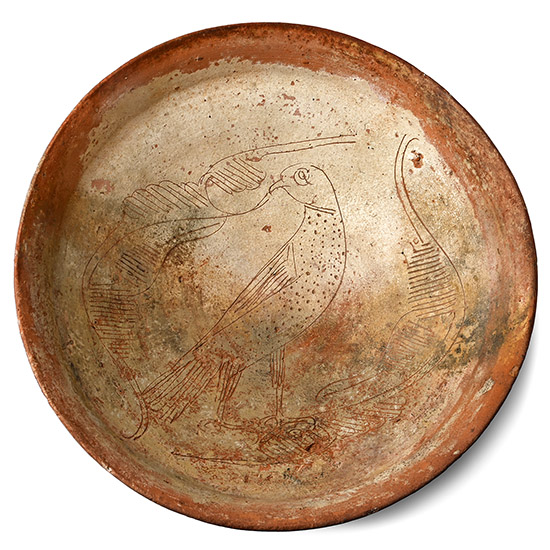
Byzantine Terracotta Sgrafitto Dish with a Falcon Among Leafy Branches
Perhaps Corinth, mid-12th century A.D.Estimate: £500 - 700 (+bp*)
Opening Bid: £5
Broad and squat with carination to the exterior face, and a broad foot ring; cream glaze with sgraffito design of a delineated falcon in profile, surrounded by leafy branches and holding one of the branches in its hooked beak. 1.04 kg, 26.3 cm
Private collection (L.v.L.), Rhineland-Pfalz, Germany, acquired between 1960s-1980s.
In the Byzantine Empire, and even more so in the Islamic world, hunting falcons were a symbol of wealth and high status. The spectrum of designs in which they are to be found on 12th-century Byzantine pottery, in particular, offers a forceful testament both to the cultural reach of such vessels during the period and to the skill of the potters who were able to produce large numbers of beautifully worked slipware vessels destined for marine trade. The present example is likely to have been discovered in the late 1960's, when it is thought a 12th-century shipwreck laden with slipware vessels was excavated off the coast of Izmir.
