
Loading, please wait...

LOT 0219
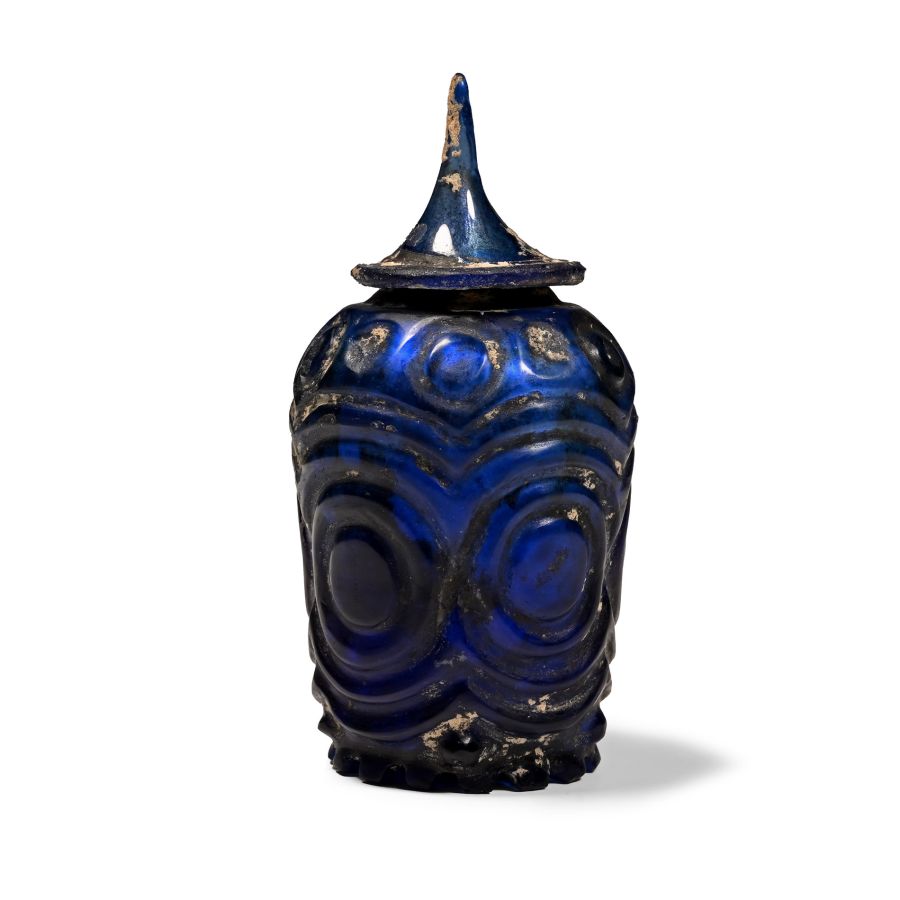
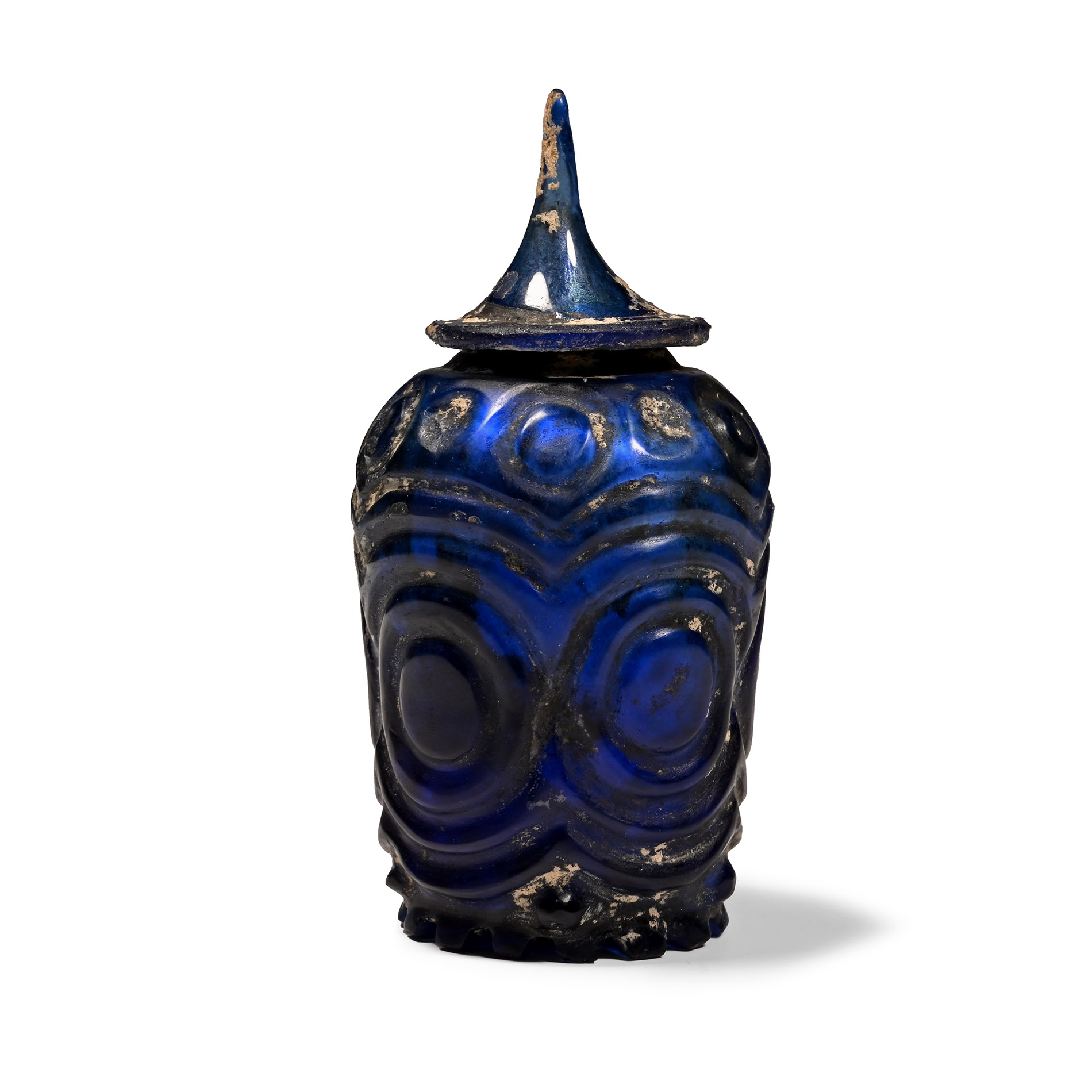
Byzantine Cobalt Blue Lidded Pyxis
9TH-12TH CENTURY A.D.
3 5/8 in. (58 grams, 92 mm).
With a barrel-shaped body, domed shoulder, everted neck, band of high-relief disc with fluting, crenellated base; conical lid with spike handle and applied rim.
ProvenanceAcquired 1960s-1970s.
From the estate of a Sheffield, UK, lady, thence by descent.
Cf. The Metropolitan Museum, accession number 2000.5a, b, for a bone pyxis of similar form.
CONDITIONTimeLine Auctions follows a vetting process to ensure the authenticity and legality of all items, reinforcing our commitment to integrity and responsible trading. Each antiquity, antique, and coin lot undergoes thorough examination by a vetting committee of at least ten external specialists, professional trade association members, scientists, and archaeologists: Our Vetting Process
AUCTIONS:
TimeLine is a leading auction house specialising in antiquities, ancient art, collectables, natural history, coins, medals, and books. Our auctions offer museums, collectors, historians, and enthusiasts the opportunity to acquire unique and historically significant pieces.
-
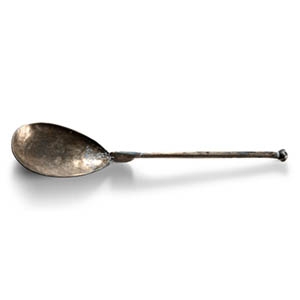
Byzantine Swan-Necked Silver Spoon
5th-7th century A.D.Sold for (Inc. bp): £598
Shallow piriform bowl attached to a stepped baluster, square-section handle with knop finial. 39 grams, 18.1 cm
Ex London, UK, gallery, 1971-early 2000s. London, UK, collection. -
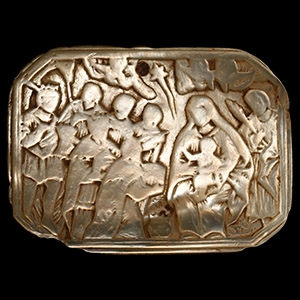
Post Byzantine Adoration of the Magi Shell Plaque
17th-18th century A.D.Estimate: £200 - 300 (‡+bp*)
Opening Bid: £100
Octagonal in plan with carved scene of the Adoration of the Magi with star above; stepped border, pierced for attachment. 30.2 grams, 68 mm
Acquired in the mid 1980s-1990s. Private collection, Switzerland, thence by descent. Private collection, since the late 1990s. -
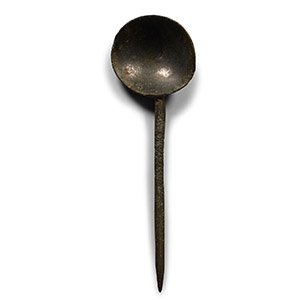
Byzantine Tinned Bronze Apothecary Spoon
6th-10th century A.D.Sold for (Inc. bp): £65
With broad bowl and spike handle. 6.65 grams total, 76 mm
Acquired on the European art market since the early 2000s. From the private Northern Ireland collection of R.M.
