
Loading, please wait...
LOT 1304
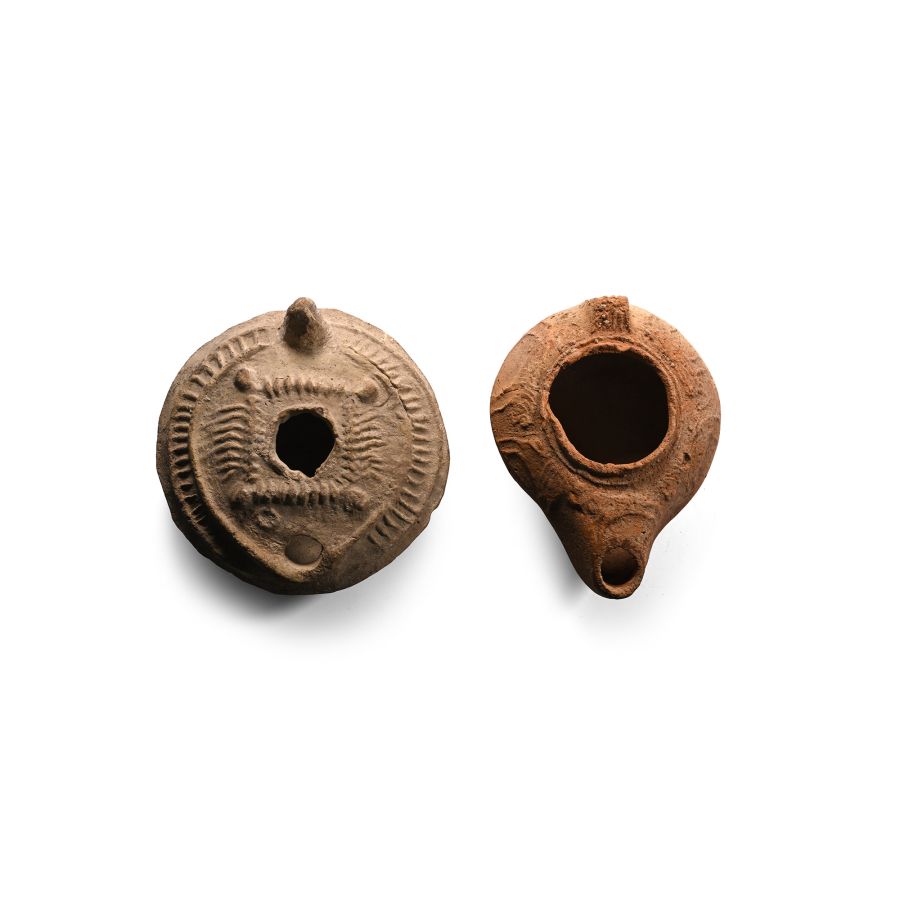
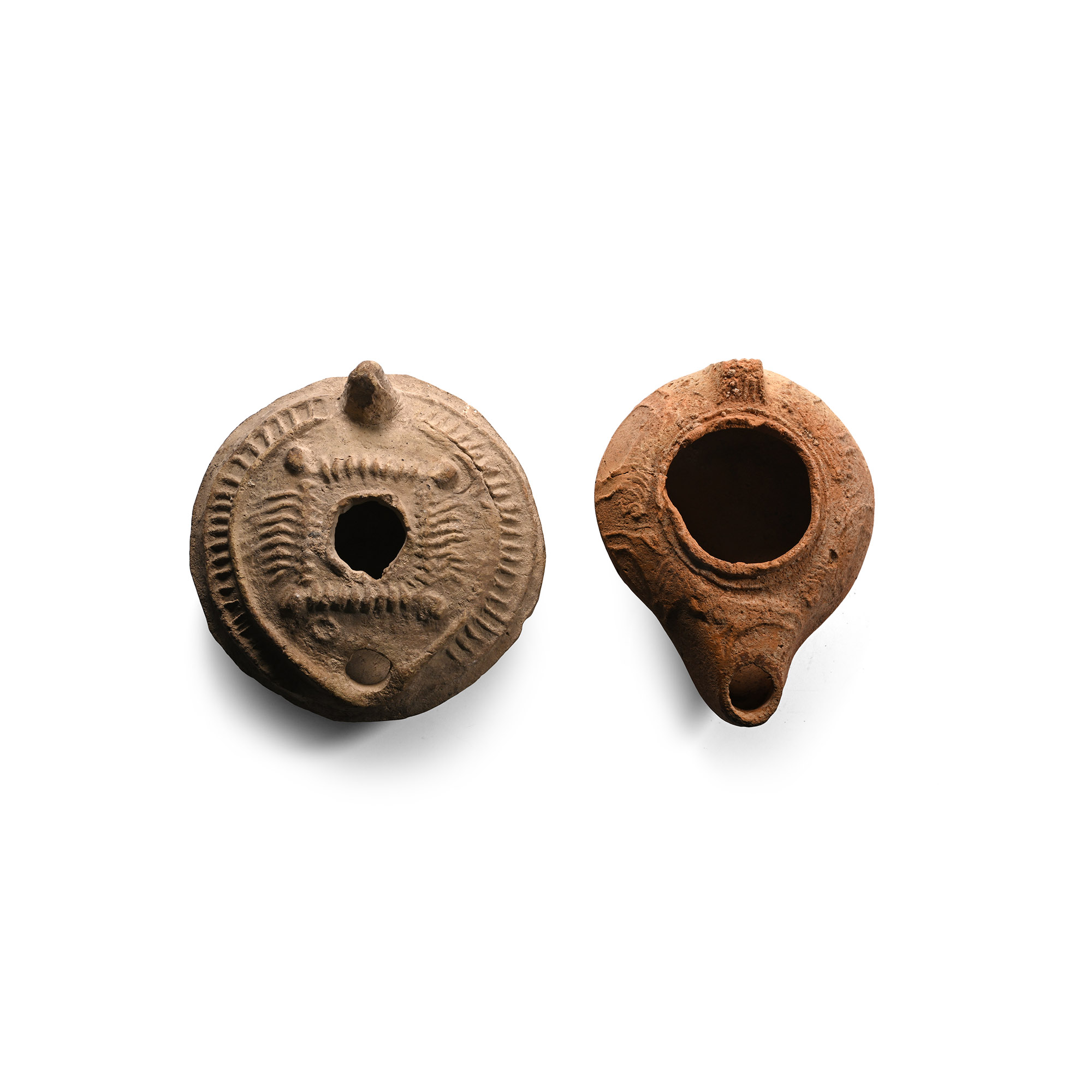
Byzantine Ceramic Oil Lamp Collection
6TH-8TH CENTURY A.D.
3 3/4 - 4 in. (195 grams total, 9.6-10.1 cm).
Comprising: a piriform lamp with a band of stylised quadrupeds surrounding the large filler hole, ribbed handle; a discoid lamp with raised linear decoration, wheel motif to base. [2, No Reserve]
Provenancewith Galerie Rhéa, Zurich, Switzerland.
CONDITIONTimeLine Auctions follows a vetting process to ensure the authenticity and legality of all items, reinforcing our commitment to integrity and responsible trading. Each antiquity, antique, and coin lot undergoes thorough examination by a vetting committee of at least ten external specialists, professional trade association members, scientists, and archaeologists: Our Vetting Process
AUCTIONS:
TimeLine is a leading auction house specialising in antiquities, ancient art, collectables, natural history, coins, medals, and books. Our auctions offer museums, collectors, historians, and enthusiasts the opportunity to acquire unique and historically significant pieces.
-
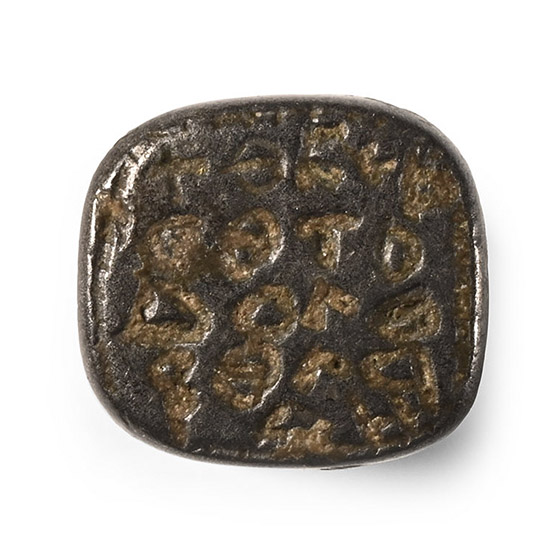
Byzantine Seal Matrix with Inscription
Circa 11th-12th century A.D.Estimate: £100 - 140 (+bp*)
Opening Bid: £56
With inscription '+ΘKEB / OΘTO / ΔΟΛΟ / ΤΘΛΑ' for 'ΘΕΟΤΟΚΕ ΒΟΗΘΕI ΤΩ ΔΟΥΛΩ ΤΟΥ ΘΕΟΥ ΛΑΔΕ' (Mother of God, help Lades, the servant of God). 13.1 grams, 18 mm
From an important collection formed before 1988, London and Geneva.
The stamp seals that have survived in large numbers from Byzantium are objects a few centimetres high and conical in shape, featuring a sealing surface at the lower end and a pendant at the upper end. They served the same function as signet rings and were used to seal everyday objects, primarily for personal purposes, using wax and other soft materials. -
.jpg)
Byzantine Bronze Oil Lamp
6th-7th century A.D.Estimate: £500 - 700 (+bp*)
Opening Bid: £270
Comprising: a squat body and large nozzle with shallow socketed rim, hinged lid to filler-hole with striped pattern, handle formed with lobed cross and loop to rear, annular foot. 376 grams, 13.7 cm
From the collection of a gentleman, acquired on the London art market in the 1990s.
The great success of this type of lamp in the Eastern Roman Empire brought about the establishment of several production centres, as can be confirmed by the frequent appearance of some of the details, e.g., the shape of the lid or of the cross and the length of the spout. Despite their wide distribution across Asia Minor, Greece and the Balkan Peninsula, these lamps also spread throughout Syria and reached Egypt, Morocco and even central Europe. -
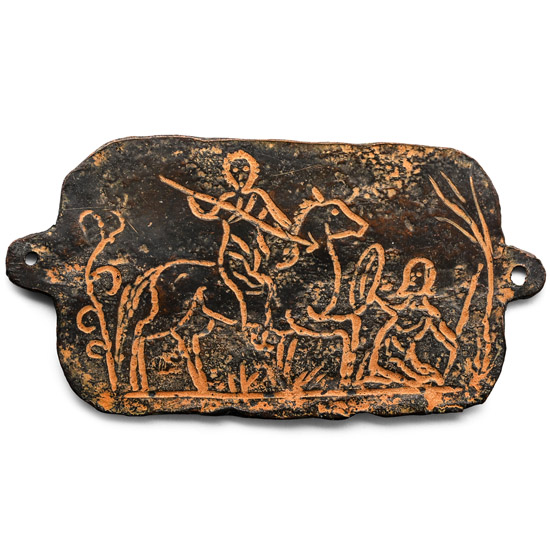
Byzantine Bronze Plaque with Warrior Saint
Circa 6th century A.D.Sold for (Inc. bp): £338
Rectangular with rounded corners and pierced lug to each short side; low-relief scene with a horseman brandishing a spear against an infantryman with spear and shield; foliage and baseline. 8.82 grams, 58 mm
From the collection of a gentleman, acquired on the London art market in the 1990s.
