
Loading, please wait...


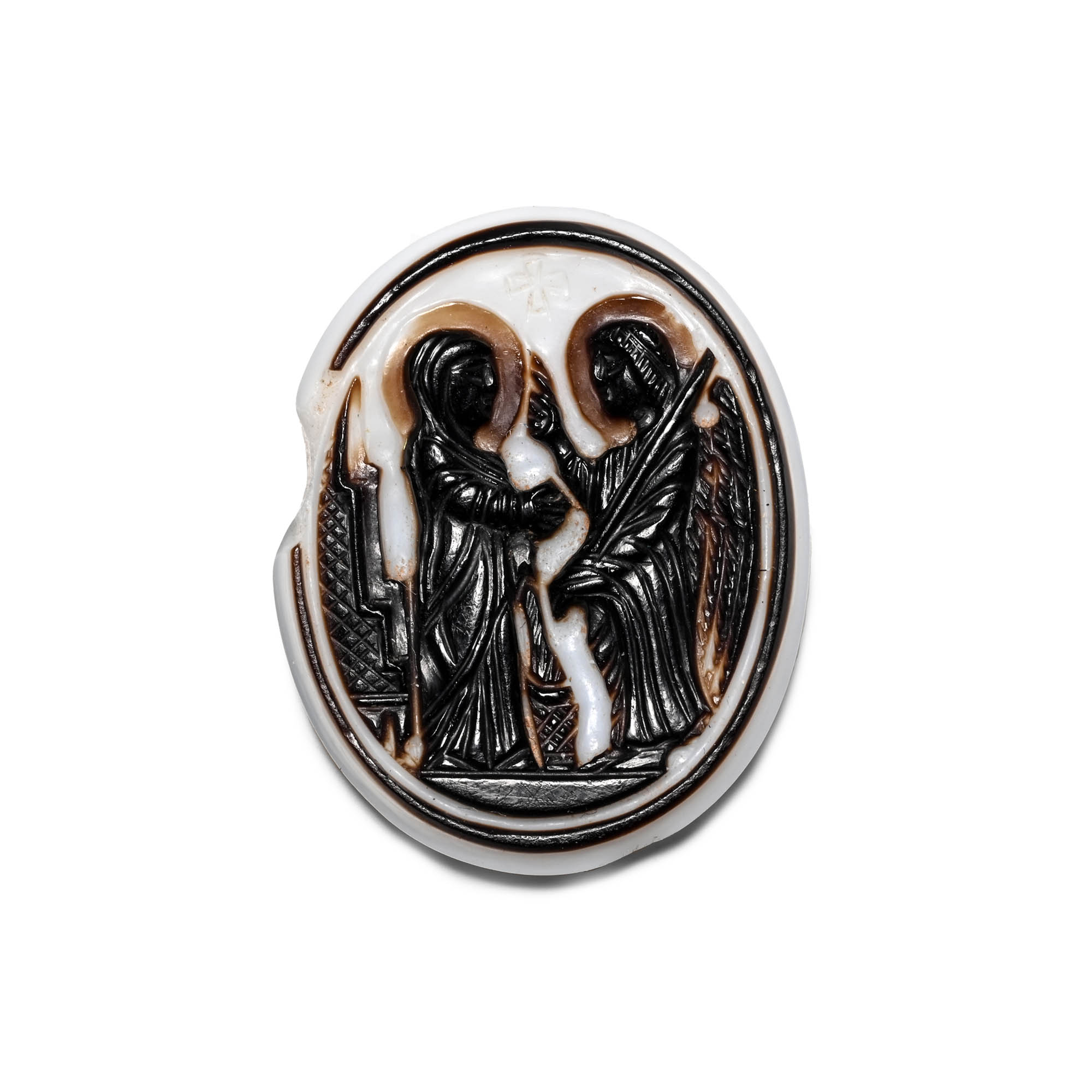
LOT 0209
Byzantine Cameo with Virgin Mary and Archangel Gabriel
6TH CENTURY A.D.
1 in. (2.3 grams, 25 mm).
Ellipsoid in plan with reserved image of the Annunciation and a frond.
ProvenanceFormerly in the collection of Michael Dennis O'Hara, 1970.
From the private collection of the late Alison Barker, a retired barrister, formed 1970-1990.
Ex North American collection.
Accompanied by an academic report by Dr Raffaele D'Amato.
This lot has been checked against the Interpol Database of stolen works of art and is accompanied by search certificate no.12401-226381.
Cf. Darkevich, V.P., Secular Art of Byzantium, Moscow, 1975, p.42, for a comparable style of female bust of a similar date.
FootnotesThe cameo represents the well known episode of the Gospel of Saint Luke (1.26.38), where the Archangel Gabriel brings Virgin Mary the news of her pregnancy.
CONDITIONTimeLine Auctions follows a vetting process to ensure the authenticity and legality of all items, reinforcing our commitment to integrity and responsible trading. Each antiquity, antique, and coin lot undergoes thorough examination by a vetting committee of at least ten external specialists, professional trade association members, scientists, and archaeologists: Our Vetting Process
AUCTIONS:
TimeLine is a leading auction house specialising in antiquities, ancient art, collectables, natural history, coins, medals, and books. Our auctions offer museums, collectors, historians, and enthusiasts the opportunity to acquire unique and historically significant pieces.
LOT 0209
Byzantine Cameo with Virgin Mary and Archangel Gabriel
Sold for (Inc. bp): £5,720
-
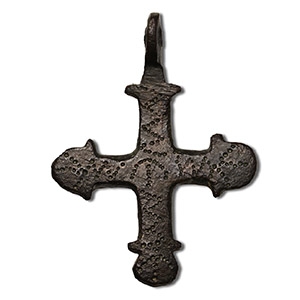
Byzantine Bronze Decorated Cross Pendant
6th-8th century A.D.Sold for (Inc. bp): £156
Cross pommée with integral suspension loop, pointillé decoration to both faces. 4.6 grams, 38 mm
Ex German art market, 2000s. Acquired from an EU collector living in London. From the collection of Surrey, UK, gentleman. -
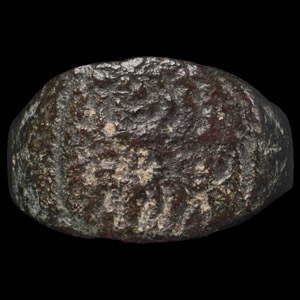
Byzantine Bronze Inscribed Ring
6th-8th century A.D.Sold for (Inc. bp): £26
With broad ellipsoid plaque, low-relief legend. 4.34 grams, 22.61 mm overall, 20.29 mm internal diameter (approximate size British U 1/2, USA 10 1/4, Europe 23.15, Japan 22)
Acquired 1980-2015. Ex Abelita family collection. -
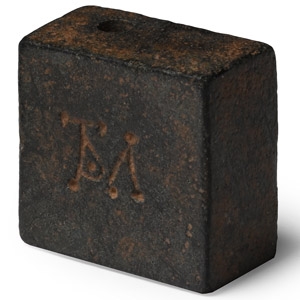
Byzantine Bronze Weight with Greek Inscription
6th-8th century A.D.Sold for (Inc. bp): £52
Rectangular in plan with Δ to obverse, monogram to reverse; one corner pierced for suspension. 16.9 grams, 15 mm
From the collection of a gentleman, acquired on the London art market in the 1990s.
