
Loading, please wait...
LOT 0860
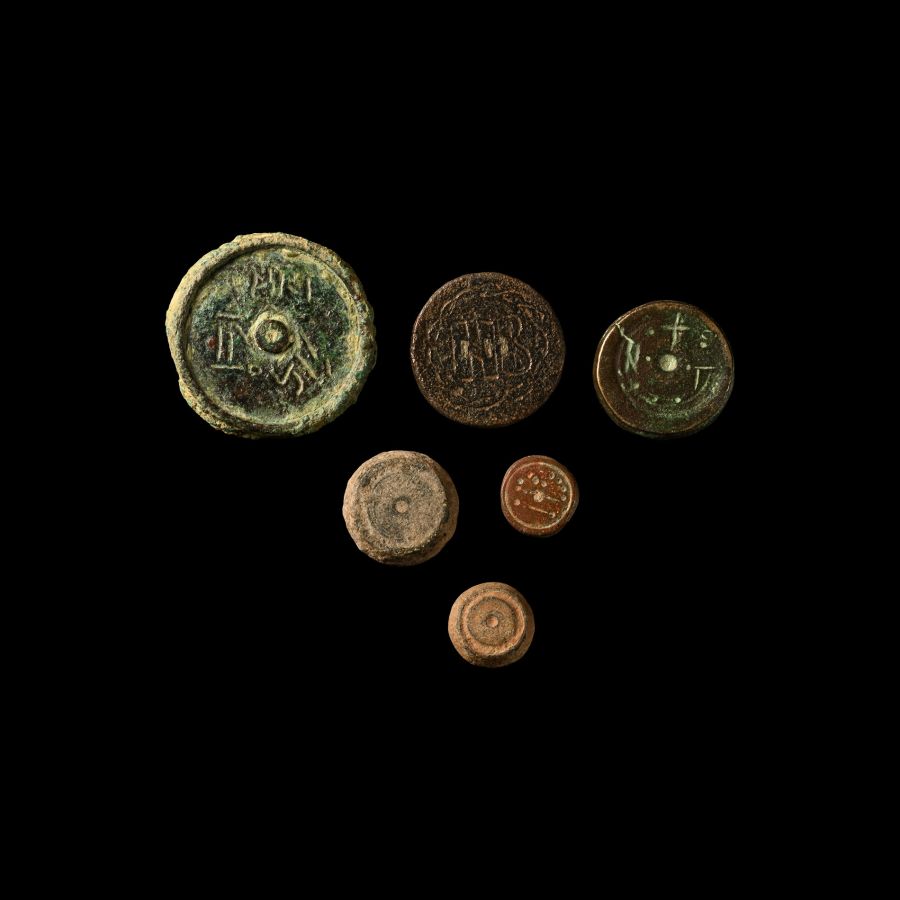
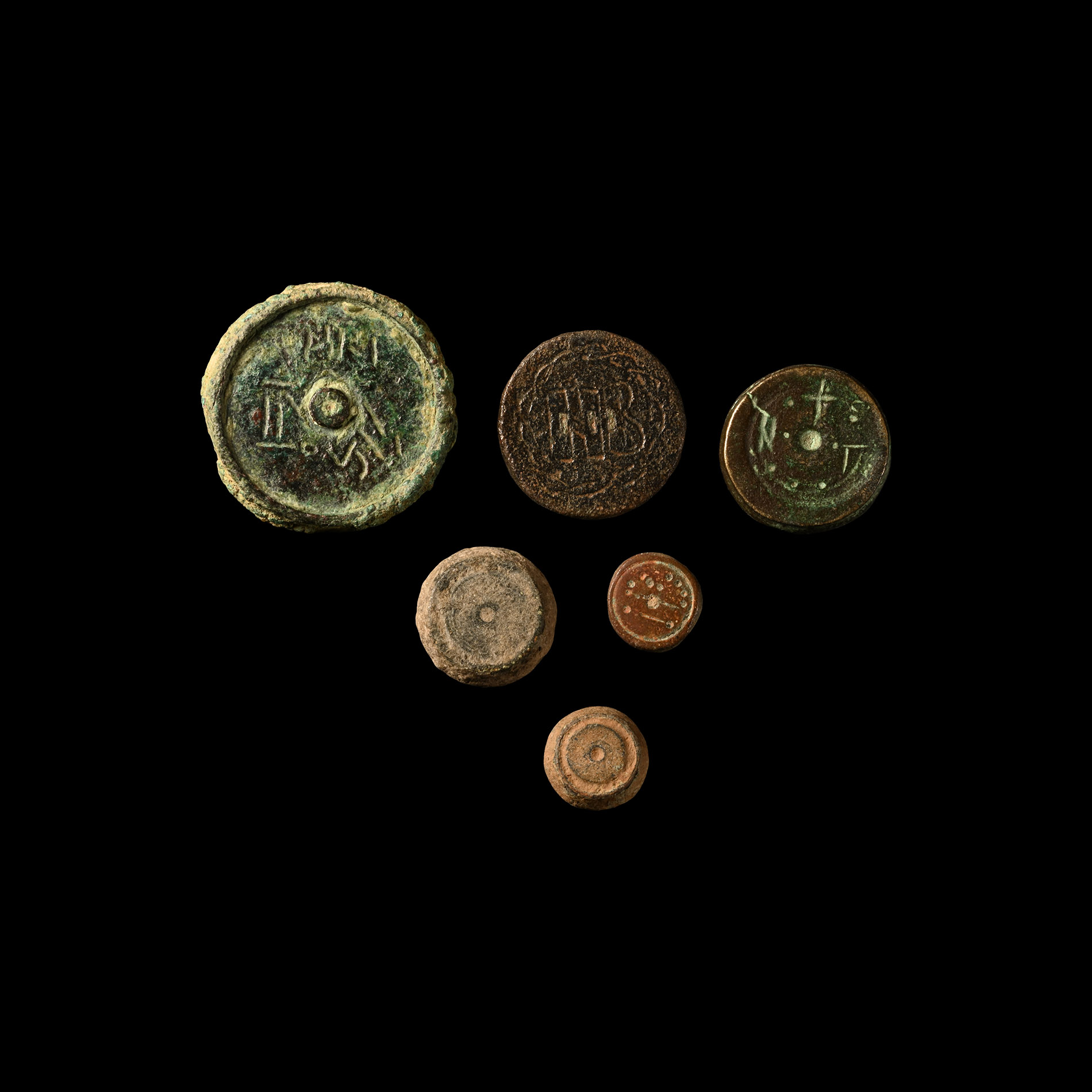
Byzantine Bronze Weight Collection
6TH-8TH CENTURY A.D.
3/8 - 1 in. (61 grams total, 10-27 mm).
Comprising six circular commercial weights of different types and sizes, including examples stamped with letter motifs. [6, No Reserve]
ProvenanceEx Simmons Gallery, London E11, UK, in the 1990s.
From a North London collection.
Cf. Bendall, S., Byzantine weights, an introduction, London, 1996, figs.111ff, for the type.
FootnotesThe biggest weight is a one ounce weight, having an engraved monogram of Γ and Α. The flans of circular coin weights were turned on a lathe in the 6th century A.D., giving them a neat appearance. The designs are usually quite simple and often crudely executed, either engraved or slipped.
CONDITIONTimeLine Auctions follows a vetting process to ensure the authenticity and legality of all items, reinforcing our commitment to integrity and responsible trading. Each antiquity, antique, and coin lot undergoes thorough examination by a vetting committee of at least ten external specialists, professional trade association members, scientists, and archaeologists: Our Vetting Process
AUCTIONS:
TimeLine is a leading auction house specialising in antiquities, ancient art, collectables, natural history, coins, medals, and books. Our auctions offer museums, collectors, historians, and enthusiasts the opportunity to acquire unique and historically significant pieces.
-
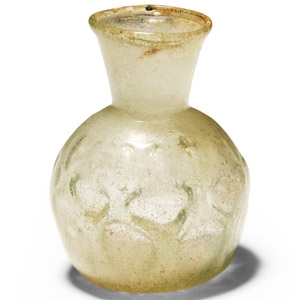
Byzantine Glass Cosmetic Bottle
Circa 5th-6th century A.D.Sold for (Inc. bp): £65
The molded body of broadly globular form and displaying a 'net' pattern, with everted neck and mouth. 35 grams, 77 mm
Ex Coincraft, London WC1. Ex private Merseyside, UK, collection. Accompanied by a Coincraft certificate of authenticity. -
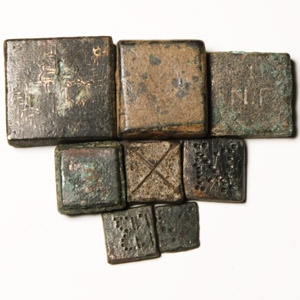
Byzantine Bronze Weight Collection
8th-12th century A.D.Sold for (Inc. bp): £59
Consisting of square-shaped weights of various sizes, most displaying markings to one or more faces in the form of Christian crosses; X-motifs; pricked letters; inscribed Greek letters; together with one weight featuring gusseted side walls. 92 grams total, 9-21 mm
Ex Simmons Gallery, London E11, UK, in the 1990s. From a North London collection. -
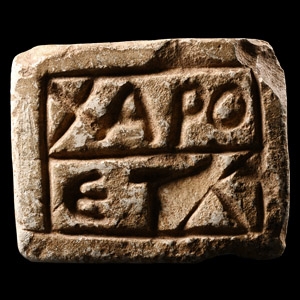
Byzantine Stone Bread Stamp
6th-10th century A.D.Sold for (Inc. bp): £247
Rectangular with pierced lug to the reverse; rectangular design with text 'XAPO / ETA'. 80 grams, 66 mm
From the private collection of the late Mr S.M., London, UK, 1969-1999; thence by descent.
The legend should have been written in reverse for a stamp; it may have been a blundered legend by the workman.
