
Loading, please wait...
LOT 0849
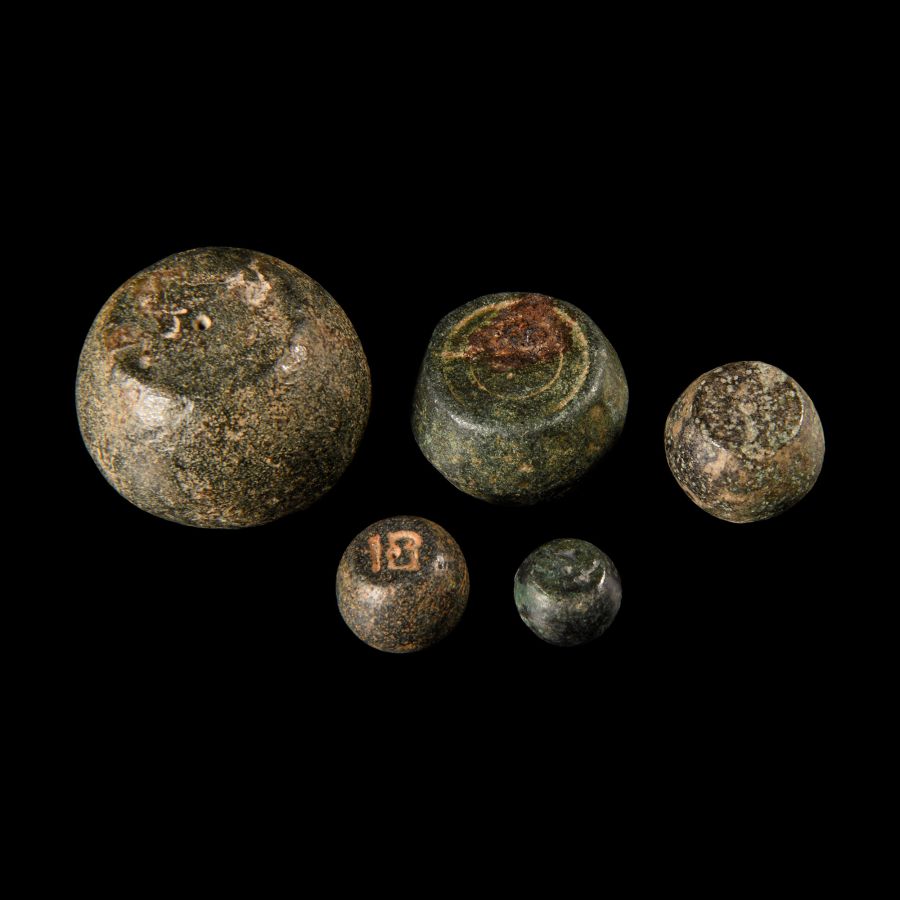
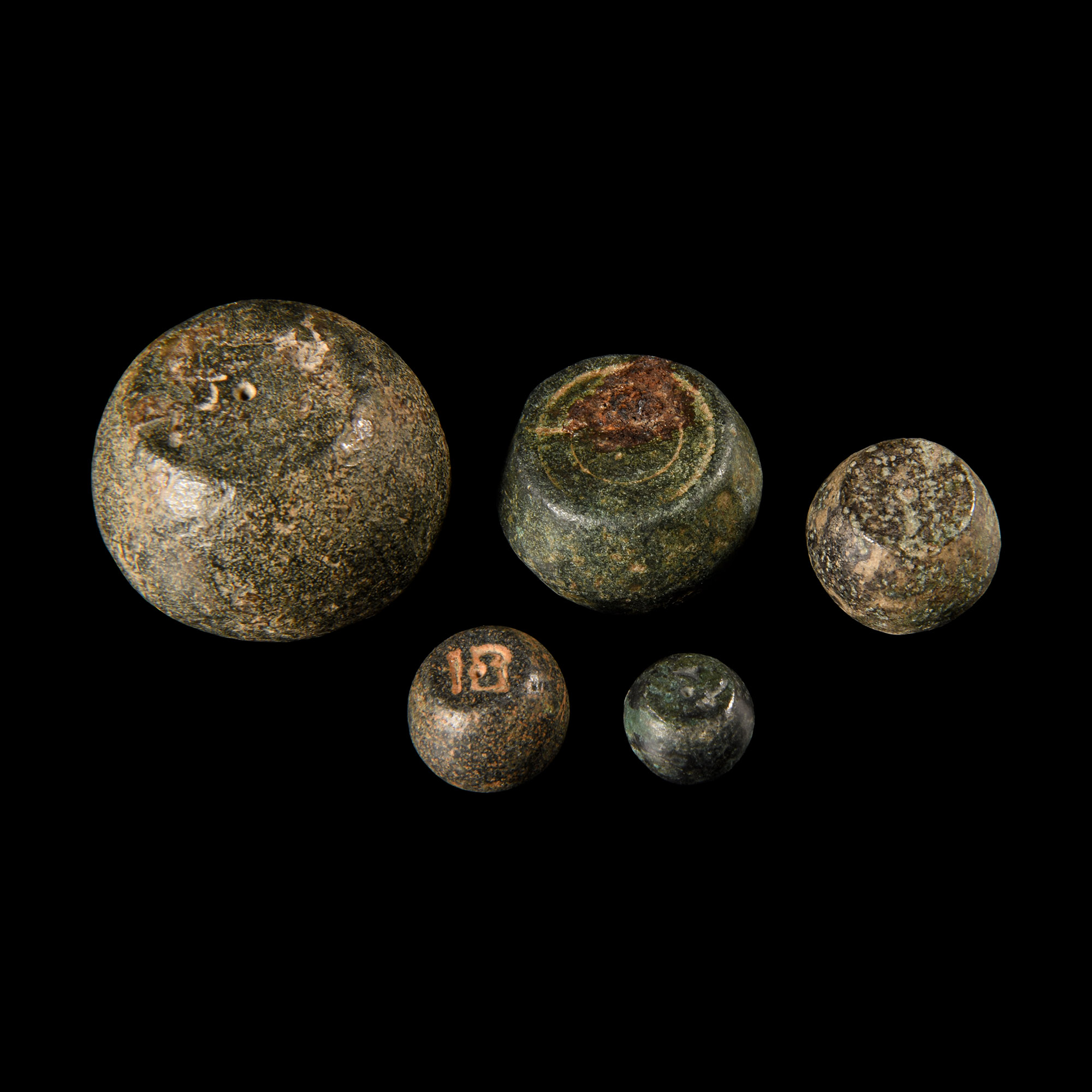
Byzantine Bronze Weight Collection
8TH-12TH CENTURY A.D.
3/8 - 1 1/4 in. (276 grams total, 11-32 mm).
Primarily truncated spherical forms, a number displaying letters, monograms and other patterns or markings. [5, No Reserve]
ProvenanceEx Simmons Gallery, London E11, UK, in the 1990s.
From a North London collection.
TimeLine Auctions follows a vetting process to ensure the authenticity and legality of all items, reinforcing our commitment to integrity and responsible trading. Each antiquity, antique, and coin lot undergoes thorough examination by a vetting committee of at least ten external specialists, professional trade association members, scientists, and archaeologists: Our Vetting Process
AUCTIONS:
TimeLine is a leading auction house specialising in antiquities, ancient art, collectables, natural history, coins, medals, and books. Our auctions offer museums, collectors, historians, and enthusiasts the opportunity to acquire unique and historically significant pieces.
-
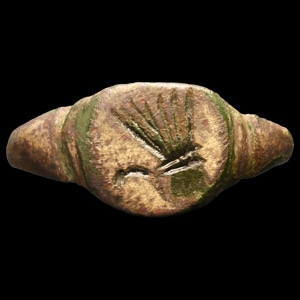
Byzantine Bronze Ring with Bird
6th-7th century A.D.Sold for (Inc. bp): £91
With stepped shoulders, D-shaped plaque, incised peacock design. 3.39 grams, 23.50 mm overall, 20.62 mm internal diameter (approximate size British U 1/2, USA 10 1/4, Europe 23.15, Japan 22)
Private collection formed in the 1970s. Ex property of an Essex, UK, businessman. Ex private Merseyside, UK, collection. -
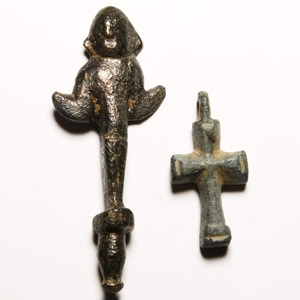
Byzantine Bronze Cross Pendant and Angel Finial Group
6th-8th century A.D.Sold for (Inc. bp): £59
Comprising: a cruciform pendant with notching to each arm and integral suspension loop; a finial crowned with an angel or seraphim. 21.83 grams total, 31-57 mm
Ex old English collection. London art market, 1980s. -
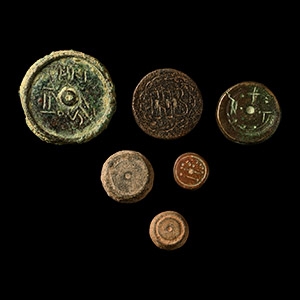
Byzantine Bronze Weight Collection
6th-8th century A.D.Sold for (Inc. bp): £65
Comprising six circular commercial weights of different types and sizes, including examples stamped with letter motifs. 61 grams total, 10-27 mm
Ex Simmons Gallery, London E11, UK, in the 1990s. From a North London collection.
The biggest weight is a one ounce weight, having an engraved monogram of Γ and Α. The flans of circular coin weights were turned on a lathe in the 6th century A.D., giving them a neat appearance. The designs are usually quite simple and often crudely executed, either engraved or slipped.
