
Loading, please wait...
LOT 0758
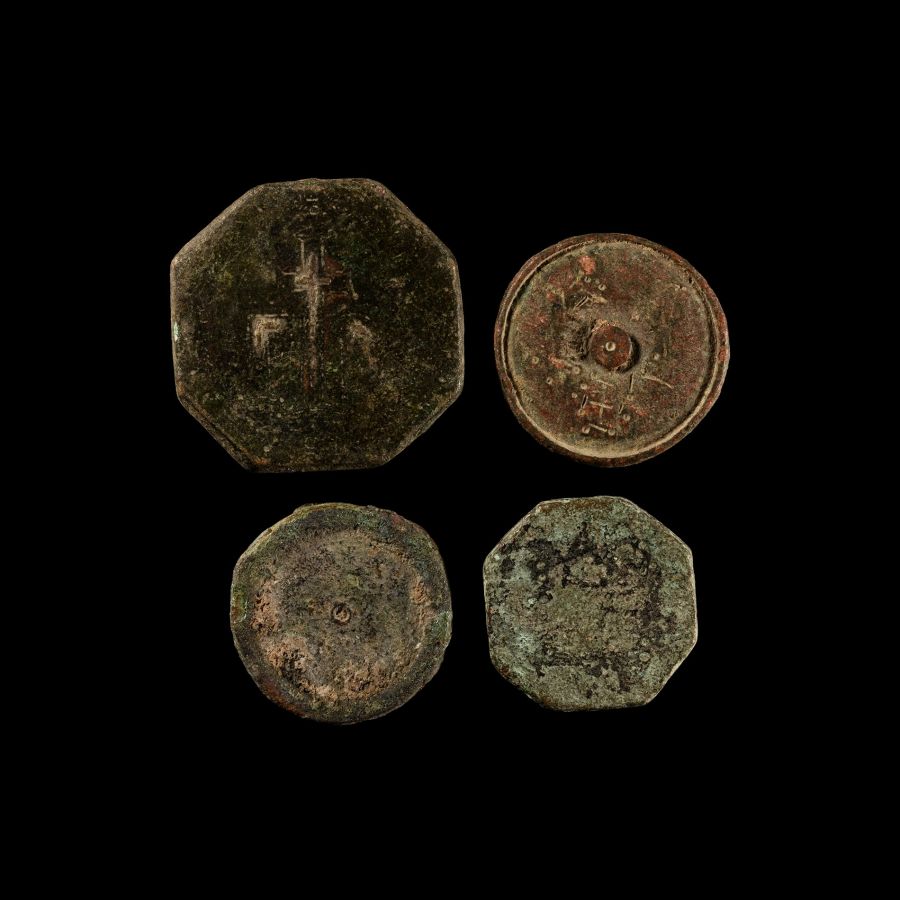
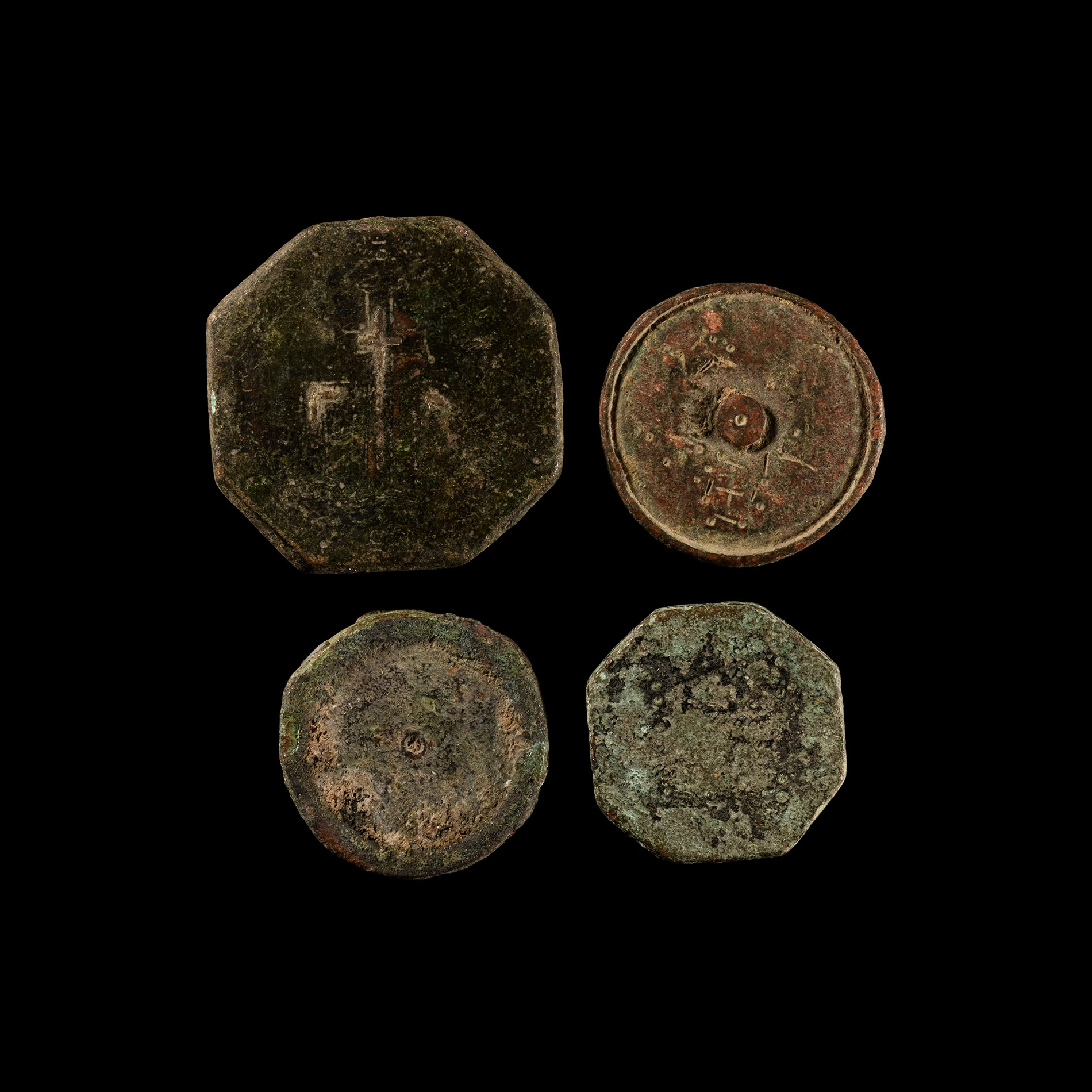
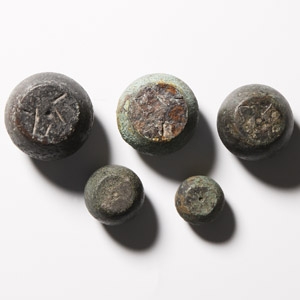
Byzantine Bronze Trade Weight Group
6TH-12TH CENTURY A.D.
1 - 1 3/8 in. (128 grams total, 25-33 mm).
Comprising four weights: one octagonal with remains of an inlaid cross and lettering to one side; a smaller octagonal weight; a round weight with recessed faces, an annulet to one side and a possible letter to the other; a circular weight with one recessed side, boss to the centre and incised symbols on the field. [4, No Reserve]
ProvenanceFrom a 1990s English collection.
Property of an Essex gentleman.
TimeLine Auctions follows a vetting process to ensure the authenticity and legality of all items, reinforcing our commitment to integrity and responsible trading. Each antiquity, antique, and coin lot undergoes thorough examination by a vetting committee of at least ten external specialists, professional trade association members, scientists, and archaeologists: Our Vetting Process
AUCTIONS:
TimeLine is a leading auction house specialising in antiquities, ancient art, collectables, natural history, coins, medals, and books. Our auctions offer museums, collectors, historians, and enthusiasts the opportunity to acquire unique and historically significant pieces.
-
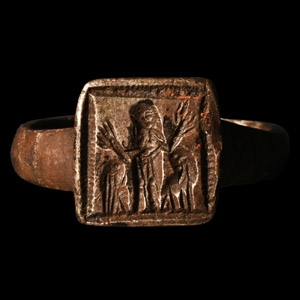
Byzantine Silver Ring with Saint
6th-8th century A.D.Sold for (Inc. bp): £208
With square plaque, incuse Daniel in orans pose flanked by two lions. 4.41 grams, 22.27 mm overall, 18.61 mm internal diameter (approximate size British P, USA 7 1/2, Europe 16.23, Japan 15)
From a UK private collection, before 1980. -
Byzantine Bronze Trade Weight Collection
Circa 8th-12th century A.D.Sold for (Inc. bp): £65
Mixed group of barrel-shaped weights pellets and other markings. 227 grams total, 14-26 mm
Ex Simmons Gallery, London E11, UK, in the 1990s. From a North London collection. -
.jpg)
Post Byzantine Bronze Ring with Inscription
Circa 18th century A.D.Estimate: £100 - 140 (+bp*)
Opening Bid: £50
With ellipsoid plaque, incuse border and text 'KERO / HOHAN / A'. 5.55 grams, 22.52 mm overall, 17.80 mm internal diameter (approximate size British O, USA 7, Europe 14.98, Japan 14)
From the collection of a High Wycombe, Buckinghamshire, UK, gentleman, circa 2000.
