
Loading, please wait...
_900x900.jpg "Byzantine Bronze Trade Weight Collection")
_200x200.jpg "Byzantine Bronze Trade Weight Collection")
.jpg "Byzantine Bronze Trade Weight Collection")
LOT 0759
Byzantine Bronze Trade Weight Collection
CIRCA 8TH-12TH CENTURY A.D.
5/8 - 3/4 in. (122 grams total, 15-20 mm).
Mixed group of barrel-shaped and biconvex weights with punched pellet markings. [5, No Reserve]
ProvenanceEx Simmons Gallery, London E11, UK, in the 1990s.
From a North London collection.
TimeLine Auctions follows a vetting process to ensure the authenticity and legality of all items, reinforcing our commitment to integrity and responsible trading. Each antiquity, antique, and coin lot undergoes thorough examination by a vetting committee of at least ten external specialists, professional trade association members, scientists, and archaeologists: Our Vetting Process
AUCTIONS:
TimeLine is a leading auction house specialising in antiquities, ancient art, collectables, natural history, coins, medals, and books. Our auctions offer museums, collectors, historians, and enthusiasts the opportunity to acquire unique and historically significant pieces.
-
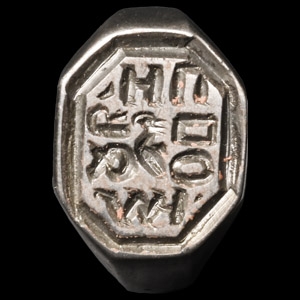
Late Byzantine Tinned Bronze Signet Ring with Inscription and Dove in Centre
Circa 14th-15th century A.D.Sold for (Inc. bp): £143
With facetted shoulders, octagonal bezel with incuse border, central dove motif and surrounding Greek legend 'ΗΠΔΟΗΜαΡ'. 10.05 grams, 23.91 mm overall, 19.86 mm internal diameter (approximate size British T, USA 9 1/2, Europe 21.26, Japan 20)
Private collection formed since the 1940s. UK art market. Property of an Essex gentleman. -
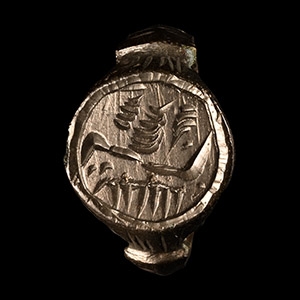
Byzantine Bronze Signet Ring with Two Birds
12th-15th century A.D.Sold for (Inc. bp): £221
With a carinated hoop, notched shoulders supporting a circular bezel with two stylised birds. 4.02 grams, 21.25 mm overall, 17.03 mm internal diameter (approximate size British N, USA 6 1/2, Europe 13.72, Japan 13)
Private collection formed since the 1940s. UK art market. Property of an Essex gentleman. -
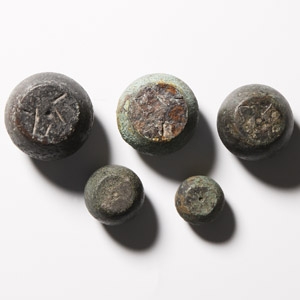
Byzantine Bronze Trade Weight Collection
Circa 8th-12th century A.D.Sold for (Inc. bp): £65
Mixed group of barrel-shaped weights pellets and other markings. 227 grams total, 14-26 mm
Ex Simmons Gallery, London E11, UK, in the 1990s. From a North London collection.
