
Loading, please wait...
LOT 0739
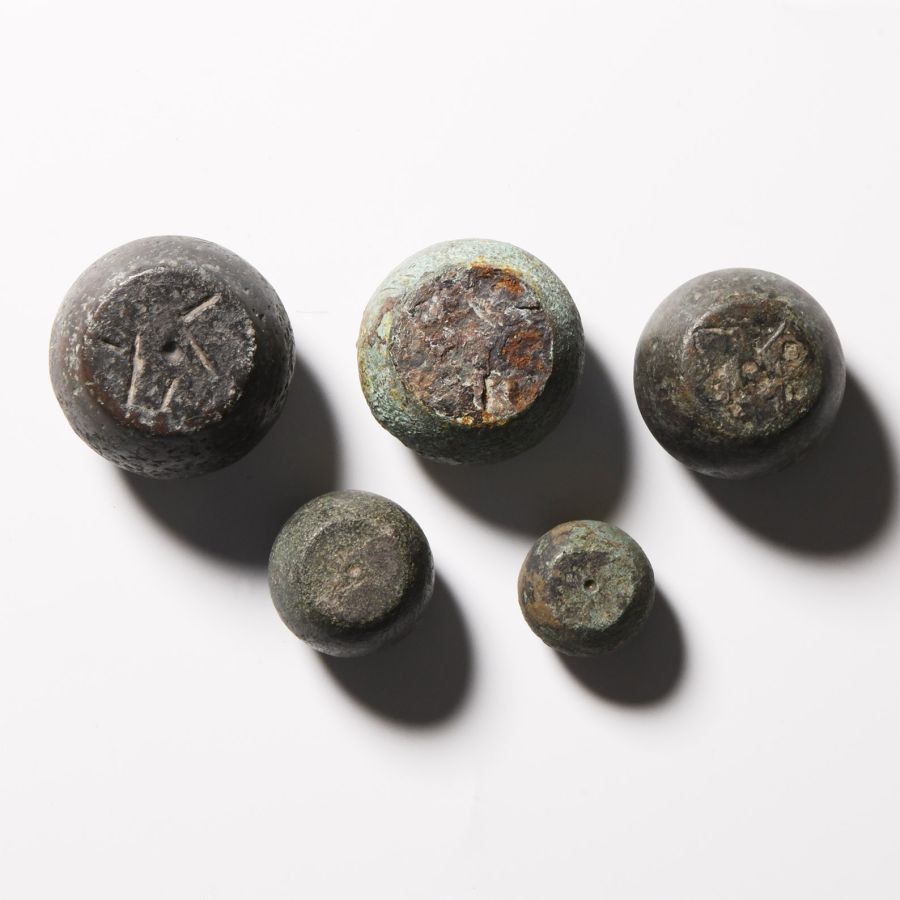
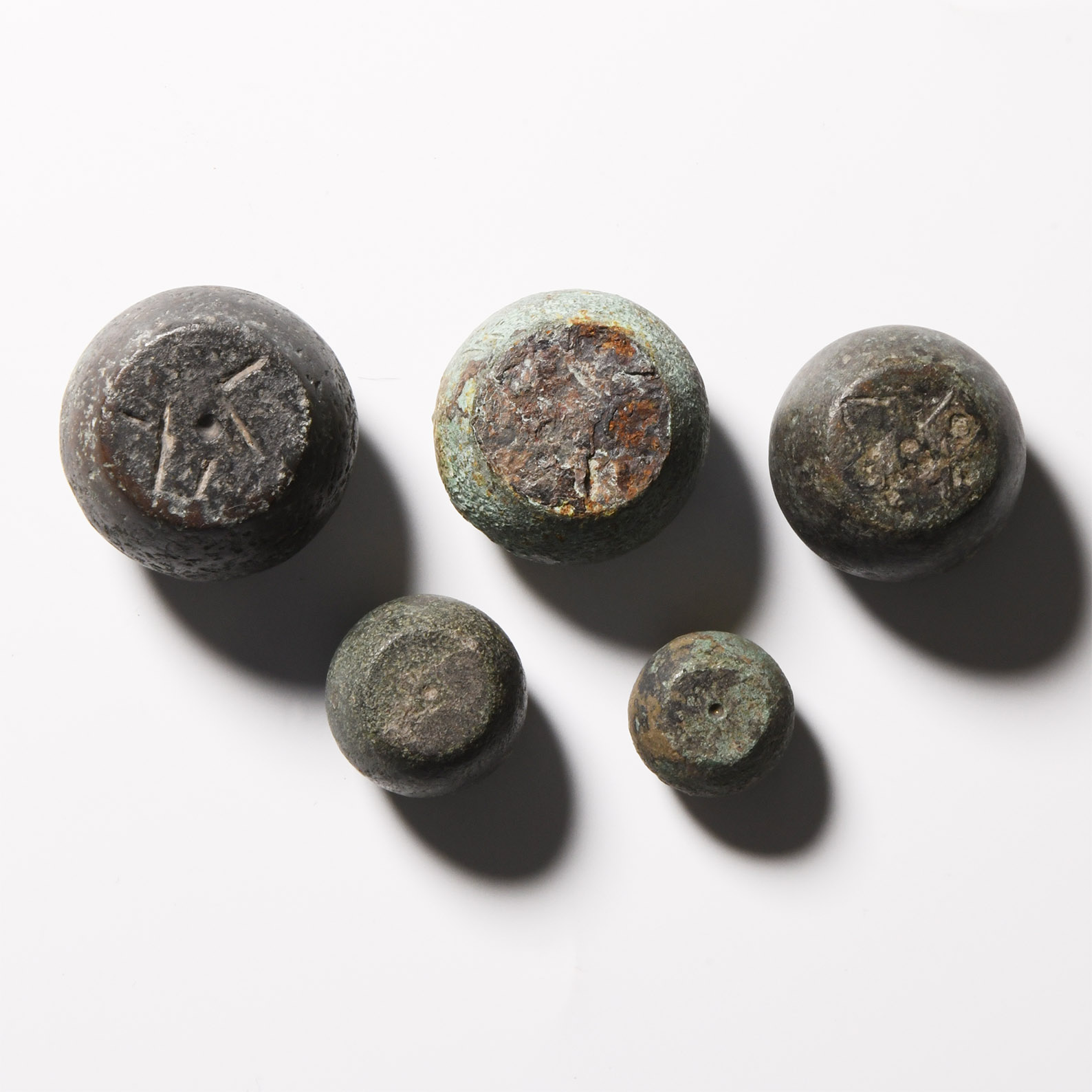
Byzantine Bronze Trade Weight Collection
CIRCA 8TH-12TH CENTURY A.D.
1/2 - 1 in. (227 grams total, 14-26 mm).
Mixed group of barrel-shaped weights pellets and other markings. [5, No Reserve]
ProvenanceEx Simmons Gallery, London E11, UK, in the 1990s.
From a North London collection.
TimeLine Auctions follows a vetting process to ensure the authenticity and legality of all items, reinforcing our commitment to integrity and responsible trading. Each antiquity, antique, and coin lot undergoes thorough examination by a vetting committee of at least ten external specialists, professional trade association members, scientists, and archaeologists: Our Vetting Process
AUCTIONS:
TimeLine is a leading auction house specialising in antiquities, ancient art, collectables, natural history, coins, medals, and books. Our auctions offer museums, collectors, historians, and enthusiasts the opportunity to acquire unique and historically significant pieces.
-
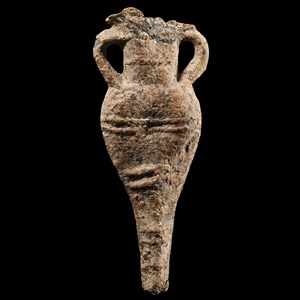
Byzantine Lead Pilgrim's Holy Water Ampulla
Circa 8th-13th century A.D.Sold for (Inc. bp): £26
Conical with thick finial, short tubular neck and two thin lateral loop handles. 18.4 grams, 57 mm
Acquired on the UK art market in the 1990s. Property of a Stowmarket, UK, gentleman. -
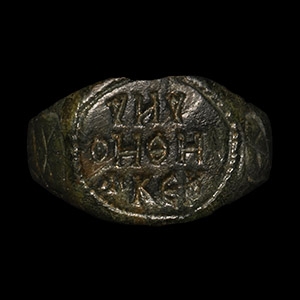
Byzantine Bronze Inscribed Ring
Circa 7th century A.D.Sold for (Inc. bp): £286
With flat-section expanding hoop, scrolls and leaf motifs to shoulders; oval bezel with three lines of Greek inscription reciting Κ[ΥΡI]Ε ΒΟΗΘΗI ΑΗΑ (= Lord helps A...A). 4.30 grams, 21.70 mm overall, 19.70 mm internal diameter (approximate size British Q, USA 8, Europe 17.49, Japan 16)
Acquired in the 1980s-1990s. Property of a Nottinghamshire gentleman.
The inscription on the ring is the typical invocatory formula Kyrie boethei N., which calls directly upon the Lord for help; this form, beside the one calling the Virgin for help as well (Theotokos boethei), is common in the inscriptions of the Eastern Roman Empire. -
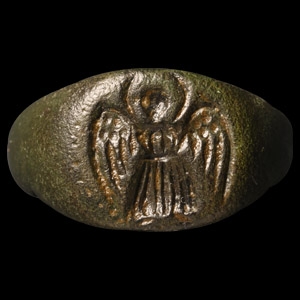
Byzantine Bronze Ring with Angel
Circa 6th-8th century A.D.Sold for (Inc. bp): £247
With a D-section hoop and expanding shoulders, the bezel with a facing nimbate angel with spread wings. 5.34 grams, 22.04 mm overall, 17.87 mm internal diameter (approximate size British P, USA 7 1/2, Europe 16.23, Japan 15)
From the collection of a High Wycombe, Buckinghamshire, UK, gentleman, circa 2000.
