
Loading, please wait...
LOT 1294
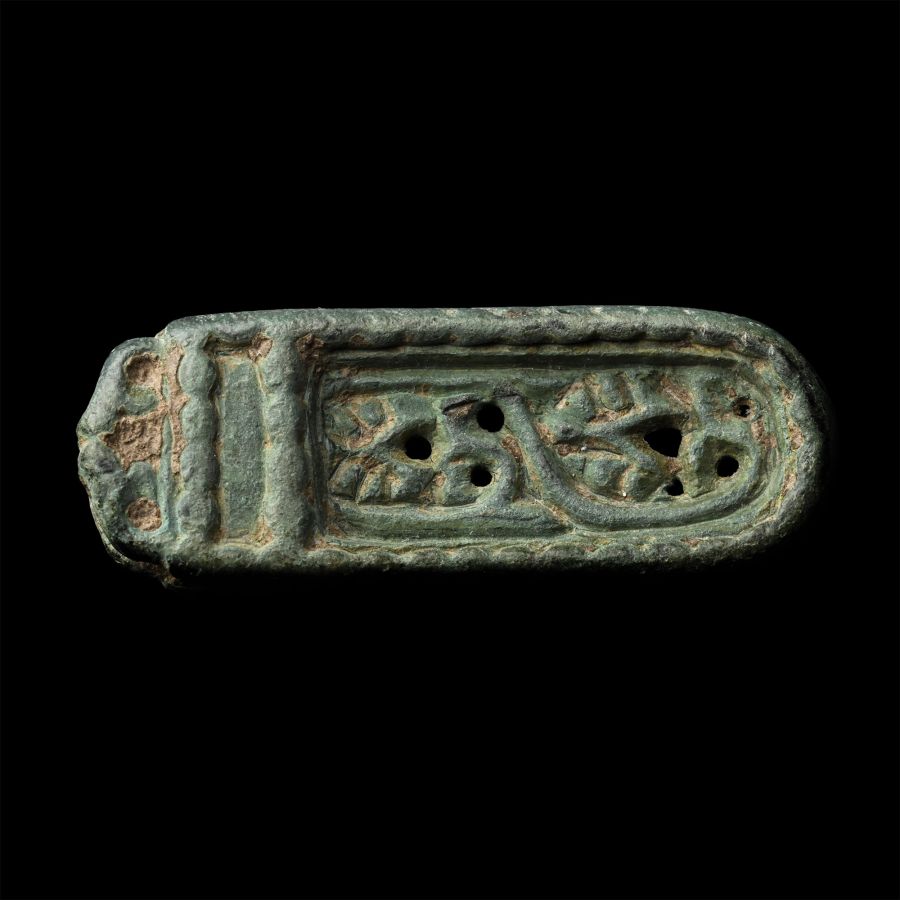
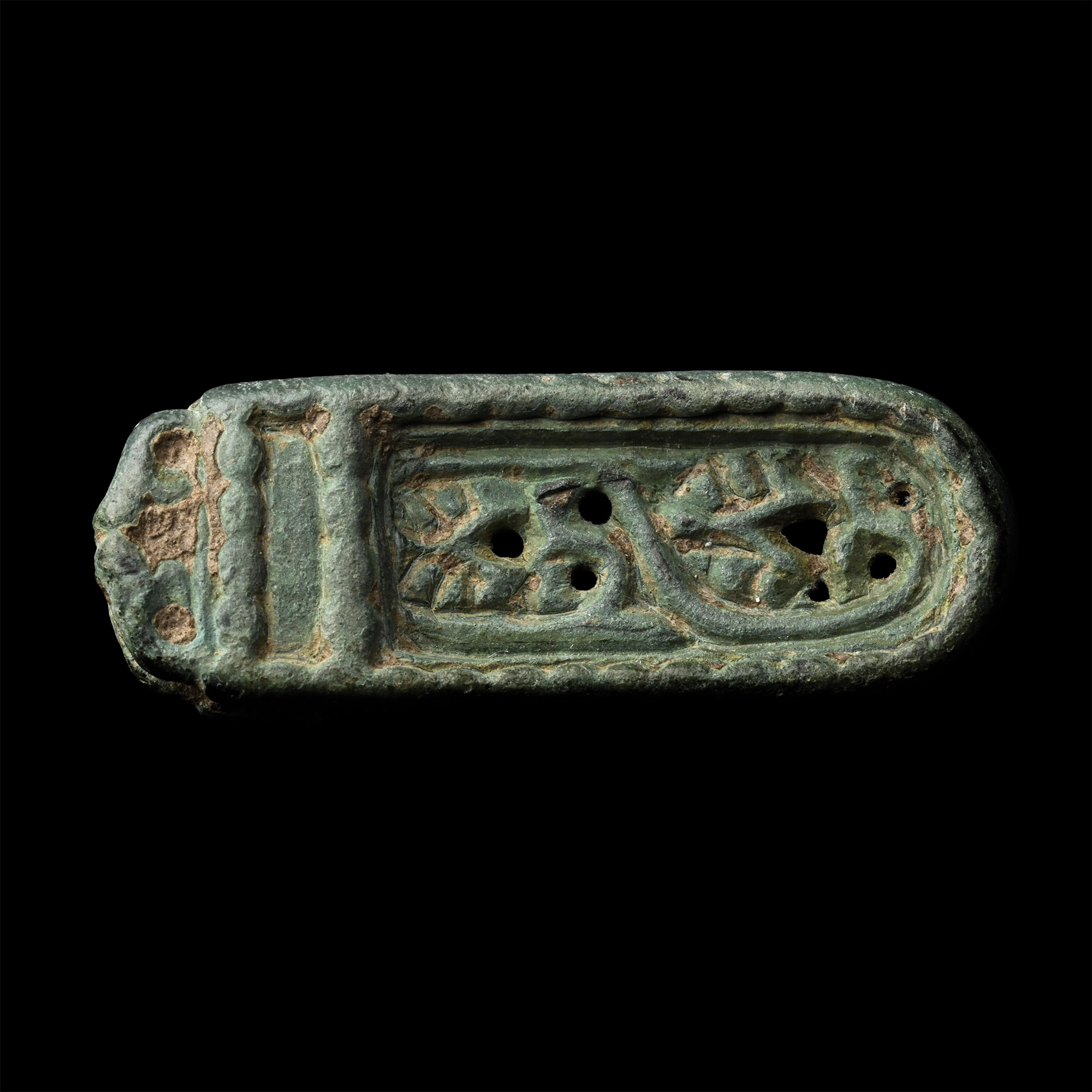
Byzantine Bronze Tongue-Shaped Strap End
CIRCA 8TH CENTURY A.D.
1 5/8 in. (16.9 grams, 41 mm).
With recessed central panel, beaded edges, slot to short end; openwork scrolled foliage motif. [No Reserve]
ProvenanceFrom the private collection of a European gentleman (1942-2024), formed since the 1970s.
CONDITIONTimeLine Auctions follows a vetting process to ensure the authenticity and legality of all items, reinforcing our commitment to integrity and responsible trading. Each antiquity, antique, and coin lot undergoes thorough examination by a vetting committee of at least ten external specialists, professional trade association members, scientists, and archaeologists: Our Vetting Process
AUCTIONS:
TimeLine is a leading auction house specialising in antiquities, ancient art, collectables, natural history, coins, medals, and books. Our auctions offer museums, collectors, historians, and enthusiasts the opportunity to acquire unique and historically significant pieces.
-
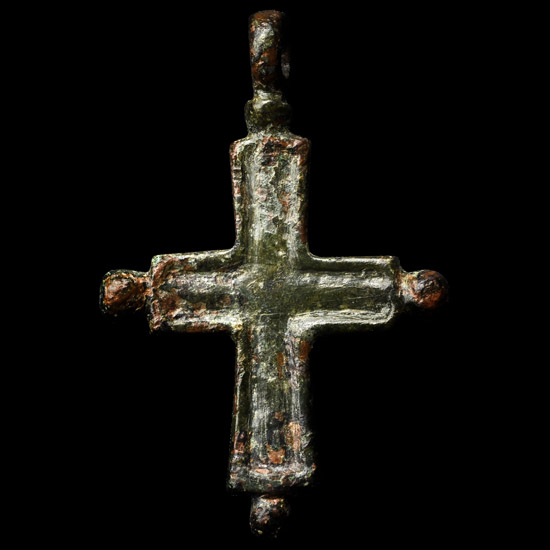
Byzantine Bronze Cross Pendant
Circa 10th-14th century A.D.Sold for (Inc. bp): £65
A bifacial pendant with raised edges and knops at the end of each arm. 5.06 grams, 40 mm
Acquired on the UK art market from the 1990s. From the private collection of a Lincolnshire, UK, gentleman. -
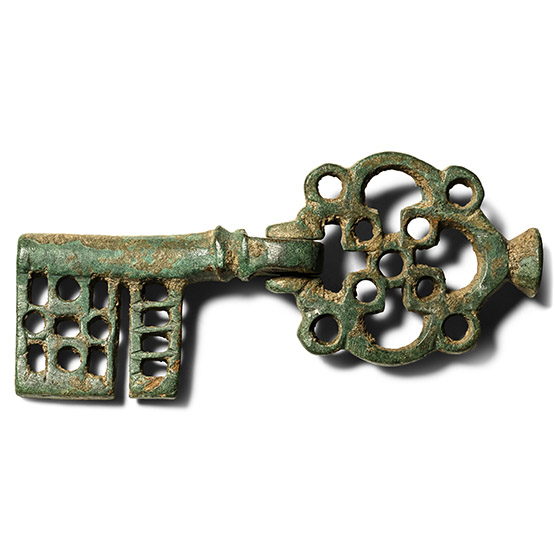
Byzantine Bronze Openwork Key
6th-8th century A.D.Sold for (Inc. bp): £1,040
Comprising an articulated decorative handle with a cross motif, a round-section shaft and an openwork bit. 17.8 grams, 60 mm
Ex German art market, 2000s. Acquired from an EU collector living in London. From the collection of a Surrey, UK, gentleman. -
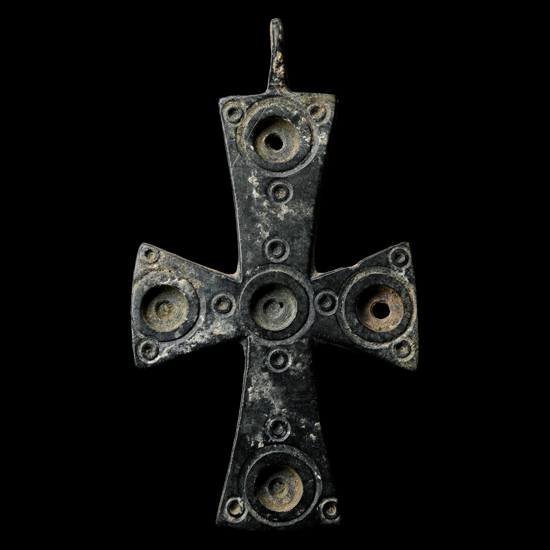
Byzantine Bronze Pectoral Cross Pendant
Circa 10th-12th century A.D.Sold for (Inc. bp): £195
An expanding arm cross with five circular cells flanked by ring-and-dot motifs, likely representing the five wounds of Christ; the reverse with a large annulate surrounded by four ring-and-dot motifs. 40 grams, 89 mm
Acquired on the UK art market from the 1990s. From the private collection of a Lincolnshire, UK, gentleman.
