
Loading, please wait...


LOT 0929
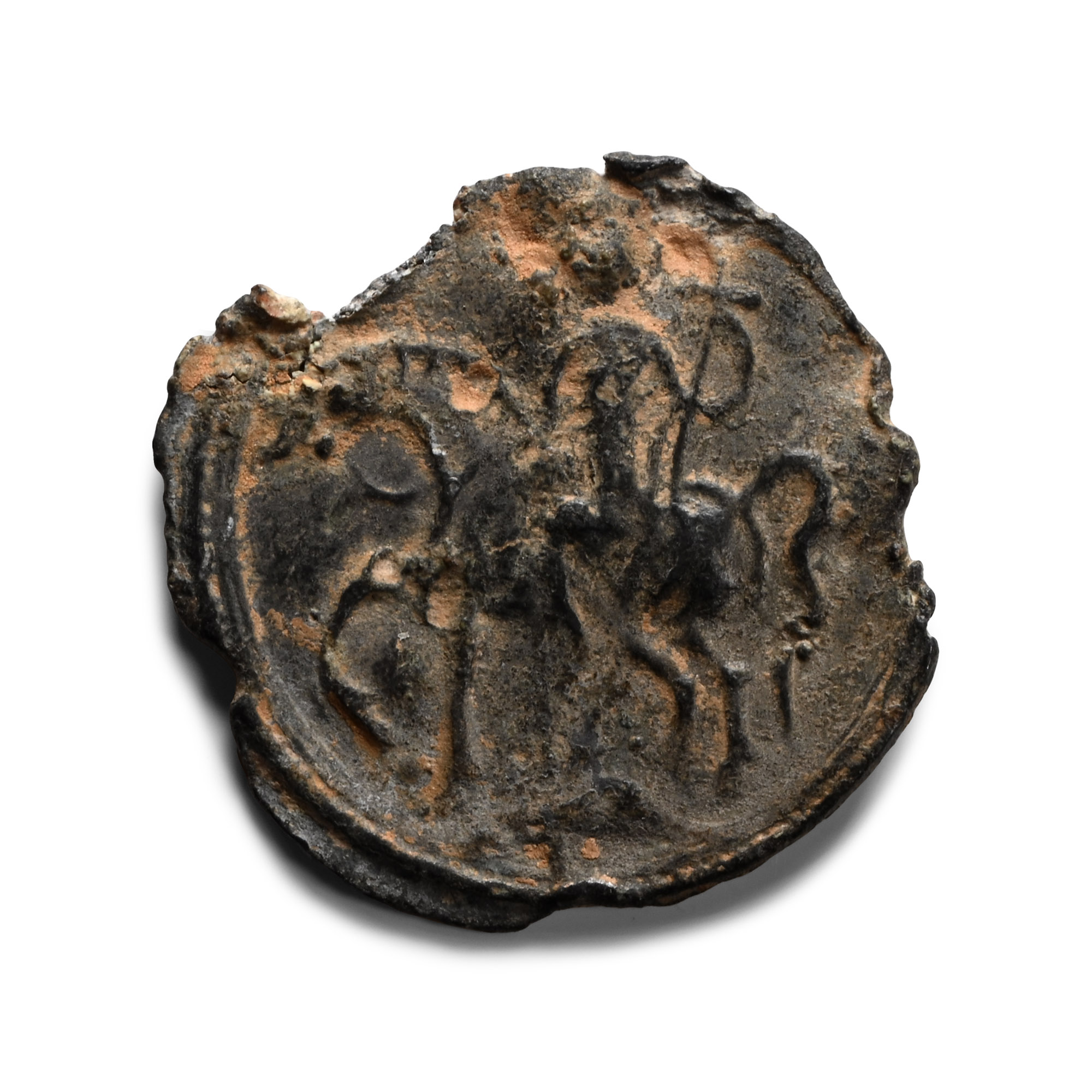
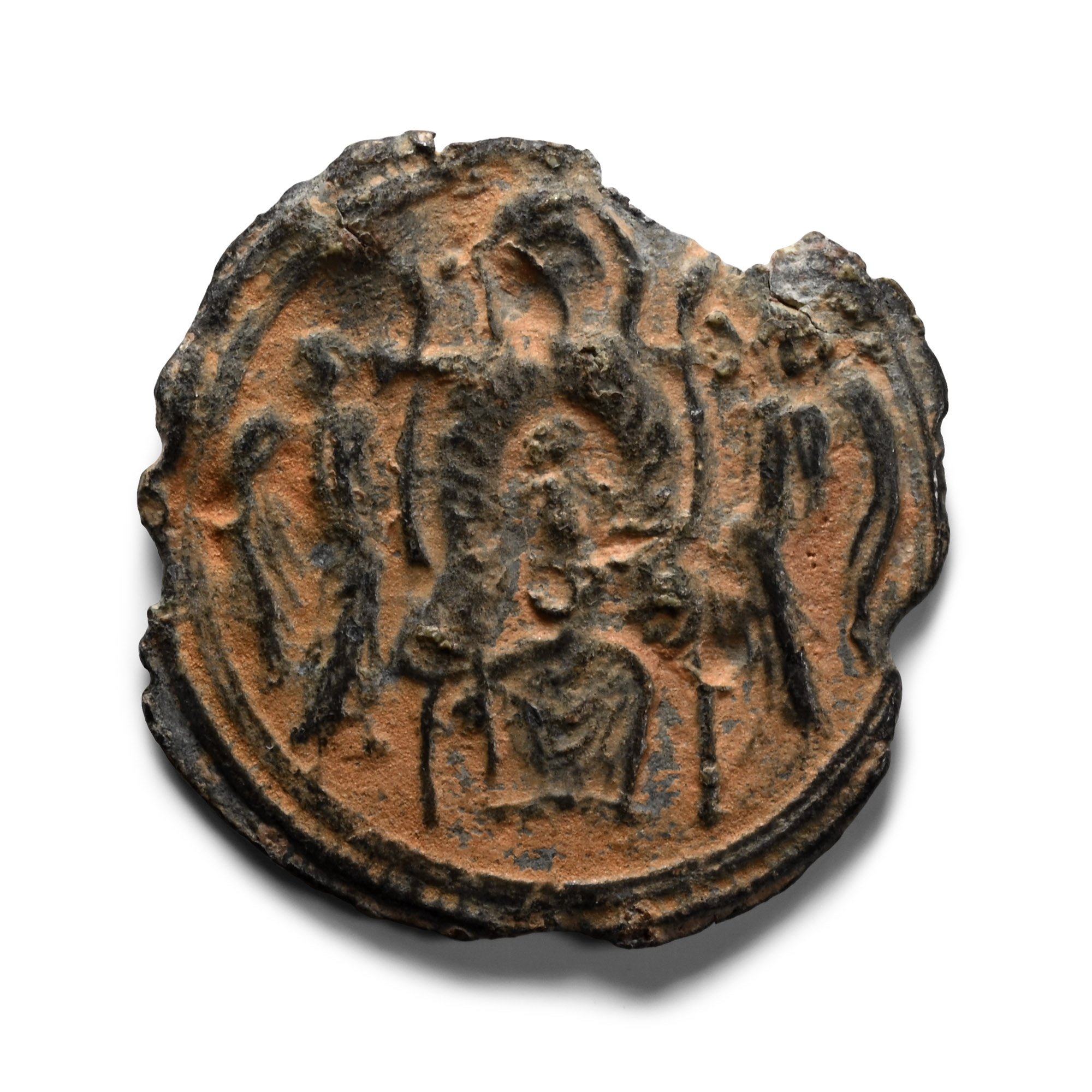
Byzantine Bronze St. George Amulet
6TH-7TH CENTURY A.D.
1 1/8 in. (5.4 grams, 28 mm).
Bifacial amulet with chipped rim; obverse: St George with cross on horseback overcoming a dragon; reverse: mary and Infant Jesus flanked by angels.
ProvenanceFrom the collection of a gentleman, acquired on the London art market in the 1990s.
CONDITIONTimeLine Auctions follows a vetting process to ensure the authenticity and legality of all items, reinforcing our commitment to integrity and responsible trading. Each antiquity, antique, and coin lot undergoes thorough examination by a vetting committee of at least ten external specialists, professional trade association members, scientists, and archaeologists: Our Vetting Process
AUCTIONS:
TimeLine is a leading auction house specialising in antiquities, ancient art, collectables, natural history, coins, medals, and books. Our auctions offer museums, collectors, historians, and enthusiasts the opportunity to acquire unique and historically significant pieces.
LOT 0929
Byzantine Bronze St. George Amulet
Estimate £100 - 140€120 - 160 (for guidance only)$140 - 190 (for guidance only)
-
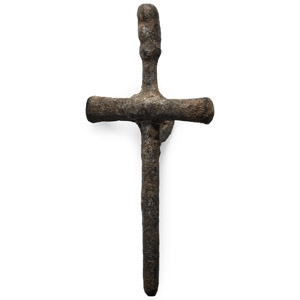
Byzantine Bronze Cross Pendant
12th-14th century A.D.Sold for (Inc. bp): £26
With flared cross-piece, pierced lug to reverse. 8.1 grams, 59 mm
From the collection of a gentleman, acquired on the London art market in the 1990s. -
.jpg)
Byzantine Lead Icon with St George
Circa 7th century A.D.Sold for (Inc. bp): £1,404
Bifacial lead plaque with figurative decoration: obverse with Saint George, nimbate, on his horse killing a fallen foe with his spear; 'ΓΕΟΡΓ' label above the horse's neck, raised border with pellets and pellet clusters; reverse with relief pattern of a double circle decorated with double arcs forming a cross pellet to the centre. 48.8 grams, 64 mm
Private collection Mr S.A., Switzerland, before 1992, thence by descent.
According to the Christian tradition, Saint George would have lived between the end of the 3rd century and the beginning of the 4th century: born into a noble Christian family, he became an officer in the Roman army and was then named a prefect by Diocletian. But when the same emperor decided to resume the persecutions, Saint George became a victim despite his important political rank. His role in the development of the faith is so important that he is included among the Great Martyrs of the Eastern Church and his fight against the dragon becomes a symbol par excellence of the fight for Good which defeats Evil. In the Christian symbolism of the Middle Ages, the circle, a perfect geometric shape which has neither beginning nor end, designates the universe whose centre is the source and thus evokes Jesus. -
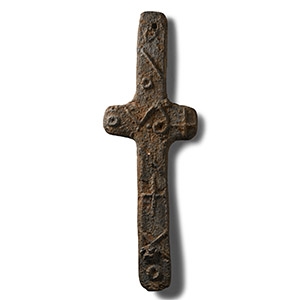
Byzantine Lead Cross
5th-7th century A.D.Estimate: £500 - 700 (‡+bp*)
Opening Bid: £250
Flat-section cruciform mount with stub arms and attachment point at one end; high-relief saltires, hoops and other detailing. 357 grams, 21.5 cm
Acquired in the mid 1980s-1990s. From the family collection of Mr S.A., Switzerland, thence by descent. Private collection since the late 1990s.
