
Loading, please wait...
LOT 0776
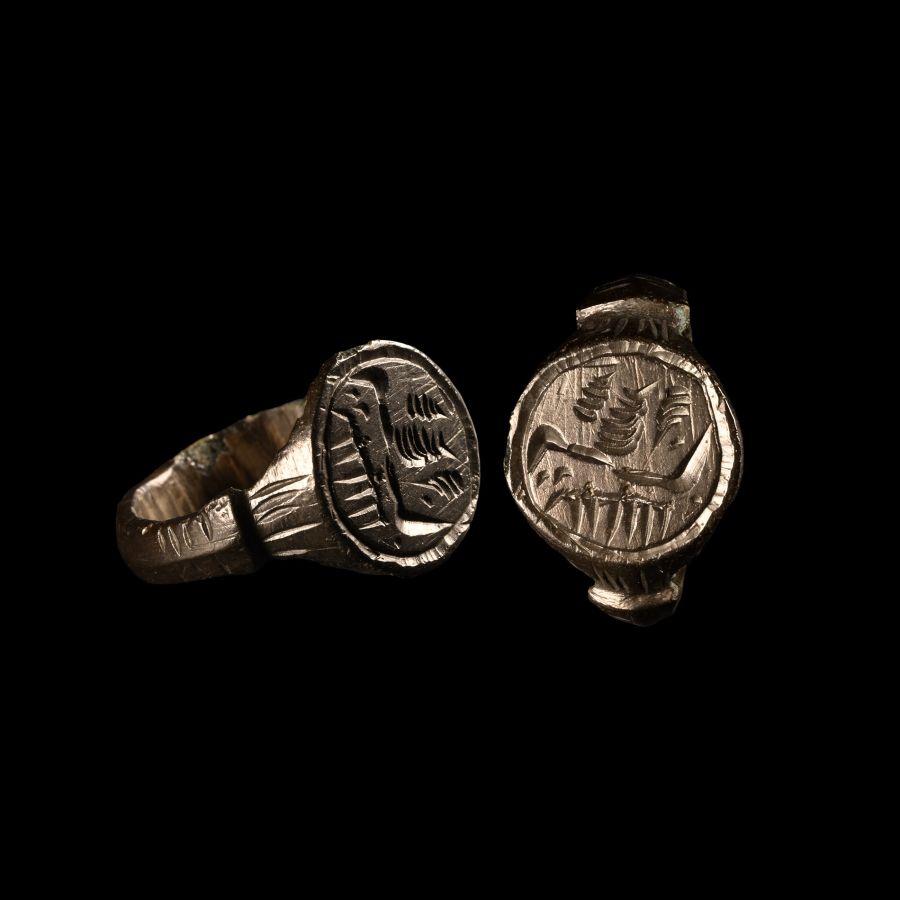
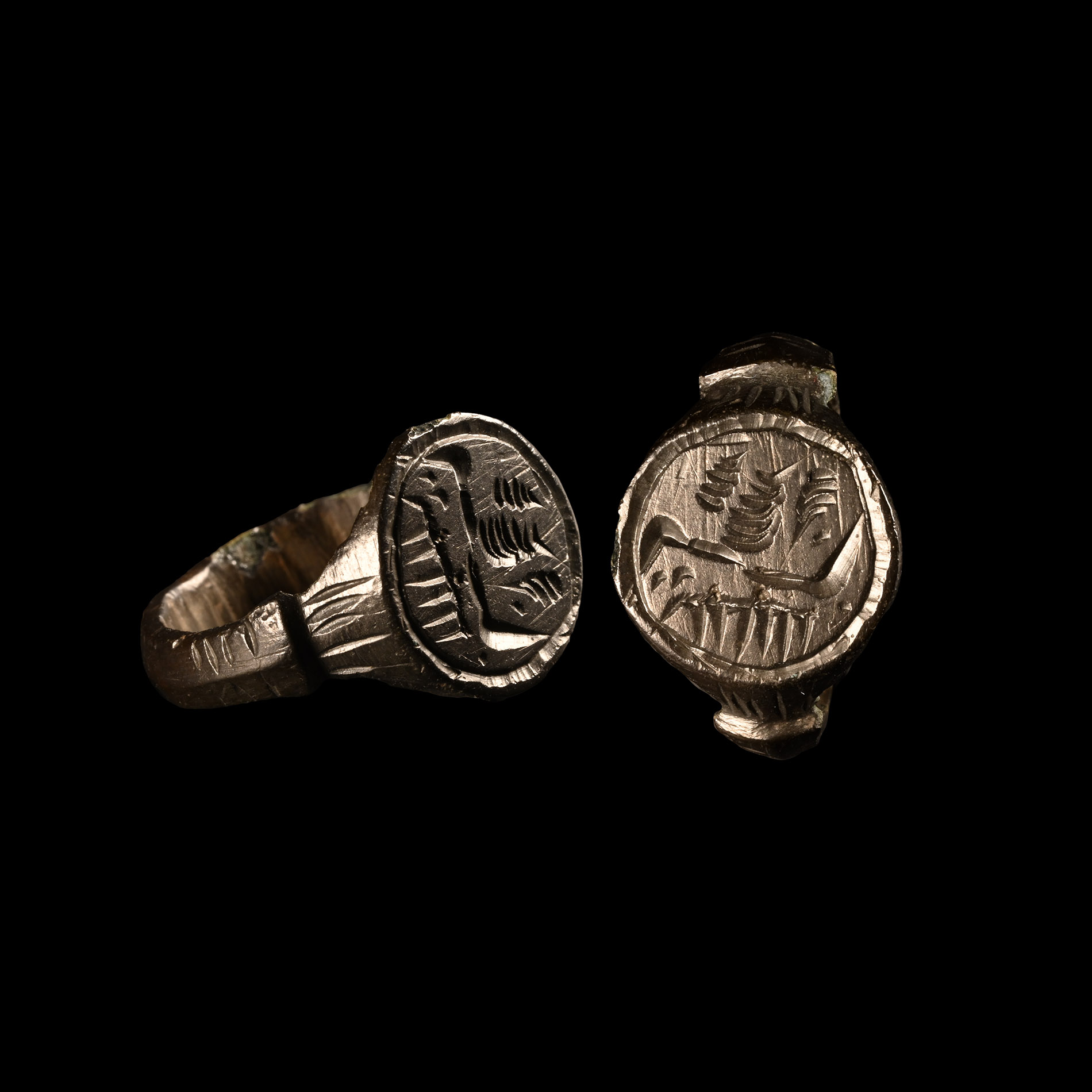
Byzantine Bronze Signet Ring with Two Birds
12TH-15TH CENTURY A.D.
3/4 in. (4.02 grams, 21.25 mm overall, 17.03 mm internal diameter (approximate size British N, USA 6 1/2, Europe 13.72, Japan 13)).
With a carinated hoop, notched shoulders supporting a circular bezel with two stylised birds. [No Reserve]
ProvenancePrivate collection formed since the 1940s.
UK art market.
Property of an Essex gentleman.
TimeLine Auctions follows a vetting process to ensure the authenticity and legality of all items, reinforcing our commitment to integrity and responsible trading. Each antiquity, antique, and coin lot undergoes thorough examination by a vetting committee of at least ten external specialists, professional trade association members, scientists, and archaeologists: Our Vetting Process
AUCTIONS:
TimeLine is a leading auction house specialising in antiquities, ancient art, collectables, natural history, coins, medals, and books. Our auctions offer museums, collectors, historians, and enthusiasts the opportunity to acquire unique and historically significant pieces.
-
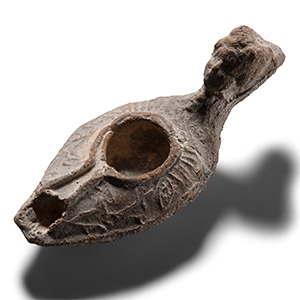
Byzantine Terracotta Slipper Oil Lamp with Head of a Goddess
5th-8th century A.D.Sold for (Inc. bp): £124
With a large sub circular filling hole and a narrow channel running towards the nozzle; stylised animal motifs and linear decoration to the body; the integral handle formed as the head of a goddess with rounded face and curly hair; low basal ring from which raised tendrils radiate. 79 grams, 11.6 cm
Acquired before 1990s/early 2000s. From the family collection of Jack Lyttle (1944-2023), Kilmacolm, Scotland; thence by descent to his granddaughter. Property of an East Sussex, UK, gentleman. -
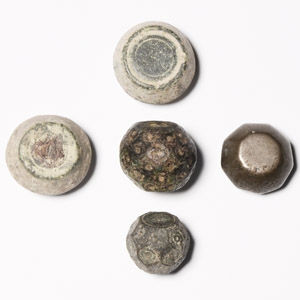
Byzantine Bronze Trade Weight Collection
Circa 8th-12th century A.D.Sold for (Inc. bp): £33
Mixed group of barrel-shaped, biconvex and other trade weights, some with punched markings. 244 grams total, 18-25 mm
Ex Simmons Gallery, London E11, UK, in the 1990s. From a North London collection. -
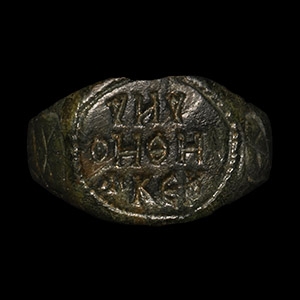
Byzantine Bronze Inscribed Ring
Circa 7th century A.D.Sold for (Inc. bp): £286
With flat-section expanding hoop, scrolls and leaf motifs to shoulders; oval bezel with three lines of Greek inscription reciting Κ[ΥΡI]Ε ΒΟΗΘΗI ΑΗΑ (= Lord helps A...A). 4.30 grams, 21.70 mm overall, 19.70 mm internal diameter (approximate size British Q, USA 8, Europe 17.49, Japan 16)
Acquired in the 1980s-1990s. Property of a Nottinghamshire gentleman.
The inscription on the ring is the typical invocatory formula Kyrie boethei N., which calls directly upon the Lord for help; this form, beside the one calling the Virgin for help as well (Theotokos boethei), is common in the inscriptions of the Eastern Roman Empire.
