
Loading, please wait...
LOT 0744
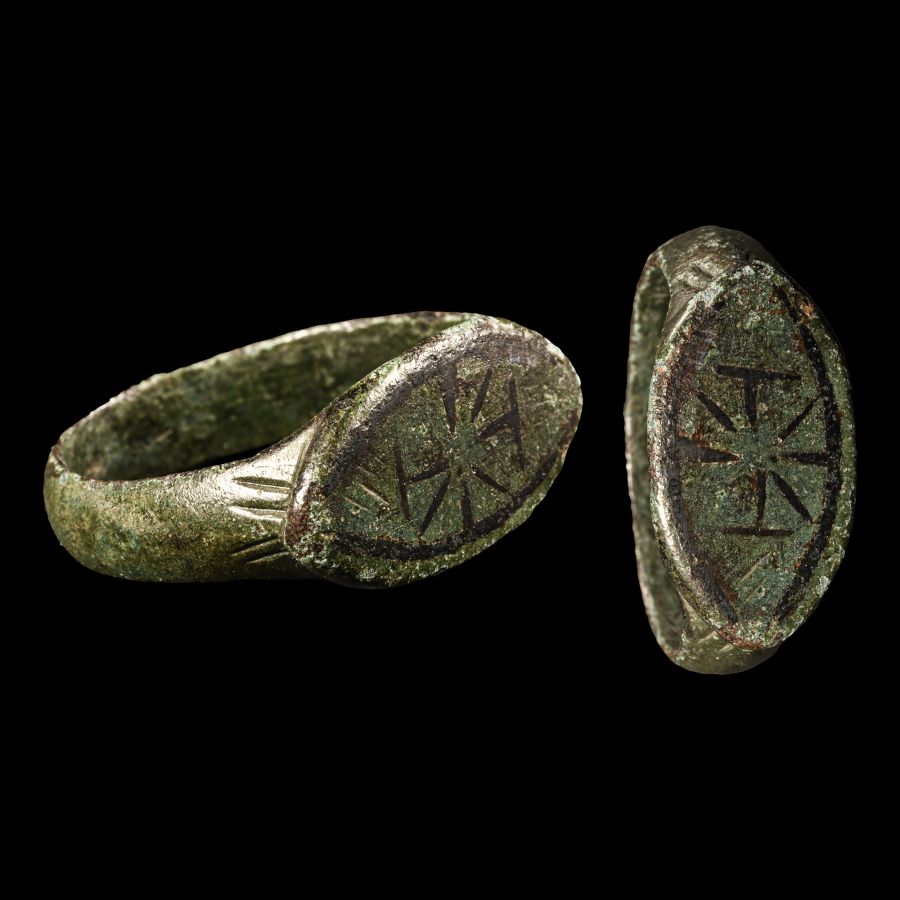
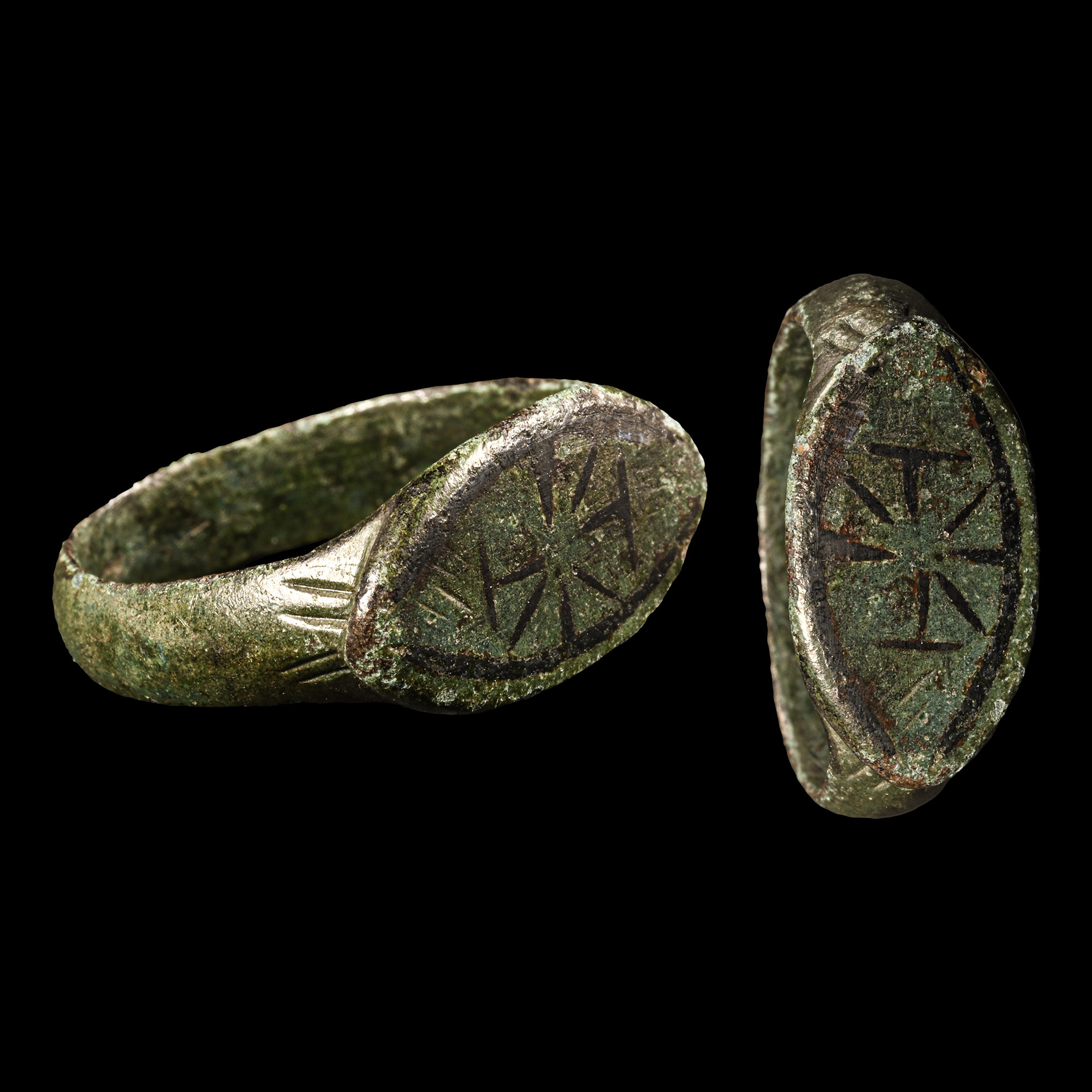
Byzantine Bronze Signet Ring with Niello Cross
CIRCA 14TH CENTURY A.D.
7/8 in. (5.04 grams, 22.85 mm overall, 17.65 mm internal diameter (approximate size British P, USA 7 1/2, Europe 16.23, Japan 15)).
With a D-section hoop, keeled shoulders supporting a lentoid bezel; the bezel with a niello border and a radiating cross motif. [No Reserve]
ProvenancePrivate collection formed since the 1940s.
UK art market.
Property of an Essex gentleman.
TimeLine Auctions follows a vetting process to ensure the authenticity and legality of all items, reinforcing our commitment to integrity and responsible trading. Each antiquity, antique, and coin lot undergoes thorough examination by a vetting committee of at least ten external specialists, professional trade association members, scientists, and archaeologists: Our Vetting Process
AUCTIONS:
TimeLine is a leading auction house specialising in antiquities, ancient art, collectables, natural history, coins, medals, and books. Our auctions offer museums, collectors, historians, and enthusiasts the opportunity to acquire unique and historically significant pieces.
-
.jpg)
Byzantine Liturgical Bronze Bowl with Figures
11th-12th century A.D.Estimate: £10,000 - 14,000 (+bp*)
Opening Bid: £5,000
With sloping walls and a thin everted rim, the interior of the vessel engraved with a scene comprising four nimbate Evangelists around a central figure of beardless Christ, each holding a gospel in the right hand, the left hand raised to make the sign of blessing; the four Evangelists each depicted beneath an arch with a Corinthian column flanking, the body of the column decorated with fish-scale motifs. 418 grams, 29.2 cm
Fine condition.
Private German collection since the 1980s. Acquired on the German art market in 2001. Property of a gentleman. Accompanied by an academic report by Dr Raffaele D’Amato. This lot has been checked against the Interpol Database of stolen works of art and is accompanied by search certificate no.10940-181731.
This vessel belongs to a well-known type of rich liturgical objects, likely produced in the workshops of the Imperial capital, Constantinople, although the style used to present Christ and the Evangelists in this artwork points to an important provincial craftsman, certainly influenced by Islamic and Persian iconography. Patens and chalices were the essential containers for the bread and wine of the Divine Liturgy (Eucharist) in Byzantium. -
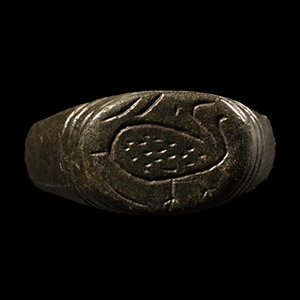
Byzantine Bronze Ring with Bird in Profile
6th-10th century A.D.Sold for (Inc. bp): £46
With an expanding D-section hoop, oval bezel with a stylised stocky bird. 5.52 grams, 21.45 mm overall, 16.15 mm internal diameter (approximate size British L, USA 5 3/4, Europe 11.24, Japan 10)
Private collection formed since the 1940s. UK art market. Property of an Essex gentleman. -
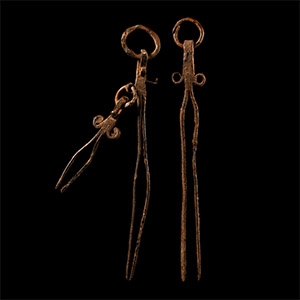
Byzantine Iron Tweezers Group
Circa 10th-15th century A.D.Sold for (Inc. bp): £65
Comprising: one with long arms, loop terminal with two further loops to the sides; another with long arms and loop terminal, the side loop with another pair of smaller tweezers. 48 grams total, 14.5-15 cm
Acquired in the 1980s-1990s. Property of a Nottinghamshire gentleman.
