
Loading, please wait...
LOT 0748
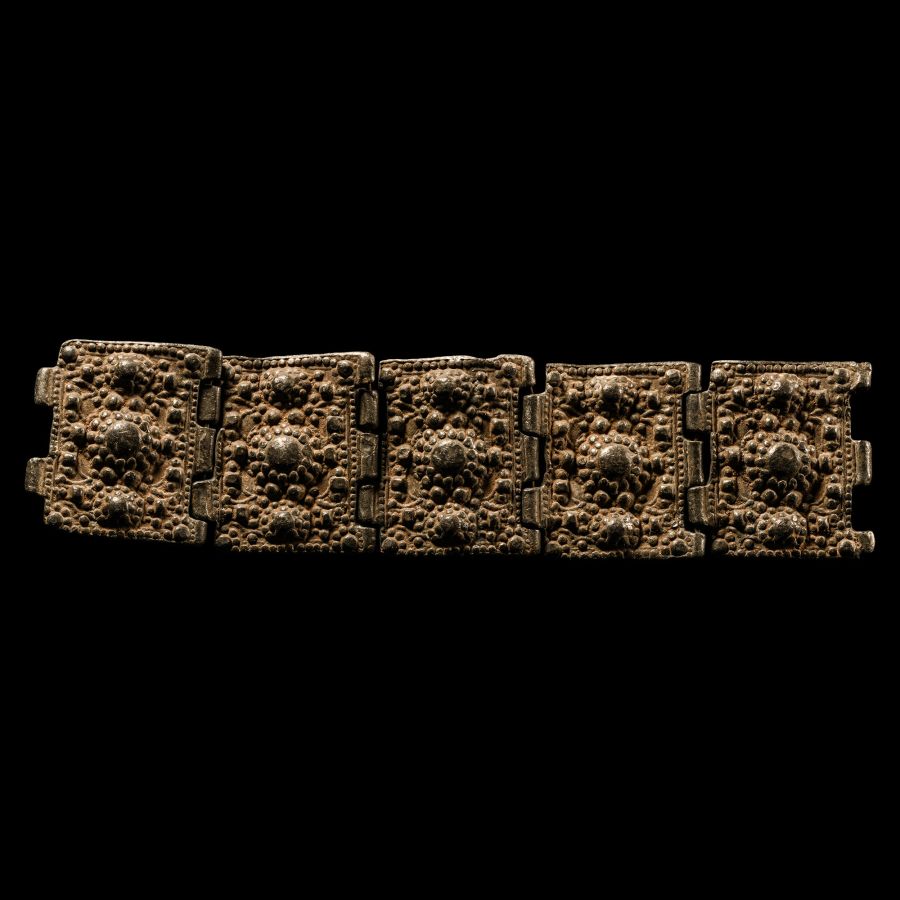
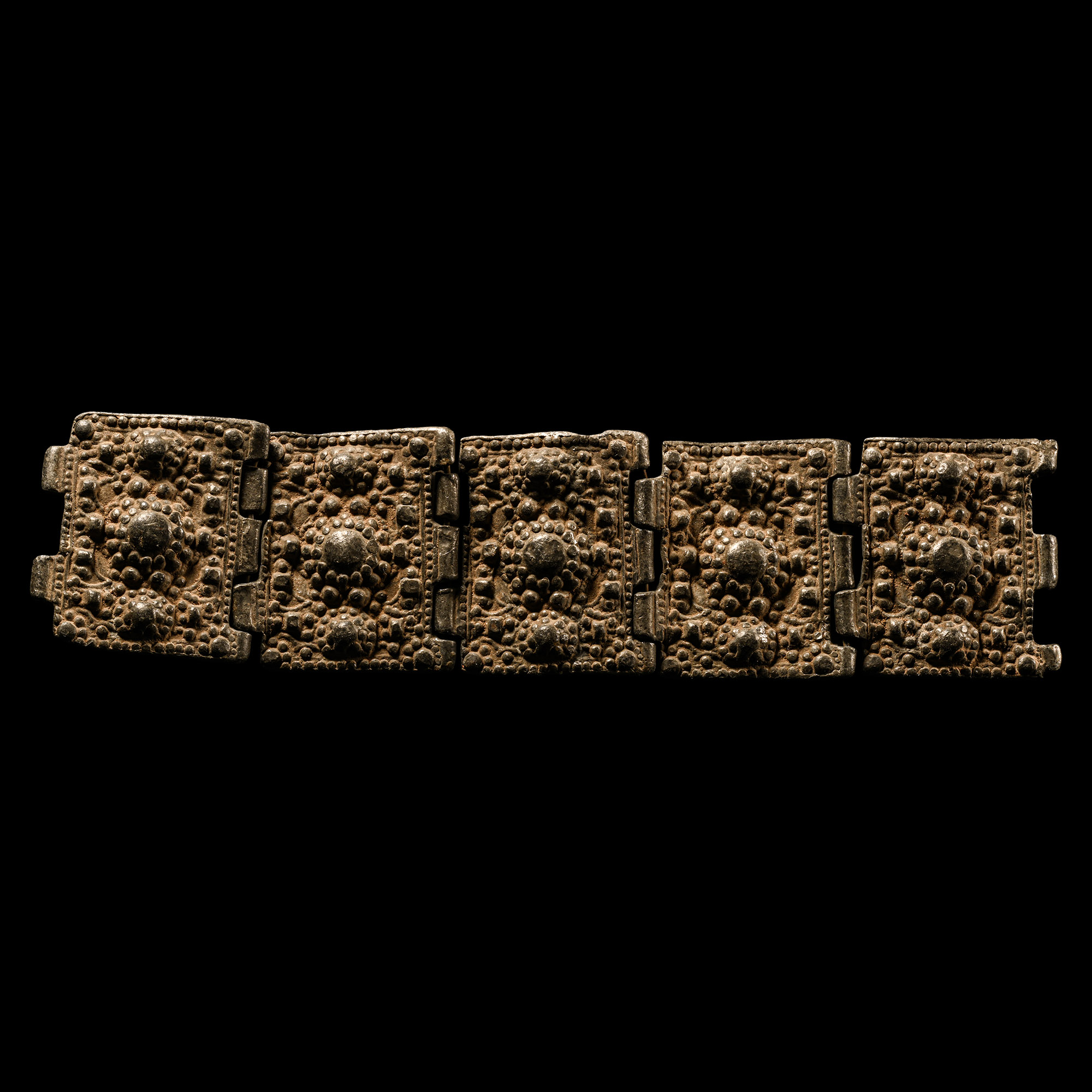
Byzantine Bronze Segmented Strap
10TH-15TH CENTURY A.D.
5 7/8 in. (61.7 grams, 15 cm).
Comprising five hinged sections, each with three central bosses with pelletted collars, further pellets to the field; possibly from a belt. [No Reserve]
ProvenanceUK private collection.
Acquired from York Antiques Centre, in 2001.
Property of a Nottinghamshire gentleman.
TimeLine Auctions follows a vetting process to ensure the authenticity and legality of all items, reinforcing our commitment to integrity and responsible trading. Each antiquity, antique, and coin lot undergoes thorough examination by a vetting committee of at least ten external specialists, professional trade association members, scientists, and archaeologists: Our Vetting Process
AUCTIONS:
TimeLine is a leading auction house specialising in antiquities, ancient art, collectables, natural history, coins, medals, and books. Our auctions offer museums, collectors, historians, and enthusiasts the opportunity to acquire unique and historically significant pieces.
-
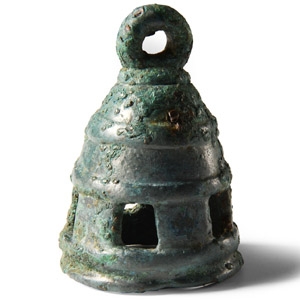
Byzantine Bronze Openwork Bell
Circa 10th-12th century A.D.Sold for (Inc. bp): £117
Conical profile with thick suspension loop, circumferential ribs, five square slots above the mouth. 108 grams, 63 mm
Ex old English collection. London art market, pre 2000. Property of a London, UK, gentleman. -
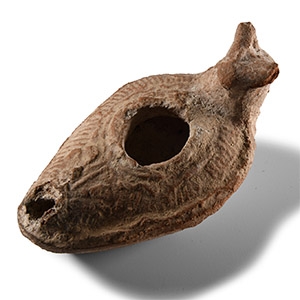
Byzantine Terracotta Slipper Oil Lamp with Animal Head Handle
5th-8th century A.D.Sold for (Inc. bp): £59
With integral handle shaped as an animal head, sub-circular filling hole, radiating raised lines to the shoulder; a palm leaf to base. 86 grams, 85 mm wide
Acquired before 1990s/early 2000s. From the family collection of Jack Lyttle (1944-2023), Kilmacolm, Scotland; thence by descent to his granddaughter. Property of an East Sussex, UK, gentleman. -
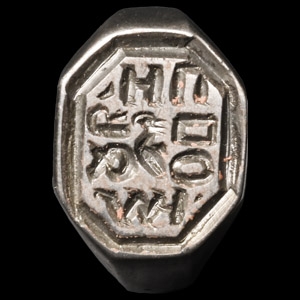
Late Byzantine Tinned Bronze Signet Ring with Inscription and Dove in Centre
Circa 14th-15th century A.D.Sold for (Inc. bp): £143
With facetted shoulders, octagonal bezel with incuse border, central dove motif and surrounding Greek legend 'ΗΠΔΟΗΜαΡ'. 10.05 grams, 23.91 mm overall, 19.86 mm internal diameter (approximate size British T, USA 9 1/2, Europe 21.26, Japan 20)
Private collection formed since the 1940s. UK art market. Property of an Essex gentleman.
