
Loading, please wait...
LOT 1151
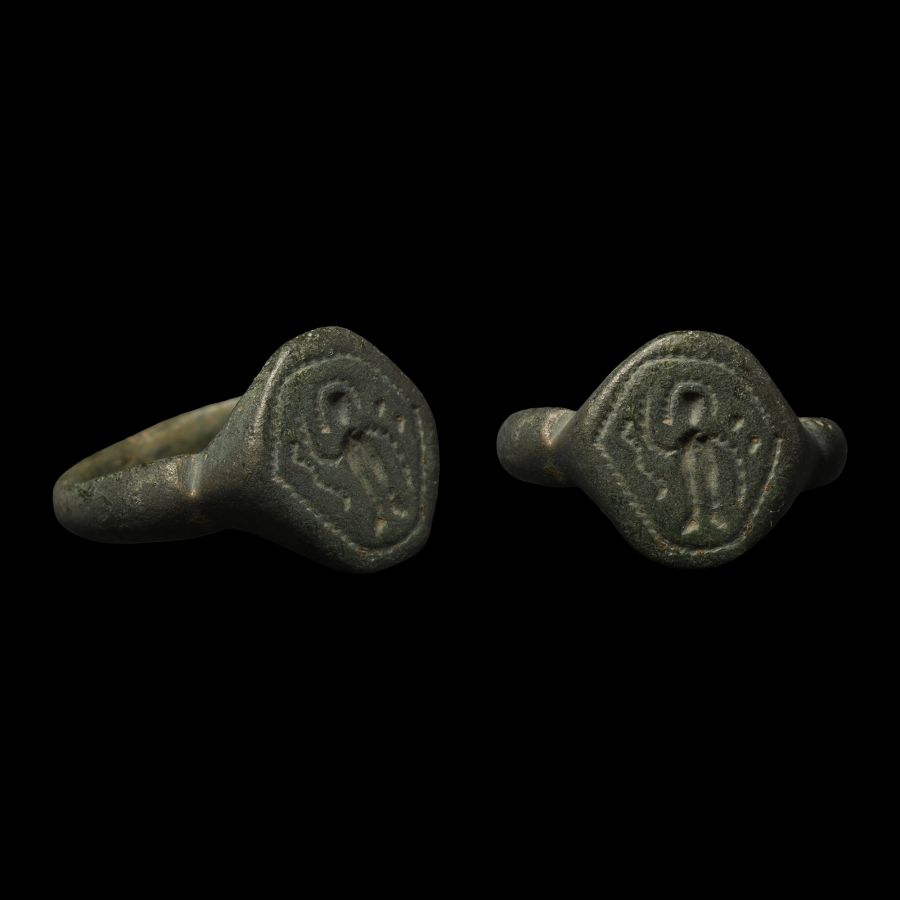
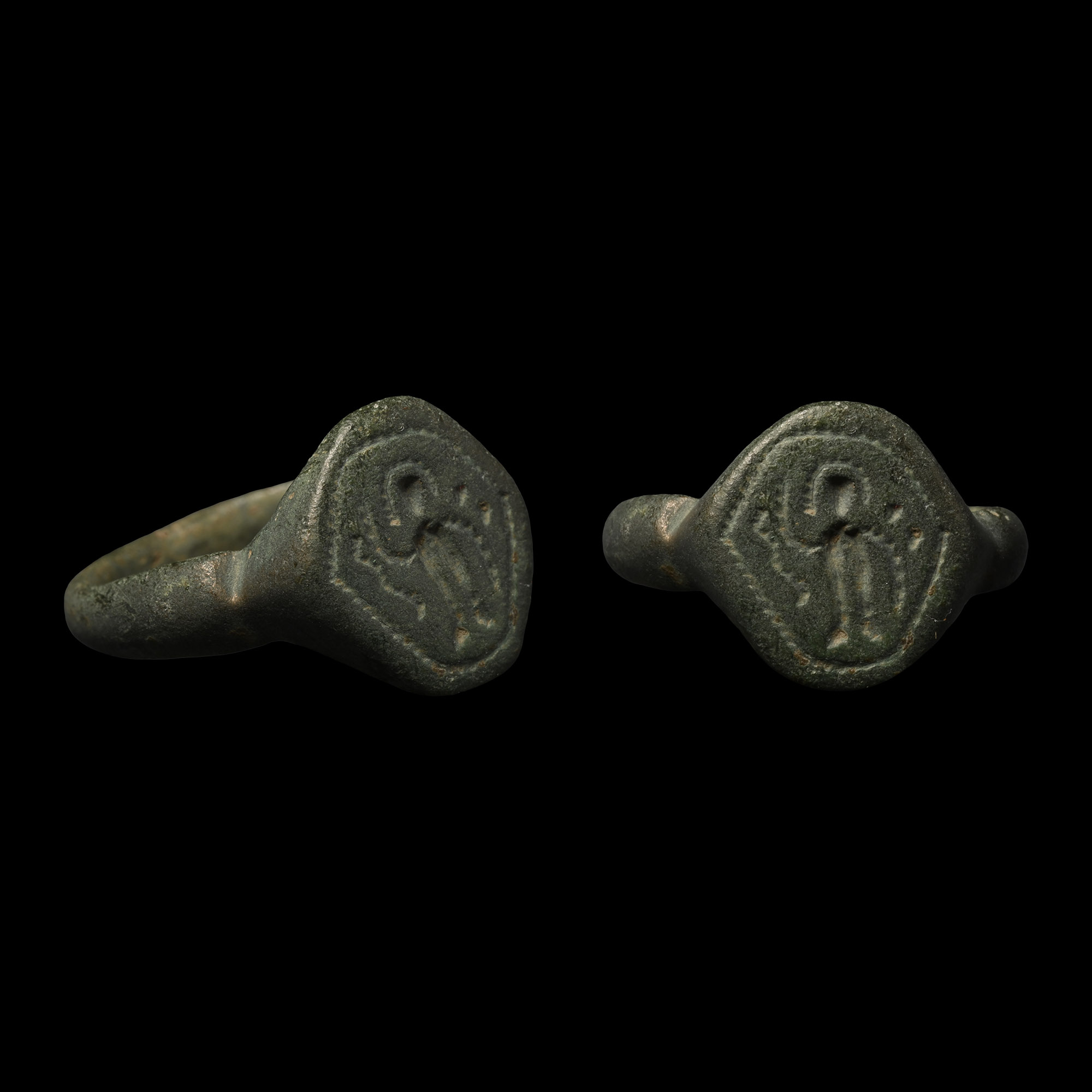
Byzantine Bronze Ring with Warrior Saint
12TH-13TH CENTURY A.D.
1 in. (6.65 grams, 23.80 mm overall, 18.91 mm internal diameter (approximate size British Q 1/2, USA 8 1/4, Europe 18.12, Japan 17)).
D-section hoop with keeled shoulders, polygonal bezel with a stylised nimbate figure. [No Reserve]
ProvenanceAcquired on the UK and EU art market before 2000.
From the private collection of a Surrey, UK, gentleman.
Cf. for the type Crajovan, B., ‘Inele medievale cu şi fără chaton descoperite pe teritoriul jud. Timiş, România,’ in Patrimonium Banaticum IX, 2019, pp.167–175, pl.3/5.
FootnotesThis category of rings had a hexagonal-rounded chaton raised above the link. Conforming to the iconography of the Orthodox countries under the influence of Byzantium, the possible decoration was related to military saints.
CONDITIONTimeLine Auctions follows a vetting process to ensure the authenticity and legality of all items, reinforcing our commitment to integrity and responsible trading. Each antiquity, antique, and coin lot undergoes thorough examination by a vetting committee of at least ten external specialists, professional trade association members, scientists, and archaeologists: Our Vetting Process
AUCTIONS:
TimeLine is a leading auction house specialising in antiquities, ancient art, collectables, natural history, coins, medals, and books. Our auctions offer museums, collectors, historians, and enthusiasts the opportunity to acquire unique and historically significant pieces.
-
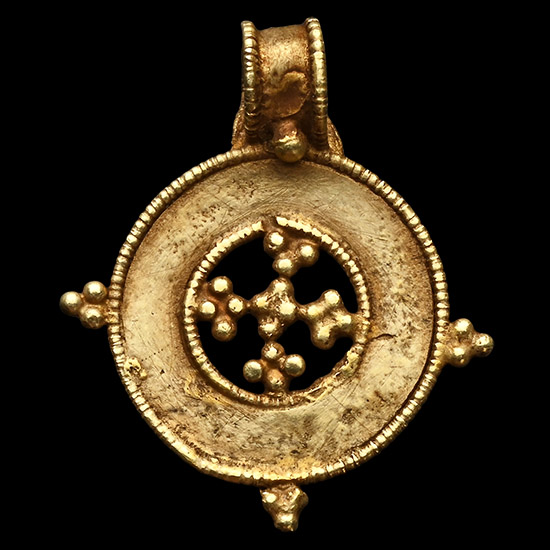
Byzantine Gold Cross Pendant
Circa 6th-8th century A.D.Sold for (Inc. bp): £650
Comprising an annular plaque with beaded wire frame to inner and outer edges, granule clusters to three cardinal points and a cruciform cluster to the centre; a suspension loop with cluster at the junction and beaded wire edges. 1.88 grams, 24 mm
From a North American gentleman's collection, 1990s. -
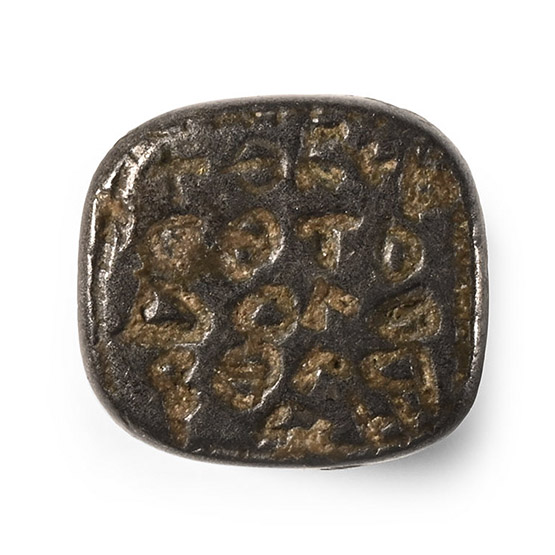
Byzantine Seal Matrix with Inscription
Circa 11th-12th century A.D.Estimate: £80 - 100 (+bp*)
Opening Bid: £44
With inscription '+ΘKEB / OΘTO / ΔΟΛΟ / ΤΘΛΑ' for 'ΘΕΟΤΟΚΕ ΒΟΗΘΕI ΤΩ ΔΟΥΛΩ ΤΟΥ ΘΕΟΥ ΛΑΔΕ' (Mother of God, help Lades, the servant of God). 13.1 grams, 18 mm
From an important collection formed before 1988, London and Geneva.
The stamp seals that have survived in large numbers from Byzantium are objects a few centimetres high and conical in shape, featuring a sealing surface at the lower end and a pendant at the upper end. They served the same function as signet rings and were used to seal everyday objects, primarily for personal purposes, using wax and other soft materials. -
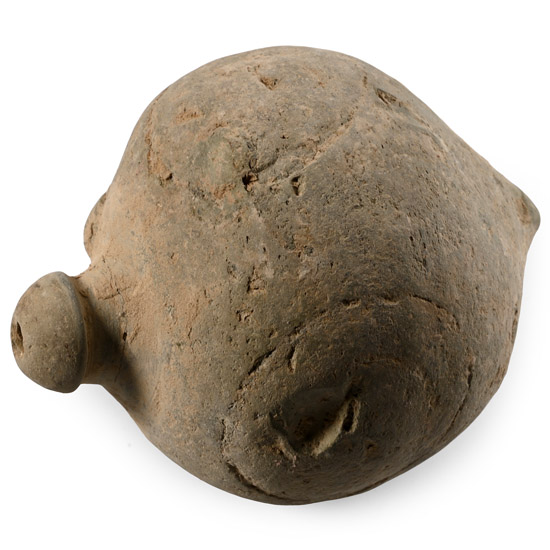
Byzantine 'Greek Fire' Ceramic Fire Bomb or Hand Grenade
9th-11th century A.D.Sold for (Inc. bp): £65
Bulbous body with pointed base and domed mouth; intended to be filled with explosive liquid and a wick, and used as a hand grenade. 598 grams, 12 cm
From an important specialist collection, London, UK, 1990s. Accompanied by an academic paper by military specialist Dr Raffaele D'Amato, dated 15 July 2019 and titled 'Eastern Roman Empire - Greek Fire Bomb or Hand Grenade (μεσαίον kακάβιον) 9th-11th century AD'.
Apart from the use of siphons or manual flame-throwers called cheirosiphona, special corps of Roman soldiers employed terracotta grenades, in the form of small jars, abundantly evidenced in archaeological excavations. They were called μεσαία kακαβιά or κυτροκακάβια, where the former had a bulbous shape and the latter a more cylindrical form.
