
Loading, please wait...
LOT 1049
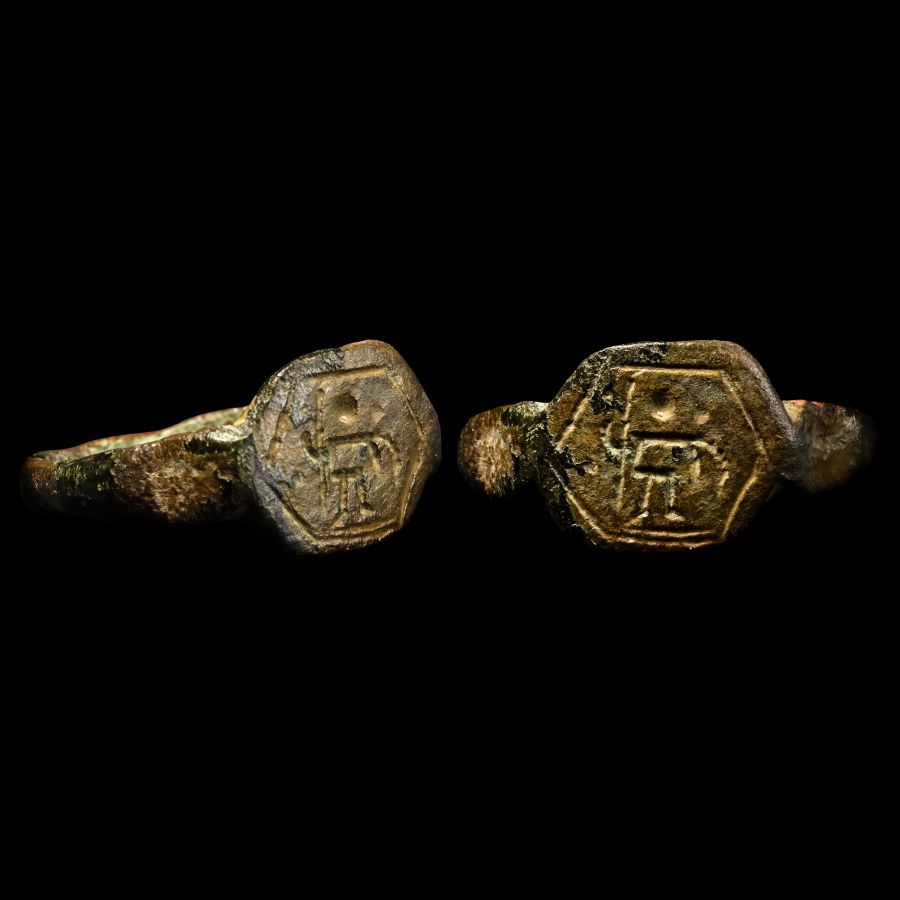
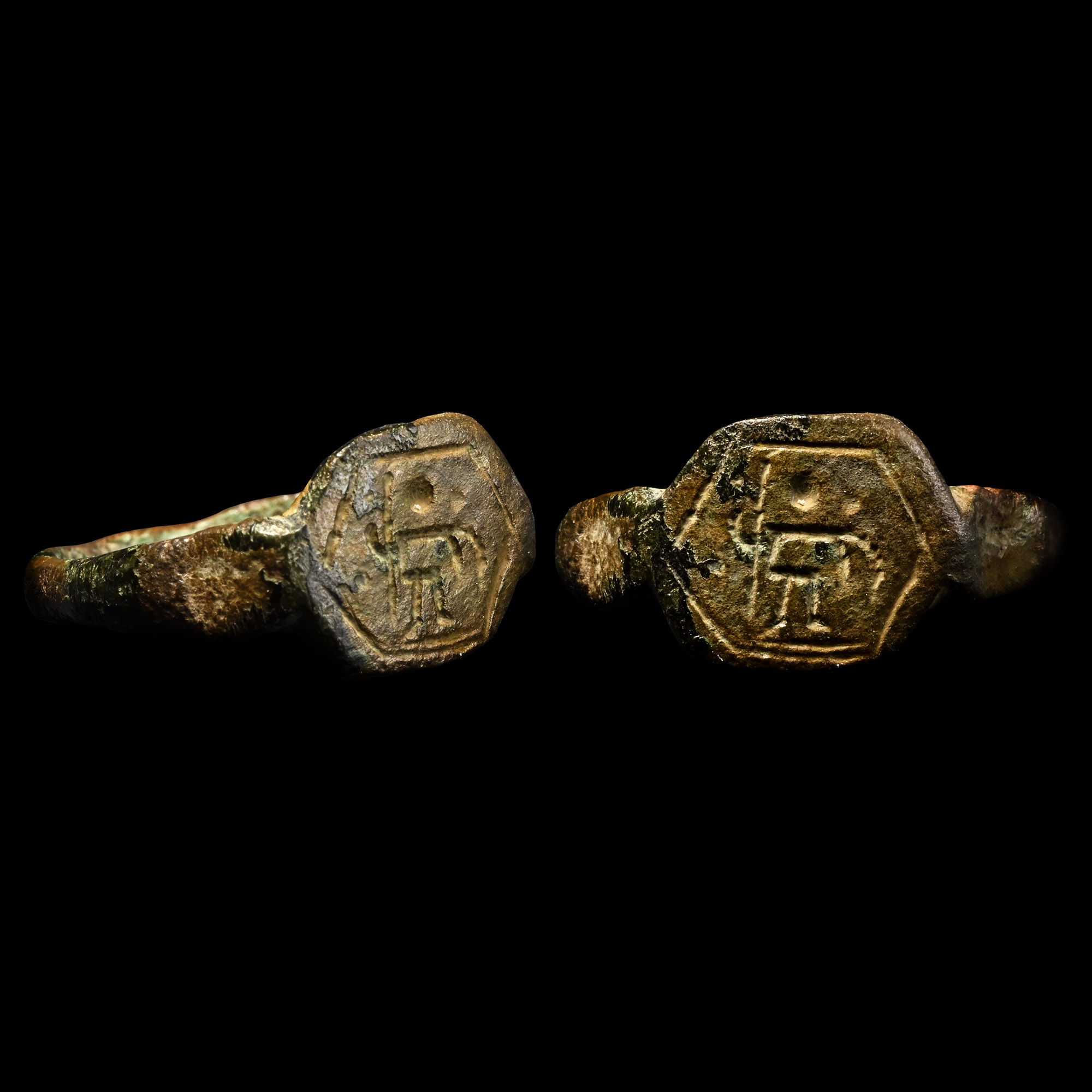
Byzantine Bronze Ring with Warrior Saint
12TH-13TH CENTURY A.D.
3/4 in. (3.24 grams, 21.80 mm overall, 17.61 mm internal diameter (approximate size British O, USA 7, Europe 14.98, Japan 14)).
Slender hoop with scooped shoulders, a hexagonal bezel with a stylised warrior holding a long spear. [No Reserve]
ProvenanceAcquired on the UK and EU art market before 2000.
From the private collection of a Surrey, UK, gentleman.
Cf. for the type Crajovan, B., ‘Inele medievale cu şi fără chaton descoperite pe teritoriul jud. Timiş, România,’ in Patrimonium Banaticum IX, 2019, pp.167–175, pl.3/5.
FootnotesThis category of rings had a hexagonal-rounded chaton raised above the link. Conforming to the iconography of the Orthodox countries under the influence of Byzantium, the possible decoration was related to the military saints.
CONDITIONTimeLine Auctions follows a vetting process to ensure the authenticity and legality of all items, reinforcing our commitment to integrity and responsible trading. Each antiquity, antique, and coin lot undergoes thorough examination by a vetting committee of at least ten external specialists, professional trade association members, scientists, and archaeologists: Our Vetting Process
AUCTIONS:
TimeLine is a leading auction house specialising in antiquities, ancient art, collectables, natural history, coins, medals, and books. Our auctions offer museums, collectors, historians, and enthusiasts the opportunity to acquire unique and historically significant pieces.
-
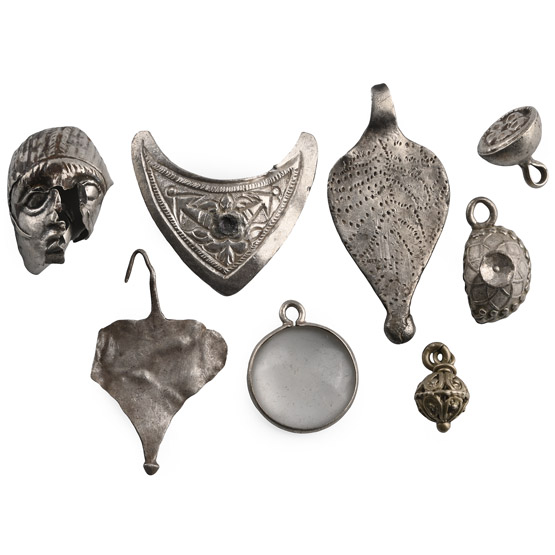
Byzantine Silver Artefact Group
6th-15th century A.D. and laterSold for (Inc. bp): £111
Including a teardrop pendant, sheet-silver miniature mask, plano-convex crystal lens and other items. 12.81 grams total, 11-40 mm
Ex German art market, 2000s. Acquired from an EU collector living in London. From the collection of a Surrey, UK, gentleman. -
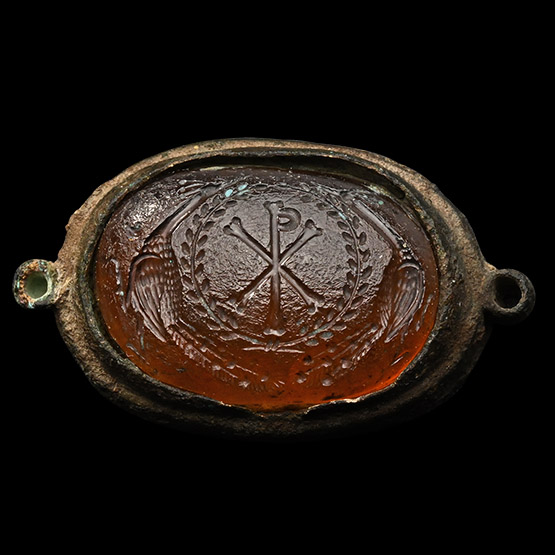
Byzantine Orange Glass Gemstone with Chi Rho Monogram and Peacocks in Laurel Wreath
5th-7th century A.D.Estimate: £2,500 - 3,500 (+bp*)
Opening Bid: £1,250
Ellipsoid cell with tubular finials to accept connecting links; inset glass cabochon with central Christogram within a wreath flanked by perching peacocks; supplied with a museum-quality impression. 14.15 grams, 37 mm
UK private collection before 2000. Acquired on the UK art market. Private collection, London, UK. This lot has been checked against the Interpol Database of stolen works of art and is accompanied by search certificate number no.13136-248305. -
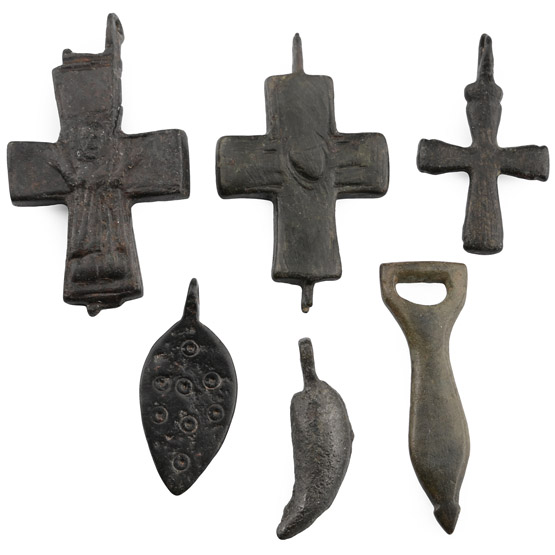
Byzantine Bronze Cross and Other Pendant Collection
6th-12th century A.D.Sold for (Inc. bp): £85
Including a leaf-shaped strap end, vesica-shaped pendant and other items. 24.12 grams total, 26-41 mm
Ex German art market, 2000s. Acquired from an EU collector living in London. From the collection of a Surrey, UK, gentleman.
