
Loading, please wait...
LOT 1076
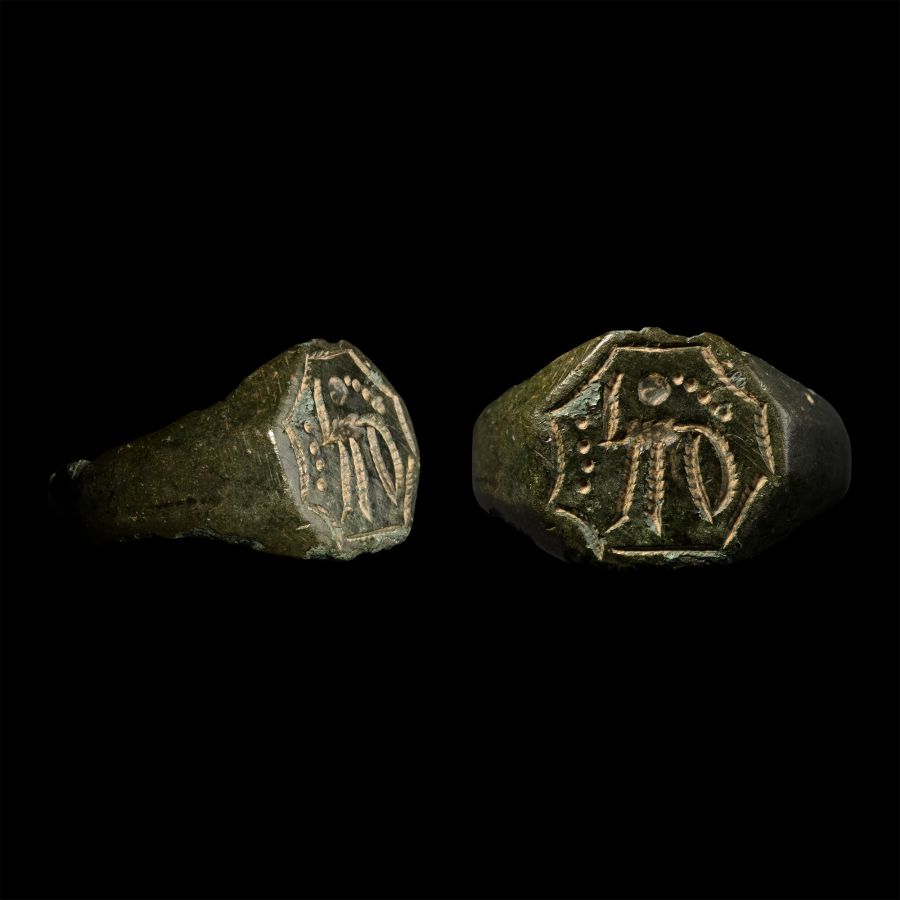
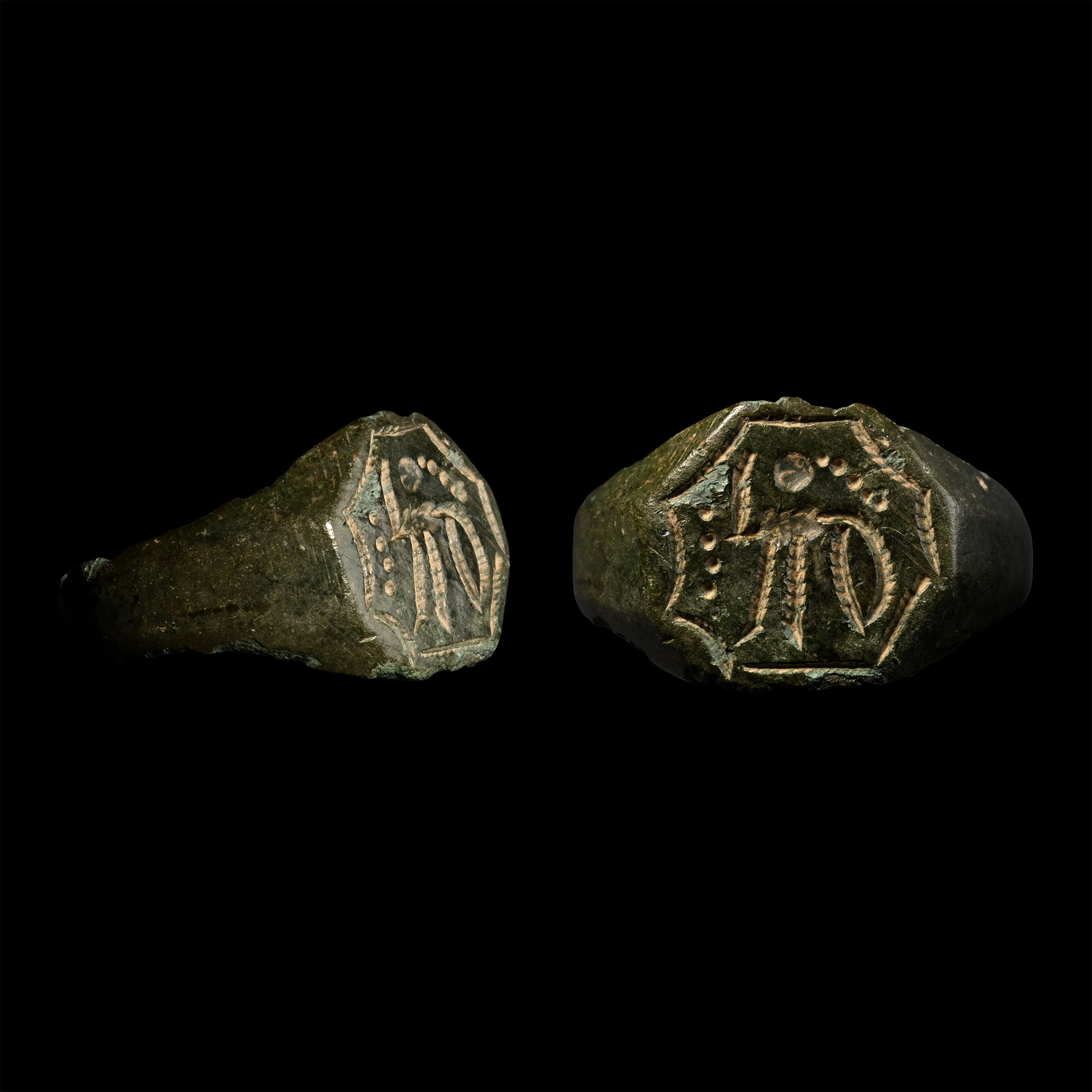
Byzantine Bronze Ring with Warrior Saint
14TH-15TH CENTURY A.D.
1 in. (7.11 grams, 23.16 mm overall, 19.40 mm internal diameter (approximate size British Q, USA 8, Europe 17.49, Japan 16)).
Wide hoop expanding at the shoulders, octagonal bezel with a stylised figure holding a sword and a shield. [No Reserve]
ProvenanceAcquired on the UK and EU art market before 2000.
From the private collection of a Surrey, UK, gentleman.
Cf. Wamser, L., Die Welt von Byzanz - Europas Östliches Erbe, München, 2004, item 682, for the type.
FootnotesIn these rings, the octagonal circular bezel bears a stylised warrior. The bezel of these rings was decorated with stylised images, very often military saints, invoking protection and blessing.
CONDITIONTimeLine Auctions follows a vetting process to ensure the authenticity and legality of all items, reinforcing our commitment to integrity and responsible trading. Each antiquity, antique, and coin lot undergoes thorough examination by a vetting committee of at least ten external specialists, professional trade association members, scientists, and archaeologists: Our Vetting Process
AUCTIONS:
TimeLine is a leading auction house specialising in antiquities, ancient art, collectables, natural history, coins, medals, and books. Our auctions offer museums, collectors, historians, and enthusiasts the opportunity to acquire unique and historically significant pieces.
-
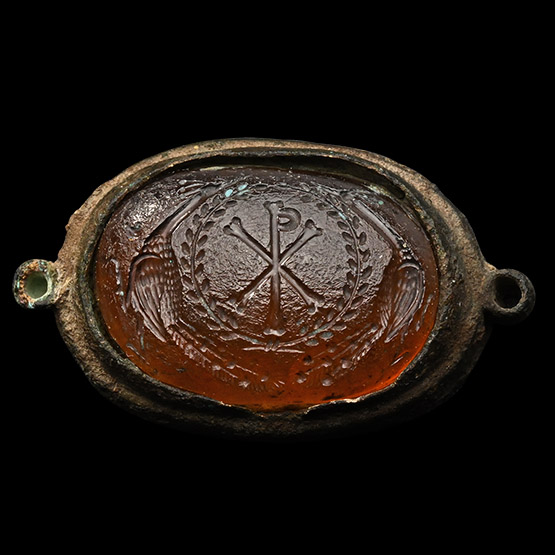
Byzantine Orange Glass Gemstone with Chi Rho Monogram and Peacocks in Laurel Wreath
5th-7th century A.D.Estimate: £2,500 - 3,500 (+bp*)
Opening Bid: £1,250
Ellipsoid cell with tubular finials to accept connecting links; inset glass cabochon with central Christogram within a wreath flanked by perching peacocks; supplied with a museum-quality impression. 14.15 grams, 37 mm
UK private collection before 2000. Acquired on the UK art market. Private collection, London, UK. This lot has been checked against the Interpol Database of stolen works of art and is accompanied by search certificate number no.13136-248305. -
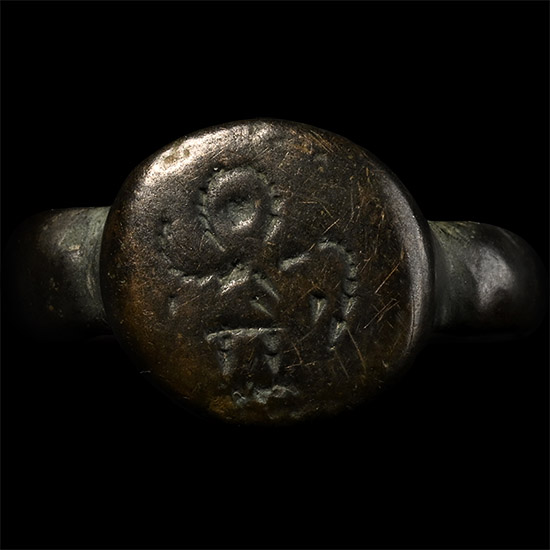
Byzantine Bronze Ring with Warrior Saint
11th-12th century A.D.Sold for (Inc. bp): £91
With an expanding D-section hoop and a raised discoid bezel with a stylised nimbate figure holding a spear and a shield. 5.15 grams, 22.16 mm overall, 19.05 mm internal diameter (approximate size British P, USA 7 1/2, Europe 16.23, Japan 15)
Acquired on the UK and EU art market before 2000. From the private collection of a Surrey, UK, gentleman.
These banded rings, made of bronze sheet with a flattened ellipsoidal head, could be decorated with geometric or animal ornaments executed by shallow carving. In this circumstance, the bezel is decorated with the stylised image, most probably of a military saint, who was asked for protection and blessing. -
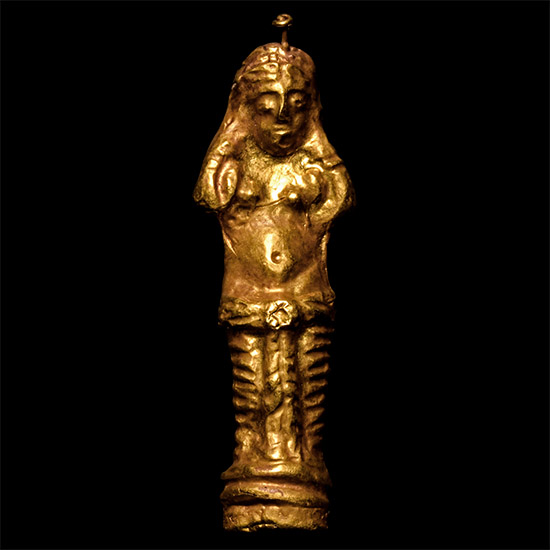
Byzantine Gold Standing Female Pendant
7th-9th century A.D.Estimate: £2,500 - 3,500 (+bp*)
Opening Bid: £1,250
Hollow-formed and modelled in the round, standing female wearing a palla around her hips, hands raised to her hair; applied mounting strip to reverse and wire stud to brow to mount a bead. 3.44 grams, 39 mm
UK private collection before 2000. Acquired on the UK art market. Private collection, London, UK. This lot has been checked against the Interpol Database of stolen works of art and is accompanied by search certificate number no.13138-248306.
The stance is based on the famous Venus Anadyomene image of the goddess emerging from the sea, as shown in the mosaic at Casa del Principe di Napoli in Pompeii.
