
Loading, please wait...


LOT 1471
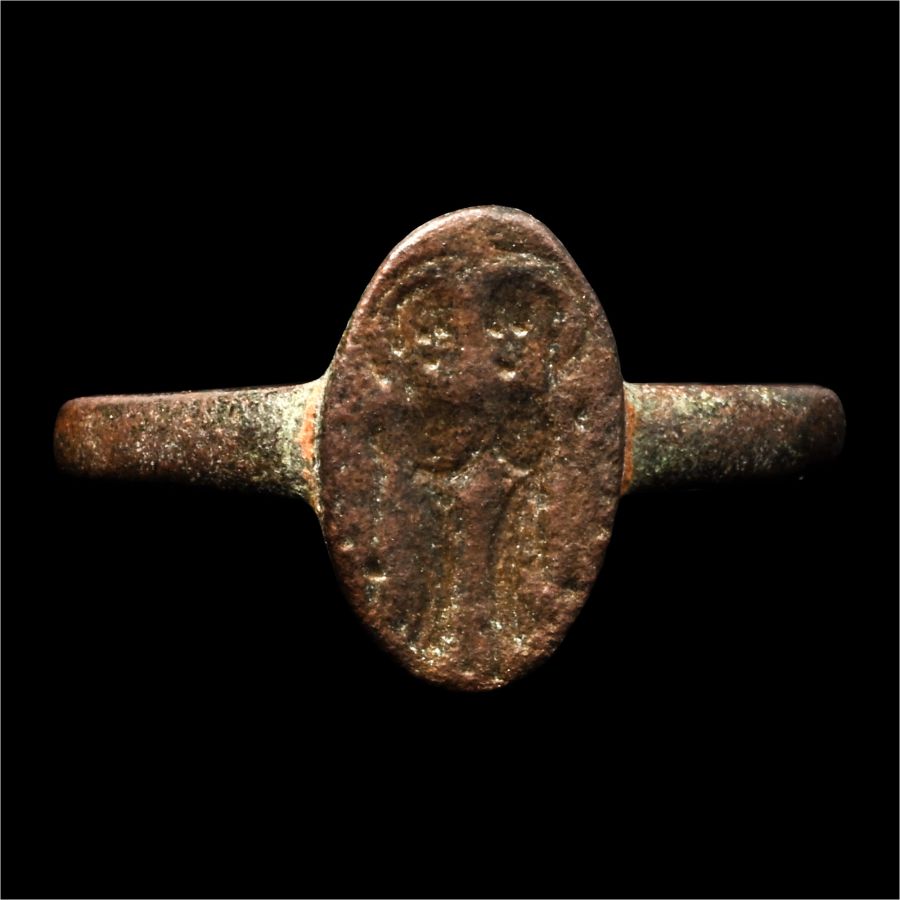
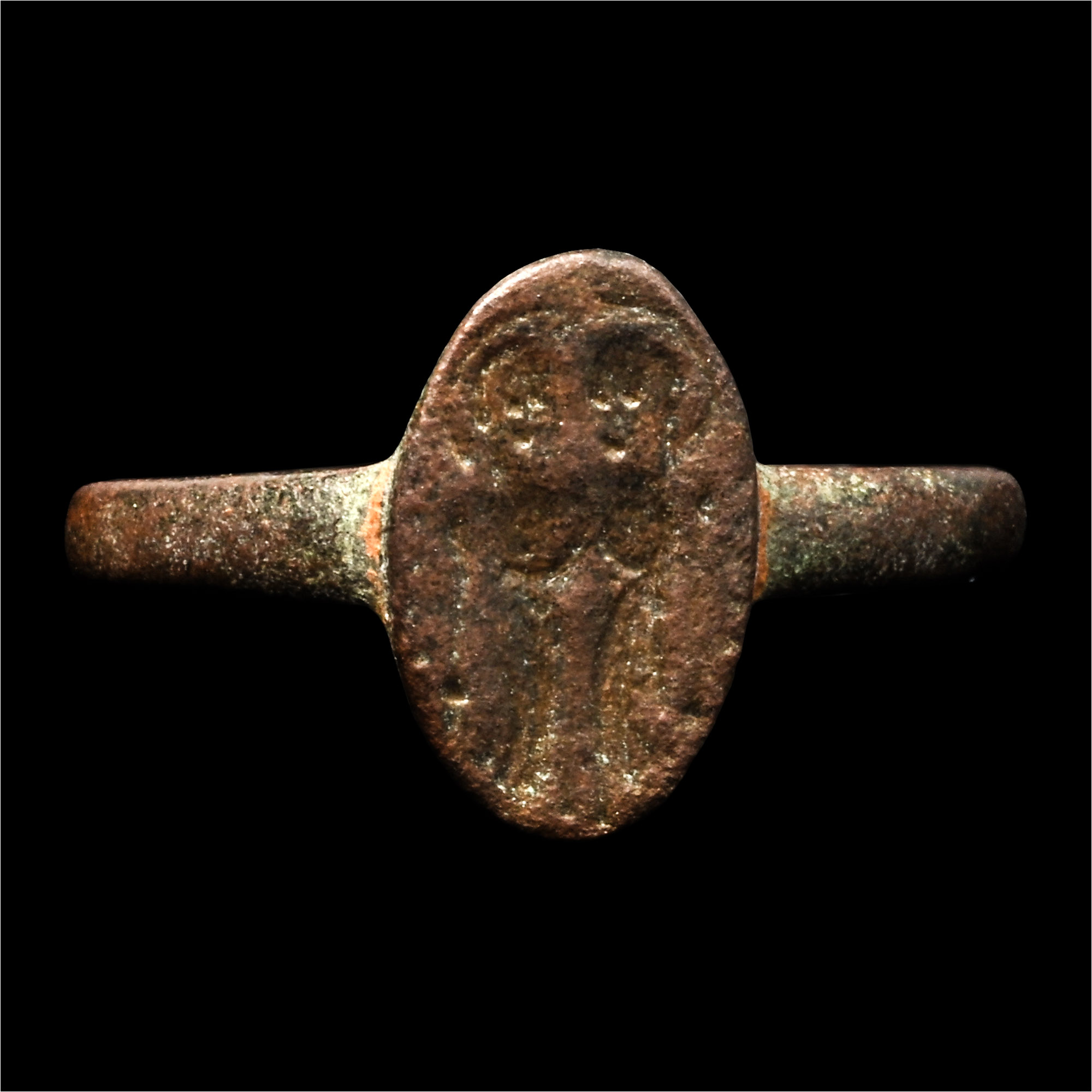
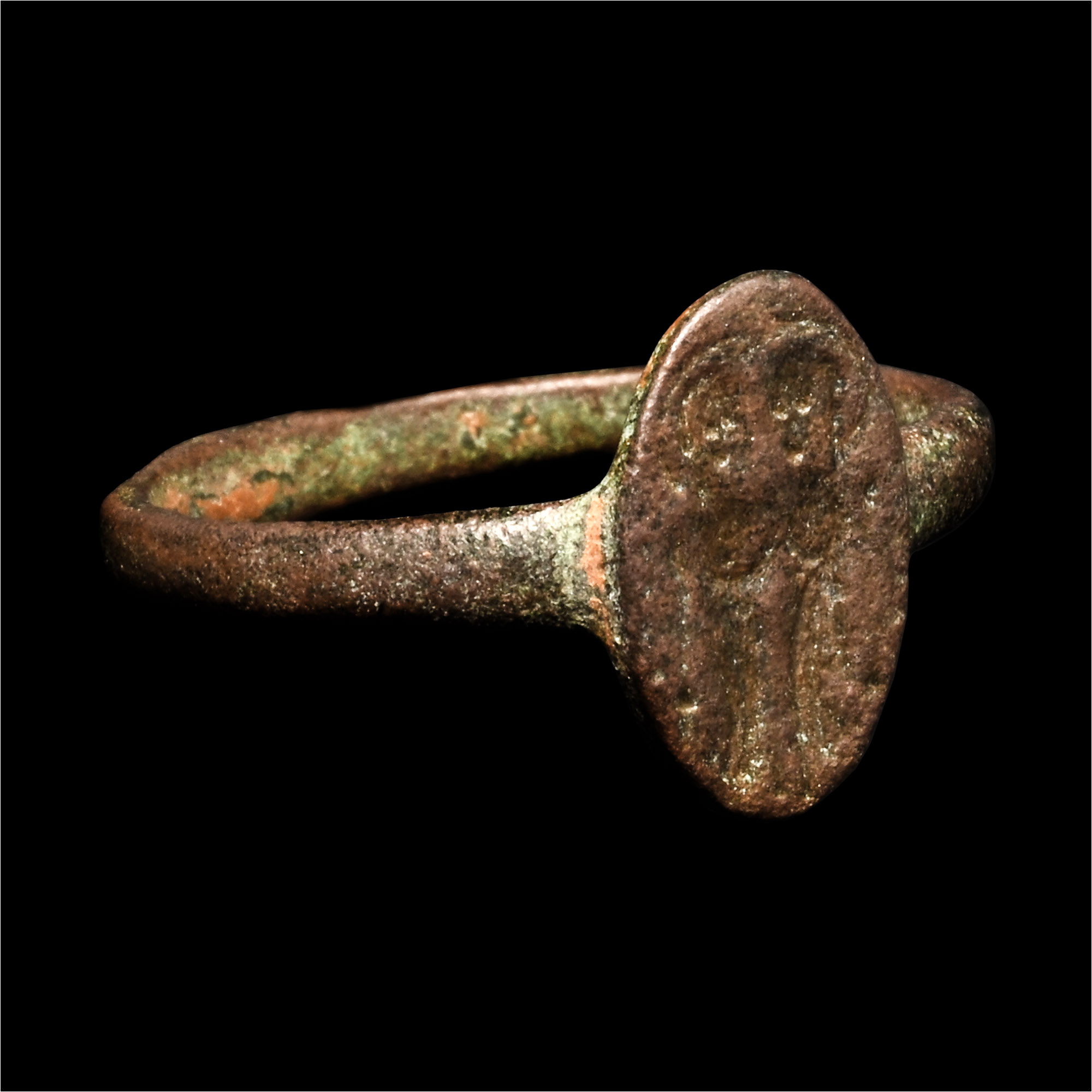
Byzantine Bronze Ring with Two Saints
6TH-7TH CENTURY A.D.
1 in. (2.86 grams, 23.50 mm overall, 20.20 mm internal diameter (approximate size British S 1/2, USA 9 1/4, Europe 20.63, Japan 19)).
Ellipsoid bezel with two facing nimbate figures in floor-length robes. [No Reserve]
ProvenanceFrom the private collection of a European gentleman (1942-2024), formed since the 1970s.
LiteratureCf. Wamser, L., Die Welt von Byzanz - Europas Östliches Erbe, München, 2004, items 655,659,660, for type and iconography.
CONDITIONTimeLine Auctions follows a vetting process to ensure the authenticity and legality of all items, reinforcing our commitment to integrity and responsible trading. Each antiquity, antique, and coin lot undergoes thorough examination by a vetting committee of at least ten external specialists, professional trade association members, scientists, and archaeologists: Our Vetting Process
AUCTIONS:
TimeLine is a leading auction house specialising in antiquities, ancient art, collectables, natural history, coins, medals, and books. Our auctions offer museums, collectors, historians, and enthusiasts the opportunity to acquire unique and historically significant pieces.
LOT 1471
Byzantine Bronze Ring with Two Saints
Estimate £30 - 40€35 - 46 (for guidance only)$41 - 54 (for guidance only)
Opening Bid
£5 (EUR 6; USD 7) +BP*
-
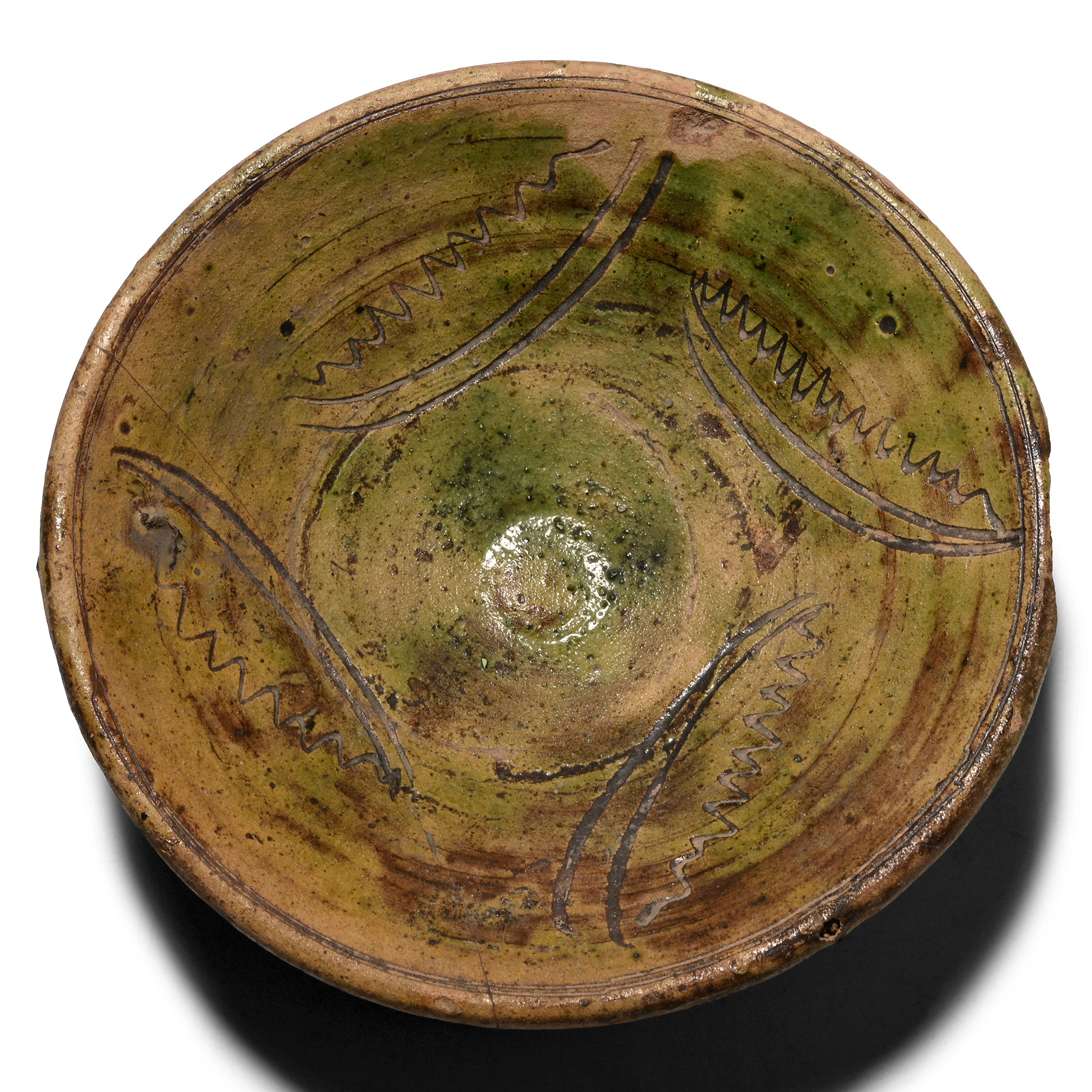
Byzantine Green Glazed Sgraffito Footed Bowl
13th-14th century A.D.Estimate: £200 - 300 (+bp*)
Bids: 2 | Current Bid: £10
Shallow type with dished body and ring to underside; rounded rim and incised border, four sgraffito crescent motifs with undulating line above each. 301 grams, 16 cm wide
From the private collection of Peter Clayton, FCILIP, Dip, Arch, FSA, FRNS, Hemel Hempstead, Hertfordshire, UK; formed since the late 1950s. -
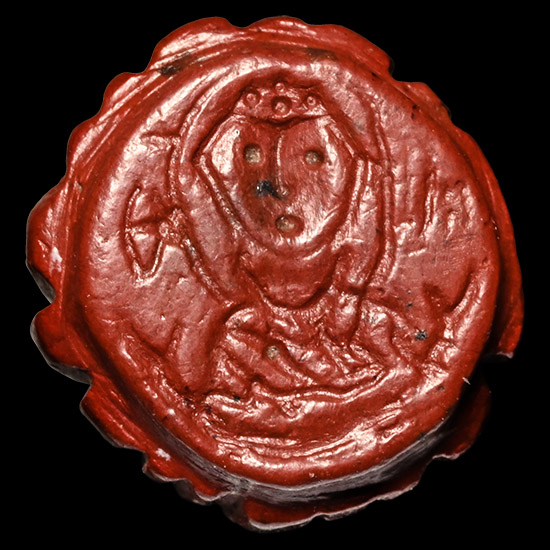
Byzantine Red Stone Stamp Seal with Bust of Mary
Circa 10th-11th century A.D.Estimate: £150 - 200 (‡+bp*)
Bids: 1 | Current Bid: £5
Conical in section with vertical ribbing to the side wall, broken loop at the apex, stepped base; underside with facing nimbate bust flanked by 'MΘ' (Mary Theotokos). 2.31 grams, 14 mm
Private collection of Kal Noselson, New York, acquired between 1976 and the late 1990s; thence by descent. -
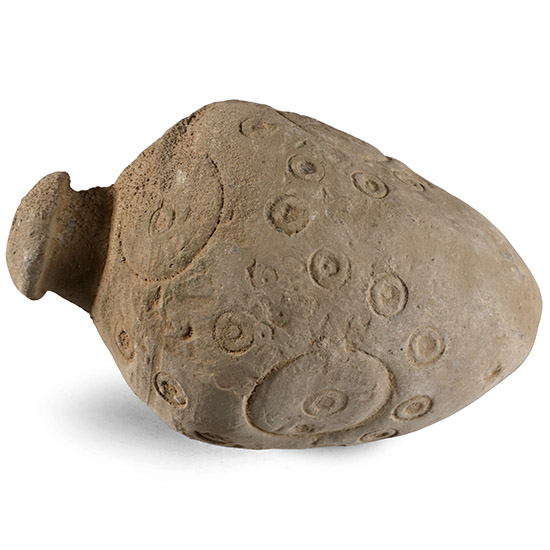
Byzantine 'Greek Fire' Ceramic Fire Bomb or Hand Grenade
9th-11th century A.D.Estimate: £70 - 90 (+bp*)
Bids: 1 | Current Bid: £5
Bulbous body with rounded base and domed filler hole, the body decorated with impressed ring-and-dot motifs; intended to be filled with explosive liquid and a wick, and used as a hand grenade. 376 grams, 11.6 cm
Ex important collection of weaponry, London, UK, 1980-1990s. Accompanied by an academic paper by military specialist Dr Raffaele D'Amato, dated 15 July 2019 and titled 'Eastern Roman Empire - Greek Fire Bomb or Hand Grenade (μεσαίον kακάβιον) 9th-11th century AD'.
Apart from the use of siphons or manual flame-throwers called cheirosiphona, special corps of Roman soldiers employed terracotta grenades, in the form of small jars, abundantly evidenced in archaeological excavations. They were called μεσαία kακαβιά or κυτροκακάβια, where the former had a bulbous shape and the latter a more cylindrical form.
