
Loading, please wait...
LOT 1115
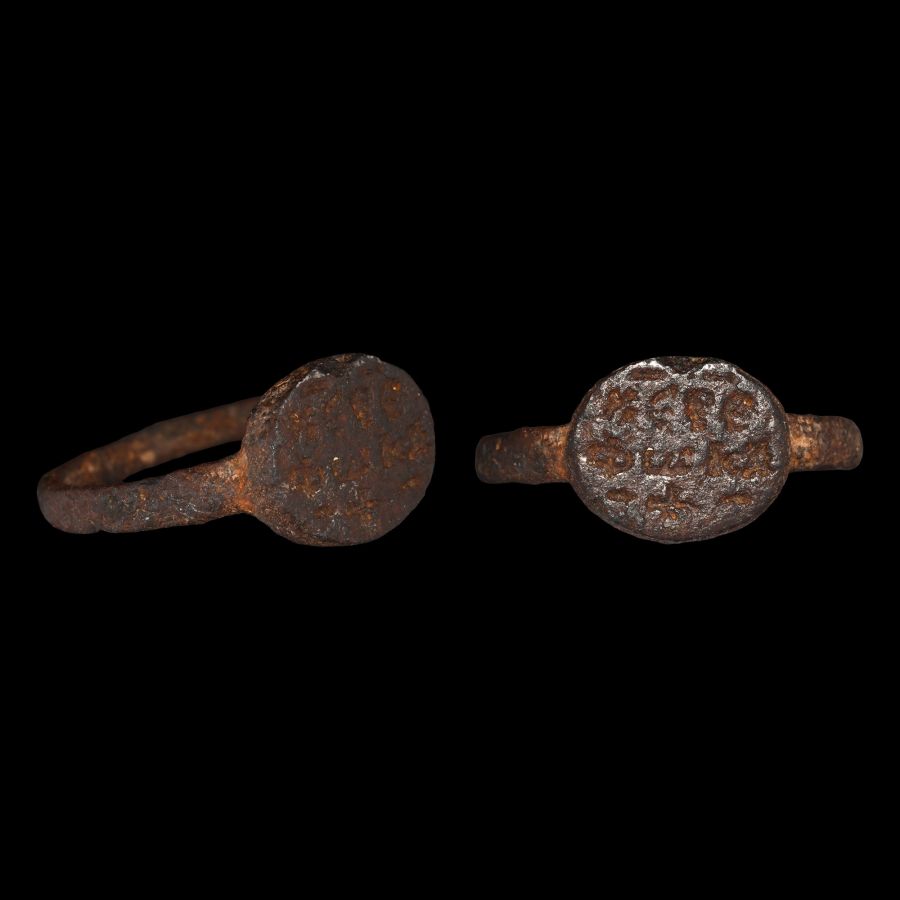
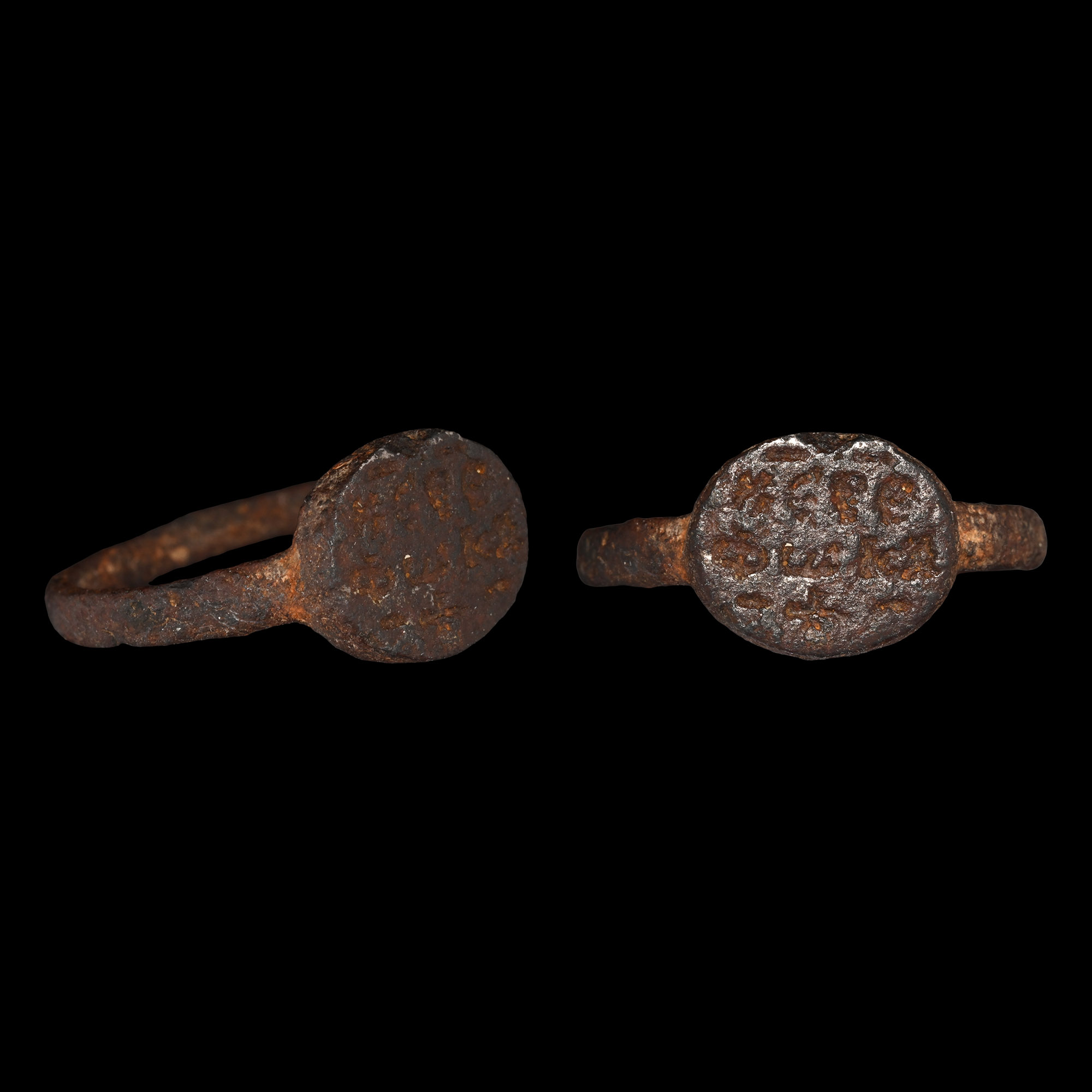
Byzantine Bronze Ring with Three Line Inscription
6TH-8TH CENTURY A.D.
1 in. (3.51 grams, 23.60 mm overall, 20.04 mm internal diameter (approximate size British T, USA 9 1/2, Europe 21.26, Japan 20)).
Discoid bezel with three lines of enigmatic Greek text 'KE[.]E / ΦυΛA / -+-'; with old collector's ticket 'van Phocas'. [No Reserve]
ProvenanceFrom the private collection of a European gentleman (1942-2024), formed since the 1970s.
CONDITIONTimeLine Auctions follows a vetting process to ensure the authenticity and legality of all items, reinforcing our commitment to integrity and responsible trading. Each antiquity, antique, and coin lot undergoes thorough examination by a vetting committee of at least ten external specialists, professional trade association members, scientists, and archaeologists: Our Vetting Process
AUCTIONS:
TimeLine is a leading auction house specialising in antiquities, ancient art, collectables, natural history, coins, medals, and books. Our auctions offer museums, collectors, historians, and enthusiasts the opportunity to acquire unique and historically significant pieces.
-
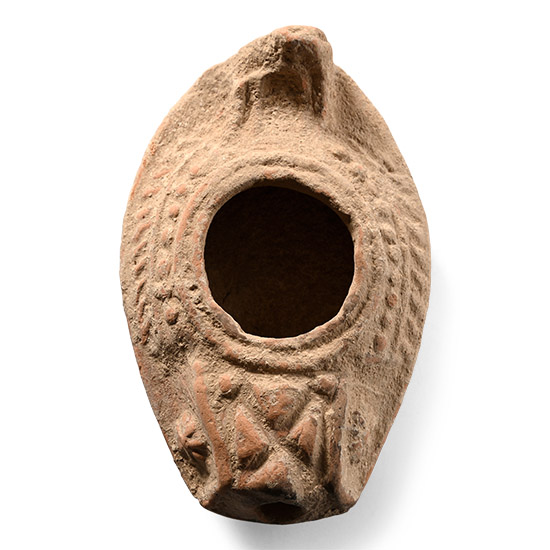
Byzantine Terracotta Slipper Oil Lamp with Expanding Cross
Holy Land, circa 5th-8th century A.D.Sold for (Inc. bp): £78
Stub handle to the rear, the body decorated with pellets and diagonal strokes, an expanding cross on the nozzle, flanked by two rosettes. 73 grams, 85 mm
Ex Ancient Art Shop, Windsor, UK, 1990s. Ex private West County, UK, collection. -
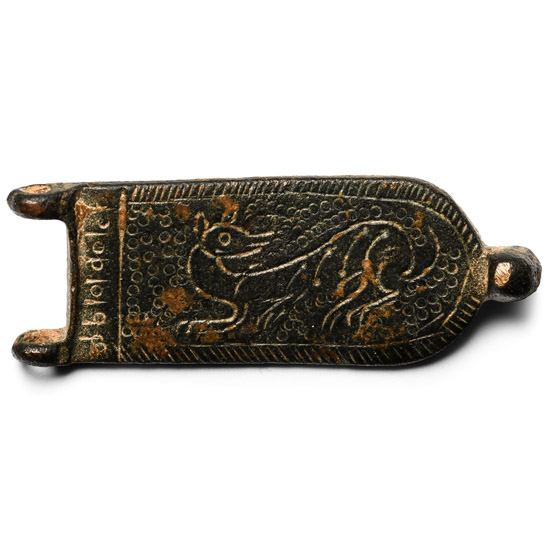
Byzantine Bronze Strap End with Beast Facing Back
Circa 8th century A.D.Sold for (Inc. bp): £78
Tongue-shaped plate with a slender animal facing back, possibly depicting a ferret, pellets on the background. 7.6 grams, 41 mm
From the private collection of a European gentleman (1942-2024), formed since the 1970s. -
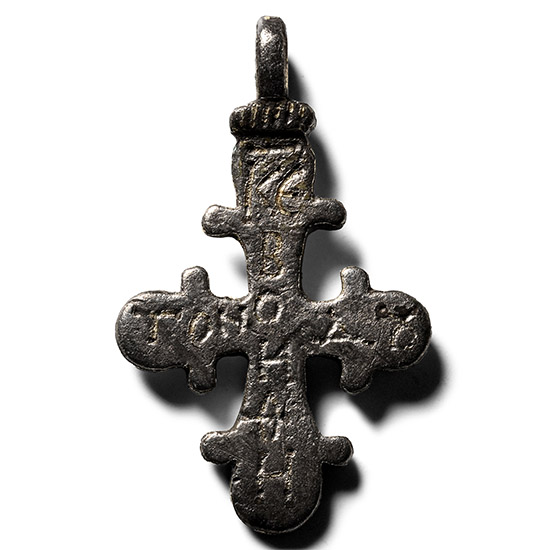
Byzantine Silver-Gilt Cross Pendant
Circa 9th-12th century A.D.Sold for (Inc. bp): £140
Bifacial cross with lobed finials, gilt Greek inscription on both sides, one side with 'KE BOHΘΗ' placed vertically and 'TON ΔOY[...]' horizontally; the other side with 'ΛON COY CTYΛY' placed vertically, and 'ANON' horizontally; the whole inscription reading: 'KγριΕ BOHΘH TON ΔOYΛON COY CTYΛYANON' = Lord helps your servant Stylianos. 4.52 grams, 34 mm
Ex German art market, 2000s. Acquired from an EU collector living in London. From the collection of a Surrey, UK, gentleman.
