
Loading, please wait...
LOT 1155
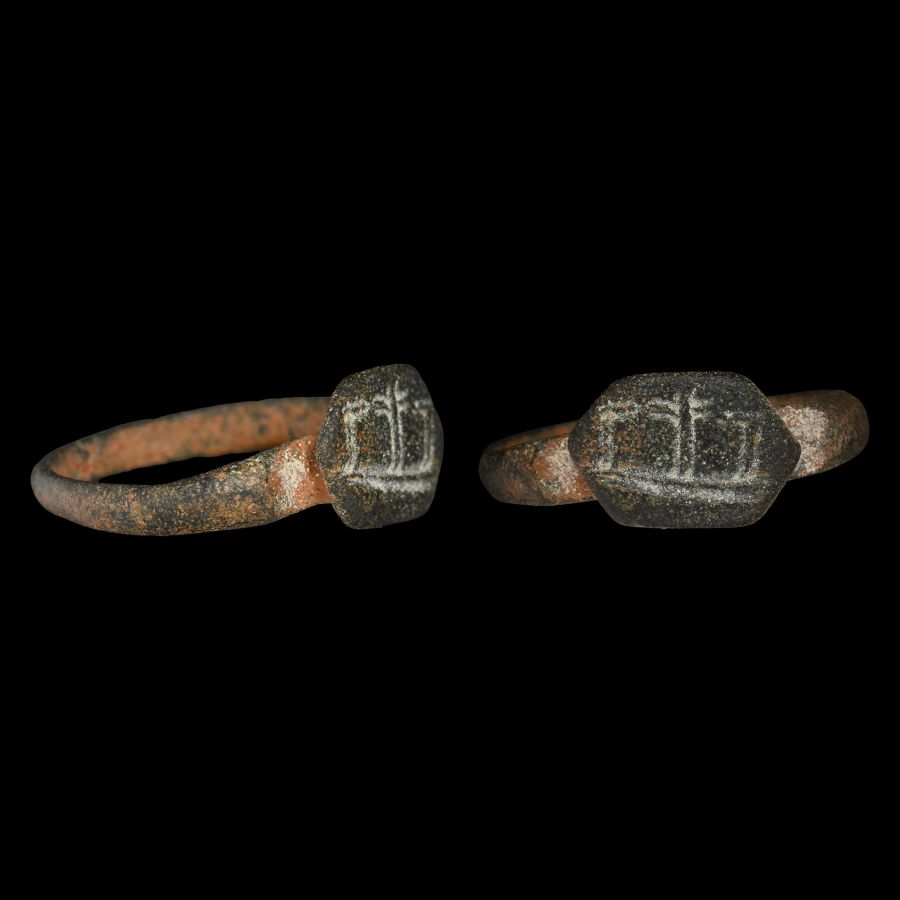
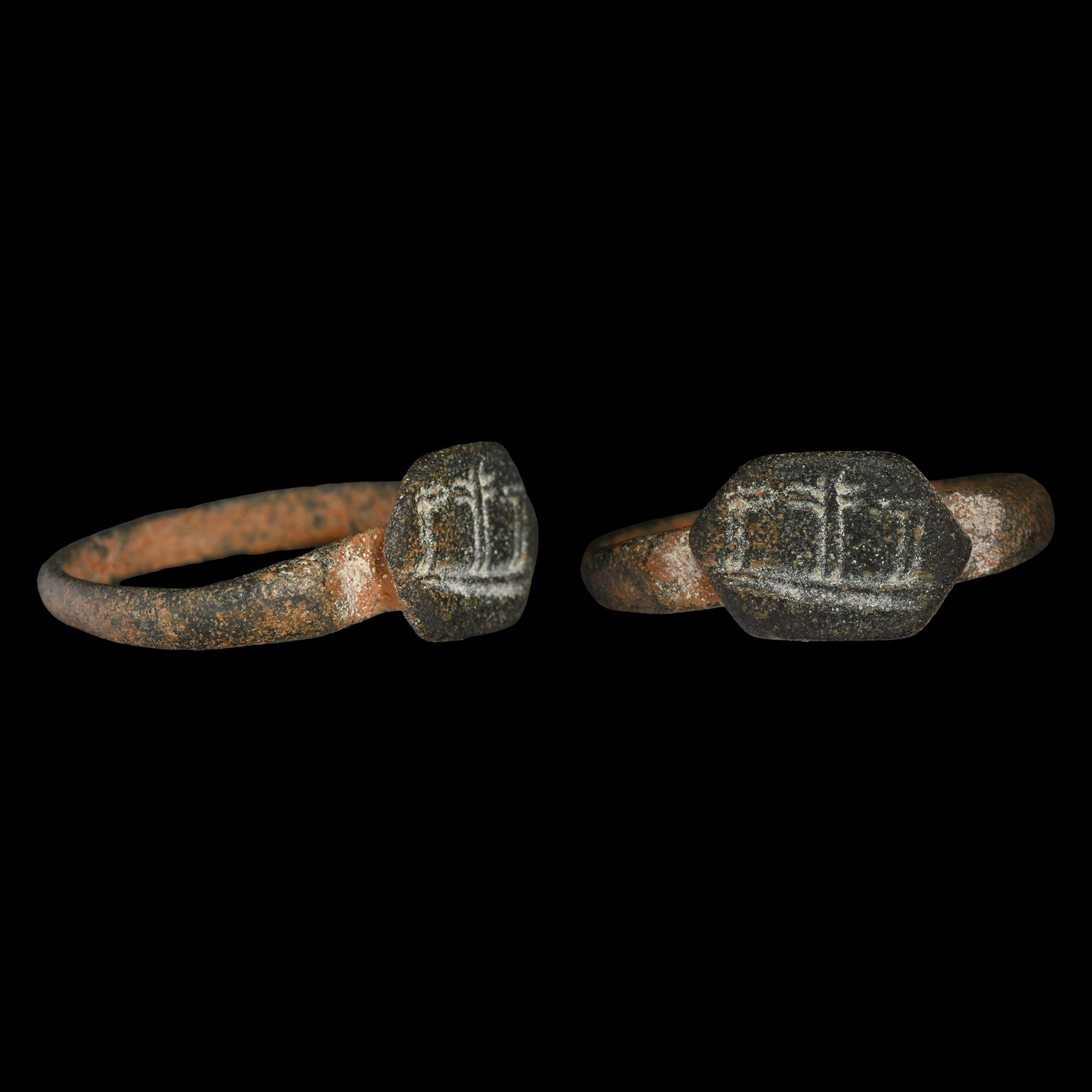
Byzantine Bronze Ring with Three Crosses of the Crucifixion
CIRCA 5TH CENTURY A.D.
1 in. (4.23 grams, 23.24 mm overall, 19.00 x 17.01 mm internal diameter (approximate size British N 1/2, USA 6 3/4, Europe 14.35, Japan 13)).
Comprising a D-section hoop and a hexagonal bezel with three crosses on a baseline. [No Reserve]
ProvenanceFrom the private collection of a European gentleman (1942-2024), formed since the 1970s.
CONDITIONTimeLine Auctions follows a vetting process to ensure the authenticity and legality of all items, reinforcing our commitment to integrity and responsible trading. Each antiquity, antique, and coin lot undergoes thorough examination by a vetting committee of at least ten external specialists, professional trade association members, scientists, and archaeologists: Our Vetting Process
AUCTIONS:
TimeLine is a leading auction house specialising in antiquities, ancient art, collectables, natural history, coins, medals, and books. Our auctions offer museums, collectors, historians, and enthusiasts the opportunity to acquire unique and historically significant pieces.
LOT 1155
Byzantine Bronze Ring with Three Crosses of the Crucifixion
Sold for (Inc. bp): £98
-
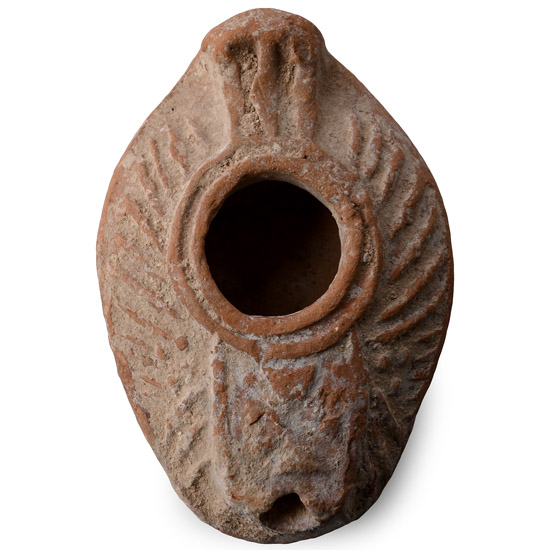
Byzantine Terracotta Oil Lamp with Linear Decoration
Circa 5th-7th century A.D.Sold for (Inc. bp): £52
Linear decoration radiating from the large filler hole, with a small handle to the rear. 76 grams, 92 mm
From the collection of a Cambridge, UK, gentleman, by direct descent from his father, who acquired the items in London in circa 1960. -
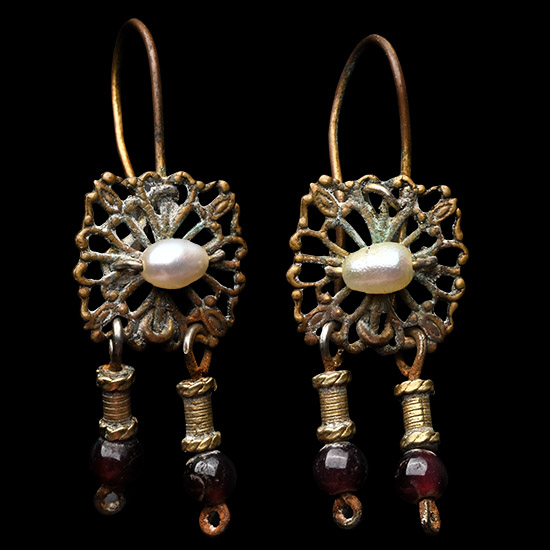
Byzantine Gold Floral Earring Pair
7th-8th century A.D.Sold for (Inc. bp): £364
Matched pair, each an openwork floral plaque with a hook to the reverse, attached pearl bead and two dangles with garnet beads. 3.17 grams total, 36-38 mm
London collection, before 1995. TimeLine Auctions, 25th-27th February 2016, no.512. Private collection, Suffolk. -
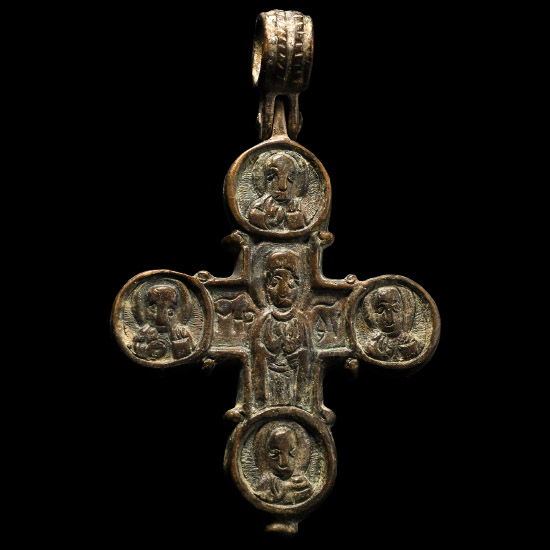
Large Byzantine Bronze Cross Pendant with Christ and Saints
Circa 10th-12th century A.D.Sold for (Inc. bp): £286
Obverse: central facing nimbate figure of Mary with 'MHP ΘV' legend, facing nimbate bust in each of the roundels; reverse with cruciform void and pellets; hinged loop with ropework detailing. 43.1 grams, 88 mm
From the private coin collection of a West London, UK, gentleman, formed since the mid 1980s.
