
Loading, please wait...
LOT 1073
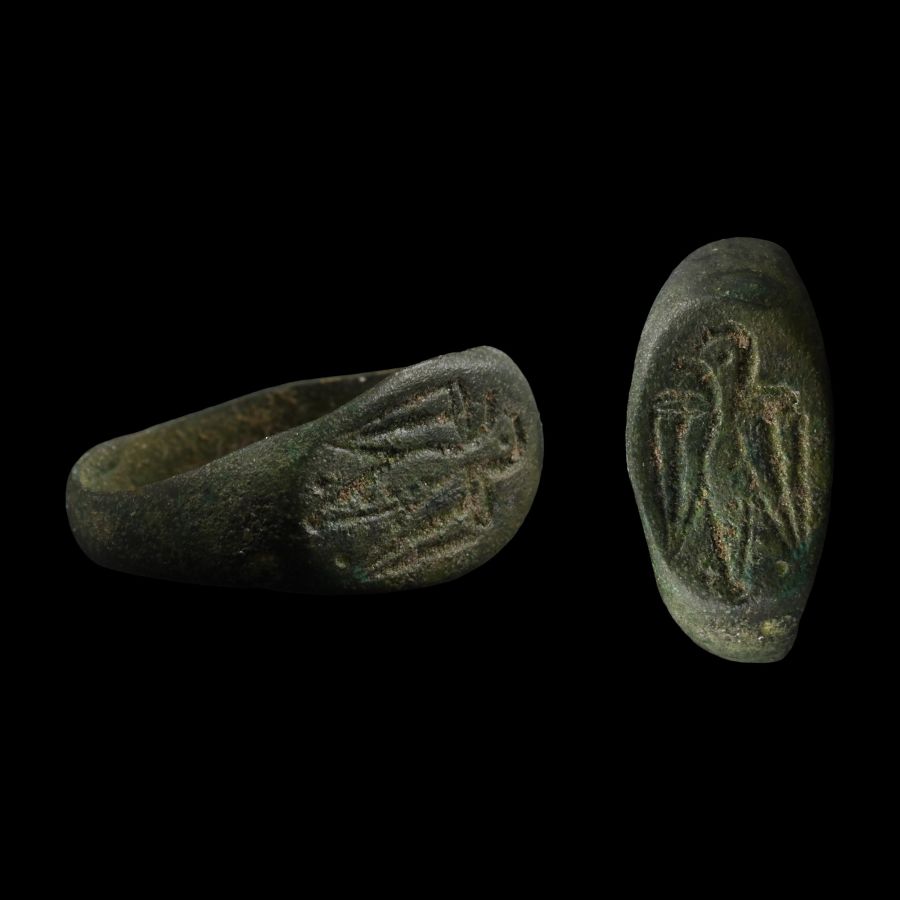
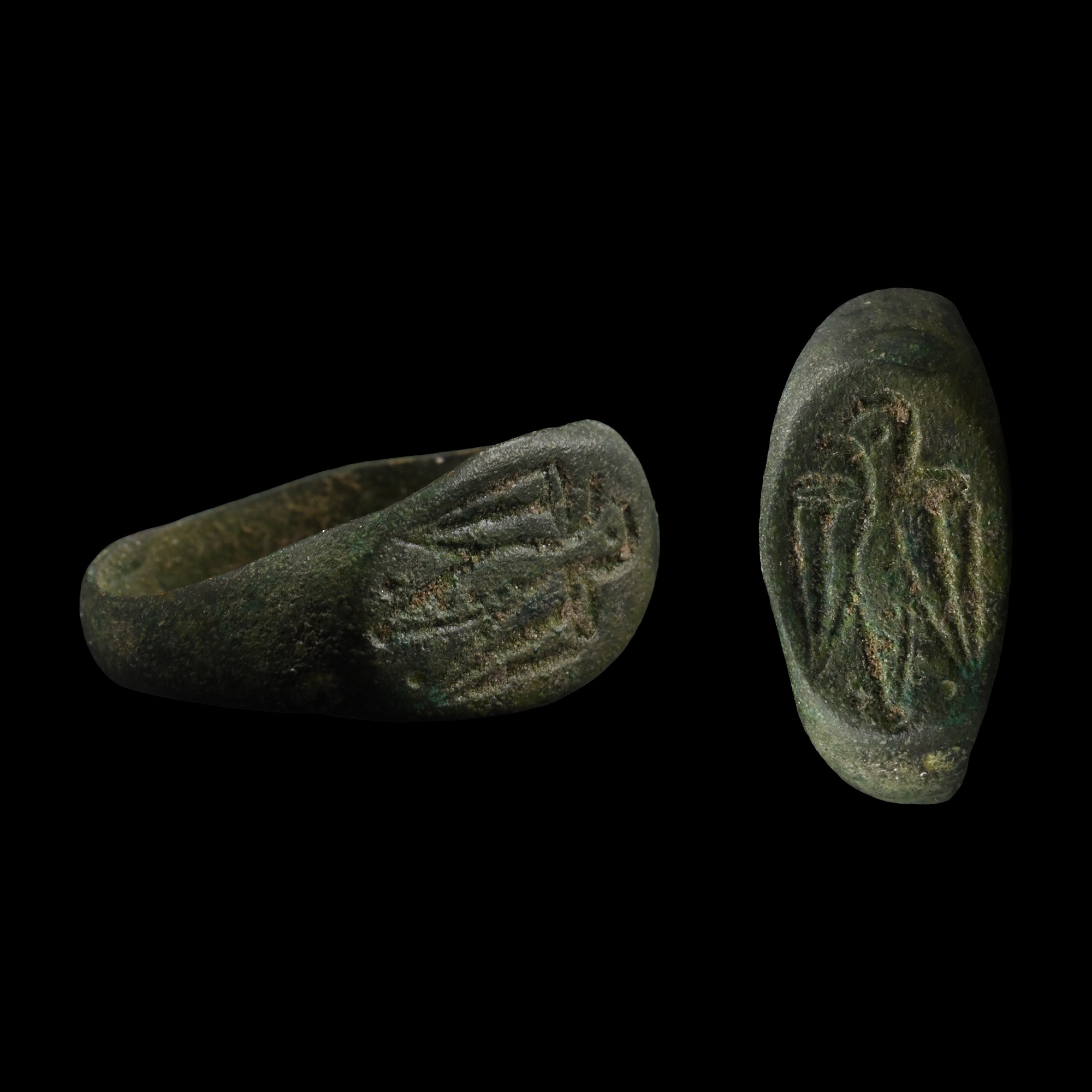
Byzantine Bronze Ring with Spread Eagle
12TH-15TH CENTURY A.D.
3/4 in. (3.71 grams, 21.84 mm overall, 19.28 mm internal diameter (approximate size British R, USA 8 1/2, Europe 18 3/4, Japan 18)).
Broad bezel with incised bird in flight motif. [No Reserve]
ProvenanceEx German art market, 2000s.
Acquired from an EU collector living in London.
From the collection of a Surrey, UK, gentleman.
TimeLine Auctions follows a vetting process to ensure the authenticity and legality of all items, reinforcing our commitment to integrity and responsible trading. Each antiquity, antique, and coin lot undergoes thorough examination by a vetting committee of at least ten external specialists, professional trade association members, scientists, and archaeologists: Our Vetting Process
AUCTIONS:
TimeLine is a leading auction house specialising in antiquities, ancient art, collectables, natural history, coins, medals, and books. Our auctions offer museums, collectors, historians, and enthusiasts the opportunity to acquire unique and historically significant pieces.
-
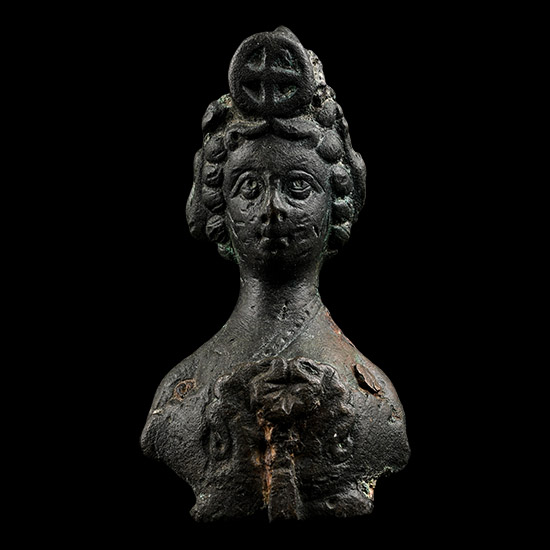
Byzantine Bronze Empress Mount
5th-6th century A.D.Estimate: £1,000 - 1,400 (+bp*)
Opening Bid: £500
Formed in the half-round as a youthful female bust, a cross in the middle of the high hair arrangement (propoloma). 192 grams, 97 mm
Ex law professor in Alexandria, prior to 1930. Ex collection of M. Bouvier, Switzerland (1901-1980). Private collection, UK.
The image of the Roman empress during the late Roman Empire was connected to Christianity by the figure of the Empress Helena. Constantine had several cities renamed Helenopolis in honour of his mother, Helena, and she gained the political verification of power with the status nobilissima femina in 318 A.D. and the rank of Augusta in 324 A.D. Alongside her social and political image, Helena also had a significant reputation as a good Christian who was a patron and took care of poor people. Owing to this powerful religious image that was created, all other Christian women during the Eastern Roman Empire were encouraged spiritually by the fact that Helena was the mother of the first Christian emperor, and the image of the Roman empress was connected to the Christian image of the Mother of God, and represented on weights, bronze appliques and, in this case, maybe as an upper mount of a tripod. -
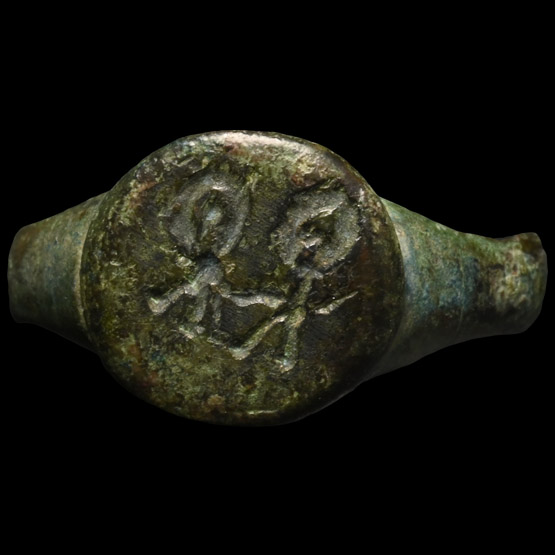
Byzantine Bronze Ring with Warrior Saints
11th-12th century A.D.Sold for (Inc. bp): £72
D-section hoop and a raised circular bezel with two nimbate warrior figures. 5.54 grams, 22.88 mm overall, 19.22 mm internal diameter (approximate size British N 1/2, USA 6 3/4, Europe 14.35, Japan 13)
Acquired on the UK and EU art market before 2000. From the private collection of a Surrey, UK, gentleman.
These banded rings, made of bronze sheet with a flattened ellipsoidal head, could be decorated with geometric or animal ornaments executed by shallow carving, or human figures. In this circumstance, the bezel is decorated with stylised images, most probably military saints, who were asked for protection and blessing. -
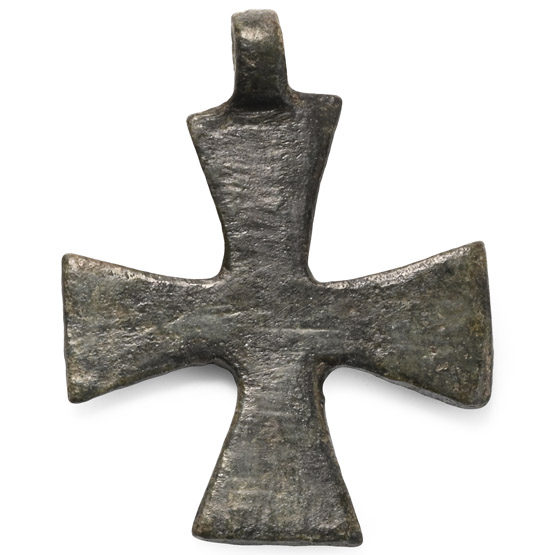
Byzantine Bronze Pendant Cross
6th-8th century A.D.Sold for (Inc. bp): £104
Expanding-arm type with integral loop. 2.07 grams, 24 mm
Ex German art market, 2000s. Acquired from an EU collector living in London. From the collection of a Surrey, UK, gentleman.
