
Loading, please wait...
LOT 1068
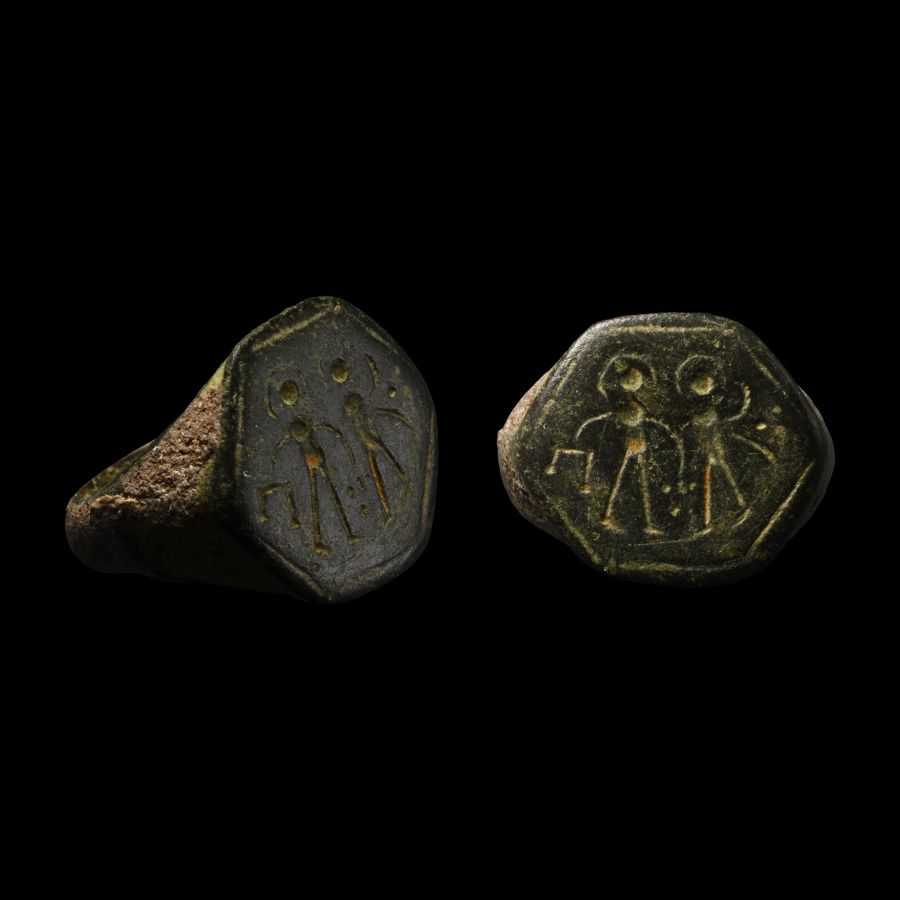
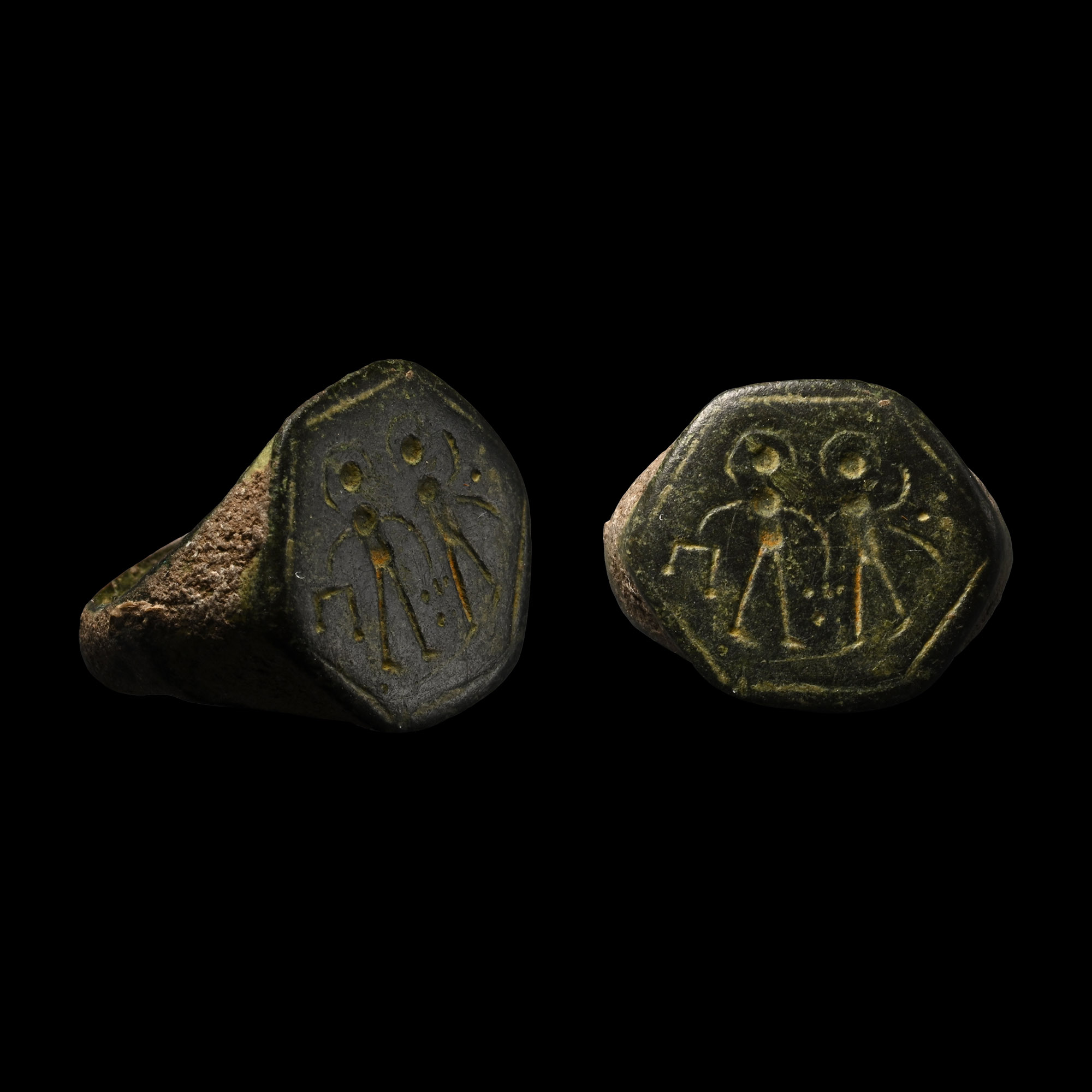
Byzantine Bronze Ring with Saints
12TH-13TH CENTURY A.D.
3/4 in. (7.64 grams, 20.53 mm overall, 15.95 mm internal diameter (approximate size British H 1/2, USA 4, Europe 6.81, Japan 6)).
An interphalangeal ring with a hexagonal bezel showing two nimbate figures. [No Reserve]
ProvenanceAcquired on the UK and EU art market before 2000.
From the private collection of a Surrey, UK, gentleman.
Cf. for the type Crajovan, B., ‘Inele medievale cu şi fără chaton descoperite pe teritoriul jud. Timiş, România,’ in Patrimonium Banaticum IX, 2019, pp.167–175, pl.3/5.
FootnotesThis category of rings had a hexagonal-rounded chaton raised above the link. Conforming to the iconography of the Orthodox countries under the influence of Byzantium, the possible decoration was related to the military saints.
CONDITIONTimeLine Auctions follows a vetting process to ensure the authenticity and legality of all items, reinforcing our commitment to integrity and responsible trading. Each antiquity, antique, and coin lot undergoes thorough examination by a vetting committee of at least ten external specialists, professional trade association members, scientists, and archaeologists: Our Vetting Process
AUCTIONS:
TimeLine is a leading auction house specialising in antiquities, ancient art, collectables, natural history, coins, medals, and books. Our auctions offer museums, collectors, historians, and enthusiasts the opportunity to acquire unique and historically significant pieces.
-
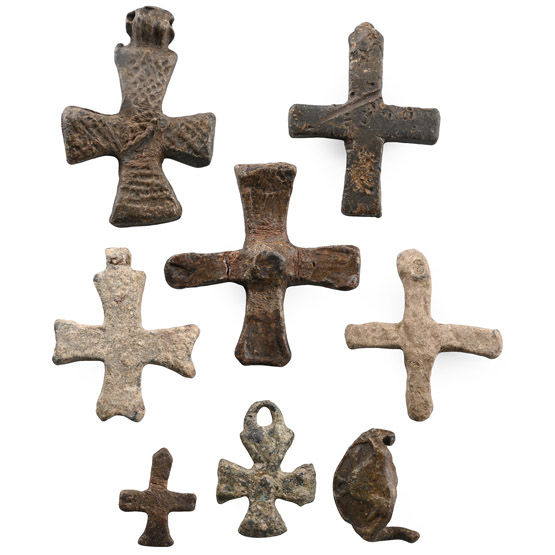
Byzantine Lead Cross Collection
6th-15th century A.D.Sold for (Inc. bp): £85
Including equal-arm, expanding-arm and other types; offered with a lead finger-ring master. 85 grams total, 18-41 mm
Ex German art market, 2000s. Acquired from an EU collector living in London. From the collection of a Surrey, UK, gentleman. -
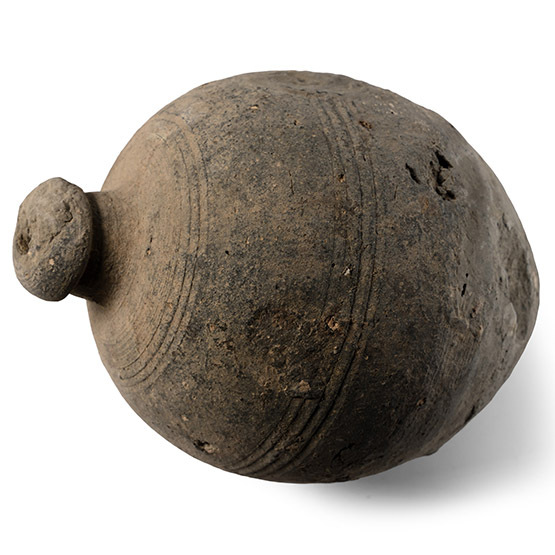
Byzantine 'Greek Fire' Ceramic Fire Bomb or Hand Grenade
9th-11th century A.D.Sold for (Inc. bp): £124
Ovoid in profile with linear decoration; intended to be filled with explosive liquid and a wick, and used as a hand grenade. 805 grams, 13 cm
From an important specialist collection, London, UK, 1990s onwards. Accompanied by an academic paper by military specialist Dr Raffaele D'Amato, dated 15 July 2019 and titled 'Eastern Roman Empire - Greek Fire Bomb or Hand Grenade (μεσαίον kακάβιον) 9th-11th century AD'.
Apart from the use of siphons or manual flame-throwers called cheirosiphona, special corps of Roman soldiers employed terracotta grenades, in the form of small jars, abundantly evidenced in archaeological excavations. They were called μεσαία kακαβιά or κυτροκακάβια where the former had a bulbous shape and the latter a more cylindrical form. -

Byzantine Bronze Ring with Scrolls
Circa 10th-12th century A.D.Sold for (Inc. bp): £91
Comprising a wide, keeled band with a flat plaque on each shoulder, raised bezel with a discoid plaque decorated with scroll motifs. 7.46 grams, 30.65 mm overall, 19.57 mm internal diameter (approximate size British R, USA 8 1/2, Europe 18 3/4, Japan 18)
Acquired on the UK art market before 2000. Property of an Essex, UK, gentleman.
