
Loading, please wait...
LOT 1059
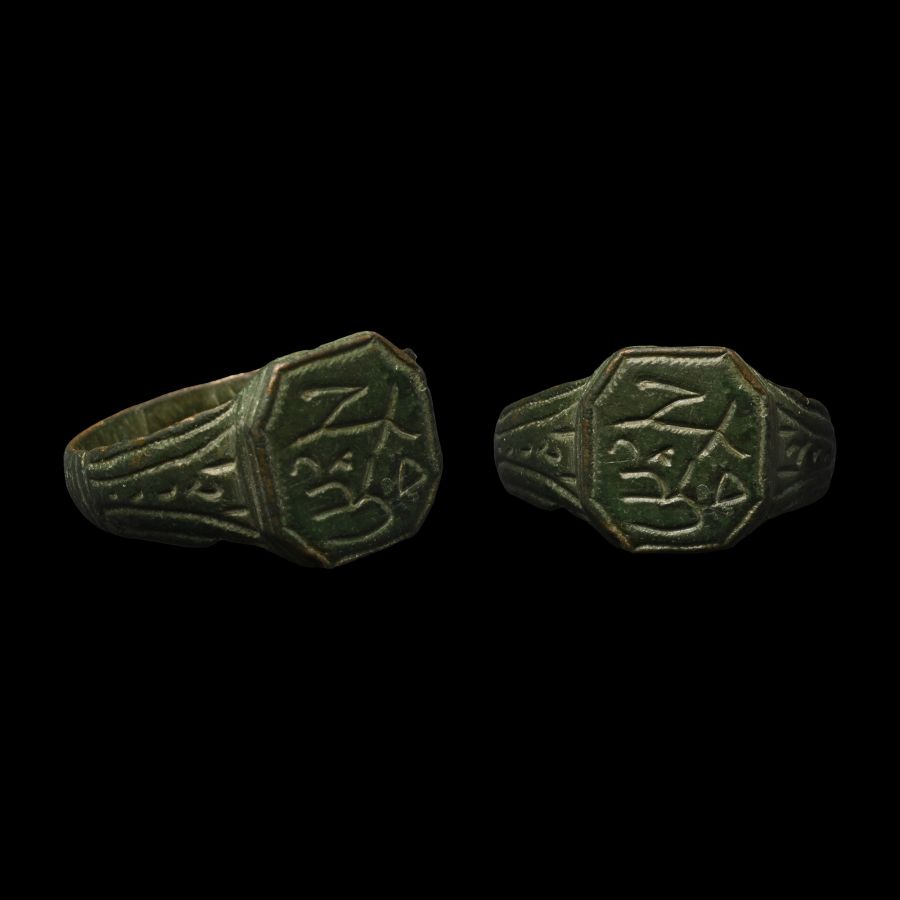
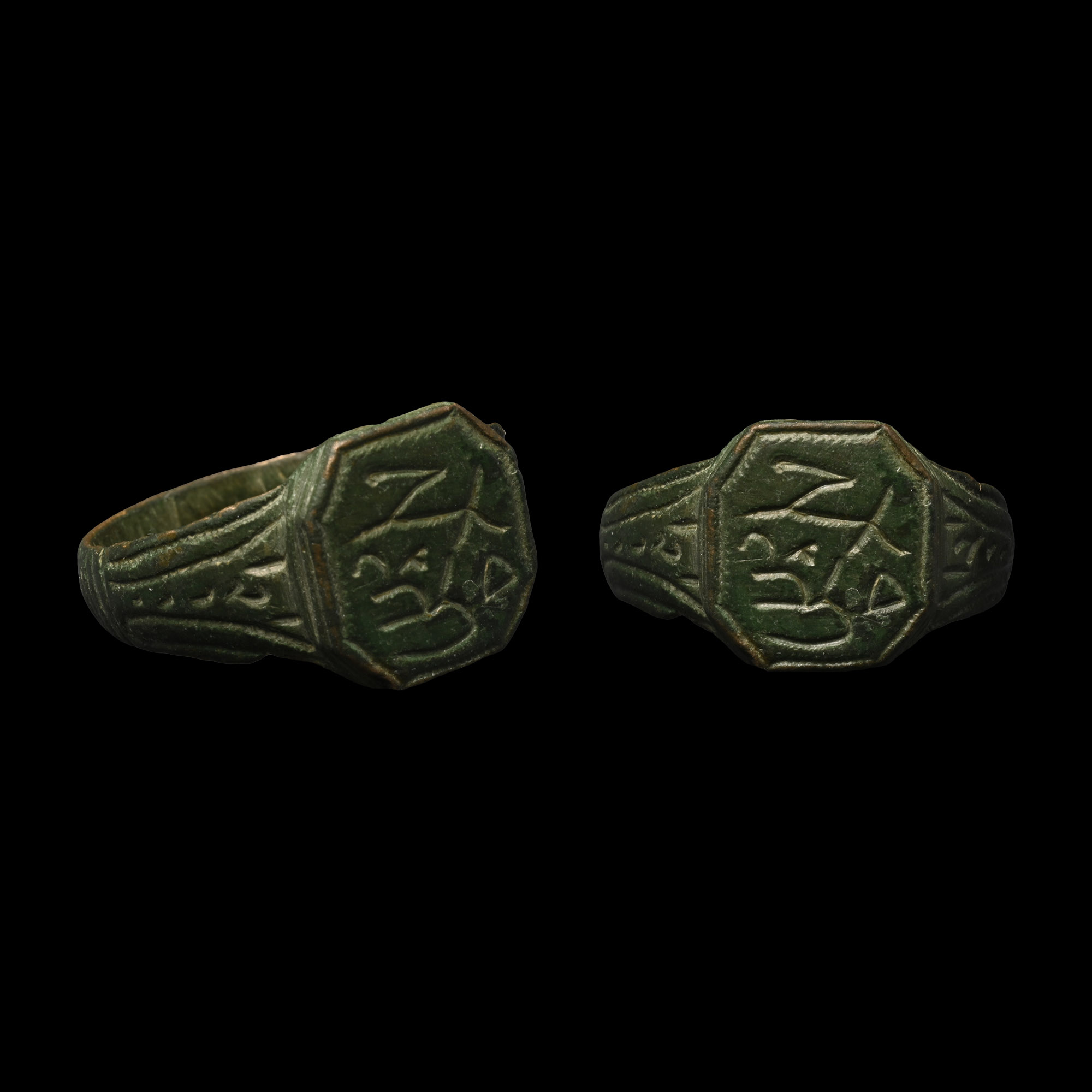
Byzantine Bronze Ring with Monogram
13TH-14TH CENTURY A.D.
1 in. (5.76 grams, 24.25 mm overall, 20.14 mm internal diameter (approximate size British S, USA 9, Europe 20, Japan 19)).
An expanding hoop with decorated shoulders, an octagonal bezel with a monogram, composed of the Greek letters 'Χ [ΑΙΡΕ] ΔΥωΝ[Υ]C (?)' = Be glad Dyoniys. [No Reserve]
ProvenanceAcquired on the UK and EU art market before 2000.
From the private collection of a Surrey, UK, gentleman.
Cf. Wamser, L., Die Welt von Byzanz - Europas Östliches Erbe, München, 2004, item 682, for the type.
FootnotesThe plate and hoop of these rings were soldered together. This system probably originated only in the late period of the Eastern Roman Empire, as evidenced by the faceting of the sides and the irregularity in the letters forming the name.
CONDITIONTimeLine Auctions follows a vetting process to ensure the authenticity and legality of all items, reinforcing our commitment to integrity and responsible trading. Each antiquity, antique, and coin lot undergoes thorough examination by a vetting committee of at least ten external specialists, professional trade association members, scientists, and archaeologists: Our Vetting Process
AUCTIONS:
TimeLine is a leading auction house specialising in antiquities, ancient art, collectables, natural history, coins, medals, and books. Our auctions offer museums, collectors, historians, and enthusiasts the opportunity to acquire unique and historically significant pieces.
-
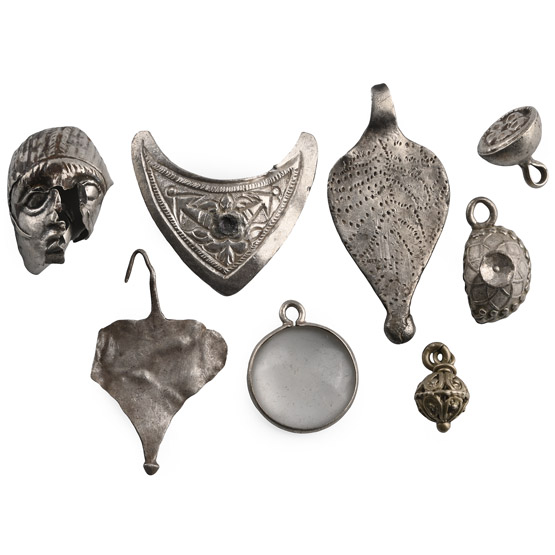
Byzantine Silver Artefact Group
6th-15th century A.D. and laterSold for (Inc. bp): £111
Including a teardrop pendant, sheet-silver miniature mask, plano-convex crystal lens and other items. 12.81 grams total, 11-40 mm
Ex German art market, 2000s. Acquired from an EU collector living in London. From the collection of a Surrey, UK, gentleman. -
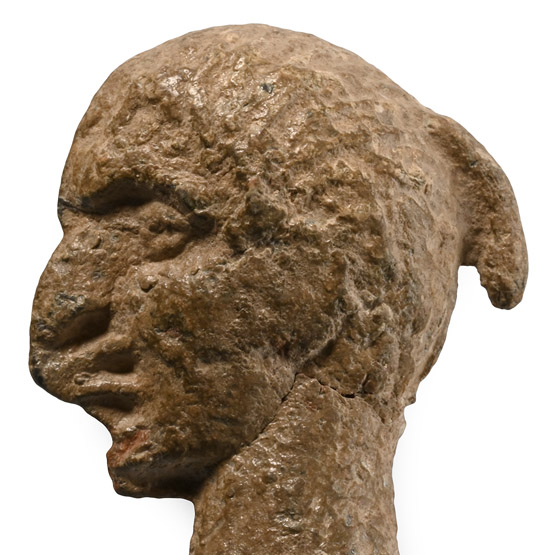
Byzantine Lead Pilgrim's Head Holy Water Ampulla
Circa 6th-8th century A.D.Sold for (Inc. bp): £20
Moulded ampulla formed as a head with a short pointed beard, aquiline nose, scalplock; open to the underside of the neck. 26.18 grams, 37 mm
Ex German art market, 2000s. Acquired from an EU collector living in London. From the collection of a Surrey, UK, gentleman. -
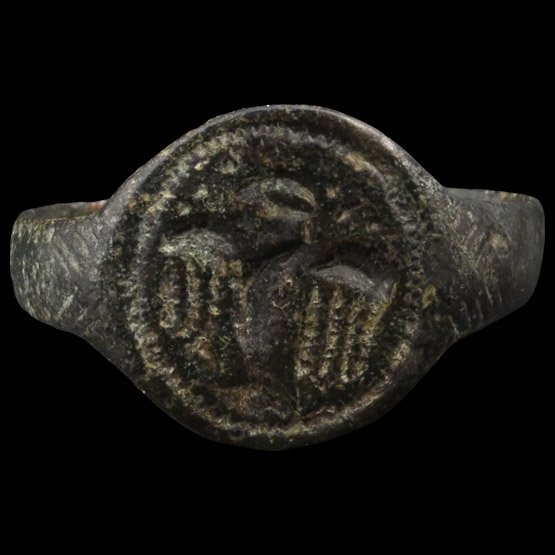
Byzantine Bronze Ring with Spread Eagle
12th-15th century A.D.Sold for (Inc. bp): £65
Discoid bezel with border, incuse spread eagle motif with head turned. 2.51 grams, 22.81 mm overall, 19.97 x 20.21 mm internal diameter (approximate size British U 1/2, USA 10 1/4, Europe 23.15, Japan 22)
Ex German art market, 2000s. Acquired from an EU collector living in London. From the collection of a Surrey, UK, gentleman.
