
Loading, please wait...


LOT 1434
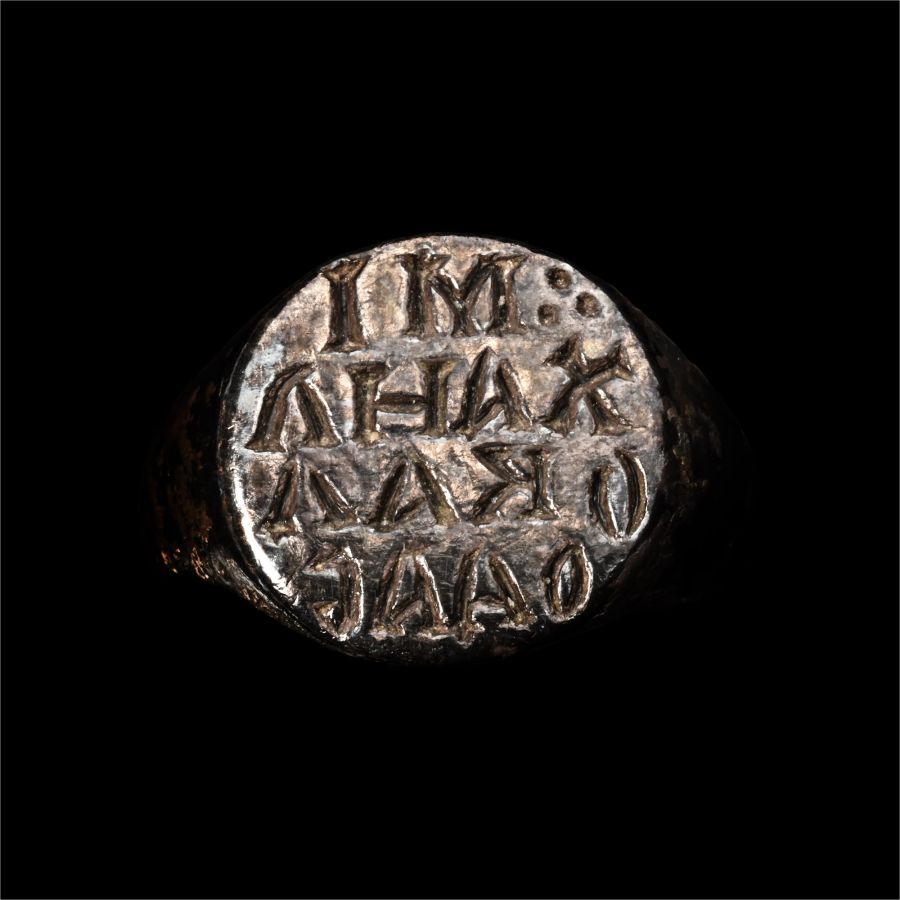
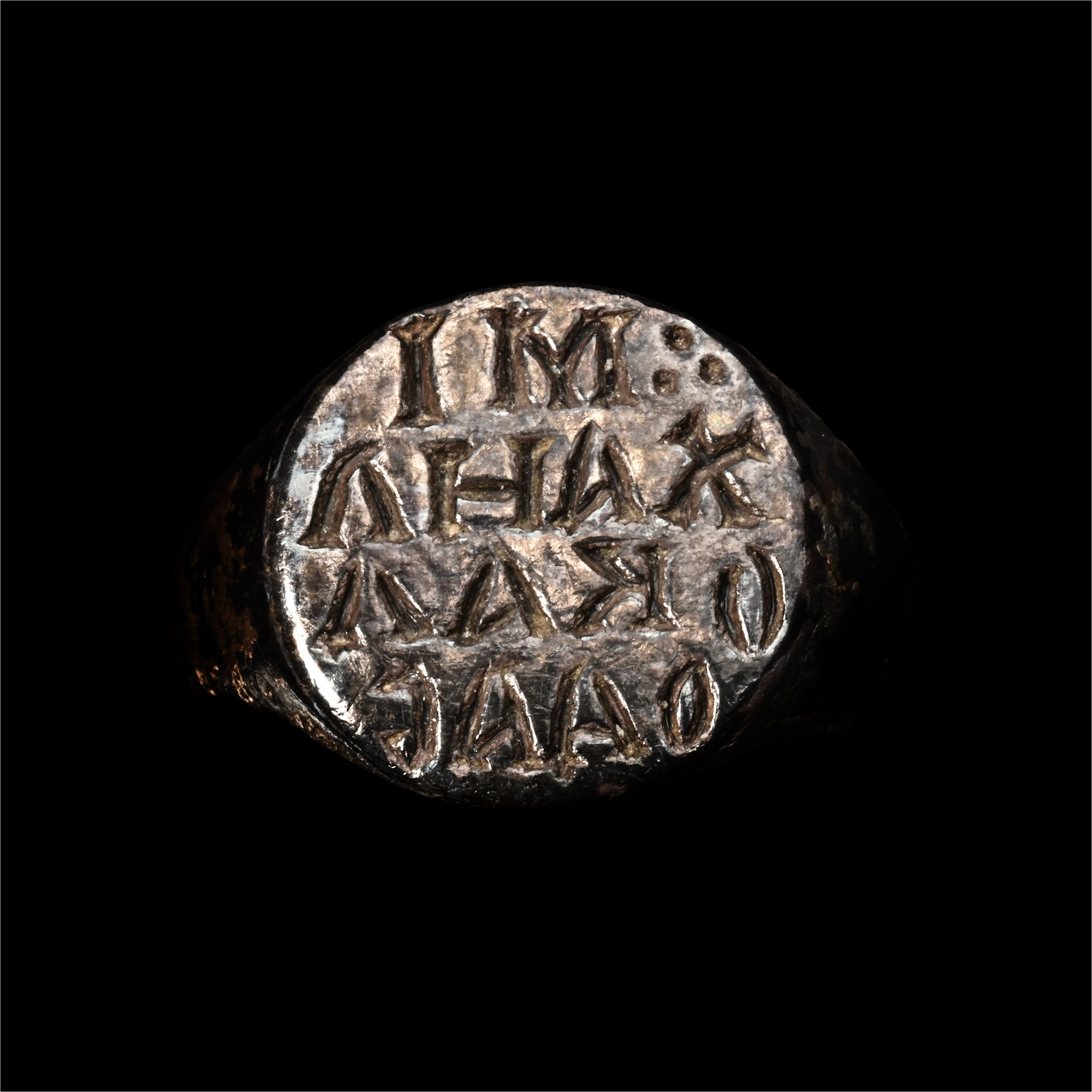
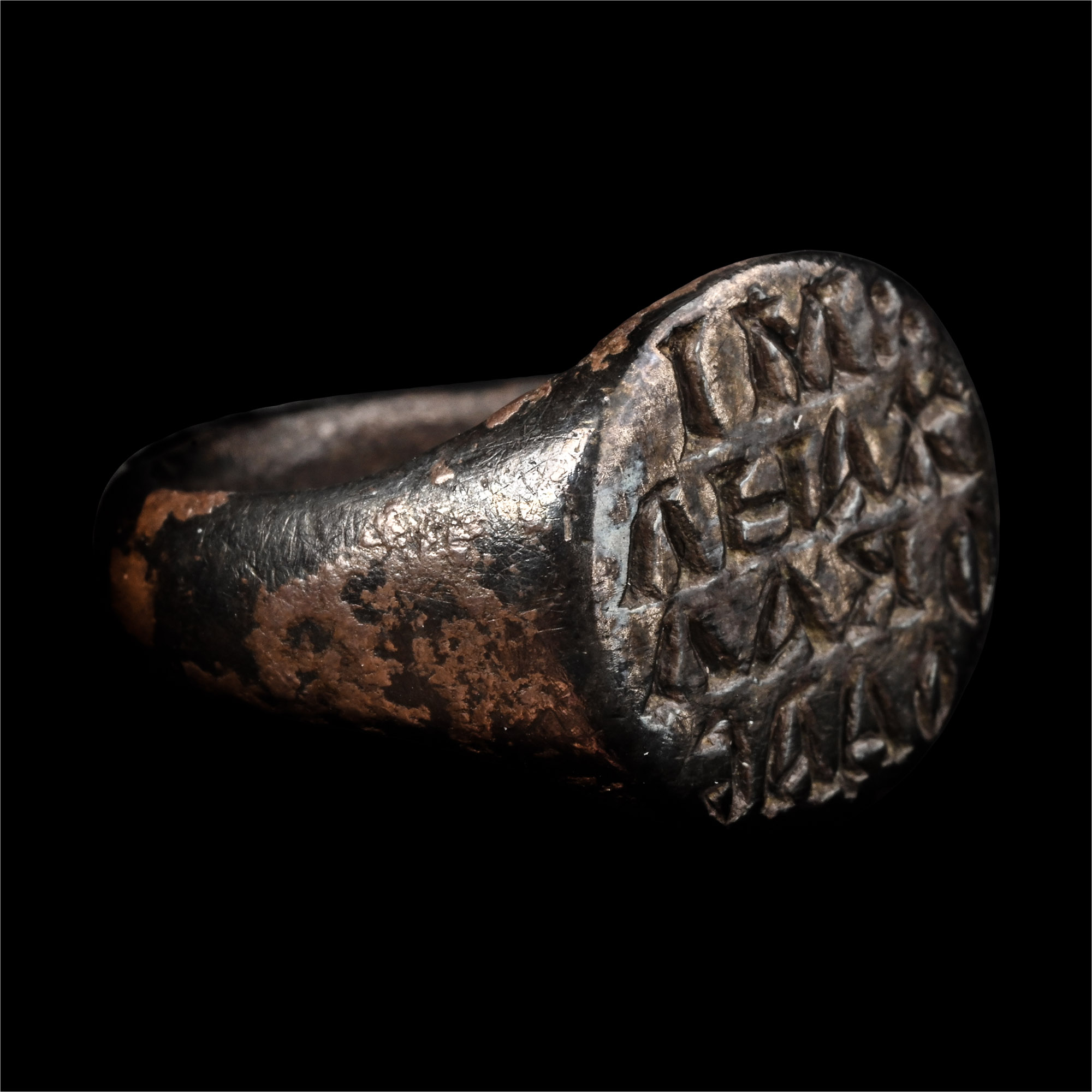
Byzantine Bronze Ring with Inscription
7TH-8TH CENTURY A.D.
7/8 in. (9.19 grams, 21.87 mm overall, 17.80 mm internal diameter (approximate size British N 1/2, USA 6 3/4, Europe 14.35, Japan 13)).
D-section hoop with integral disc bezel, incised Greek legend '·: MI / XAHΛ / ΩKAΛ / ΩAAB'.
ProvenancePrivate collection of Kal Noselson, New York, acquired between 1976 and the late 1990s; thence by descent.
LiteratureCf. Chadour, A.B., Rings. The Alice and Louis Koch Collection, volume I, Leeds, 1994, item 481, for type.
CONDITIONTimeLine Auctions follows a vetting process to ensure the authenticity and legality of all items, reinforcing our commitment to integrity and responsible trading. Each antiquity, antique, and coin lot undergoes thorough examination by a vetting committee of at least ten external specialists, professional trade association members, scientists, and archaeologists: Our Vetting Process
AUCTIONS:
TimeLine is a leading auction house specialising in antiquities, ancient art, collectables, natural history, coins, medals, and books. Our auctions offer museums, collectors, historians, and enthusiasts the opportunity to acquire unique and historically significant pieces.
LOT 1434
Byzantine Bronze Ring with Inscription
Estimate £150 - 200€170 - 230 (for guidance only)$200 - 270 (for guidance only)
Opening Bid
£75 (EUR 87; USD 101) ‡+BP*
-
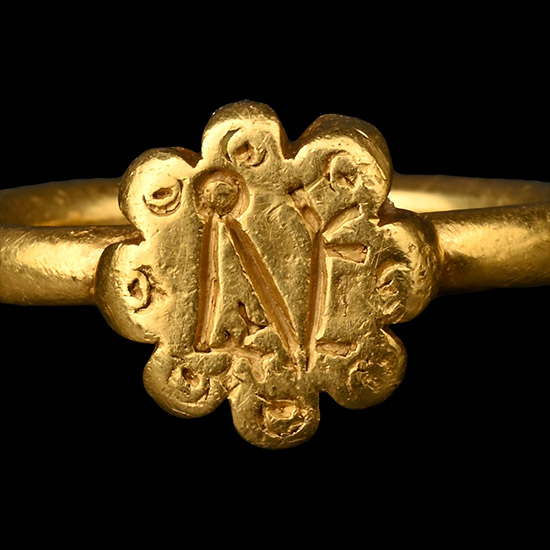
Heavy Byzantine Gold Ring with Monogram
Circa 7th century A.D.Estimate: £3,000 - 4,000 (‡+bp*)
Opening Bid: £1,500
Substantial hoop with integral rosette bezel, ring-and-dot motifs to the upper face surrounding a monogram including 'ΝIKΟΥ' and other letters. 14.74 grams, 27.85 mm overall, 20.28 x 18.97 mm internal diameter (approximate size British S 1/2, USA 9 1/4, Europe 20.63, Japan 19)
Private collection of Kal Noselson, New York, acquired between 1976 and the late 1990s; thence by descent. This lot has been checked against the Interpol Database of stolen works of art and is accompanied by search certificate no.13413-259782.
The ring belongs to the category of Eastern Roman rings featuring a polygonal band and an applied bezel, a type particularly common in the 7th century A.D. It bears the monogram ΝIKΟΥ (of Nikos). -
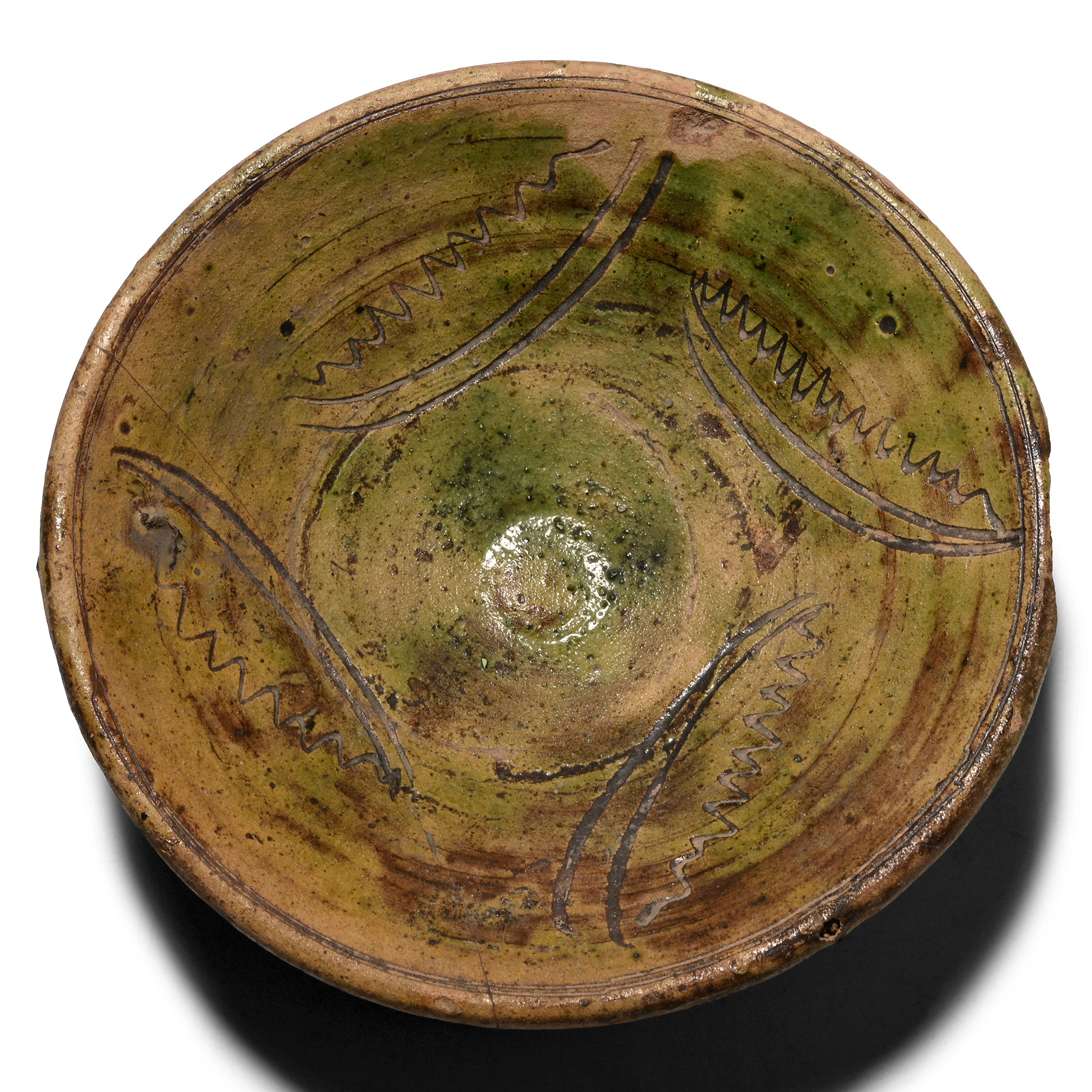
Byzantine Green Glazed Sgraffito Footed Bowl
13th-14th century A.D.Estimate: £200 - 300 (+bp*)
Opening Bid: £5
Shallow type with dished body and ring to underside; rounded rim and incised border, four sgraffito crescent motifs with undulating line above each. 301 grams, 16 cm wide
From the private collection of Peter Clayton, FCILIP, Dip, Arch, FSA, FRNS, Hemel Hempstead, Hertfordshire, UK; formed since the late 1950s. -
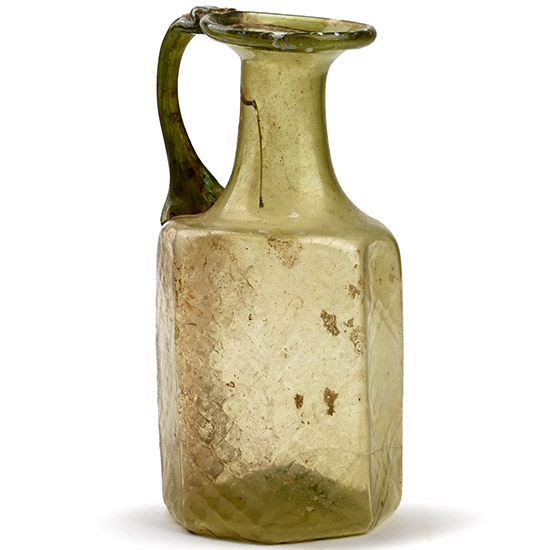
Byzantine Mould-Blown Octagonal Green Glass Jug
5th-7th century A.D.Estimate: £1,500 - 2,000 (+bp*)
Opening Bid: £750
Featuring an octagonal body with a flattened shoulder and a cylindrical neck with a funnel-shaped mouth and a folded rim, a tooled single handle drawn up and outward from the shoulder to the rim, the sides mould-blown and displaying four types of lozenge motifs, each repeated twice, a concave base with a six-petalled flower with a pontil mark at the centre. 138 grams, 16.7 cm
Ex Mayfair, London, UK, gallery, 1990s-2000s. From an important collection of glass, the property of a London gentleman. Roman glass from an important London collection, acquired from the early 1980s. Accompanied by a typed previous catalogue information page with provenance.
Hexagonal and octagonal jars or jugs, decorated with Christian or Jewish symbols or neutral geometric patterns, were mass-produced in moulds for the pilgrims visiting the Holy Land during the Late Roman Empire. These “pilgrim vessels” are also recorded from Cyprus, an island that was on the sea route that brought pilgrims to and from Jerusalem.
