
Loading, please wait...


LOT 0942
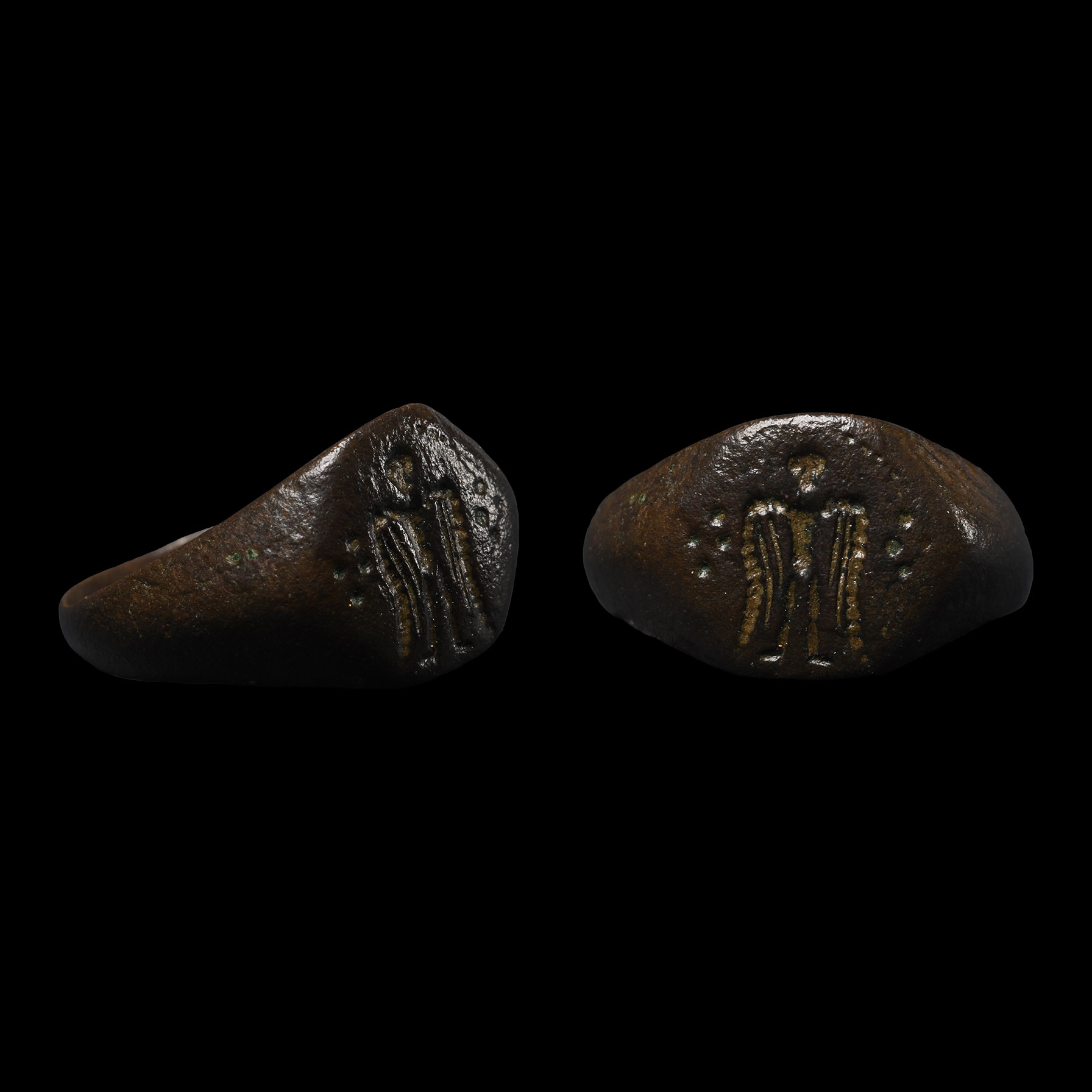
Byzantine Bronze Ring with Eagle
6TH-8TH CENTURY A.D.
1 in. (6.79 grams, 23.08 mm overall, 19.62 mm internal diameter (approximate size British S 1/2, USA 9 1/4, Europe 20.63, Japan 19)).
With a D-section hoop expanding at the shoulders, hexagonal bezel with intaglio image of an eagle with wings spread, pellets to the field. [No Reserve]
ProvenanceEx German art market, 2000s.
Acquired from an EU collector living in London.
From the collection of Surrey, UK, gentleman.
TimeLine Auctions follows a vetting process to ensure the authenticity and legality of all items, reinforcing our commitment to integrity and responsible trading. Each antiquity, antique, and coin lot undergoes thorough examination by a vetting committee of at least ten external specialists, professional trade association members, scientists, and archaeologists: Our Vetting Process
AUCTIONS:
TimeLine is a leading auction house specialising in antiquities, ancient art, collectables, natural history, coins, medals, and books. Our auctions offer museums, collectors, historians, and enthusiasts the opportunity to acquire unique and historically significant pieces.
-
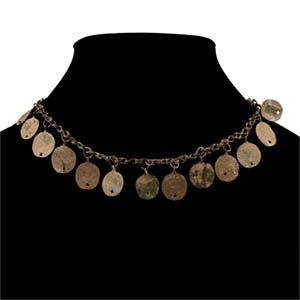
Byzantine Bronze Pendant Chain Necklace
6th-8th century A.D.Sold for (Inc. bp): £260
Length of chain with pendant discs, each a plain roundel with small cruciform void to the lower edge. 17.2 grams, 33 cm long
Acquired on the London art market in the late 1980s-1990s. From the family collection of an East London, UK, gentleman. -
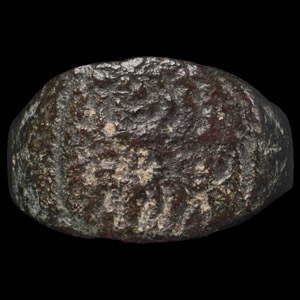
Byzantine Bronze Inscribed Ring
6th-8th century A.D.Sold for (Inc. bp): £26
With broad ellipsoid plaque, low-relief legend. 4.34 grams, 22.61 mm overall, 20.29 mm internal diameter (approximate size British U 1/2, USA 10 1/4, Europe 23.15, Japan 22)
Acquired 1980-2015. Ex Abelita family collection. -
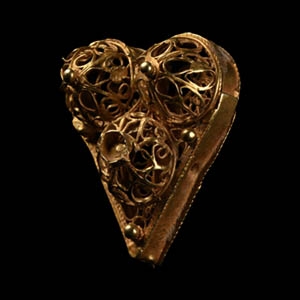
Byzantine Gold Heart-Shaped Fitting
Circa 6th-8th century A.D.Sold for (Inc. bp): £494
Openwork bead or pendant with heart-shaped frame and three domes to the obverse, each formed as a filigree cage; one with cell at the apex and the others with knop finials; granules to the obverse, filigree swirls to the reverse. 2.93 grams, 24 mm
Ex property of a late Japanese collector, 1970-2000s.
