
Loading, please wait...
LOT 1131
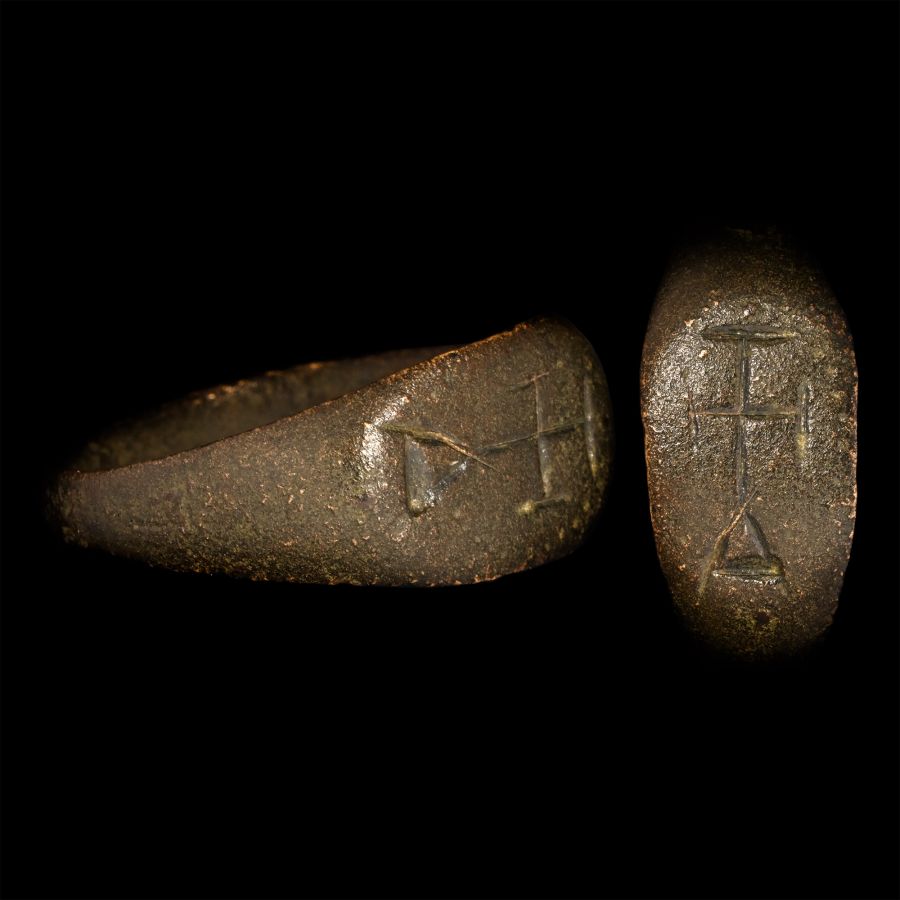
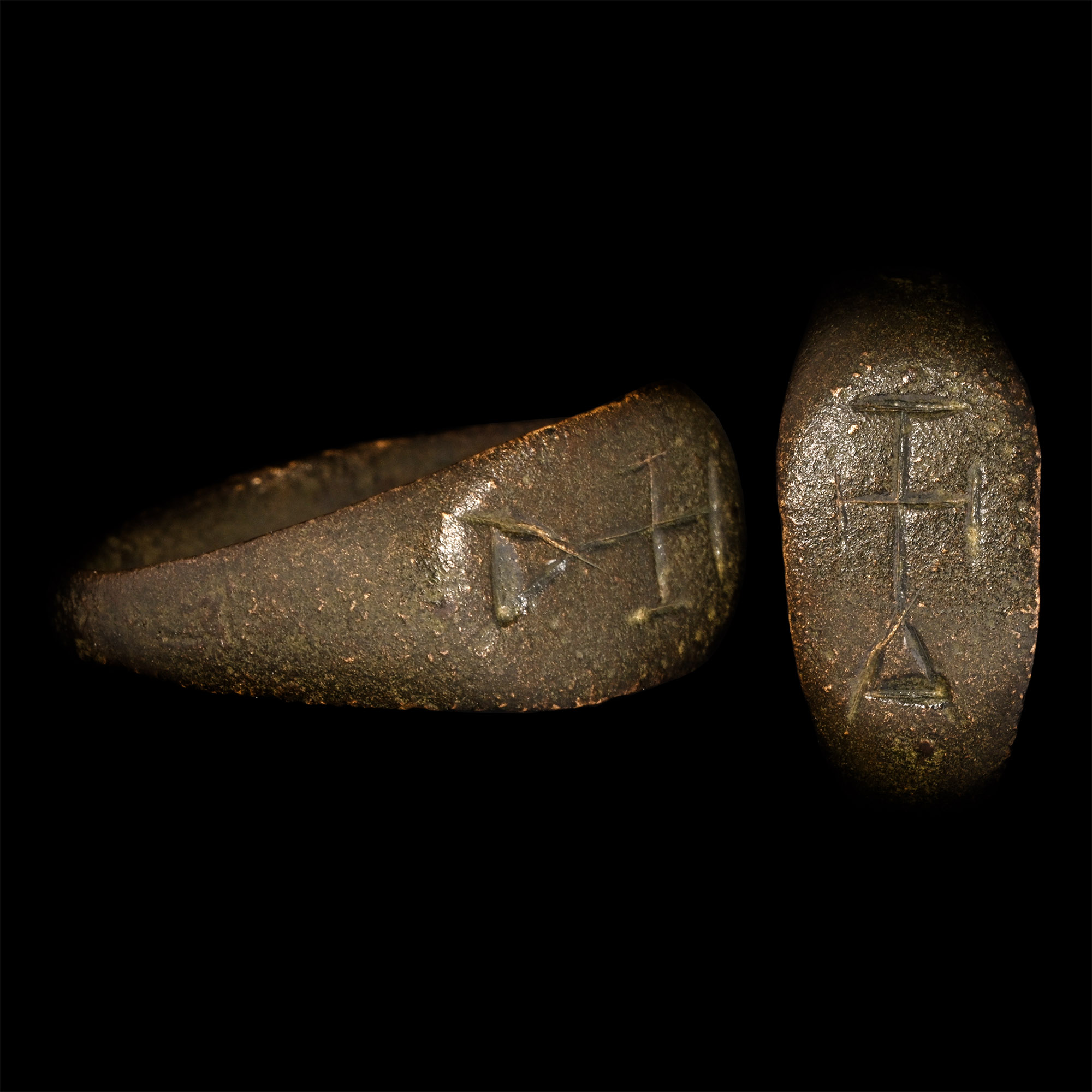
Byzantine Bronze Ring with Cross
6TH-8TH CENTURY A.D.
7/8 in. (3.65 grams, 22.69 mm overall, 20.44 mm internal diameter (approximate size British U, USA 10, Europe 22.52, Japan 21)).
Hoop expanding towards the shoulders, oval bezel with a cross on a triangular base. [No Reserve]
ProvenanceEx German art market, 2000s.
Acquired from an EU collector living in London.
From the collection of a Surrey, UK, gentleman.
TimeLine Auctions follows a vetting process to ensure the authenticity and legality of all items, reinforcing our commitment to integrity and responsible trading. Each antiquity, antique, and coin lot undergoes thorough examination by a vetting committee of at least ten external specialists, professional trade association members, scientists, and archaeologists: Our Vetting Process
AUCTIONS:
TimeLine is a leading auction house specialising in antiquities, ancient art, collectables, natural history, coins, medals, and books. Our auctions offer museums, collectors, historians, and enthusiasts the opportunity to acquire unique and historically significant pieces.
-
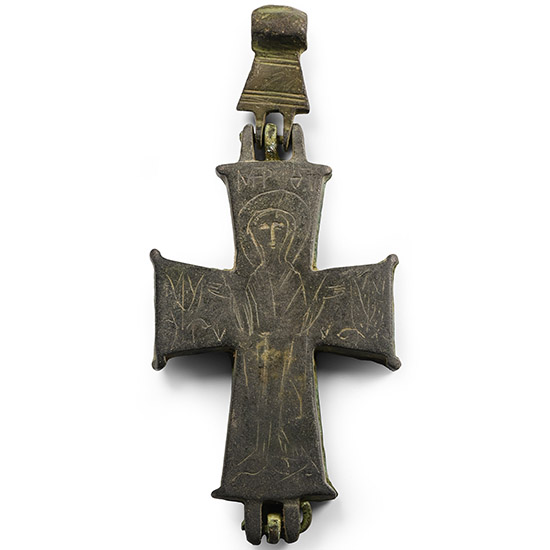
Byzantine Bronze Reliquary Cross Pendant
Circa 10th-12th century A.D.Sold for (Inc. bp): £234
Formed from two hinged plates with a recess to the inner face of each, cast suspension loop to the upper hinge; obverse with four incised equal-arm crosses and 'MIXAHΛ' (Michael) legend; reverse with low-relief image of nimbate Mary in orans pose. 56.8 grams, 10.1 cm
Ex German art market, 2000s. Acquired from an EU collector living in London. From the collection of Surrey, UK, gentleman. -
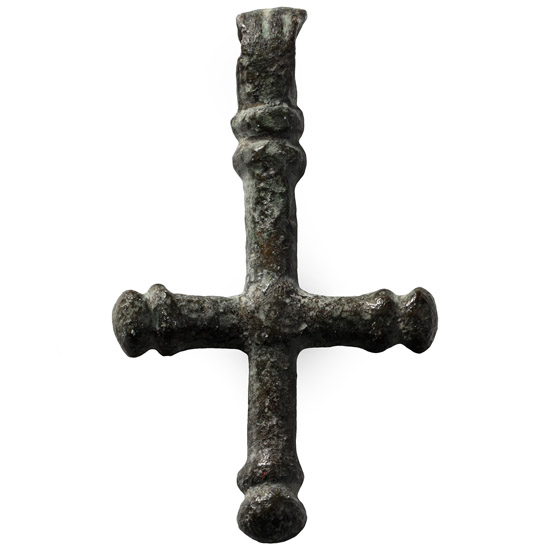
Byzantine Bronze Cross Pendant
Circa 6th-8th century A.D.Sold for (Inc. bp): £52
With a collar and a knop finial on each arm and an integral suspension loop. 8.45 grams, 43 mm
From the private coin collection of a West London, UK, gentleman, formed since the mid 1980s. -
.jpg)
Byzantine Gilt Bronze Horse Harness Decoration Set
8th-10th century A.D.Sold for (Inc. bp): £1,430
Comprising: a large octofoil harness frontal plate with beaded rim and granulation; studs with quatrefoil plates; bell-shaped dangles. 556 grams total, 11-92 mm
From the private collection of a London gentleman, from his grandfather's collection formed before the early 1970s. This lot has been checked against the Interpol Database of stolen works of art and is accompanied by a search certificate number no.12687-234699.
The military technology of Byzantium and Khazar Kingdom were interconnected in the 8th-10th centuries A.D. Many military items, like horse harnesses, were produced in both countries and object of interchange between the two military cultures.
