
Loading, please wait...
LOT 1135
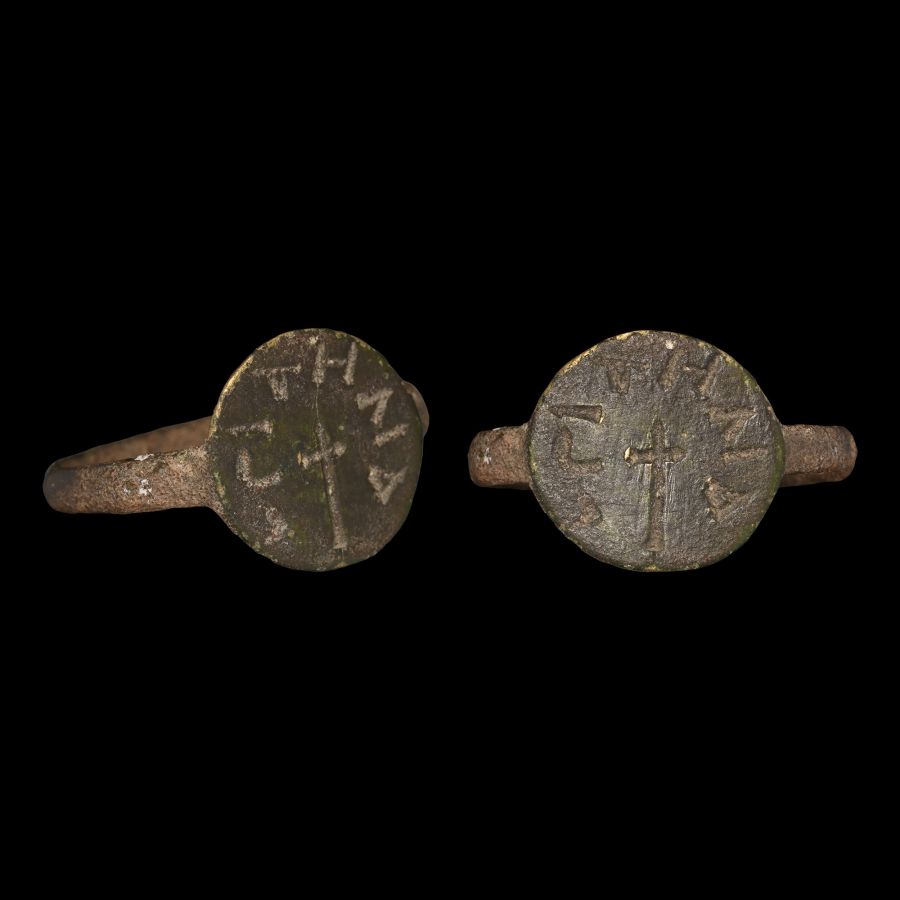
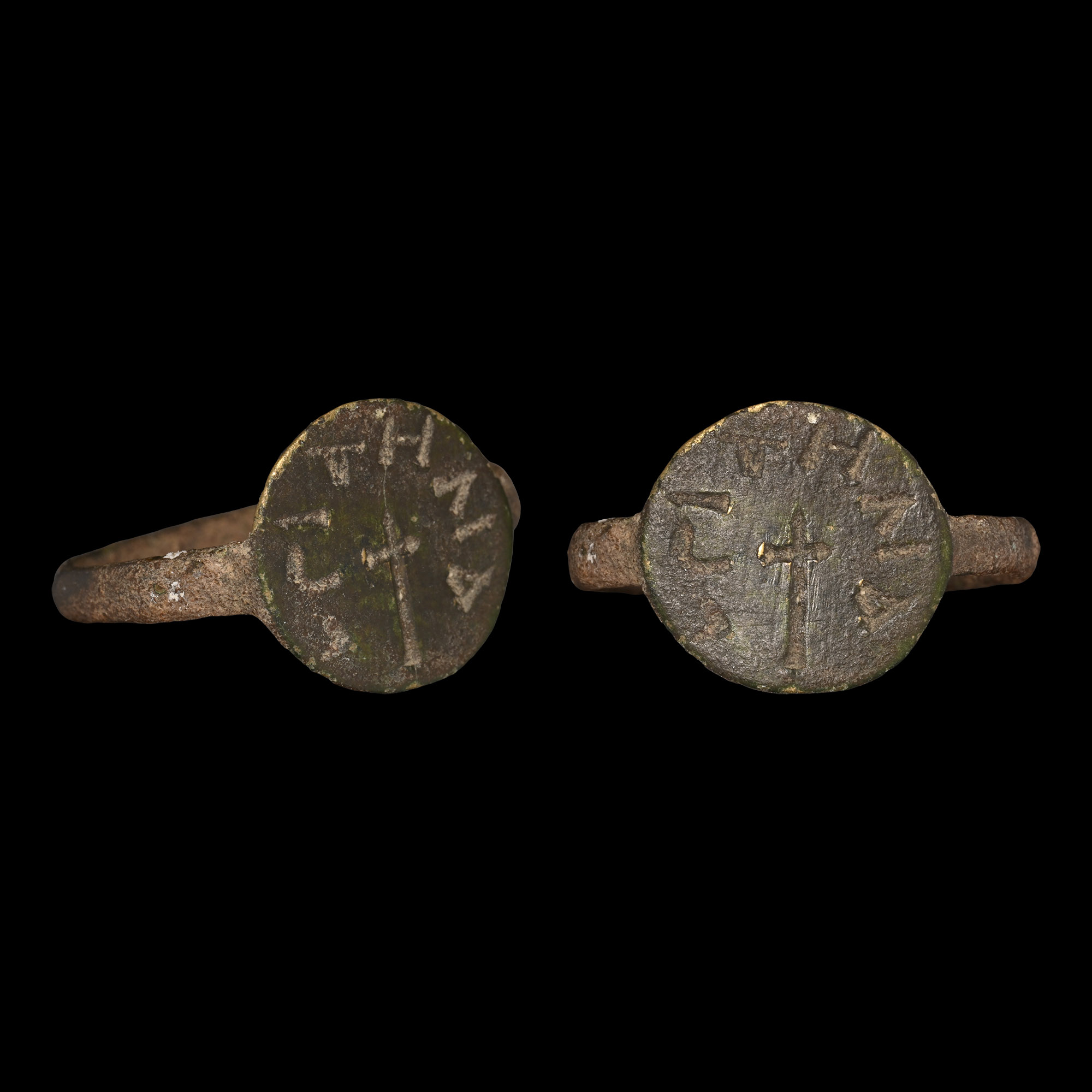
Byzantine Bronze Ring with Cross and Inscription
6TH-8TH CENTURY A.D.
7/8 in. (2.26 grams, 22.83 mm overall, 19.49 x 17.19 mm internal diameter (approximate size British P, USA 7 1/2, Europe 16.23, Japan 15)).
Comprising a faceted hoop and disc bezel with incised cross and legend 'ΓI [.]HNA'. [No Reserve]
ProvenanceFrom the private collection of a European gentleman (1942-2024), formed since the 1970s.
CONDITIONTimeLine Auctions follows a vetting process to ensure the authenticity and legality of all items, reinforcing our commitment to integrity and responsible trading. Each antiquity, antique, and coin lot undergoes thorough examination by a vetting committee of at least ten external specialists, professional trade association members, scientists, and archaeologists: Our Vetting Process
AUCTIONS:
TimeLine is a leading auction house specialising in antiquities, ancient art, collectables, natural history, coins, medals, and books. Our auctions offer museums, collectors, historians, and enthusiasts the opportunity to acquire unique and historically significant pieces.
-
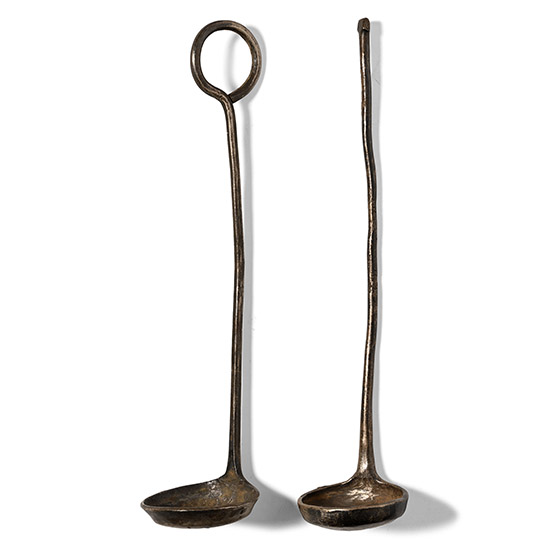
Byzantine Silver Priest's Ladle Pair
Circa 10th-13th century A.D.Sold for (Inc. bp): £293
Each with a shallow discoid bowl and flared rim, round-section shank; one with an integral suspension ring. 58.3 grams total, 16.2-16.5 cm
Ex property of a London gentleman; part of a Mayfair collection formed in the 1970s and 1980s. Private collection, Suffolk, UK. -
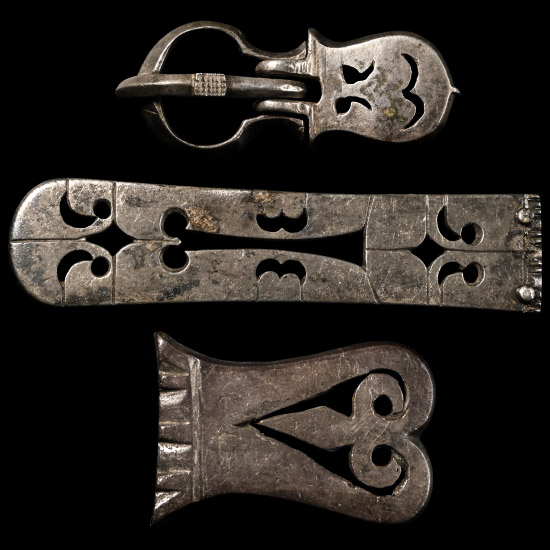
Early Byzantine Silver Belt Fittings with Openwork Decoration
6th-7th century A.D.Estimate: £300 - 400 (+bp*)
Opening Bid: £150
Comprising: two strap ends with openwork decoration of bifurcated scrolls and volutes; a buckle with an arched loop and cast tongue mounted on a shield-shaped plate decorated in a similarly abstract vegetal scheme. 51.5 grams total, 47-89 mm
Acquired on the European art market.
The high quality of execution, formal consistency, and use of silver suggest these fittings once adorned the belt of a military or aristocratic figure within a frontier or provincial context. Their design is representative of the transitional material culture of the early Byzantine world, in which classical motifs were abstracted and reinterpreted through regional aesthetic idioms. This ensemble belongs to the broader category of Early Byzantine personal dress fittings, and is closely related to the Martynivka Hoard—a group of silver artefacts discovered near Kanev (modern Cherkasy Oblast, Ukraine) before 1909. Now divided between the British Museum and the National Museum of the History of Ukraine, the hoard includes strap ends and buckles of closely comparable design and manufacture. While their precise cultural attribution remains debated, the prevailing scholarly consensus situates them within the orbit of Byzantine provincial production, possibly influenced by or intended for Slavic, nomadic, or client populations in the Pontic steppe region. Similar artefacts have been recovered from Kerch in Crimea, further supporting the view that such belt fittings were widely disseminated in Byzantine-controlled or influenced regions along the northern Black Sea during the 6th and 7th centuries. Their function was not merely practical; richly decorated belts of this kind were important signifiers of rank, allegiance, and imperial favour. -
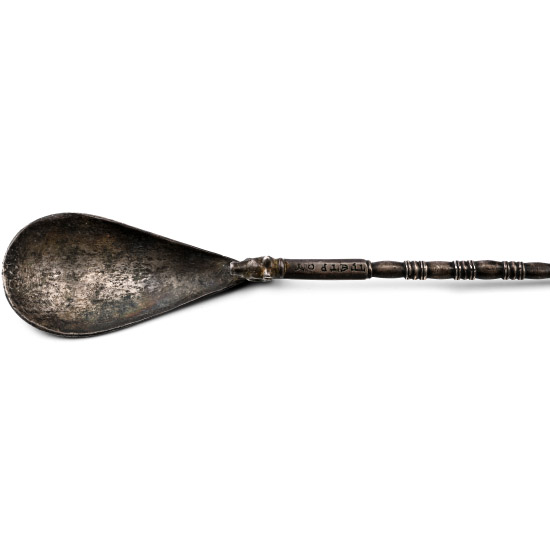
Late Byzantine Silver Spoon with 'St Peter' Inscription on the Handle
Late 6th-8th century A.D.Sold for (Inc. bp): £910
Featuring a large, shallow piriform bowl, stepped junction with a boar's head above, a hexagonal-section stem extending from behind the boar's neck bearing a Greek inscription 'TTETPOY' (of Peter); a balustered handle with a cuboid, striated finial. 60.77 grams, 21.5 cm
Acquired on the UK art market. Private collection, Surrey, UK.
The inscription suggests that the spoon may have had a liturgical purpose, associated with the Holy Communion. Still today in the Orthodox Church, the Body and Blood of Christ are dispensed with similar liturgical objects. The name Peter can be associated with the church, or simply with the owner of the liturgical artefact.
