
Loading, please wait...
LOT 0865
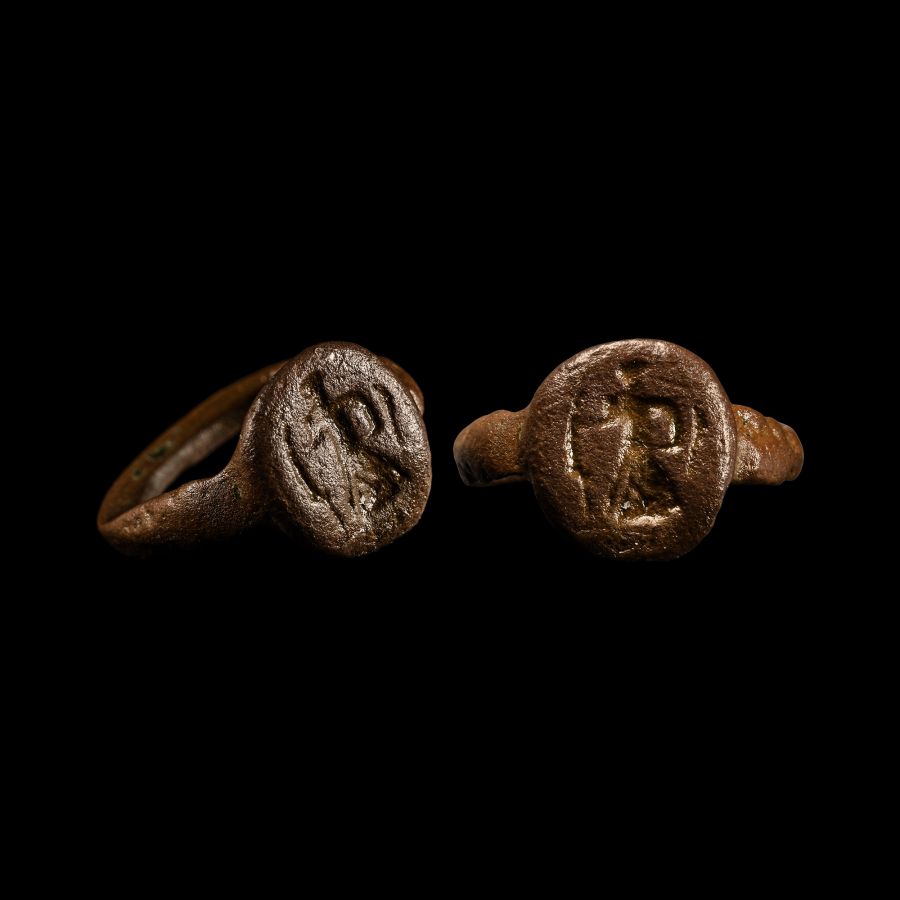
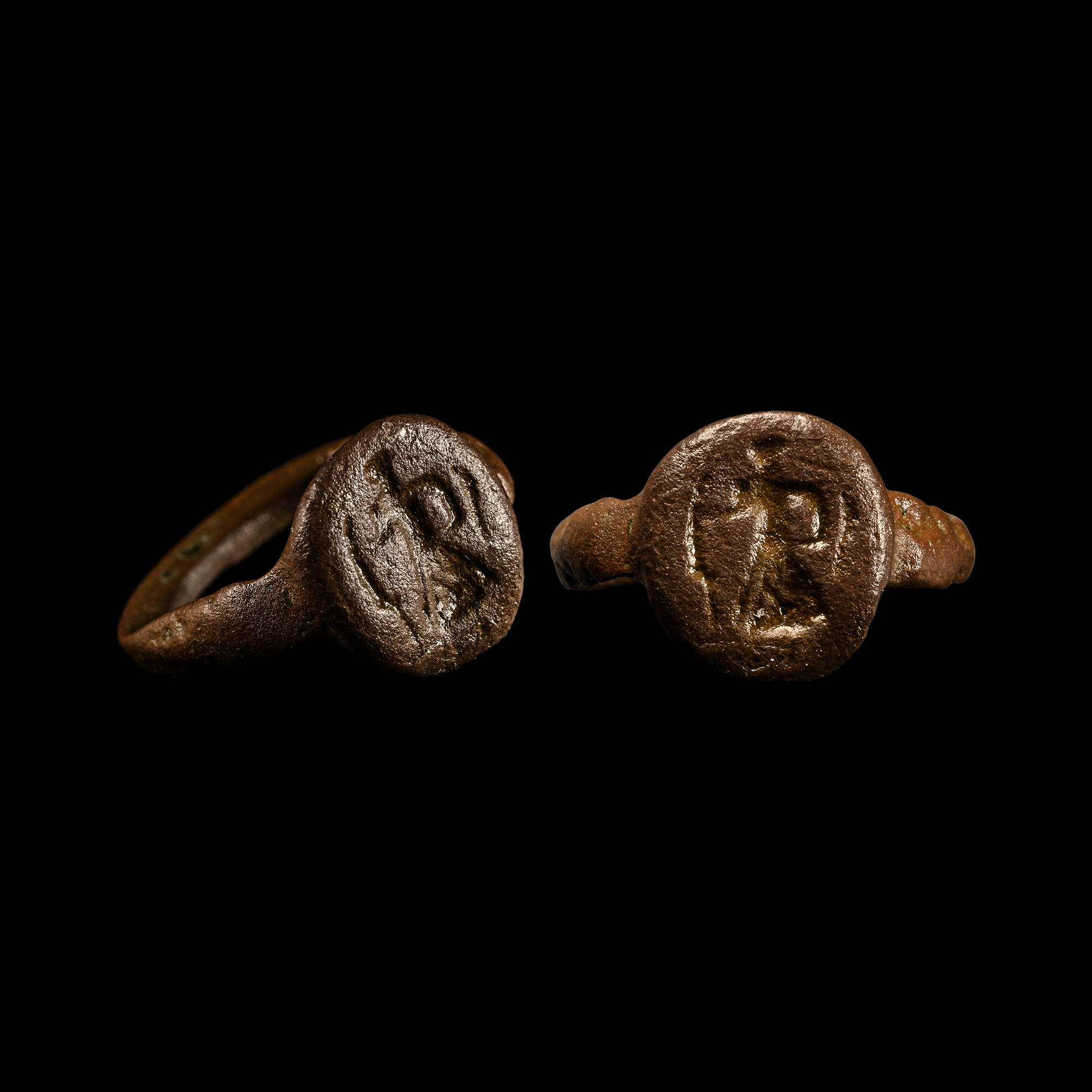
Byzantine Bronze Ring with Armed Warrior
CIRCA 5TH-7TH CENTURY A.D.
3/4 in. (2.06 grams, 18.52 mm overall, 15.90 mm internal diameter (approximate size British I 1/2, USA 4 1/2, Europe 8.07, Japan 7)).
The slender hoop with worn remains of decorative notching to shoulders, oval bezel engraved with stylised standing figure holding shield and a spear or other weapon. [No Reserve]
ProvenancePrivate collection formed since the 1940s.
UK art market.
Property of an Essex gentleman.
TimeLine Auctions follows a vetting process to ensure the authenticity and legality of all items, reinforcing our commitment to integrity and responsible trading. Each antiquity, antique, and coin lot undergoes thorough examination by a vetting committee of at least ten external specialists, professional trade association members, scientists, and archaeologists: Our Vetting Process
AUCTIONS:
TimeLine is a leading auction house specialising in antiquities, ancient art, collectables, natural history, coins, medals, and books. Our auctions offer museums, collectors, historians, and enthusiasts the opportunity to acquire unique and historically significant pieces.
-
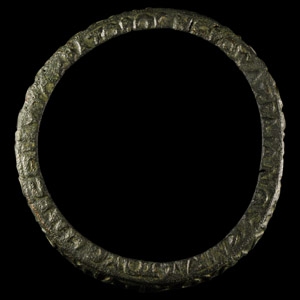
Byzantine Bronze Inscribed Vessel Rim
Circa 6th-8th century A.D.Sold for (Inc. bp): £572
Sub-circular in form, displaying an inscription in raised Greek lettering to the upper and side faces; pierced for attachment; the main inscription on the border should be read 'Μ ΔΗΜ ΞΕΙΖΟΓ ΒΛΙΑ TΟΥ ΛΙΟΥΚΟΥ ΑΔΡΑΤΟΥ ΤΟΥ ΥΠΑΤΙΚΟΥ' = M(ichail) Dem(etrios) Exizoglos to the consularis Ioulios Quadratos. 257 grams, 15 cm wide
Ex Simmons Gallery, London E11, UK, in the 1990s. From a North London collection.
The vessel was probably part of a gift given by a certain Michail Demetrios to an officer of (ΥΠΑΤΙΚΟΥ) i.e. Consularis Rank. The shape recalls that of small tripods stands. -
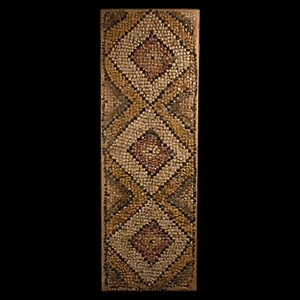
Byzantine Geometric Floor Mosaic
Circa 6th century A.D.Sold for (Inc. bp): £2,600
Comprising a triple geometric rhomboidal figure, where three rhombuses are drawn one inside the other and distinguished by different shades of yellow, white and light red, the latter figure marked in the centre by a white space; the three figures are vertically arranged in a perfect geometric axis on a light background. 36.3 kg, 114.5 cm including frame
Acquired 1970s-1996. Property of a North American collector. London collection, 2016. This lot has been checked against the Interpol Database of stolen works of art and is accompanied by search certificate number no.11823-207411.
The tendency to use abstract and geometric motifs characterises the mosaic art of the Levant under the domination of Byzantium. Close ties can be identified between these rhomboidal figures and those of some of the famous Lebanese mosaics of Beit el Dine, or the mosaics of Tiberias and Hammat, which represent the last expression of Roman art in that area before the Islamic conquest. -
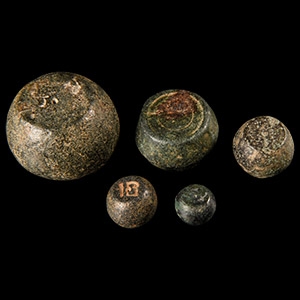
Byzantine Bronze Weight Collection
8th-12th century A.D.Sold for (Inc. bp): £52
Primarily truncated spherical forms, a number displaying letters, monograms and other patterns or markings. 276 grams total, 11-32 mm
Ex Simmons Gallery, London E11, UK, in the 1990s. From a North London collection.
