
Loading, please wait...


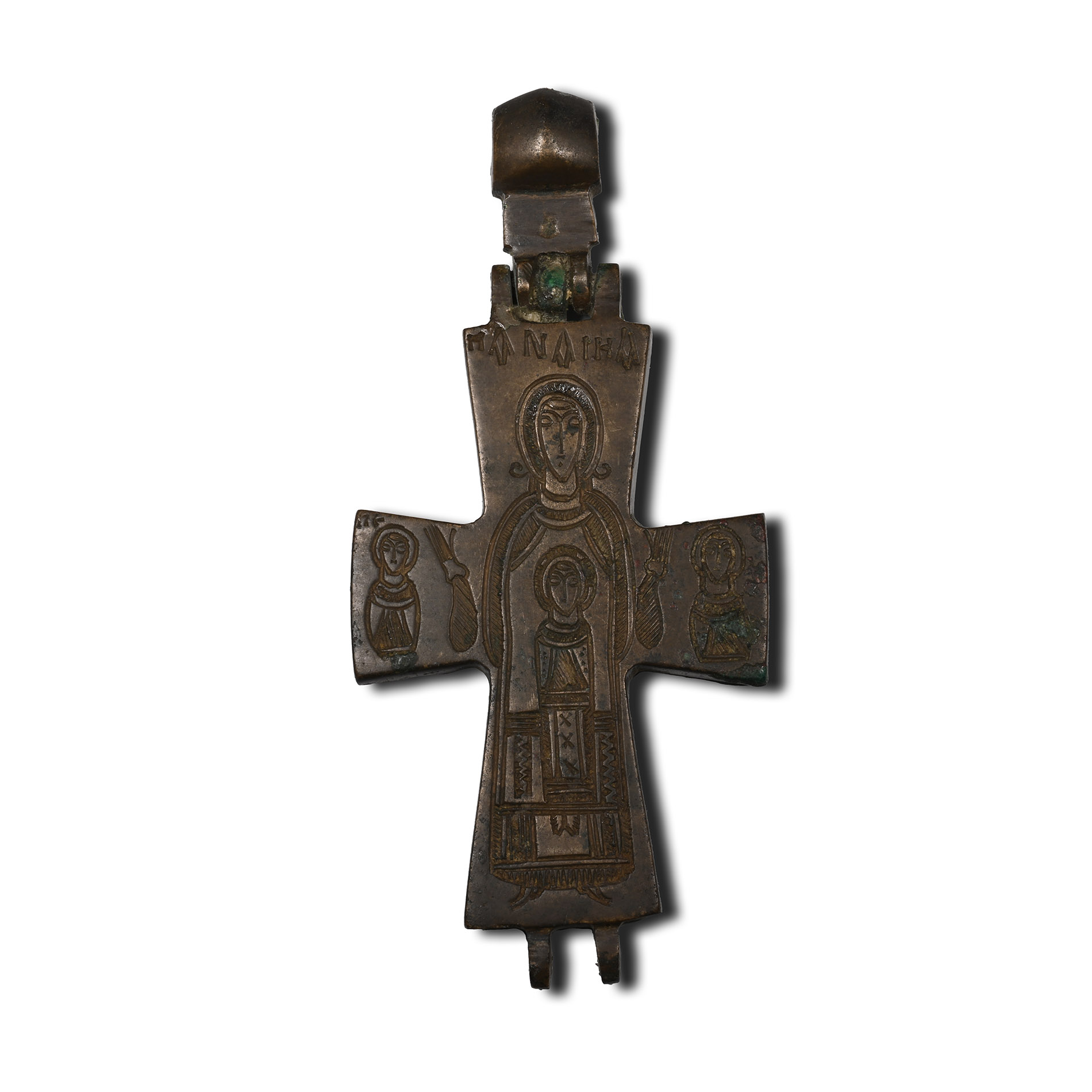
LOT 1078
Byzantine Bronze Reliquary Cross Plate
10TH-12TH CENTURY A.D.
4 1/8 in. (49.5 grams, 10.6 cm).
The enkolpion with hinged loop, nimbate figure in orans pose with a smaller robed figure before, inscription above, two nimbate saints to the arms.
ProvenanceAcquired on the German art market, 2003.
Private collection, Europe.
TimeLine Auctions follows a vetting process to ensure the authenticity and legality of all items, reinforcing our commitment to integrity and responsible trading. Each antiquity, antique, and coin lot undergoes thorough examination by a vetting committee of at least ten external specialists, professional trade association members, scientists, and archaeologists: Our Vetting Process
AUCTIONS:
TimeLine is a leading auction house specialising in antiquities, ancient art, collectables, natural history, coins, medals, and books. Our auctions offer museums, collectors, historians, and enthusiasts the opportunity to acquire unique and historically significant pieces.
-
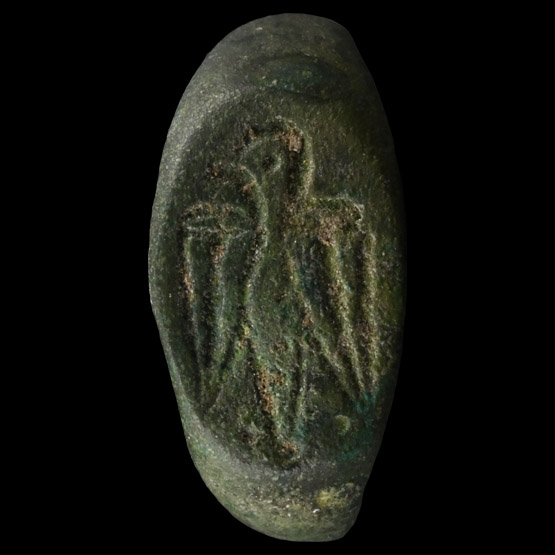
Byzantine Bronze Ring with Spread Eagle
12th-15th century A.D.Sold for (Inc. bp): £65
Broad bezel with incised bird in flight motif. 3.71 grams, 21.84 mm overall, 19.28 mm internal diameter (approximate size British R, USA 8 1/2, Europe 18 3/4, Japan 18)
Ex German art market, 2000s. Acquired from an EU collector living in London. From the collection of a Surrey, UK, gentleman. -
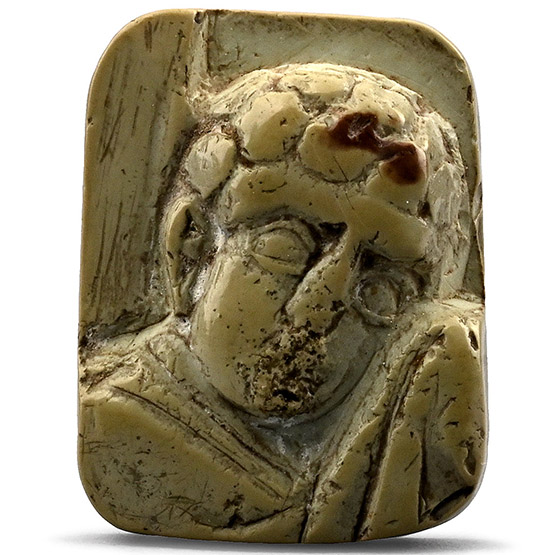
Byzantine Steatite Mount with Saint John the Theologian
12th century A.D. or laterEstimate: £600 - 800 (‡+bp*)
Opening Bid: £333
Showing a bust of a man dressed in a cloak and with his head turned to look over his right shoulder, possibly depicting St John; rectangular in plan with rounded corners. 2.52 grams, 19 mm
Acquired from Artemis Gallery, 2003. Private collection, Europe. -
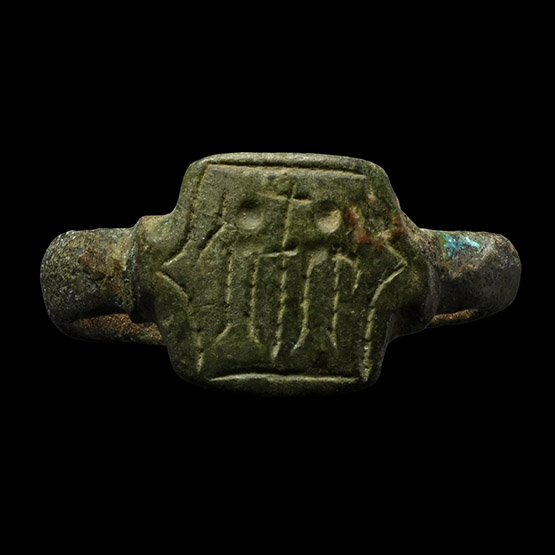
Byzantine Bronze Ring with Saints
12th-13th century A.D.Sold for (Inc. bp): £312
Comprising a D-section hoop and a hexagonal bezel with two stylised figures flanking a cross. 5.33 grams, 25.53 mm overall, 21.73 mm internal diameter (approximate size British O 1/2, USA 7 1/4, Europe 15.61, Japan 15)
Acquired on the UK and EU art market before 2000. From the private collection of a Surrey, UK, gentleman.
The bronze ring is compactly worked from a single bar. The ring link, hemispherical in section, broadens at the top, where the ring bezel was hammered. The decoration inscribed in the hexagon shows in the upper field a military saint, surrounded by lines running parallel to the hexagon, which form a further decorative element. The bezel of these rings was decorated with stylised images, very often military saints, who were asked for protection and blessing. They are usually represented as one or two human figures, schematically depicted, inscribed in a circle, decorating the bezel.
