
Loading, please wait...
LOT 1335
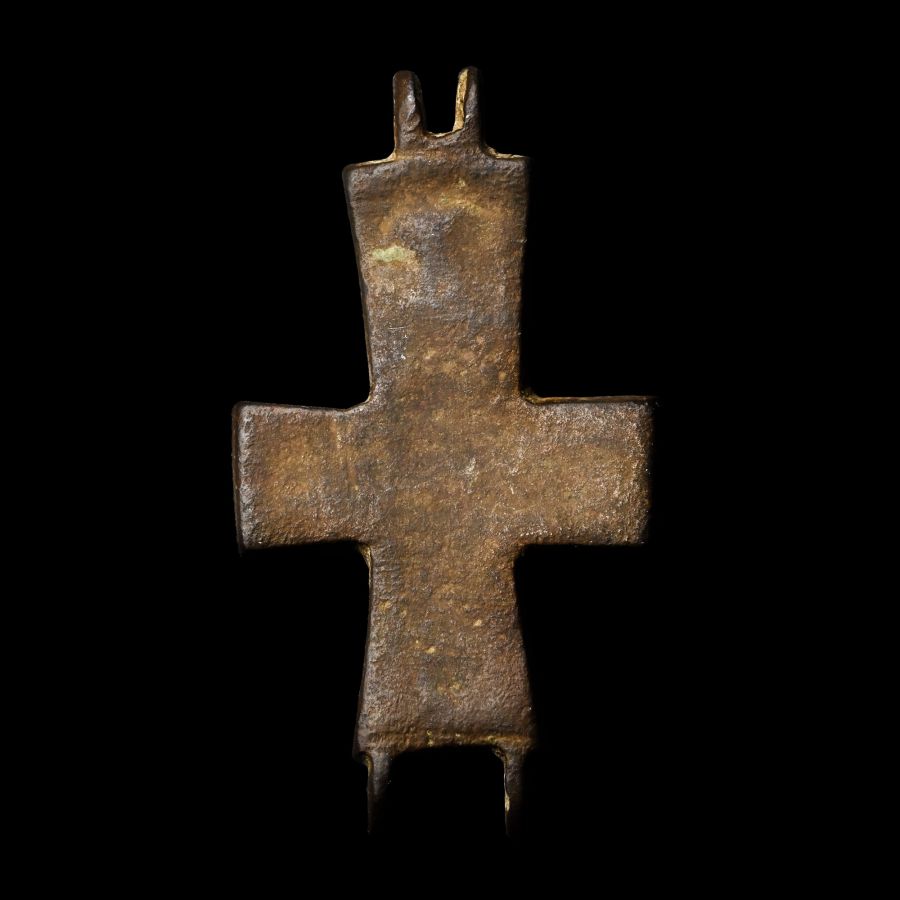
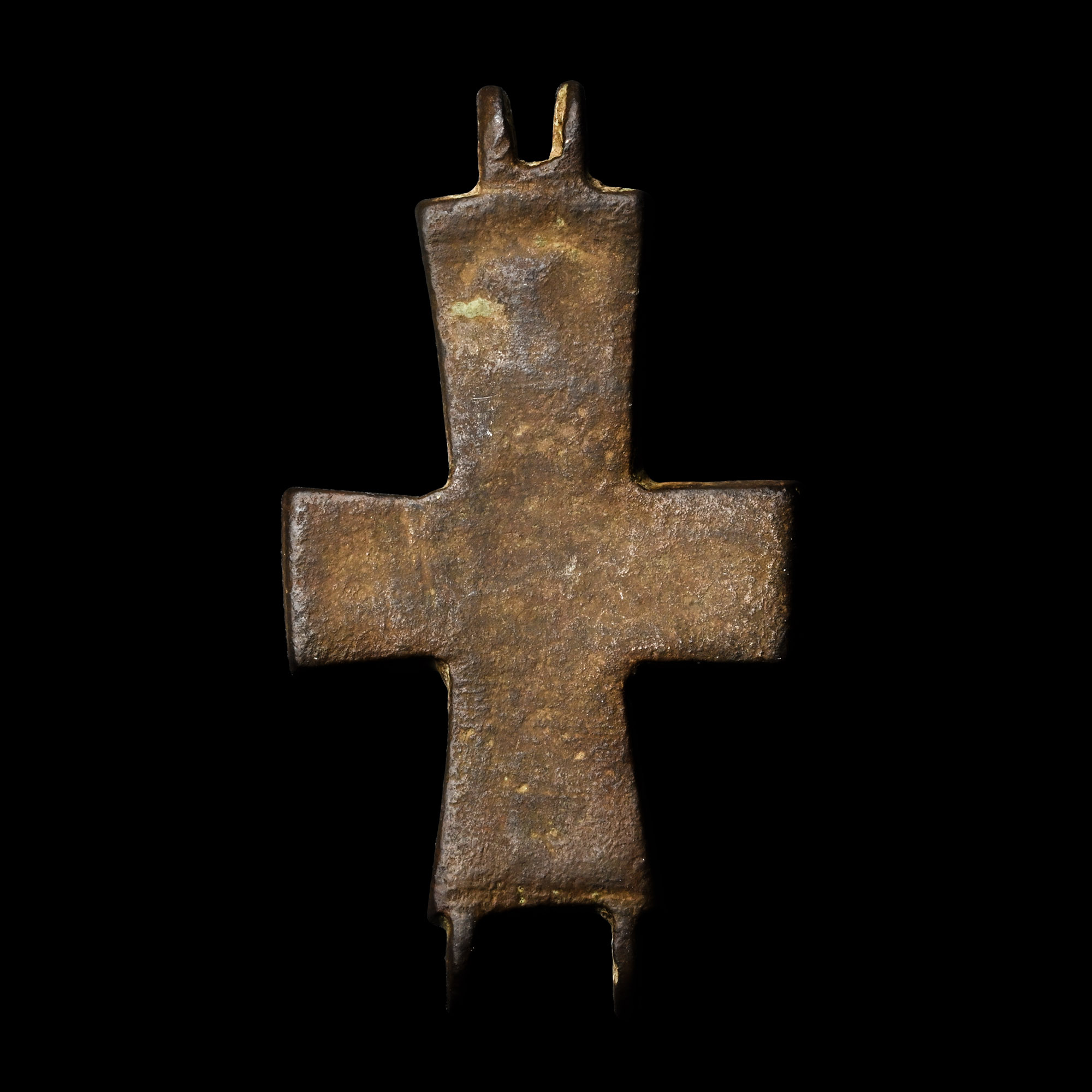
Byzantine Bronze Reliquary Cross Pendant Plate
CIRCA 10TH-12TH CENTURY A.D.
1 7/8 in. (7.36 grams, 48 mm).
A plain plate from an enkolpion with hinge-loops at each end. [No Reserve]
ProvenanceAcquired on the UK art market from the 1990s.
From the private collection of a Lincolnshire, UK, gentleman.
TimeLine Auctions follows a vetting process to ensure the authenticity and legality of all items, reinforcing our commitment to integrity and responsible trading. Each antiquity, antique, and coin lot undergoes thorough examination by a vetting committee of at least ten external specialists, professional trade association members, scientists, and archaeologists: Our Vetting Process
AUCTIONS:
TimeLine is a leading auction house specialising in antiquities, ancient art, collectables, natural history, coins, medals, and books. Our auctions offer museums, collectors, historians, and enthusiasts the opportunity to acquire unique and historically significant pieces.
-
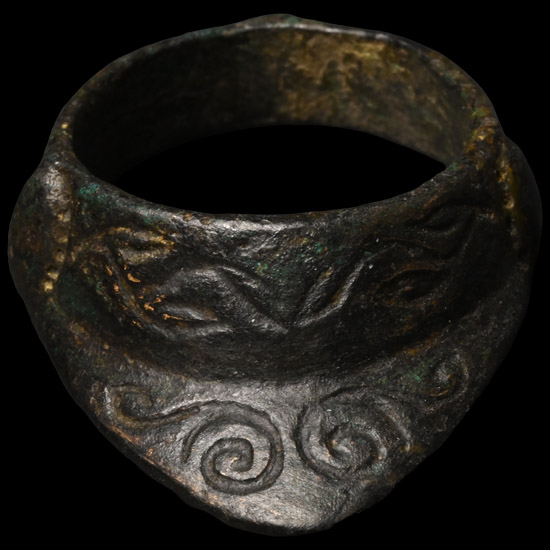
Byzantine Bronze Decorated Archer's Thumb Ring
10th-14th century A.D.Sold for (Inc. bp): £117
Wide hoop with three raised bosses, triangular extension with vine-leaf and scroll decoration. 9.75 grams, 39.38 mm overall, 21.50 x 22.11 mm internal diameter (approximate size British Y 1/2, USA 12 1/4, Europe 28.2, Japan 27)
Ex Wiltshire, UK, collection, 1990s. -
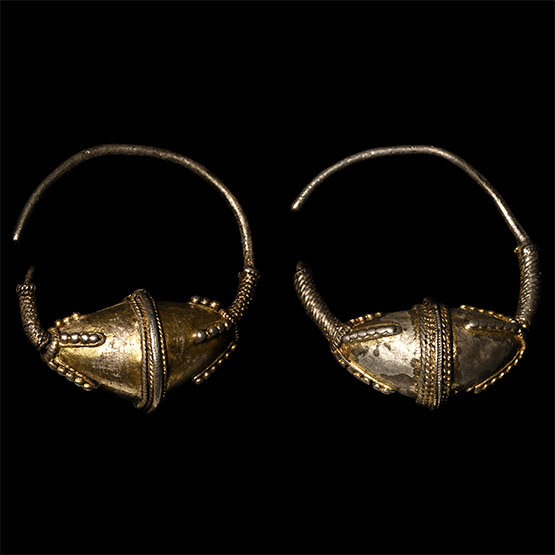
Byzantine Silver-Gilt Earring Pair
6th-10th century A.D.Sold for (Inc. bp): £187
A matched pair with round-section hoops and decorative 'bulbs' featuring medial ropework collars, with applied beads and collars of 'ropework' to both ends. 9.54 grams total, 35-36 mm
Ex German art market, 2000s. Acquired from an EU collector living in London. From the collection of a Surrey, UK, gentleman. -
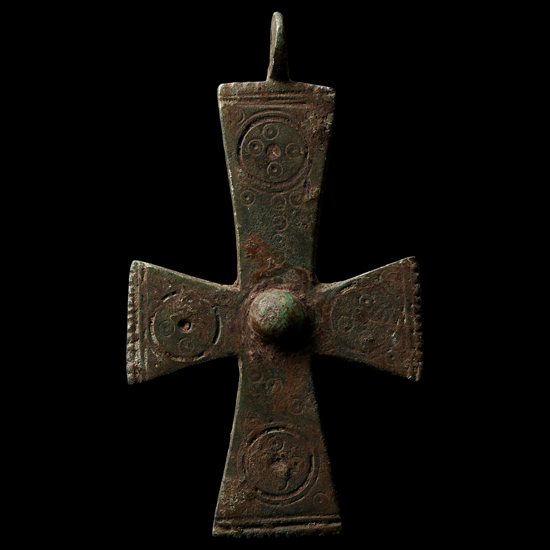
Byzantine Bronze Pectoral Cross Pendant
Circa 10th-12th century A.D.Sold for (Inc. bp): £130
A large expanding arm cross with a central raised boss, each arm with an incised concentric ring motif with four ring-and-dot motifs surrounding a central recess, possibly to accept an inlay; further ring-and-dot motifs on the body. 50 grams, 89 mm
Acquired on the UK art market from the 1990s. From the private collection of a Lincolnshire, UK, gentleman.
