
Loading, please wait...
LOT 0176
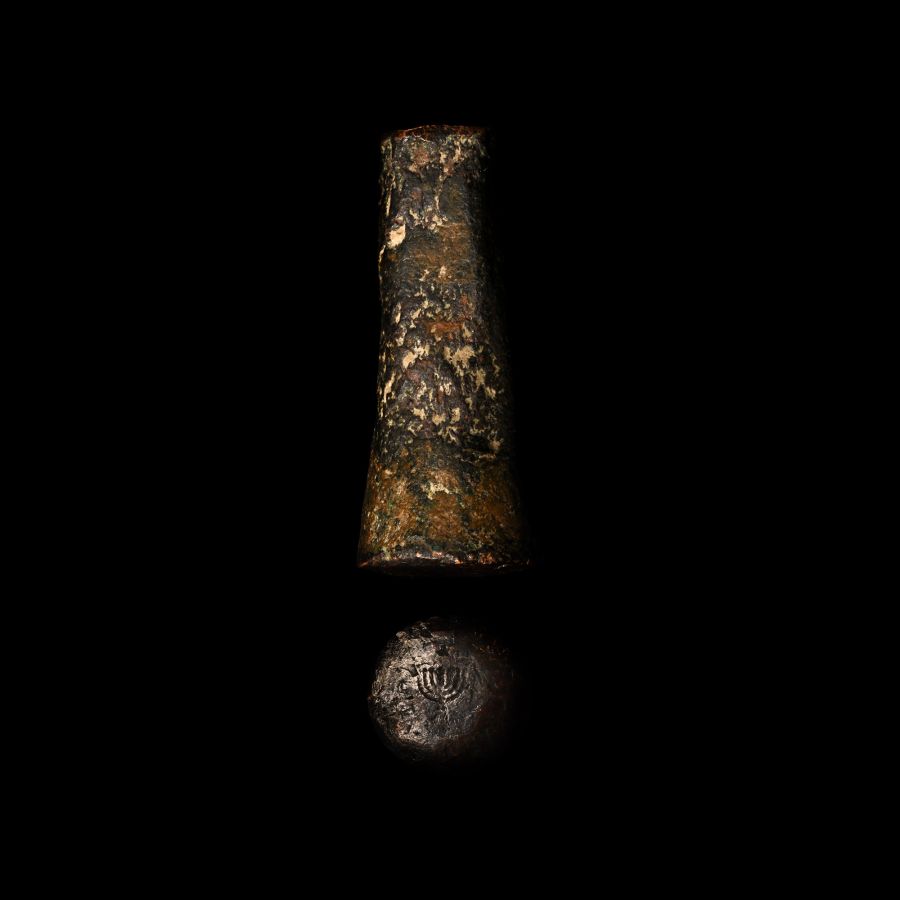
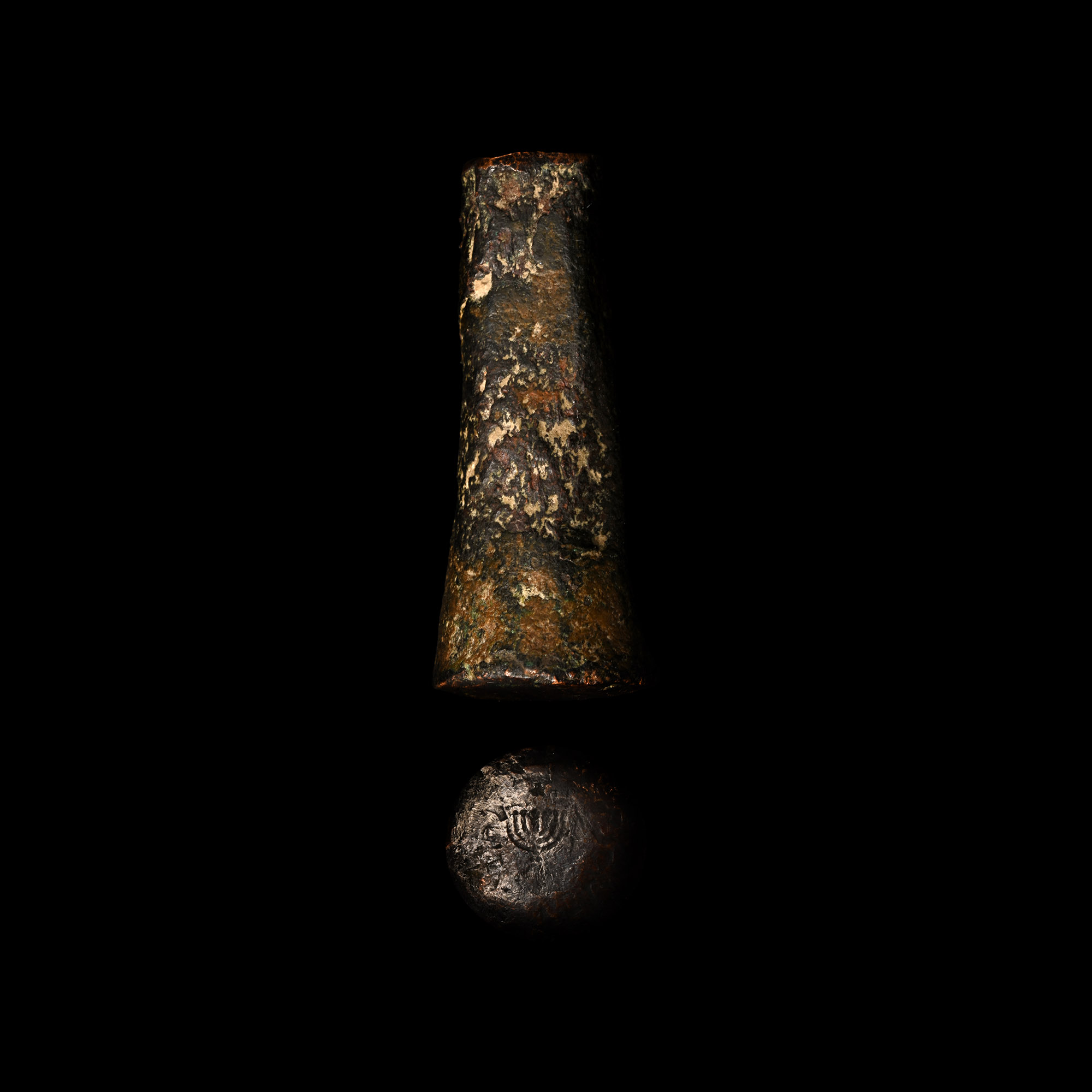
Byzantine Bronze Punch with Menorah and Hebrew Inscription
CIRCA 5TH-6TH CENTURY A.D.
1 1/4 in. (18.8 grams, 31 mm).
Columnar stem with conical base extending to a square-section shank.
ProvenanceFrom the collection of a gentleman, acquired on the London art market in the 1990s.
This lot is accompanied by an illustrated lot declaration signed by the Head of the Antiquities Department, Dr Raffaele D'Amato.
Cf. Friedenberg, D.M., ‘The Evolution and Uses of Jewish Byzantine Stamp Seals’, in The Journal of the Walters Art Gallery, vol. 52/53, 1994/1995, pp.16ff., nos. 19-21.
FootnotesStamping in antiquity and in the Roman Empire was under strict regulations, and it was not limited to food and liquid containers. Bricks and tiles used in construction were impressed with the names of magistrates, workshops, estate owners from whom the material came, and the names of individual makers. Among the myriad Late Roman stamps, a great number were to mark bread or containers holding flour and other foods, as well as a variety of liquids such as wine, oil, fish and fruits preserved in sauces, medical ointments, even water. It is interesting to note as the Jewish symbols here engraved are very stylised: as mentioned by various scholars, the Jewish representations of shofar and lulav on this category of stamps degenerated in quality in Late Antiquity and this is way there are variously dated between the 4th and the 7th century.
CONDITIONTimeLine Auctions follows a vetting process to ensure the authenticity and legality of all items, reinforcing our commitment to integrity and responsible trading. Each antiquity, antique, and coin lot undergoes thorough examination by a vetting committee of at least ten external specialists, professional trade association members, scientists, and archaeologists: Our Vetting Process
AUCTIONS:
TimeLine is a leading auction house specialising in antiquities, ancient art, collectables, natural history, coins, medals, and books. Our auctions offer museums, collectors, historians, and enthusiasts the opportunity to acquire unique and historically significant pieces.
LOT 0176
Byzantine Bronze Punch with Menorah and Hebrew Inscription
Estimate £1,000 - 1,400€1,160 - 1,620 (for guidance only)$1,350 - 1,890 (for guidance only)
-
Byzantine Gilt Bronze Horse Harness Decoration Set
8th-10th century A.D.Estimate: £3,000 - 4,000 (+bp*)
Opening Bid: £1,000
Comprising: a large octofoil harness frontal plate with beaded rim and granulation; studs with quatrefoil plates; bell-shaped dangles. 556 grams total, 11-92 mm
From the private collection of a London gentleman, from his grandfather's collection formed before the early 1970s. This lot has been checked against the Interpol Database of stolen works of art and is accompanied by a search certificate number no.12687-234699. This lot has been cleared against the Art Loss Register database, and is accompanied by an illustrated lot declaration signed by the Head of the Antiquities Department, Dr Raffaele D'Amato. -
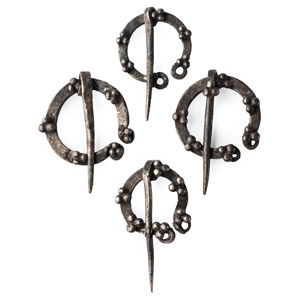
Byzantine Silver Brooch Collection
7th-11th century A.D.Sold for (Inc. bp): £221
Comprising four flat-section penannular brooches with looped terminals, applied pellets to the upper face; with round-section tapering pins. 18.7 grams total, 34-37 mm
UK private collection before 2000. Acquired on the UK art market. Private collection, London, UK. This lot is accompanied by an illustrated lot declaration signed by the Head of the Antiquities Department, Dr Raffaele D'Amato. -
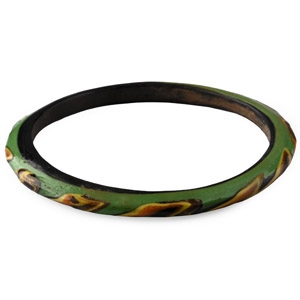
Byzantine Period Glass Bangle
8th-12th century A.D.Sold for (Inc. bp): £91
D-shaped in section with green mosaic band to the upper face of the outer edge, marvered trail with red and yellow, undulating profile. 30.9 grams, 93 mm
Ex property of a London collector; acquired 1960s. Property of a North London, UK, lady. This lot is accompanied by an illustrated lot declaration signed by the Head of the Antiquities Department, Dr Raffaele D'Amato.
