
Loading, please wait...
LOT 0173
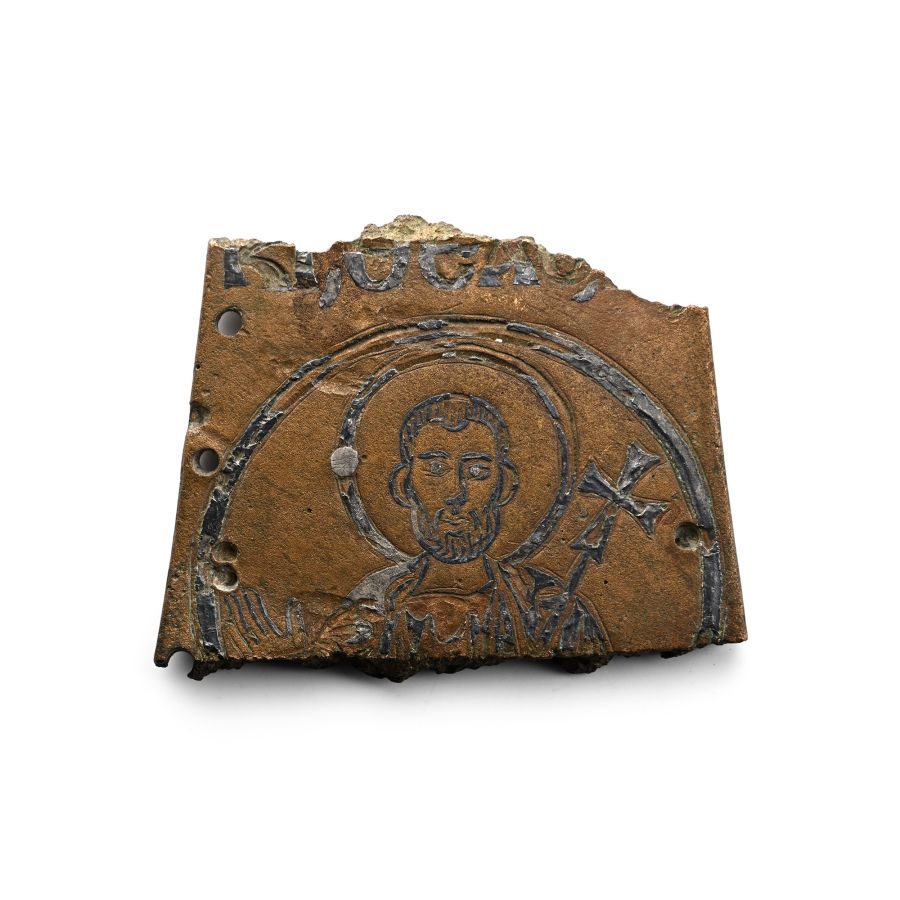
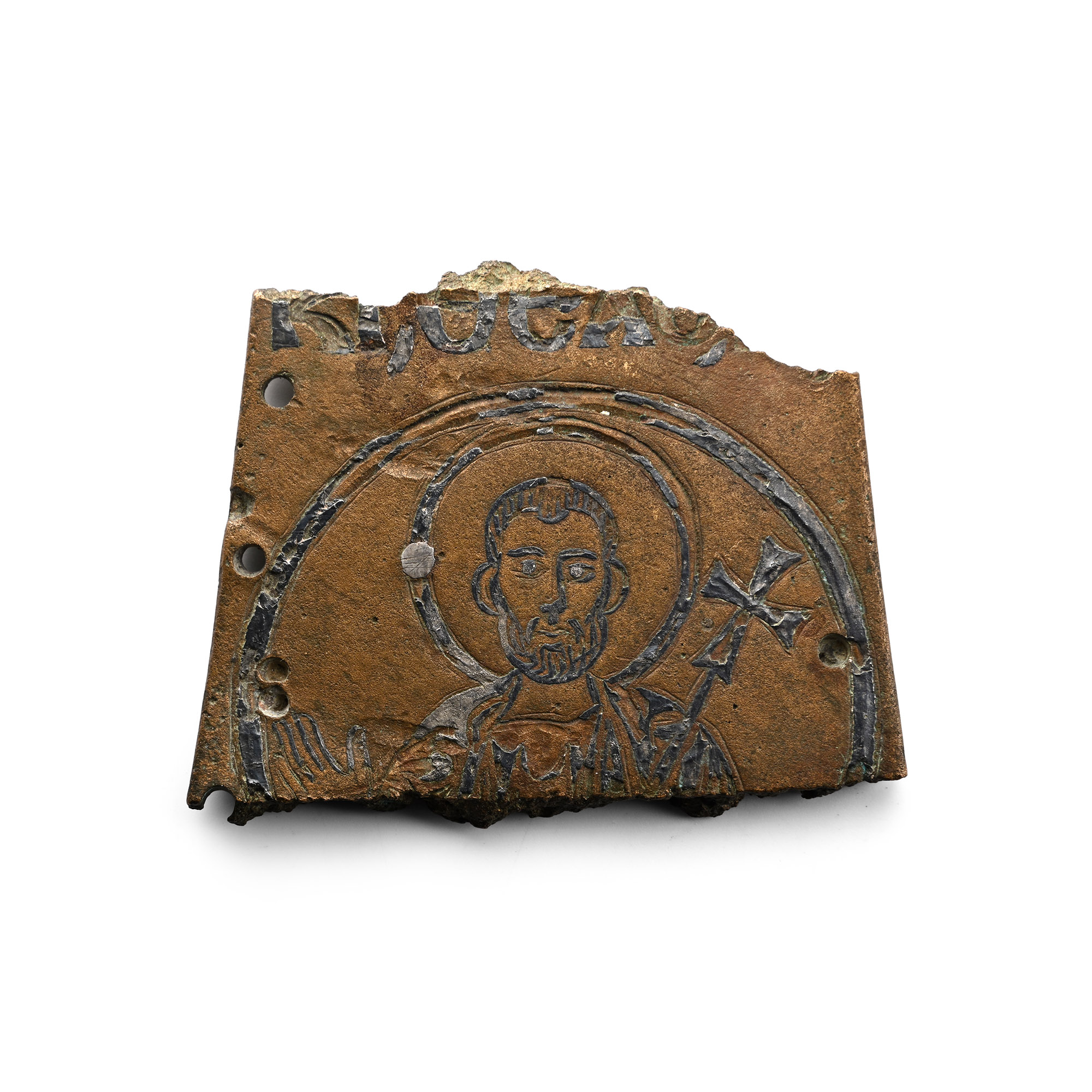
Byzantine Bronze Processional Cross Fragment with Inlaid Silver Bust
10TH CENTURY A.D.
2 1/2 in. (121 grams, 64 mm).
Irregular fragment with attachment holes along both lateral edges; inlaid silver nimbate bust with processional cross to the left shoulder, inside an arched border; inlaid legend above, possibly Coptic script; perhaps used as a trade-weight. [No Reserve]
ProvenanceEx Ariadne Galleries, New York, USA, 2009.
Ex central London gallery.
This lot is accompanied by an illustrated lot declaration signed by the Head of the Antiquities Department, Dr Raffaele D'Amato.
TimeLine Auctions follows a vetting process to ensure the authenticity and legality of all items, reinforcing our commitment to integrity and responsible trading. Each antiquity, antique, and coin lot undergoes thorough examination by a vetting committee of at least ten external specialists, professional trade association members, scientists, and archaeologists: Our Vetting Process
AUCTIONS:
TimeLine is a leading auction house specialising in antiquities, ancient art, collectables, natural history, coins, medals, and books. Our auctions offer museums, collectors, historians, and enthusiasts the opportunity to acquire unique and historically significant pieces.
LOT 0173
Byzantine Bronze Processional Cross Fragment with Inlaid Silver Bust
Sold for (Inc. bp): £520
-
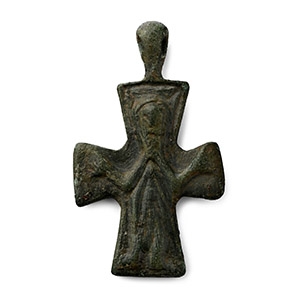
Byzantine Bronze Cross Pendant
10th-14th century A.D.Sold for (Inc. bp): £111
Bifacial expanding arm cross with integral loop, one side with Corpus Christi, the other with a figure in orans pose. 9.2 grams, 42 mm
Ex German art market, 2000s. Acquired from an EU collector living in London. From the collection of a Surrey, UK, gentleman. This lot is accompanied by an illustrated lot declaration signed by the Head of the Antiquities Department, Dr Raffaele D'Amato. -
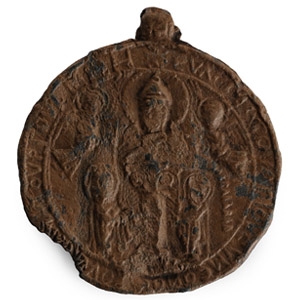
Byzantine Lead Pendant with Simeon Stylites
12th century A.D.Estimate: £250 - 350 (‡+bp*)
Opening Bid: £139
Discoid with integral loop, tondo with figural scene of Simeon Stylites standing on his column, two worshippers at the base and two angels above; legend to the rim. 22 grams, 48 mm
Acquired in the mid 1980s-1990s. Private collection, Switzerland, thence by descent. Private collection, since the late 1990s. This lot is accompanied by an illustrated lot declaration signed by the Head of the Antiquities Department, Dr Raffaele D’Amato. This lot is accompanied by an illustrated lot declaration signed by the Head of the Antiquities Department, Dr Raffaele D'Amato. -
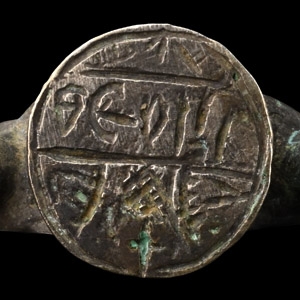
Eastern Byzantine Silver Inscribed Ring
13th-15th century A.D.Sold for (Inc. bp): £182
Comprising a broad hoop and panel to each shoulder with trumpet-shaped spur and incised asterisk motif; discoid bezel with retrograde legend 'ΘΕΑΙ[..]' and hatched field. 10.56 grams, 25.38 mm overall, 18.27 mm internal diameter (approximate size British N, USA 6 1/2, Europe 13.72, Japan 13)
Ex German art market, 2000s. Acquired from an EU collector living in London. From the collection of a Surrey, UK, gentleman. This lot is accompanied by an illustrated lot declaration signed by the Head of the Antiquities Department, Dr Raffaele D'Amato.
