
Loading, please wait...
LOT 0180
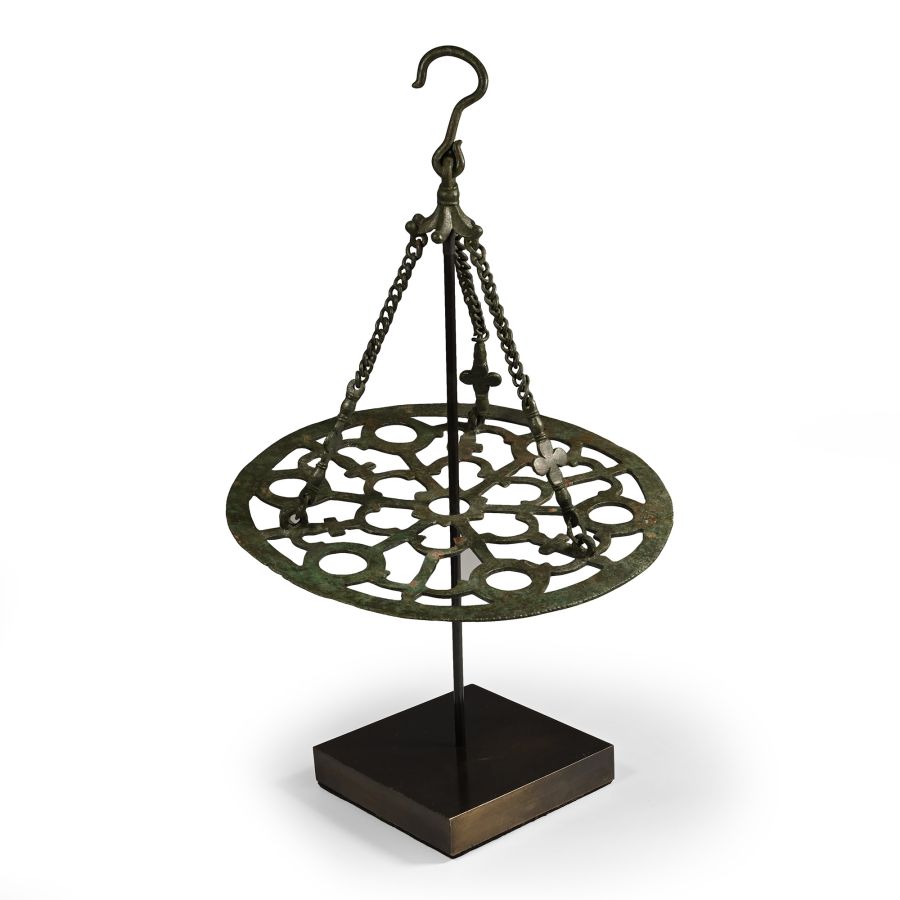
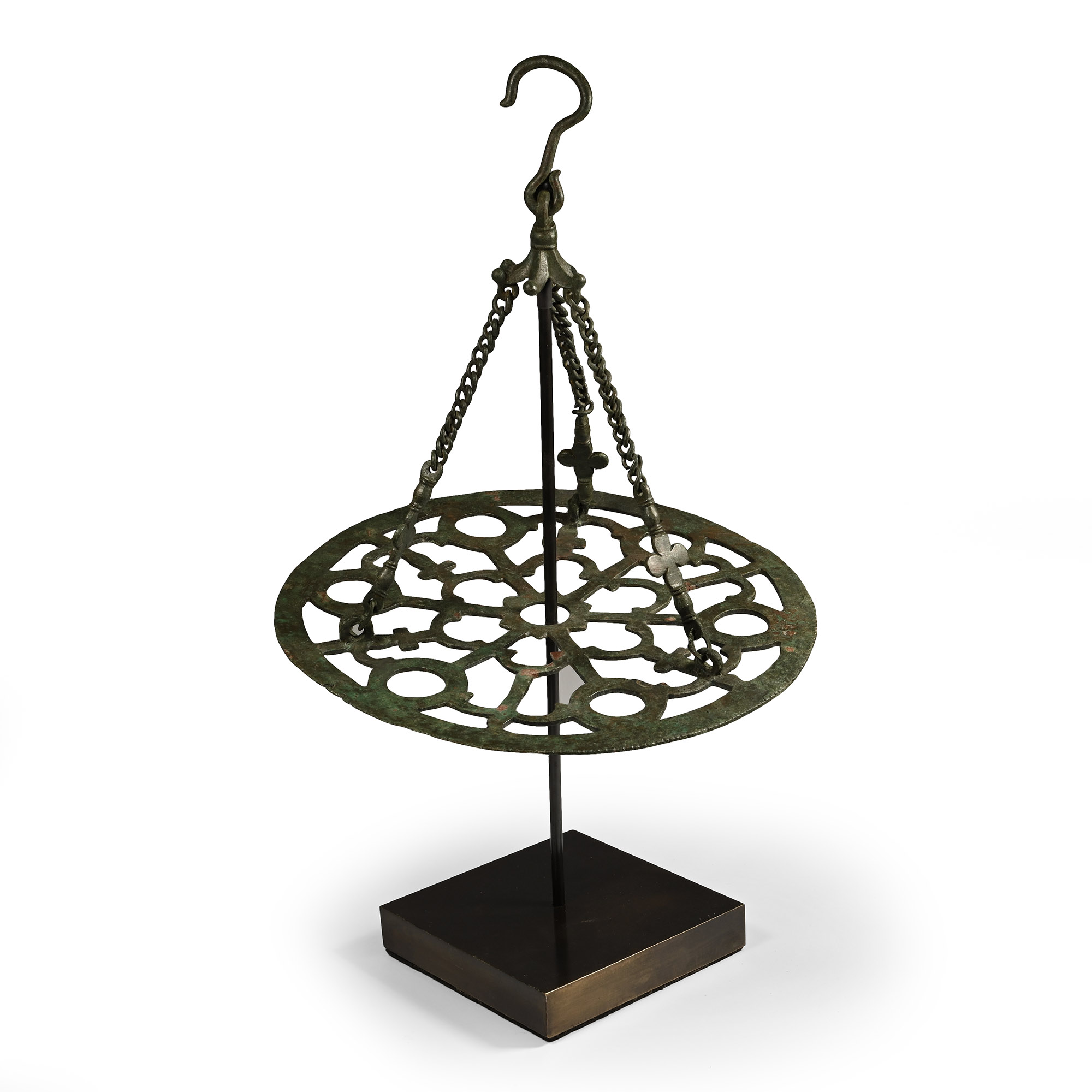
Byzantine Bronze Polycandelon with Cross
6TH-8TH CENTURY A.D.
11 in. (18 1/2 in.) (967 grams, 28.2 cm high (1.65 kg total, 47 cm high including stand)).
Comprising a circular panel with notched rim, openwork design to the tondo with roundels, crosses and omega-shaped arms, central rosette; attachment points for three short chains with balustered cross fleury bars, lobed distributor and suspension hook; supplied with a custom-made stand.
ProvenanceFrom an important London, UK, collection, 1970-1990s.
This lot is accompanied by an illustrated lot declaration signed by the Head of the Antiquities Department, Dr Raffaele D’Amato.
Cf. Bailey, D.M., A Catalogue of the Lamps in the British Museum, IV, Lamps of Metal and Stone, and Lampstands, London, 1996, pl.141, for similar; also, Wamser L. and Zahlhaas, G., Rom und Byzanz, Archaologischen Kostbarkeiten aus Bayern, München, 1999.
CONDITIONTimeLine Auctions follows a vetting process to ensure the authenticity and legality of all items, reinforcing our commitment to integrity and responsible trading. Each antiquity, antique, and coin lot undergoes thorough examination by a vetting committee of at least ten external specialists, professional trade association members, scientists, and archaeologists: Our Vetting Process
AUCTIONS:
TimeLine is a leading auction house specialising in antiquities, ancient art, collectables, natural history, coins, medals, and books. Our auctions offer museums, collectors, historians, and enthusiasts the opportunity to acquire unique and historically significant pieces.
-
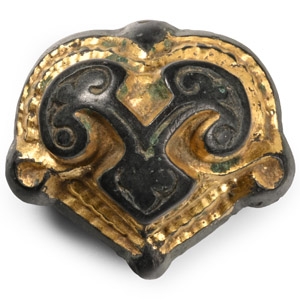
Byzantine Gilt Bronze Mount
10th-11th century A.D.Sold for (Inc. bp): £65
Domed pelta-shaped mount with parcel-gilt obverse, reserved scrolled motif; fixing lugs to reverse. 10 grams, 26 mm
Ex German art market, 2000s. Acquired from an EU collector living in London. From the collection of Surrey, UK, gentleman. This lot is accompanied by an illustrated lot declaration signed by the Head of the Antiquities Department, Dr Raffaele D’Amato. -
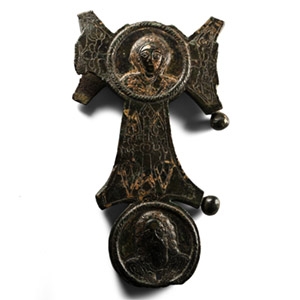
Byzantine Gilt Bronze Altar Cross with Two Medallions
11th century A.D.Sold for (Inc. bp): £208
Hollow-formed cross fragment with low-relief ornament; obverse with facing veiled female bust within a ropework tondo, cruciform design to the lower arm and second tondo with facing bearded bust, foliage to the lateral arms; reverse with geometric saltire bands; knop finials to the arms (two present) and slots for attachment of additional features. 153 grams, 13.8 cm
with Rupert Wace Ltd. This lot is accompanied by an illustrated lot declaration signed by the Head of the Antiquities Department, Dr Raffaele D’Amato. -
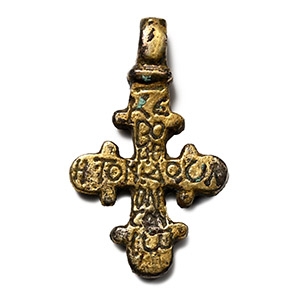
Byzantine Silver-Gilt Cross Pendant
10th-12th century A.D.Sold for (Inc. bp): £234
Cross bottony type with legend 'KE / BO / HΘ/ H TON ΔOYΛ / ON / COY / Iώ' (Lord, help your servant, John). 6.43 grams, 34 mm
Ex German art market, 2000s. Acquired from an EU collector living in London. From the collection of Surrey, UK, gentleman. This lot is accompanied by an illustrated lot declaration signed by the Head of the Antiquities Department, Dr Raffaele D’Amato.
