
Loading, please wait...
LOT 1316
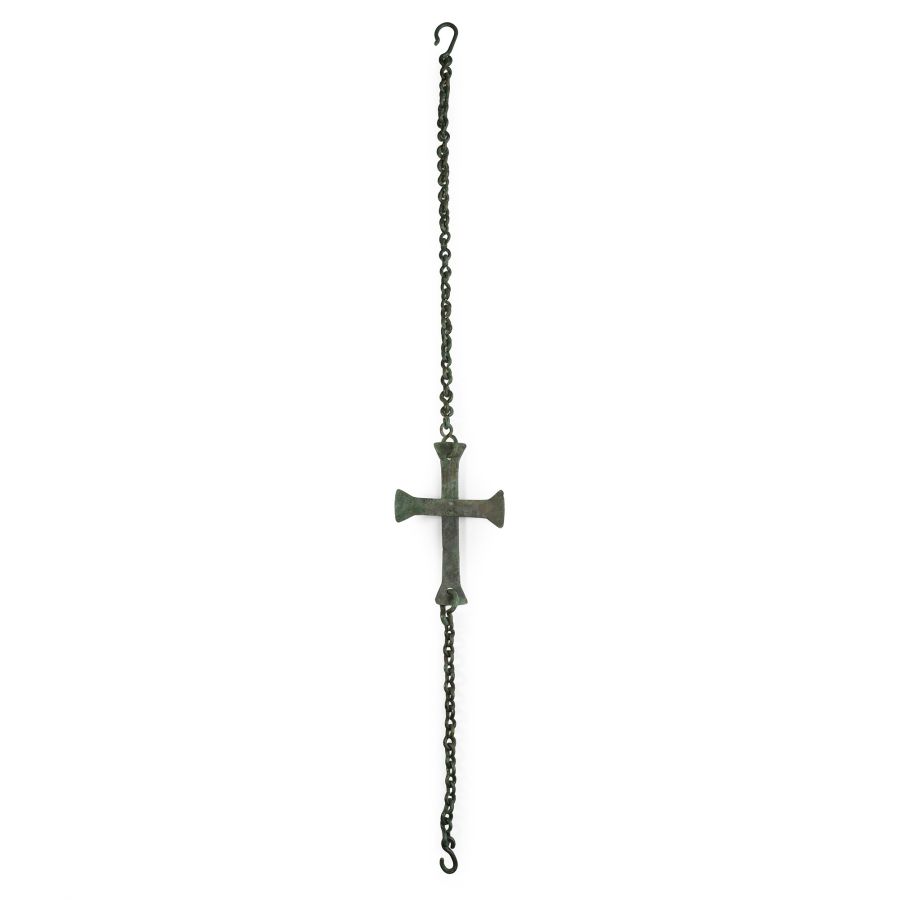
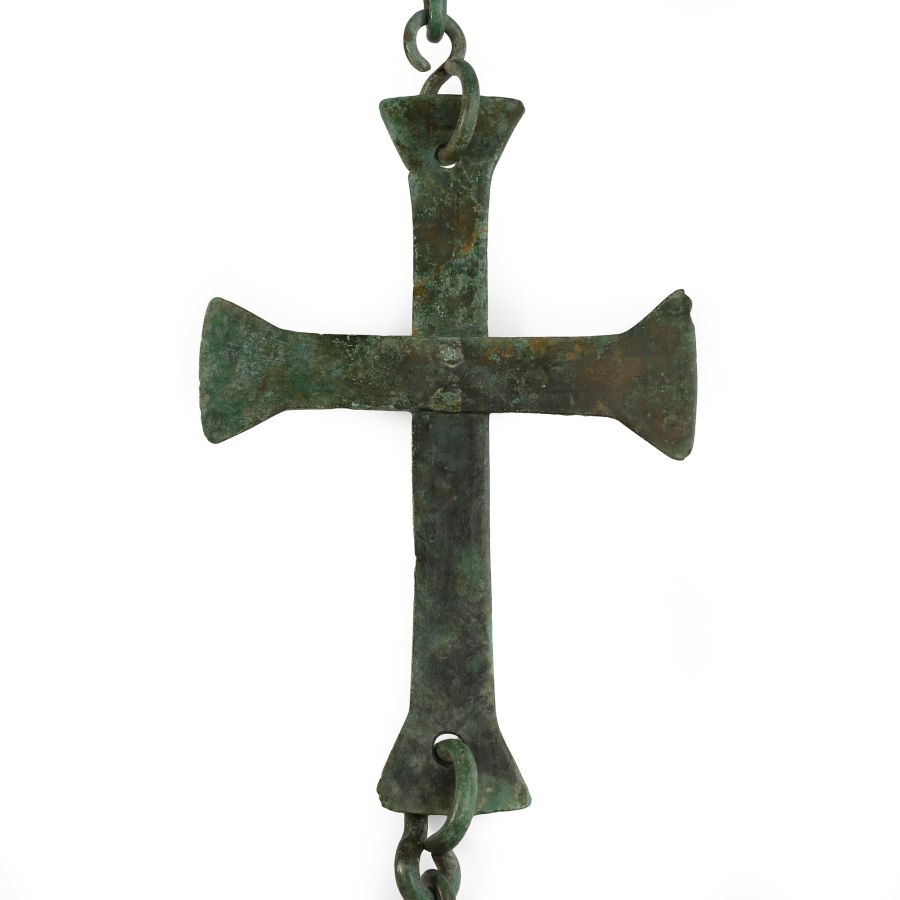
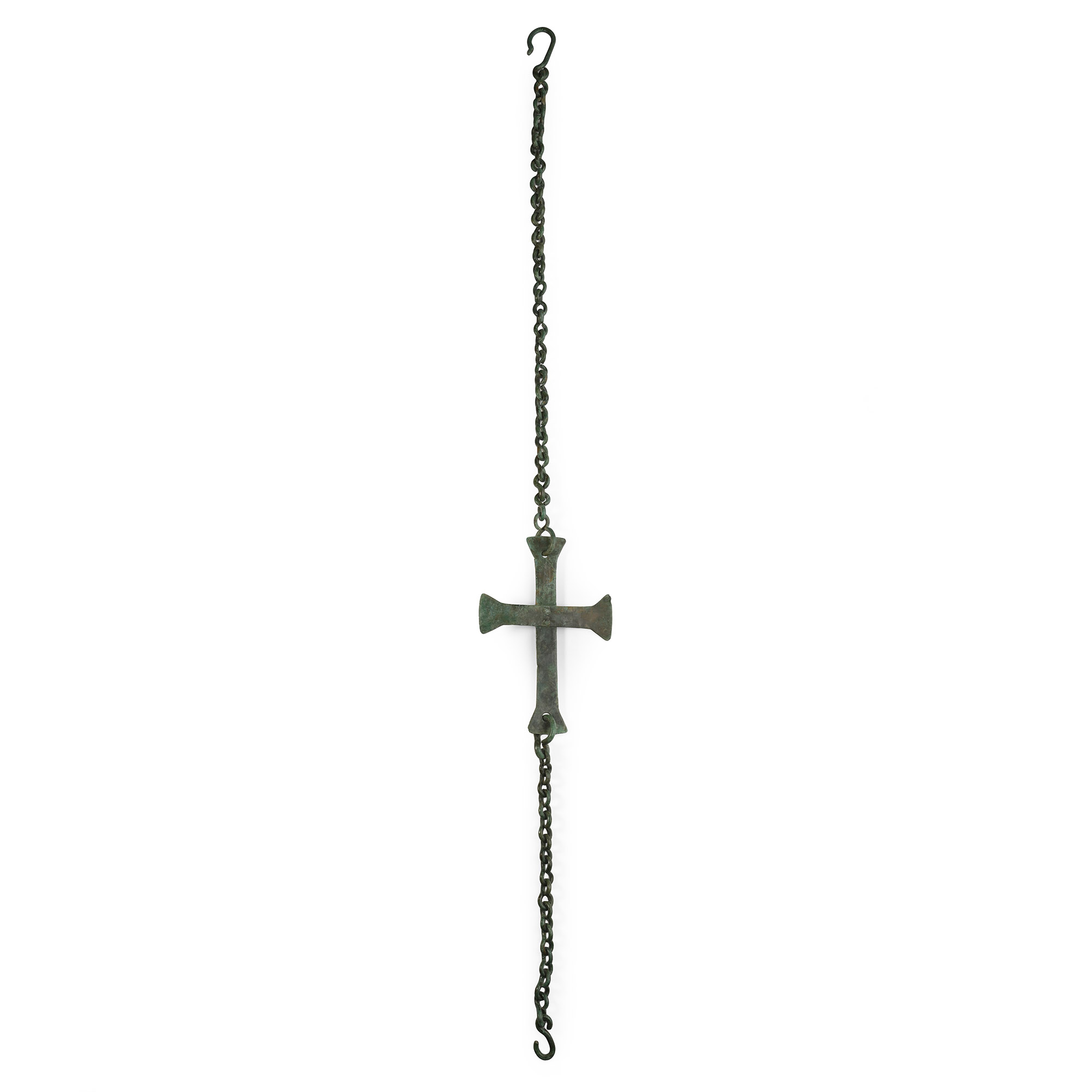
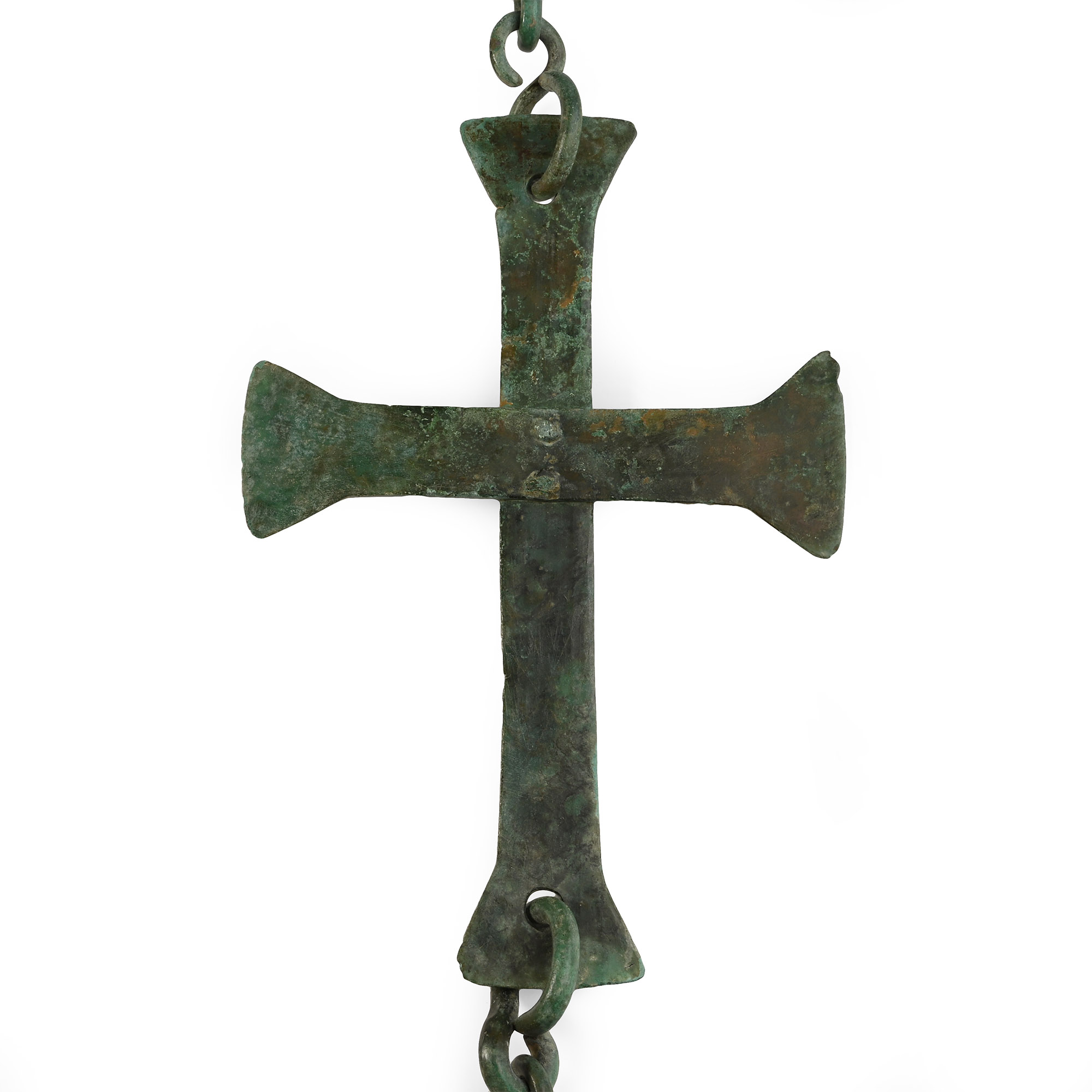
Byzantine Bronze Polycandelon Hanger Chain with Cross
5TH-7TH CENTURY A.D.
34 1/4 in. (372 grams, 87 cm).
Comprising a substantial link chain with a large cross composed of two rivetted plates.
ProvenanceEx German art market, 2000s.
Acquired from an EU collector living in London.
From the collection of a Surrey, UK, gentleman.
Cf. Marin, E., Salona Christiana, Split, 1994, no.2 p.284, for a similar bronze cross (inv.no.H5735).
FootnotesPolycandela were basically ring-shaped devices, hung from chains, pierced with circular holes to accommodate the stems of glass lamps. These suspended chandeliers, formed by two perforated concentric circles, held glass lamps filled with oil and having a metal wick holder inside. Crosses were often attached to polycandela, as elements of connection of the chains, a system still used in the actual Oriental churches.
CONDITIONTimeLine Auctions follows a vetting process to ensure the authenticity and legality of all items, reinforcing our commitment to integrity and responsible trading. Each antiquity, antique, and coin lot undergoes thorough examination by a vetting committee of at least ten external specialists, professional trade association members, scientists, and archaeologists: Our Vetting Process
AUCTIONS:
TimeLine is a leading auction house specialising in antiquities, ancient art, collectables, natural history, coins, medals, and books. Our auctions offer museums, collectors, historians, and enthusiasts the opportunity to acquire unique and historically significant pieces.
-
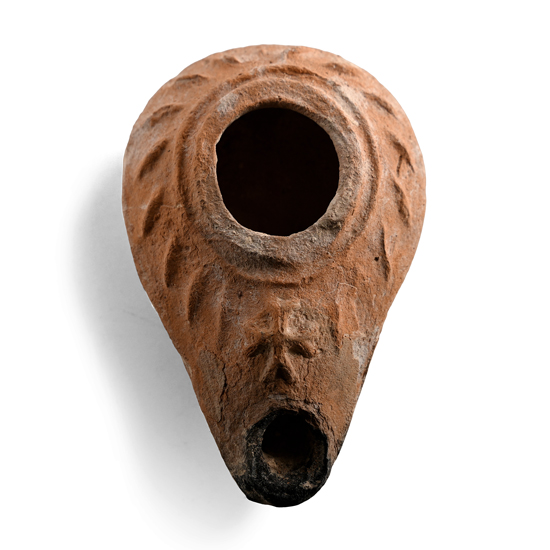
Byzantine Terracotta Slipper Oil Lamp with Cross
5th-7th century A.D.Sold for (Inc. bp): £117
Piriform body with raised rim around the filler hole and tapering nozzle, low-relief linear slashes to the shoulder, and low basal ring. 32.3 grams, 79 mm
From a collection of lamps of a late Scottish gentleman, 1970-1990s. -
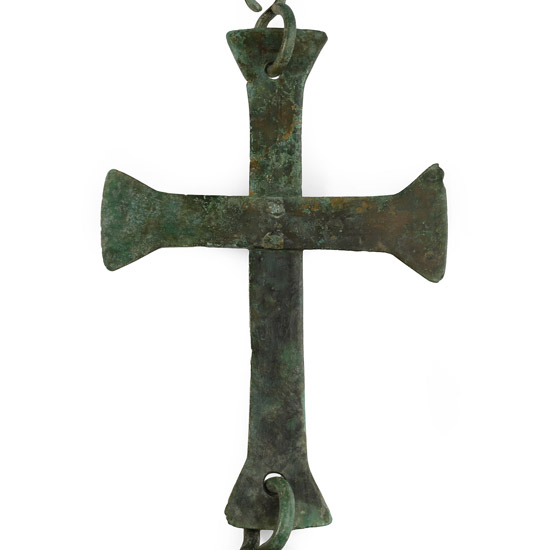
Byzantine Bronze Polycandelon Hanger Chain with Cross
5th-7th century A.D.Sold for (Inc. bp): £442
Comprising a substantial link chain with a large cross composed of two rivetted plates. 372 grams, 87 cm
Ex German art market, 2000s. Acquired from an EU collector living in London. From the collection of a Surrey, UK, gentleman.
Polycandela were basically ring-shaped devices, hung from chains, pierced with circular holes to accommodate the stems of glass lamps. These suspended chandeliers, formed by two perforated concentric circles, held glass lamps filled with oil and having a metal wick holder inside. Crosses were often attached to polycandela, as elements of connection of the chains, a system still used in the actual Oriental churches. -
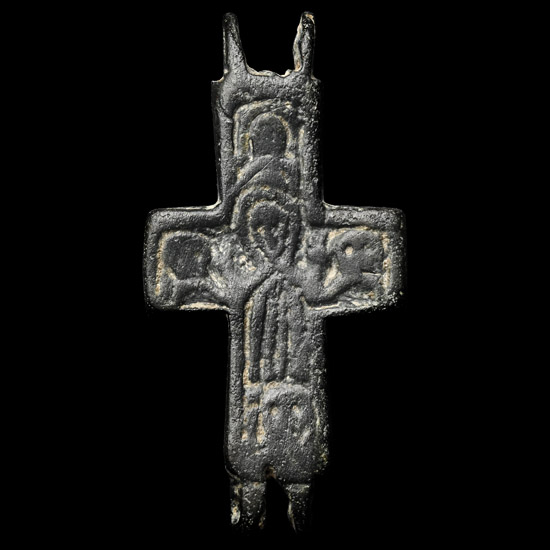
Byzantine Bronze Reliquary Cross Pendant Plate
Circa 10th-12th century A.D.Sold for (Inc. bp): £52
The enkolpion with hinge-loops, nimbate figure in orans pose at the centre, flanked by nimbate busts. 7.50 grams, 42 mm
Acquired on the UK art market from the 1990s. From the private collection of a Lincolnshire, UK, gentleman.
