
Loading, please wait...
LOT 1092
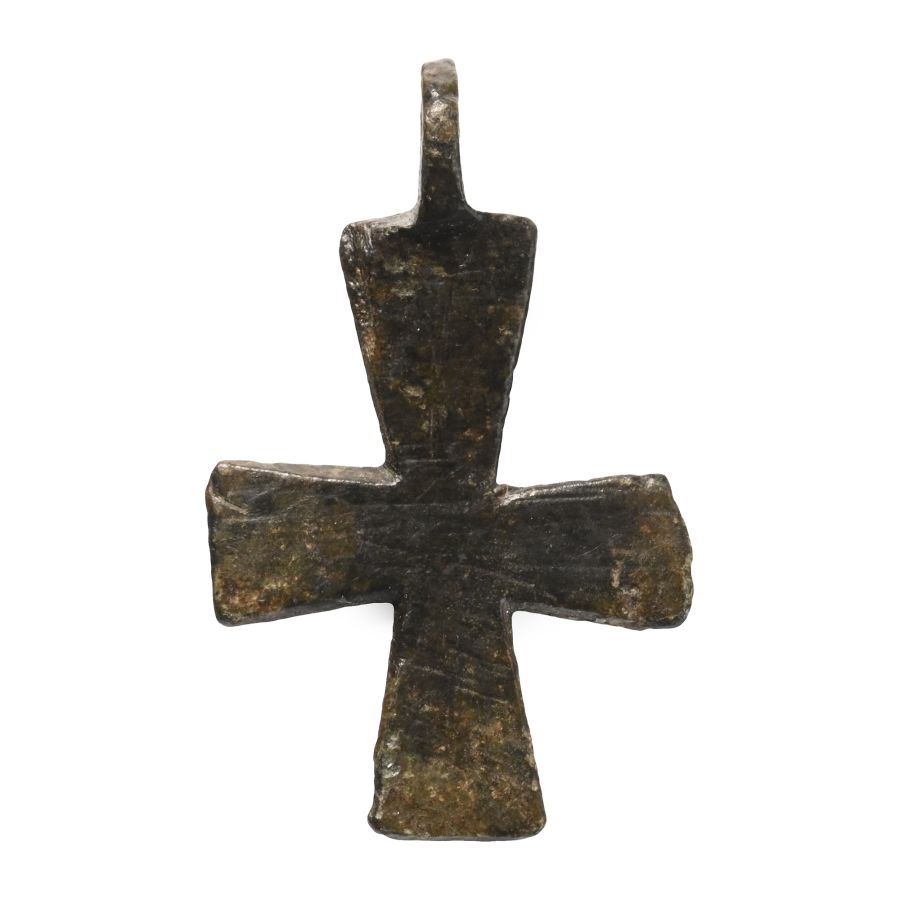
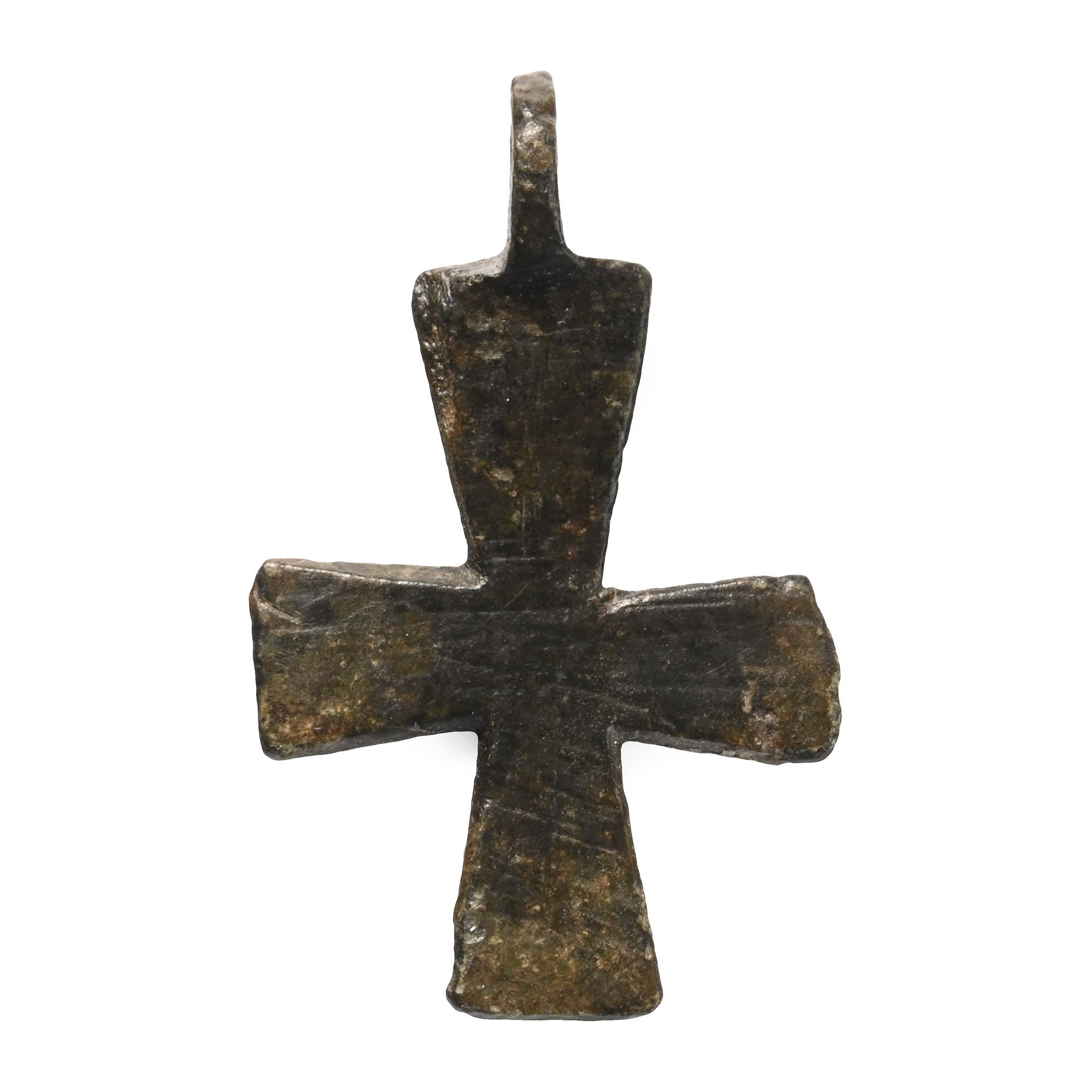
Byzantine Bronze Pendant Cross
6TH-8TH CENTURY A.D.
1 1/4 in. (2.82 grams, 32 mm).
Expanding-arm type with integral loop. [No Reserve]
ProvenanceEx German art market, 2000s.
Acquired from an EU collector living in London.
From the collection of a Surrey, UK, gentleman.
Cf. Pitarakis, B., Les Croix-Reliquaires Pectorales Byzantines En Bronze, France, 2006, for discussion.
CONDITIONTimeLine Auctions follows a vetting process to ensure the authenticity and legality of all items, reinforcing our commitment to integrity and responsible trading. Each antiquity, antique, and coin lot undergoes thorough examination by a vetting committee of at least ten external specialists, professional trade association members, scientists, and archaeologists: Our Vetting Process
AUCTIONS:
TimeLine is a leading auction house specialising in antiquities, ancient art, collectables, natural history, coins, medals, and books. Our auctions offer museums, collectors, historians, and enthusiasts the opportunity to acquire unique and historically significant pieces.
-
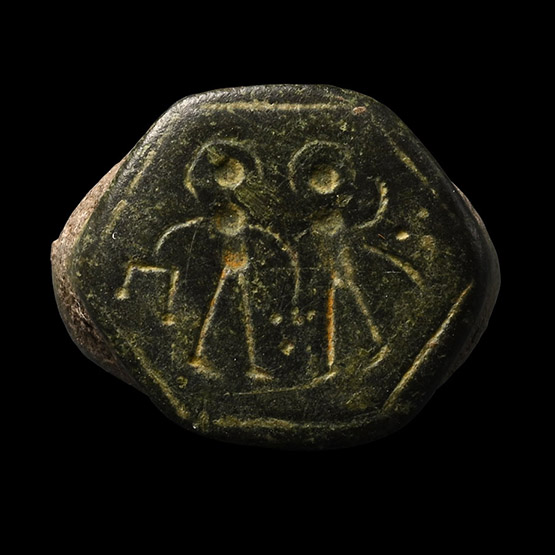
Byzantine Bronze Ring with Saints
12th-13th century A.D.Sold for (Inc. bp): £91
An interphalangeal ring with a hexagonal bezel showing two nimbate figures. 7.64 grams, 20.53 mm overall, 15.95 mm internal diameter (approximate size British H 1/2, USA 4, Europe 6.81, Japan 6)
Acquired on the UK and EU art market before 2000. From the private collection of a Surrey, UK, gentleman.
This category of rings had a hexagonal-rounded chaton raised above the link. Conforming to the iconography of the Orthodox countries under the influence of Byzantium, the possible decoration was related to the military saints. -
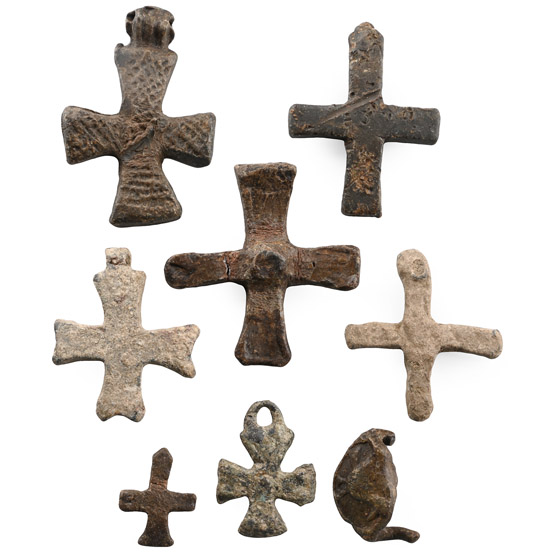
Byzantine Lead Cross Collection
6th-15th century A.D.Sold for (Inc. bp): £85
Including equal-arm, expanding-arm and other types; offered with a lead finger-ring master. 85 grams total, 18-41 mm
Ex German art market, 2000s. Acquired from an EU collector living in London. From the collection of a Surrey, UK, gentleman. -
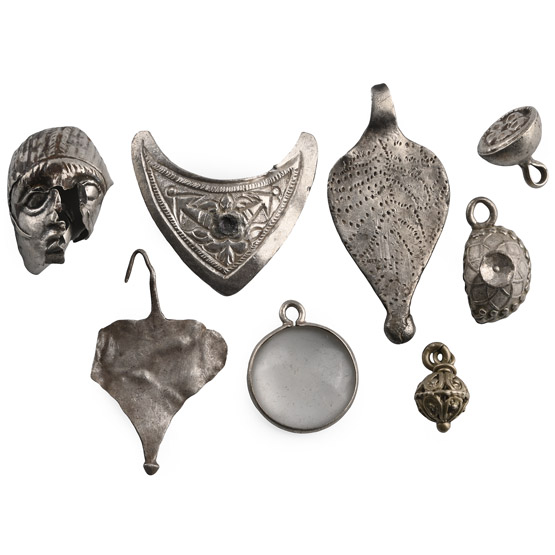
Byzantine Silver Artefact Group
6th-15th century A.D. and laterSold for (Inc. bp): £111
Including a teardrop pendant, sheet-silver miniature mask, plano-convex crystal lens and other items. 12.81 grams total, 11-40 mm
Ex German art market, 2000s. Acquired from an EU collector living in London. From the collection of a Surrey, UK, gentleman.
