Loading, please wait...

Byzantine Bronze Pectoral Cross Pendant Byzantine Bronze Pectoral Cross Pendant Byzantine Bronze Pectoral Cross Pendant Byzantine Bronze Pectoral Cross Pendant Byzantine Bronze Pectoral Cross Pendant Byzantine Bronze Pectoral Cross Pendant
Use mousewheel to zoom in and out, click to enlarge
Details

LOT 1138

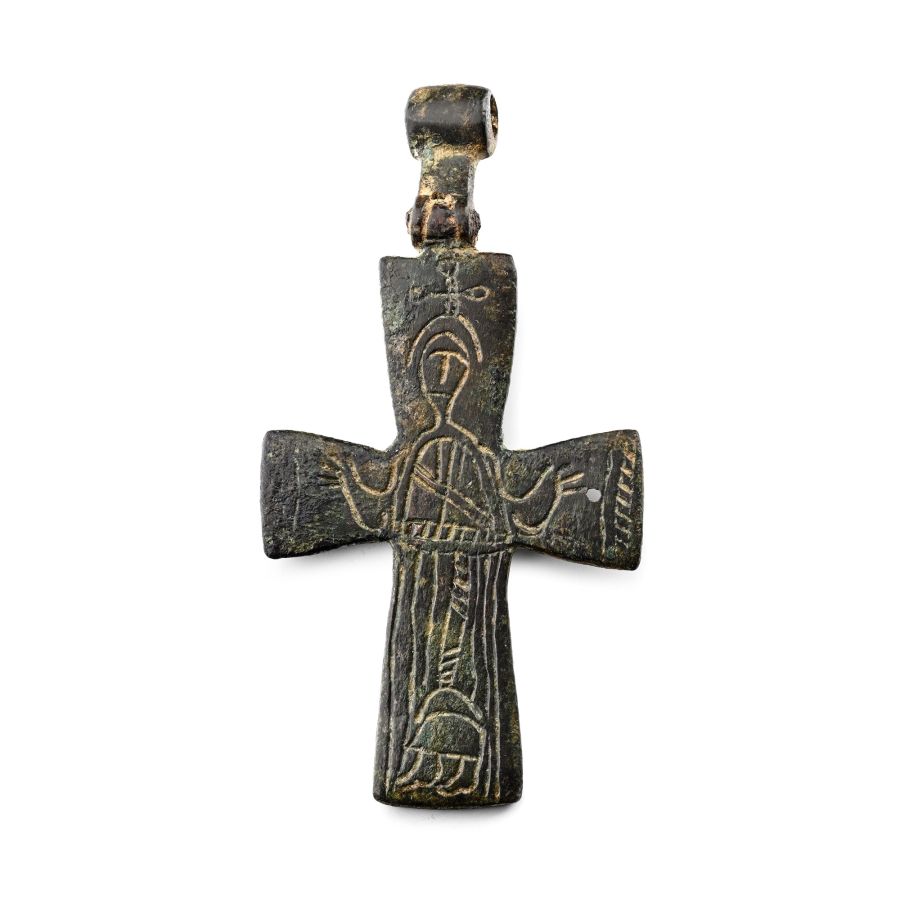
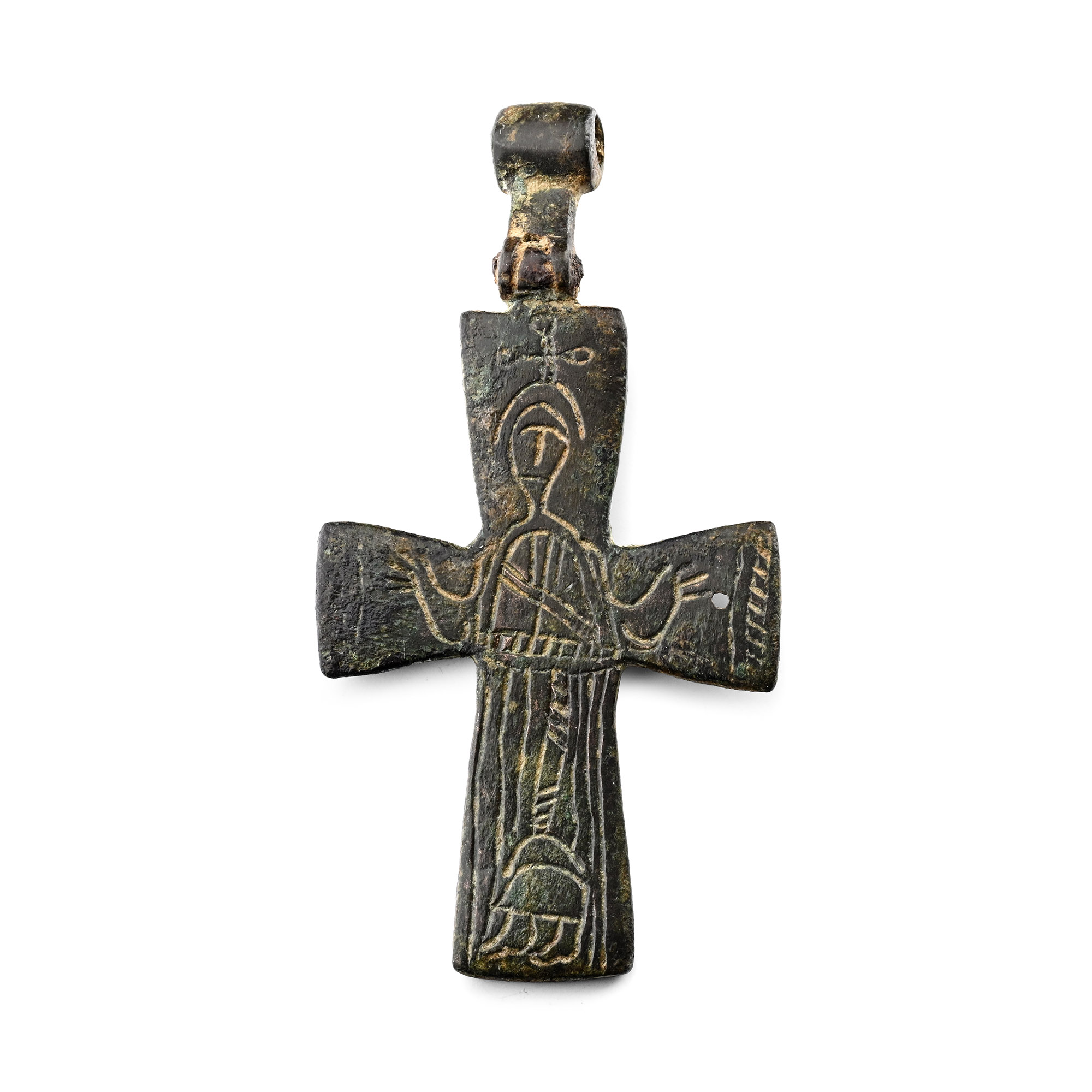
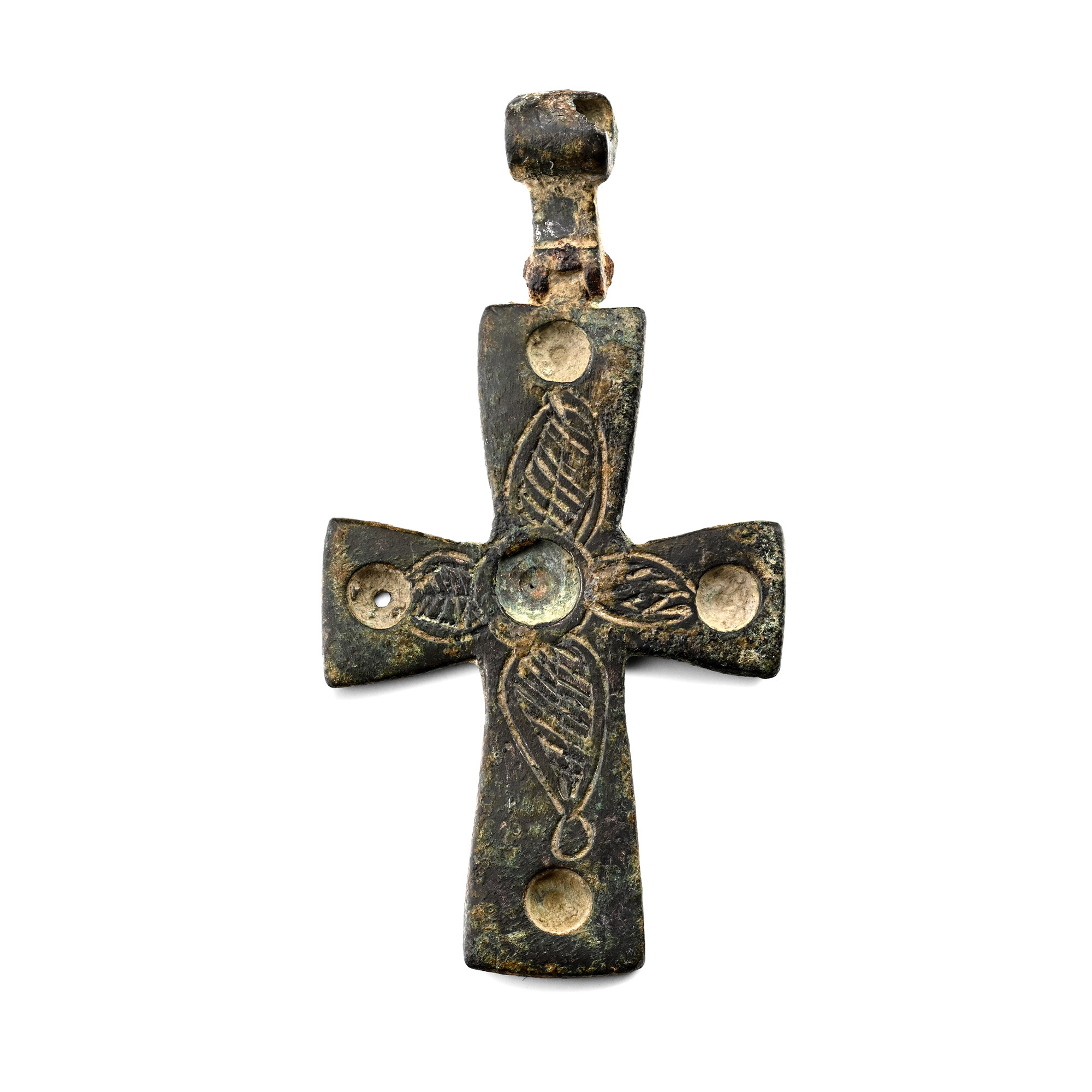
Byzantine Bronze Pectoral Cross Pendant

CIRCA 11TH-12TH CENTURY A.D.

3 1/4 in. (29.5 grams, 83 mm).

Large cruciform pendant with hinged loop, one side with a robed figure in orans pose, a cross above; the other side with a floral cross and five cells for inlay representing the five wounds of Christ.

Provenance

Ex German art market, 2000s.
Acquired from an EU collector living in London.
From the collection of a Surrey, UK, gentleman.

CONDITION
VETTING:

TimeLine Auctions follows a vetting process to ensure the authenticity and legality of all items, reinforcing our commitment to integrity and responsible trading. Each antiquity, antique, and coin lot undergoes thorough examination by a vetting committee of at least ten external specialists, professional trade association members, scientists, and archaeologists: Our Vetting Process


AUCTIONS:

TimeLine is a leading auction house specialising in antiquities, ancient art, collectables, natural history, coins, medals, and books. Our auctions offer museums, collectors, historians, and enthusiasts the opportunity to acquire unique and historically significant pieces.

LOT 1138

Byzantine Bronze Pectoral Cross Pendant

Estimate £200 - 300€230 - 350 (for guidance only)$270 - 410 (for guidance only)

Current bid: £150 +BP*
(2 Bids, Reserve not met)

Sign in to Bid

Please enter a e-mail
Please enter a password
Or Create Account here.
Please confirm to accept TC and Privacy policy

(2 Bids, Reserve not met)   |   Current bid: £150
RELATED LOTS
  • Byzantine Filigree Gold Cross Pendant with Bead Drops
    Byzantine Filigree Gold Cross Pendant with Bead Drops
    Circa 6th-8th century A.D.

    Estimate: £1,500 - 2,000 (+bp*)

    Bids: 1   |   Current Bid: £100

    Formed as a Maltese cross, each arm with twisted filigree frame and filigree coils, dangle to the outer end with pearl and other beads (pearls ancient but possibly not original), central stepped cell with beaded collar and inset garnet cabochon, loop with filigree detailing. 3.68 grams, 50 mm


    From a North American gentleman's collection, 1990s.

    Lot Details

  • Byzantine Bronze Ring with Warrior Saint
    Byzantine Bronze Ring with Warrior Saint
    12th-13th century A.D.

    Estimate: £60 - 80 (+bp*)

    Bids: 2   |   Current Bid: £15

    D-section hoop with keeled shoulders, polygonal bezel with a stylised nimbate figure. 6.65 grams, 23.80 mm overall, 18.91 mm internal diameter (approximate size British Q 1/2, USA 8 1/4, Europe 18.12, Japan 17)


    Acquired on the UK and EU art market before 2000. From the private collection of a Surrey, UK, gentleman.

    This category of rings had a hexagonal-rounded chaton raised above the link. Conforming to the iconography of the Orthodox countries under the influence of Byzantium, the possible decoration was related to military saints.

    Lot Details

  • Byzantine Greek Fire Ceramic Fire Bomb or Hand Grenade
    Byzantine 'Greek Fire' Ceramic Fire Bomb or Hand Grenade
    9th-11th century A.D.

    Estimate: £80 - 100 (+bp*)

    Bids: 2   |   Current Bid: £5

    Piriform body with pointed base, two sets of circumferential banding on the body; intended to be filled with explosive liquid and a wick, and used as a hand grenade. 470 grams, 10.6 cm


    From an important specialist collection, London, UK, 1990s. Accompanied by an academic paper by military specialist Dr Raffaele D'Amato, dated 15 July 2019 and titled 'Eastern Roman Empire - Greek Fire Bomb or Hand Grenade (μεσαίον kακάβιον) 9th-11th century AD'.

    Apart from the use of siphons or manual flame-throwers called cheirosiphona, special corps of Roman soldiers employed terracotta grenades, in the form of small jars, abundantly evidenced in archaeological excavations. They were called μεσαία kακαβιά or κυτροκακάβια, where the former had a bulbous shape and the latter a more cylindrical form.

    Lot Details