
Loading, please wait...
LOT 0927
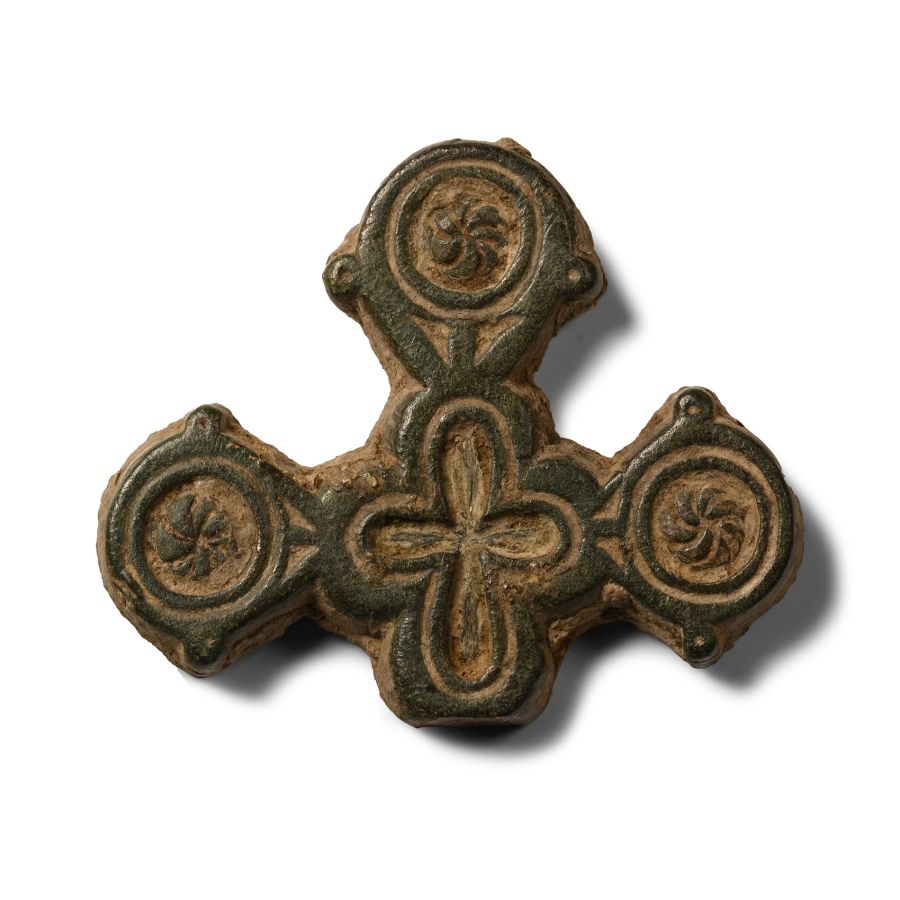
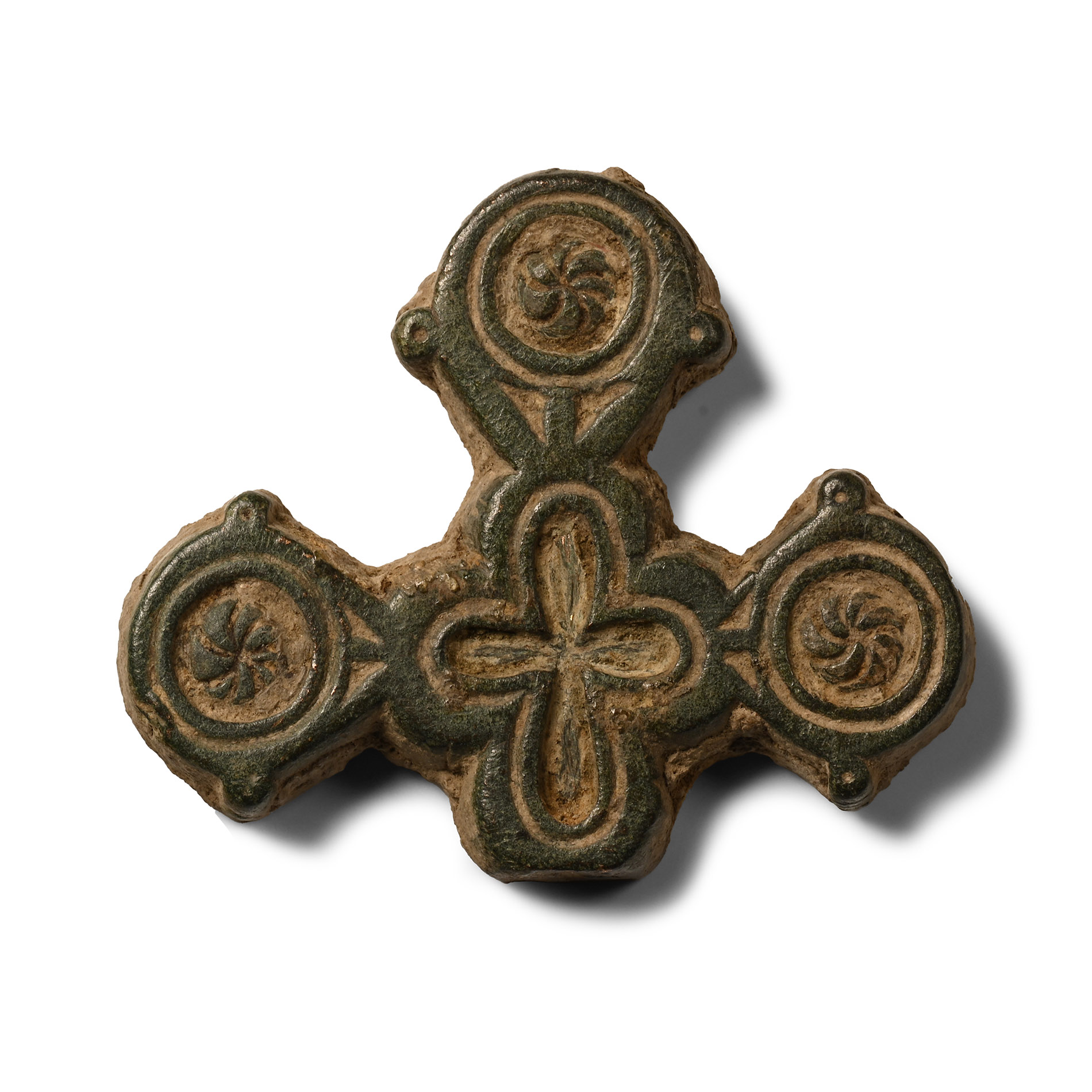
Byzantine Bronze Patrix Die for a Belt Mount
6TH-7TH CENTURY A.D.
1 5/8 in. (17.8 grams, 40 mm).
Cruciform in plan with central quatrefoil flanked on three sides by a disc with rosette fill and lateral lugs. [No Reserve]
ProvenanceAcquired in the 1980s.
From the collection of a London antiquarian.
TimeLine Auctions follows a vetting process to ensure the authenticity and legality of all items, reinforcing our commitment to integrity and responsible trading. Each antiquity, antique, and coin lot undergoes thorough examination by a vetting committee of at least ten external specialists, professional trade association members, scientists, and archaeologists: Our Vetting Process
AUCTIONS:
TimeLine is a leading auction house specialising in antiquities, ancient art, collectables, natural history, coins, medals, and books. Our auctions offer museums, collectors, historians, and enthusiasts the opportunity to acquire unique and historically significant pieces.
-
Byzantine Swan-Necked Silver Spoon
5th-7th century A.D.Sold for (Inc. bp): £598
Shallow piriform bowl attached to a stepped baluster, square-section handle with knop finial. 39 grams, 18.1 cm
Ex London, UK, gallery, 1971-early 2000s. London, UK, collection. -
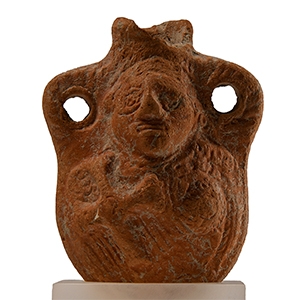
Byzantine Terracotta Pilgrim Flask with a Saint
6th century A.D.Estimate: £1,200 - 1,700 (‡+bp*)
Opening Bid: £600
Piriform in profile with two thick lug handles to the shoulder, obverse with low-relief facing figure holding a large cross and orb, reverse with facing figure with hand held up in the orans posture; with a display stand. 47.2 grams, 77 mm (71.4 grams total, 91 mm including stand)
Ex private collection, Mrs L.S., 1990s. Acquired from the above, 2001. Private European collection. This lot has been checked against the Interpol Database of stolen works of art and is accompanied by a search certificate number no.12110-218216. -
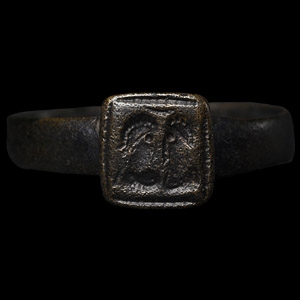
Byzantine Bronze Marriage Ring with Facing Busts
6th-8th century A.D.Sold for (Inc. bp): £182
Comprising a flat-section hoop and raised rectangular bezel, intaglio motif of two facing busts. 4.23 grams, 26.13 mm overall, 21.25 mm internal diameter (approximate size British V 1/2, USA 10 3/4, Europe 24.4, Japan 23)
Ex German art market, 2000s. Acquired from an EU collector living in London. From the collection of Surrey, UK, gentleman.
