
Loading, please wait...
LOT 0740
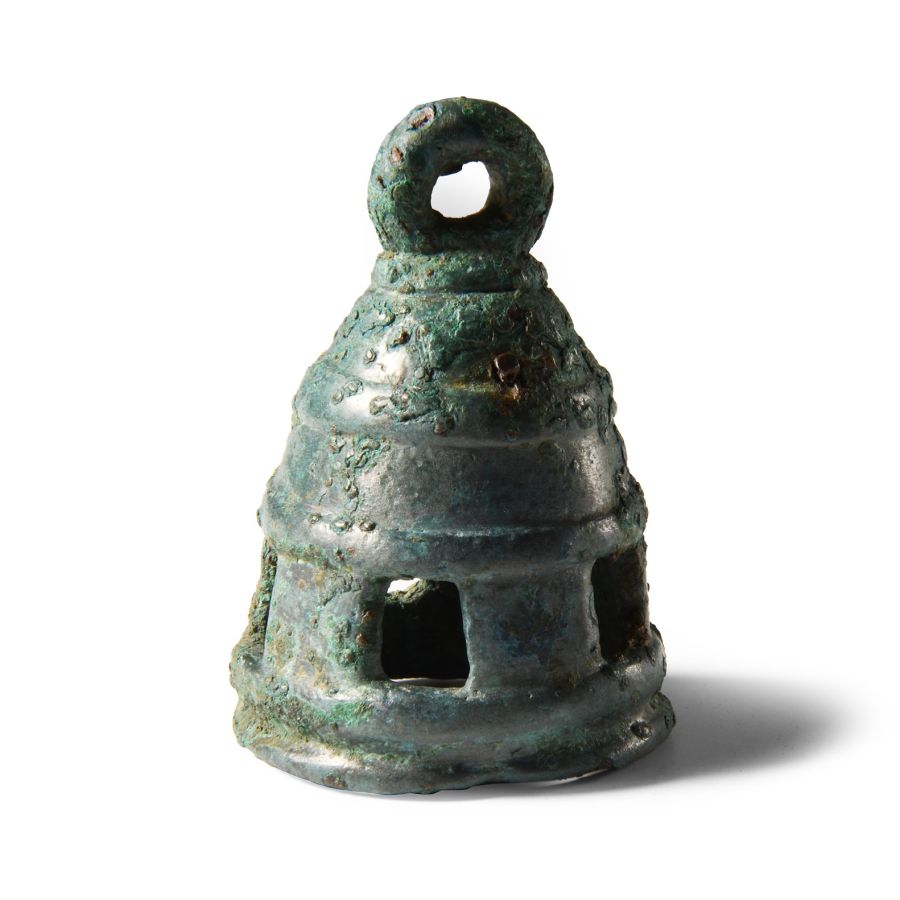
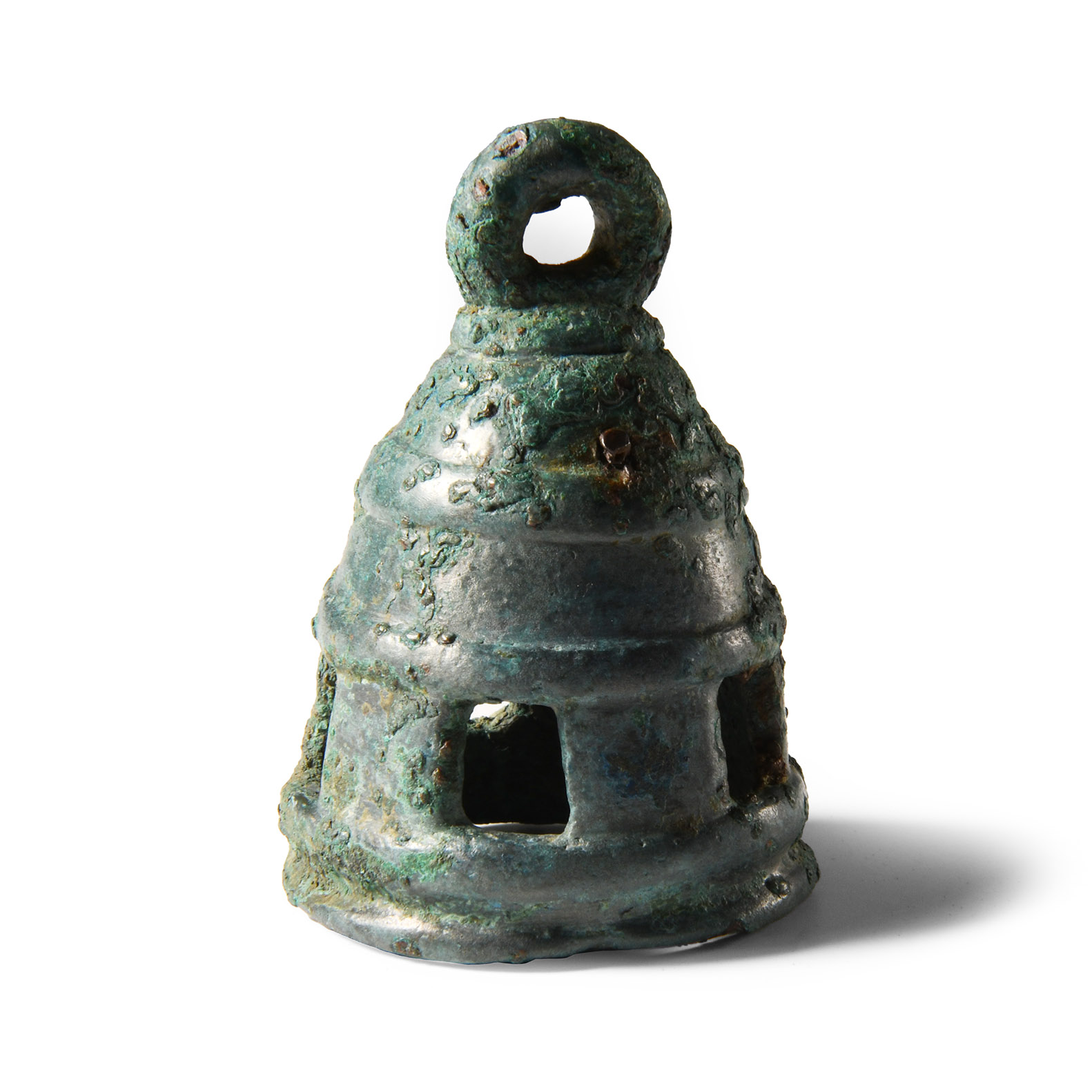
Byzantine Bronze Openwork Bell
CIRCA 10TH-12TH CENTURY A.D.
2 1/2 in. (108 grams, 63 mm).
Conical profile with thick suspension loop, circumferential ribs, five square slots above the mouth.
ProvenanceEx old English collection.
London art market, pre 2000.
Property of a London, UK, gentleman.
TimeLine Auctions follows a vetting process to ensure the authenticity and legality of all items, reinforcing our commitment to integrity and responsible trading. Each antiquity, antique, and coin lot undergoes thorough examination by a vetting committee of at least ten external specialists, professional trade association members, scientists, and archaeologists: Our Vetting Process
AUCTIONS:
TimeLine is a leading auction house specialising in antiquities, ancient art, collectables, natural history, coins, medals, and books. Our auctions offer museums, collectors, historians, and enthusiasts the opportunity to acquire unique and historically significant pieces.
-
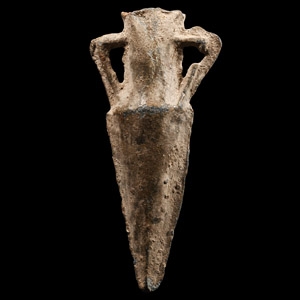
Byzantine Lead Pilgrim's Holy Water Ampulla
Circa 8th-13th century A.D.Sold for (Inc. bp): £39
Conical with tubular neck and two thin lateral handles. 21.2 grams, 55 mm
Acquired on the UK art market in the 1990s. Property of a Stowmarket, UK, gentleman. -
.jpg)
Byzantine Bronze Trade Weight Collection
Circa 8th-12th century A.D.Sold for (Inc. bp): £33
Mixed group of barrel-shaped and biconvex weights with punched pellet markings. 122 grams total, 15-20 mm
Ex Simmons Gallery, London E11, UK, in the 1990s. From a North London collection. -
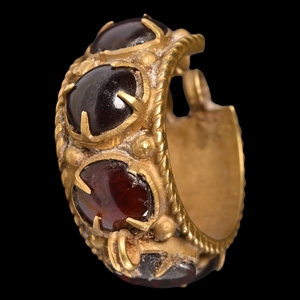
Byzantine Gold Earring
Circa 8th-12th century A.D.Sold for (Inc. bp): £403
Substantial D-section hoop with applied ropework borders, loops for fastening clasp, six radiating garnet cabochons in claw settings with interstitial granules, ribbed loop to the apex. 2.71 grams, 17 mm
Ex European collection formed in the 1990s. Acquired from a North London gallery. Property of an Essex gentleman.
